Mastering the double in practice routines darts is crucial for closing out legs and improving your overall game; it’s the key to consistent winning. This article will guide you through effective practice drills, targeting strategies, and mental approaches to significantly enhance your double hitting accuracy on the dartboard.
⚠️ Still Using Pen & Paper (or a Chalkboard)?! ⚠️
Step into the future! The Dart Counter App handles all the scoring, suggests checkouts, and tracks your stats automatically. It's easier than you think!
Try the Smart Dart Counter App FREE!Ready for an upgrade? Click above!
The Importance of Focusing on Double In Practice Routines Darts
Why is focusing on doubles so important? Simply put, you can score all the big numbers you want, but if you can’t hit the final double, you won’t win the leg. Many players neglect this crucial aspect of their game, spending more time on trebles and high scores, ultimately hindering their progress. Incorporating dedicated double in practice routines darts into your training regimen will pay dividends in match situations.
Think about it: every game of 301, 501, or any other variant requires you to finish on a double. Therefore, consistent and accurate double hitting is the ultimate differentiator between a good player and a great one. Even if you’re proficient at hitting trebles, a shaky performance on the doubles can cost you the game. So, dedicating time to double in practice routines darts is paramount to your overall success.
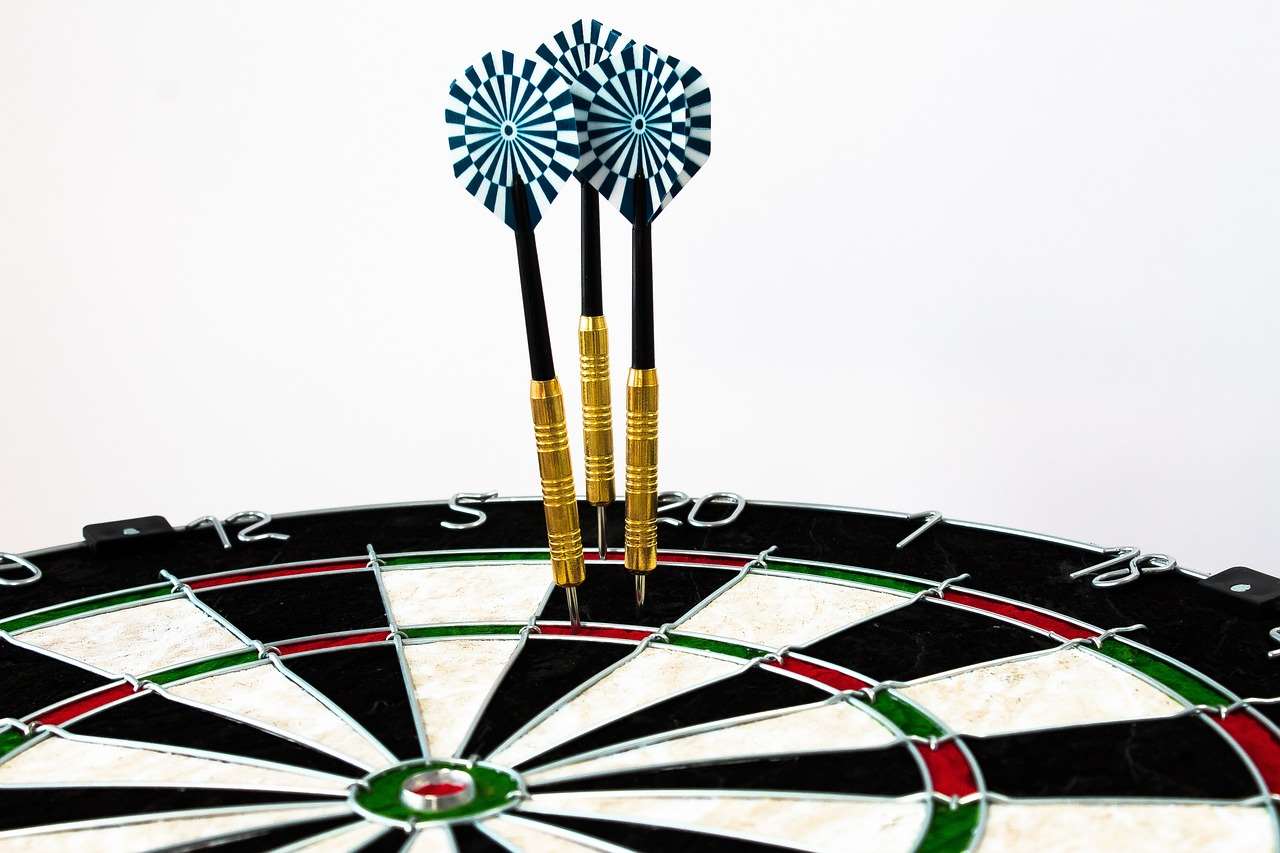
Effective Practice Drills for Mastering Doubles
Now that we’ve established the importance of double in practice routines darts, let’s dive into some effective drills you can use to improve your accuracy. Remember, consistency is key, so try to incorporate these drills into your practice sessions regularly.
The Around the Clock Drill
This is a classic drill for honing your double-hitting skills. Start by aiming at double 1, then double 2, and continue sequentially around the board until you reach double 20. The goal is to hit each double consecutively. If you miss, start over from double 1. As you improve, you can set yourself targets, such as completing the drill in a certain number of darts or within a specific timeframe. This exercise improves your aim and builds your confidence with each double. You can modify the drill by only targeting even or odd numbers. Try the drill with different sets of darts to find what works best for you.
The “Double In, Double Out” Challenge
This drill simulates a real game scenario. Start with a score of, say, 40. You must hit a double to “get in” (reduce your score) and then finish the game with another double. This drill combines the pressure of needing to hit a double to start with the necessity of ending with a double. You can adjust the starting score to increase the difficulty. This helps to improve your dart throwing technique under pressure. Practicing with a partner can also help recreate the feeling of competition.
The 20, Double 20, Bullseye Drill
This drill focuses on transitioning between different areas of the board. Start by aiming at the single 20, then move to the double 20, and finally, finish on the bullseye. Repeat this sequence multiple times. This drill helps you to improve your accuracy and control over your darts, particularly when moving between vastly different targets. This will ultimately help when you’re aiming for high scores in darts.

Targeting Strategies for Doubles
While practice drills are essential, having a solid targeting strategy is just as important. Here are some tips for effectively targeting doubles:
Understanding the Board Layout
Familiarize yourself with the layout of the dartboard and the relationship between different numbers. Knowing which doubles are adjacent to higher scoring areas can help you to adjust your aim and minimize the risk of hitting a lower score if you miss. For example, understanding that the double 20 is next to the single 1 and single 5 will influence your aiming point.
Finding Your Preferred Doubles
Everyone has their preferred doubles. Identify the doubles that you feel most comfortable hitting and prioritize them when possible. This could be due to factors like stance, throwing style, or simply personal preference. Experiment with different doubles and track your accuracy to determine which ones you excel at. Maybe you’re a natural at the double 16, or perhaps the double 18 feels better in your hand.
Developing a Backup Plan
Even the best players miss their target doubles occasionally. It’s crucial to have a backup plan for when you miss. Consider what number you are likely to hit if you miss your intended double and plan your next throw accordingly. For example, if you’re aiming for double 20 and you miss low, you might hit the single 1 or single 5. Knowing this allows you to adjust your subsequent throws to still leave yourself on a manageable double. You might even find some Darts Variants Fun Games that incorporate this concept.
The Mental Game of Doubles in Darts
Hitting doubles isn’t just about physical skill; it also requires a strong mental game. Pressure, nerves, and distractions can all impact your accuracy. Here are some tips for maintaining a calm and focused mindset when aiming for doubles:
Visualization Techniques
Before you throw, take a moment to visualize your dart hitting the target double. Imagine the trajectory of the dart, the feeling of release, and the sound of the dart hitting the board. This mental rehearsal can help to build confidence and improve accuracy.
Breathing Exercises
When you feel nervous or tense, take a few deep breaths to calm your nerves. Inhale deeply through your nose, hold for a few seconds, and then exhale slowly through your mouth. This simple breathing exercise can help to lower your heart rate and improve your focus.
Positive Self-Talk
Replace negative thoughts with positive affirmations. Instead of thinking “I’m going to miss,” tell yourself “I can hit this double.” Believing in your ability to hit the target can make a significant difference in your performance. Remember that mental toughness in darts is just as important as physical skill.
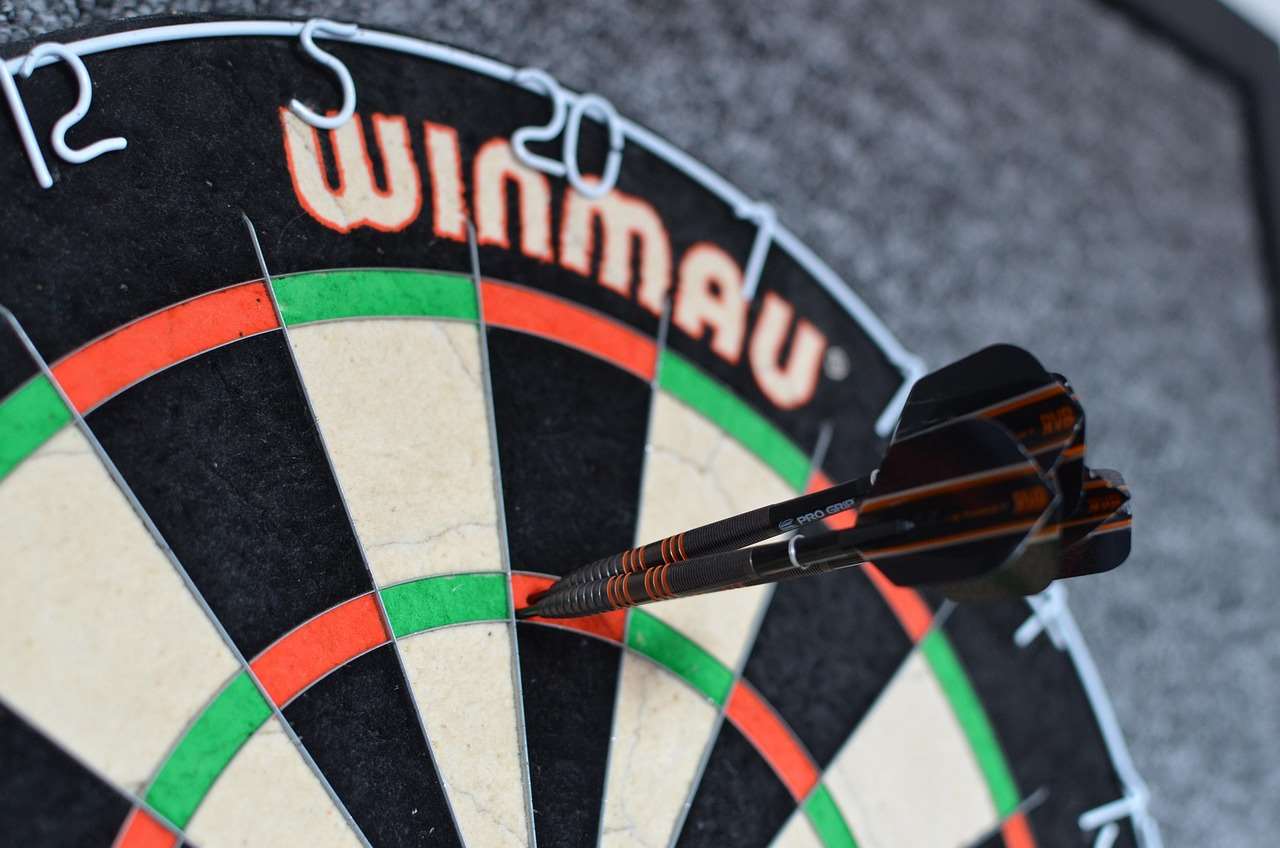
Equipment Considerations for Double In Practice Routines Darts
While skill and practice are paramount, your equipment also plays a significant role in your success. Here are some considerations regarding darts and dartboards for double in practice routines darts:
Dart Weight and Grip
Experiment with different dart weights and grips to find what feels most comfortable and allows for consistent release. Heavier darts may offer more stability, while lighter darts may allow for more finesse. A comfortable grip is crucial for maintaining control and accuracy. Many professional players spend considerable time fine-tuning their grip to achieve optimal results.
Dartboard Quality
Invest in a high-quality dartboard made from sisal fibers. A good dartboard will have consistent density and minimal bounce-outs. Rotate your dartboard regularly to ensure even wear and tear, and replace it when the sisal fibers become too worn. Proper maintenance can extend the lifespan of your dartboard and improve your overall playing experience.
Dartboard Lighting
Ensure adequate lighting around your dartboard to eliminate shadows and provide clear visibility of the target doubles. Poor lighting can strain your eyes and affect your accuracy. Consider using a dedicated dartboard lighting system to provide consistent and even illumination.
Advanced Double In Practice Routines Darts Techniques
Once you’ve mastered the basics, you can explore some advanced techniques to further refine your double-hitting skills. These techniques require more practice and precision, but they can significantly enhance your performance:
Targeting Specific Segments
Instead of just aiming for the entire double segment, try to target a specific part of it. For example, aim for the top or bottom of the double 20 to fine-tune your accuracy and reduce the risk of missing. This requires a high level of precision and control, but it can dramatically improve your consistency.
Adjusting for Wind
If you’re playing in a windy environment, learn to adjust your aim to compensate for the wind’s effect on the dart’s trajectory. This is a challenging skill that requires practice and experience, but it can be crucial in outdoor settings.
Varying Your Stance
Experiment with different stances to see if one feels more comfortable and stable. A slightly altered stance can improve your balance and allow for a more consistent throwing motion. Consider watching professional dart players to observe their stances and see if you can incorporate any elements into your own technique.
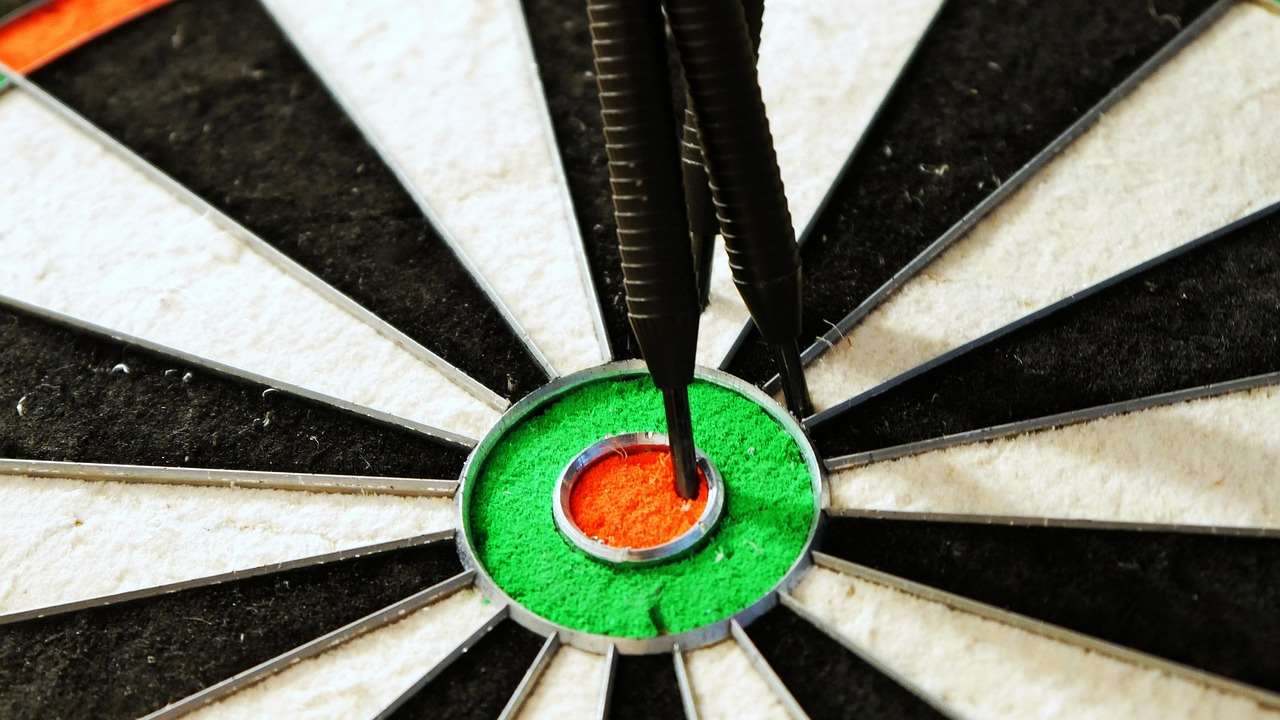
Incorporating Double In Practice Routines Darts into Your Training Schedule
Consistency is key to improving your double-hitting accuracy. Make sure to incorporate double in practice routines darts into your regular training schedule. Here are some tips for creating an effective training plan:
- Set Realistic Goals: Don’t try to improve everything at once. Focus on one or two specific doubles at a time.
- Track Your Progress: Keep a record of your scores and accuracy to monitor your improvement.
- Vary Your Drills: Avoid monotony by incorporating a variety of drills into your practice sessions.
- Practice Regularly: Even short, consistent practice sessions are more effective than infrequent, long ones.
- Rest and Recover: Allow your body and mind to rest and recover between practice sessions to avoid burnout.
Remember to enjoy the process of improving your game. Darts should be a fun and engaging activity, so don’t put too much pressure on yourself. Celebrate your successes and learn from your failures. This will help you stay motivated and continue to improve your skills over time. You may even want to look at the obscure dartboard games list for some fun practice ideas.
Troubleshooting Common Double Hitting Problems
Even with consistent practice, you may encounter challenges when trying to hit doubles. Here are some common problems and how to address them:
- Inconsistent Release: Focus on maintaining a smooth and consistent release point.
- Target Panic: If you freeze up when aiming for a double, try taking a deep breath and relaxing your muscles.
- Poor Aim: Work on your alignment and ensure that your eye, arm, and target are all in a straight line.
- Dart Flight Issues: Experiment with different dart flights to find one that provides optimal stability and trajectory.
Don’t get discouraged if you encounter these problems. Every dart player experiences challenges at some point. The key is to identify the problem, address it systematically, and keep practicing.
Conclusion: Elevate Your Darts Game with Focused Double In Practice Routines Darts
Incorporating dedicated double in practice routines darts is essential for improving your overall darts game. By mastering the techniques discussed in this article, including effective drills, strategic targeting, mental strategies, and equipment considerations, you can significantly enhance your double-hitting accuracy and consistently close out legs. Remember to set realistic goals, track your progress, and stay consistent with your practice. Good luck, and may your darts always find their mark! Now, grab your darts and start putting these techniques into practice. Your journey to becoming a better darts player starts now!

Hi, I’m Dieter, and I created Dartcounter (Dartcounterapp.com). My motivation wasn’t being a darts expert – quite the opposite! When I first started playing, I loved the game but found keeping accurate scores and tracking stats difficult and distracting.
I figured I couldn’t be the only one struggling with this. So, I decided to build a solution: an easy-to-use application that everyone, no matter their experience level, could use to manage scoring effortlessly.
My goal for Dartcounter was simple: let the app handle the numbers – the scoring, the averages, the stats, even checkout suggestions – so players could focus purely on their throw and enjoying the game. It began as a way to solve my own beginner’s problem, and I’m thrilled it has grown into a helpful tool for the wider darts community.