In the game of doubles darts, the crucial rule revolves around starting and finishing a leg: you **must** begin by hitting a **double** to enter the scoring phase and end by hitting another **double** to win. This article comprehensively covers the ins and outs of **double in doubles darts rules**, providing a clear understanding of the gameplay, strategies, and common variations.
⚠️ Still Using Pen & Paper (or a Chalkboard)?! ⚠️
Step into the future! The Dart Counter App handles all the scoring, suggests checkouts, and tracks your stats automatically. It's easier than you think!
Try the Smart Dart Counter App FREE!Ready for an upgrade? Click above!
Understanding the Basics of Double In Doubles Darts Rules
The concept of **double in doubles darts rules** adds a strategic layer to the traditional game. It means that before a team or individual can begin accumulating points in a leg, they must first successfully hit a **double**. This applies both at the start (hence “double in”) and at the finish (requiring a “double out”). The standard target number is usually 501, but it can be adjusted depending on the format. Understanding this core rule is essential for strategizing your game.
Essentially, you can throw as many darts as you need to hit that first crucial **double**. Until you do, your score remains untouched. After hitting the **double** and “opening” your score, the standard scoring rules of darts apply.

Key Elements of the Double In Rule
- Starting with a Double: This is mandatory. Any score before hitting a **double** doesn’t count.
- Calculating Scores After Opening: Once a **double** is hit, the score is calculated as normal for the remaining darts in that turn.
- The Importance of Accuracy: Hitting those **doubles** requires precision and practice.
Variations in Double In Doubles Darts Rules
While the fundamental principle remains the same, certain variations can exist within **double in doubles darts rules**, especially in informal settings or specific tournaments. It’s always a good idea to clarify the rules before starting a game.
One common variation involves the definition of what constitutes a “double.” While the standard definition includes the narrow outer ring of the dartboard, some house rules might allow the bullseye (double 25) to count as a **double** for opening the score. However, this is less common in formal matches.
Also be aware that different **darts variants fun games** might have completely different rulesets that diverge further from the standard double in/double out format.
House Rules and Tournament Specifics
- Bullseye as a Double: Check if the bullseye counts as a **double** for starting.
- Tournament Regulations: Official tournaments will always adhere to strict rules. Always consult the official rulebook.
- Communication is Key: Always confirm the rules with your opponent before starting the game to avoid any misunderstandings.
Strategies for Double In Doubles Darts
Mastering **double in doubles darts rules** requires more than just understanding the concept; it demands strategic thinking and precise execution. Here are some strategies to improve your game.
Targeting Specific Doubles
Instead of randomly aiming for any **double**, focus on mastering a few key **doubles** that provide strategic advantages. For example:
- Double 20: A popular choice due to its larger target area.
- Double 16: Another favored **double**, especially for finishing.
- Double 10 and Double 5: These can be useful alternatives if you are slightly off target on the larger doubles.
Developing a Consistent Throw
Consistency is paramount in darts. Work on developing a smooth and repeatable throwing motion. This will significantly improve your accuracy when targeting those crucial **doubles**. Practice drills that focus solely on hitting **doubles** can be particularly beneficial.
Mental Preparation
The mental aspect of darts is often overlooked, but it’s crucial, especially under pressure. Learn to manage nerves and maintain focus. Visualize yourself hitting the **double** before each throw. This positive mental imagery can enhance your performance. Remember, even professional players feel the pressure, but their mental fortitude allows them to perform under stress.
Practice Drills to Improve Double In Doubles Darts Skills
Consistent practice is the cornerstone of success in any dart game, especially when playing with **double in doubles darts rules**. Here are some targeted drills:
The “Around the Clock” Doubles Drill
Start by aiming for **double** 1, then **double** 2, and so on, all the way up to **double** 20. This drill improves your accuracy on all the **doubles** around the board. Time yourself and try to beat your previous best time. This also helps to identify which **doubles** you struggle with the most.
The “Double In” Pressure Drill
Simulate a game situation where you have to hit a **double** to start scoring. Set a target score (e.g., 501) and see how many attempts it takes you to hit the initial **double**. Repeat this drill multiple times to build confidence under pressure. Also, think of your dart setup. Are you using the right darts and dartboard? These also make a difference in your game.
The “Double Out” Simulation
Start with a score that requires you to finish on a **double** (e.g., 40, requiring **double** 20). Practice hitting that specific **double** repeatedly. You can also vary the target **double** to simulate different finishing scenarios. Over time, this focused practice will build muscle memory and improve your consistency.
These drills combined with understanding of **old dart games rules** helps your gameplay.
Choosing the Right Equipment for Double In Doubles Darts
While skill is paramount, having the right equipment can make a significant difference, especially when adhering to **double in doubles darts rules**.
Dart Weight and Material
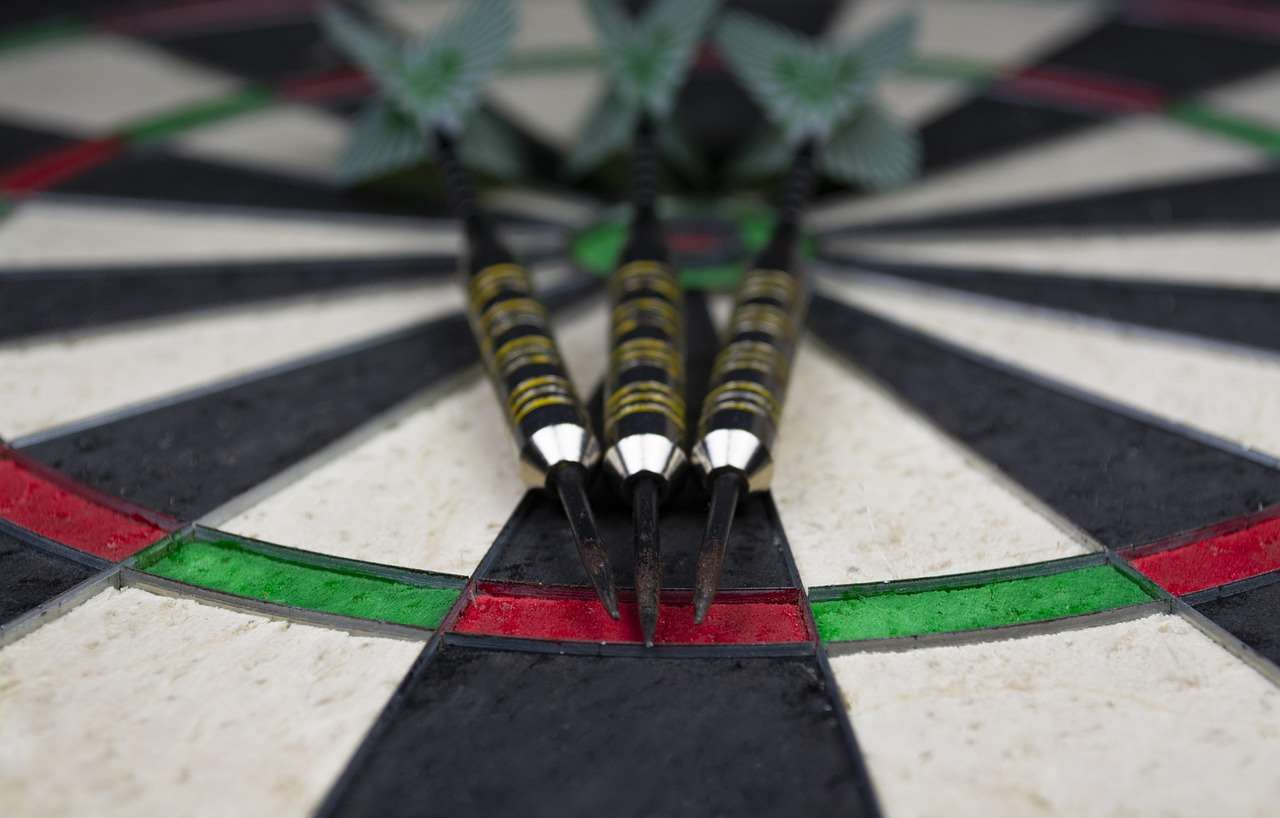
Experiment with different dart weights and materials to find what feels most comfortable and gives you the best control. Tungsten darts are generally preferred by professionals due to their slim profile and high density, allowing for tighter groupings on the board. A good starting point is around 22-24 grams, but ultimately, the ideal weight is a personal preference.
Dart Shafts and Flights
Shafts and flights affect the dart’s trajectory and stability. Experiment with different lengths and shapes to find what works best for your throwing style. Shorter shafts generally result in a more direct flight path, while longer shafts can provide more stability. Flights come in various shapes, such as standard, kite, and slim. Standard flights offer the most stability, while slim flights provide less drag. Also consider reading more about **history of darts games uk** as understanding history will help you in gameplays.
Dartboard Quality
Invest in a high-quality dartboard made from sisal fibers. A good dartboard will have tightly packed fibers that heal quickly after being hit by a dart, extending the board’s lifespan. Regularly rotate the dartboard to distribute wear evenly. Poor-quality dartboards can lead to bounce-outs and inconsistent scoring, hindering your progress.
The Social Aspect of Playing Doubles Darts
Playing doubles darts, especially with **double in doubles darts rules**, is often a social activity. Whether you’re playing in a pub league or with friends at home, the camaraderie and friendly competition can be just as rewarding as the game itself. Remember always to respect your opponents and adhere to the rules of the game. The enjoyment of the game is just as important as being a champion.

Etiquette and Sportsmanship
Good sportsmanship is essential. Be respectful of your opponents’ throws and avoid distractions. Congratulate them on good shots, even if they are against you. Losing gracefully is just as important as winning. By fostering a positive and respectful environment, you can make the game more enjoyable for everyone involved.
Joining a Darts League
Joining a darts league is a great way to improve your skills, meet new people, and experience the thrill of competitive play. Leagues often have different divisions based on skill level, so you can find one that is appropriate for your abilities. Participating in a league can also expose you to different playing styles and strategies, helping you to become a more well-rounded player. Consider this in conjunction with understanding **Darts Variants Fun Games** as you could find something new and exciting.
Conclusion: Mastering Double In Doubles Darts Rules
Understanding and mastering **double in doubles darts rules** requires a combination of knowledge, skill, and strategy. By focusing on accurate **double** hitting, consistent practice, and mental preparation, you can significantly improve your game. Remember to choose the right equipment, practice regularly, and embrace the social aspect of the game. Whether you are a seasoned pro or a beginner, consistent effort and dedication will allow you to master darts. Take your newfound knowledge and practice those doubles! Good luck and happy darting!

Hi, I’m Dieter, and I created Dartcounter (Dartcounterapp.com). My motivation wasn’t being a darts expert – quite the opposite! When I first started playing, I loved the game but found keeping accurate scores and tracking stats difficult and distracting.
I figured I couldn’t be the only one struggling with this. So, I decided to build a solution: an easy-to-use application that everyone, no matter their experience level, could use to manage scoring effortlessly.
My goal for Dartcounter was simple: let the app handle the numbers – the scoring, the averages, the stats, even checkout suggestions – so players could focus purely on their throw and enjoying the game. It began as a way to solve my own beginner’s problem, and I’m thrilled it has grown into a helpful tool for the wider darts community.