Pinpointing who has the best throw in darts is subjective, as perfection varies between players; however, many consider Phil Taylor’s consistency and power unmatched. This article explores the elements that define a great throw, examining legendary players and their unique styles while also discussing techniques you can use to improve your own game.
⚠️ Still Using Pen & Paper (or a Chalkboard)?! ⚠️
Step into the future! The Dart Counter App handles all the scoring, suggests checkouts, and tracks your stats automatically. It's easier than you think!
Try the Smart Dart Counter App FREE!Ready for an upgrade? Click above!
Deconstructing the “Best” Throw: What Makes a Dart Throw Great?
The question of who has the best throw in darts isn’t just about hitting the bullseye. Several factors contribute to an effective and admired dart throw. Let’s break down the key components:
- Consistency: This is paramount. The ability to replicate the same throw repeatedly, even under pressure, is what separates the good from the great.
- Accuracy: Hitting the intended target, whether it’s a treble 20 or a strategic double, is crucial.
- Smoothness: A fluid, unhurried motion is generally more accurate than a jerky one. This minimizes extraneous movements that can throw off the dart’s trajectory.
- Power: Generating adequate power is necessary, but it needs to be controlled and consistent. Too much power can lead to wild throws, while too little may result in the dart dropping short.
- Release Point: A clean, consistent release is critical for sending the dart on the correct path.
- Follow-Through: A complete and deliberate follow-through ensures the dart is propelled in the desired direction.
It’s important to remember that everyone’s throw is unique. What works for one player might not work for another. The ideal throw is the one that produces the most consistent and accurate results for *you*. The ability to perform reliable darts outshots, is a sign of a developed throw.
Legends of the Oche: Examining Iconic Dart Throws
Throughout the history of darts, certain players have been admired not only for their winning records but also for their distinctive and seemingly flawless throwing styles. Let’s analyze some iconic throws:
Phil “The Power” Taylor
Often considered the greatest dart player of all time, Phil Taylor possessed a robotic consistency that was almost unnerving. His key attributes included:
- An extremely still stance and upper body.
- A short, compact backswing.
- An incredibly fast and powerful release.
- An unwavering focus and mental toughness.
Taylor’s success wasn’t just about raw talent; it was about relentless practice and perfecting his technique to an almost inhuman degree. His dedication to target darts sale equipment and his rigorous training regime made him a formidable opponent.
Michael van Gerwen
“Mighty Mike” brings an explosive energy to the oche, reflected in his powerful and aggressive throw. Key features include:
- A wider stance and more body movement than Taylor.
- A longer backswing, generating more power.
- A very deliberate follow-through.
- An intense and emotional presence.
Van Gerwen’s power and dynamism, combined with his exceptional scoring ability, have made him a dominant force in the world of darts.
Raymond van Barneveld
“Barney” was known for his smooth and graceful throwing action. His style was characterized by:
- A very relaxed and fluid motion.
- A high elbow position.
- A long and elegant follow-through.
- A calm and composed demeanor.
Van Barneveld’s relaxed style made him a popular player, and his ability to perform under pressure earned him numerous major titles.
Key Elements for a Perfect Dart Throw
While individual styles vary, there are fundamental principles that underpin any good dart throw. Understanding and mastering these principles can significantly improve your game. Consider the impact of factors such as a darts cricket scoreboard printable to keep track of progress.
Stance and Posture
Your stance provides the foundation for your throw. Common stances include:
- Side-on stance: This is the most common stance, where your throwing shoulder faces the board.
- Front-on stance: In this stance, you face the board directly.
- Angled stance: This is a variation of the side-on stance, where you angle your body slightly towards the board.
Regardless of your stance, maintain good posture: stand tall, with your weight balanced, and avoid slouching. A stable stance promotes consistency and helps prevent unwanted movement. Consider visiting argos darts tune up for advice and potential supplies.
Grip and Finger Placement
The grip is crucial for control and accuracy. Experiment with different grips to find one that feels comfortable and secure.
- Two-finger grip: This grip offers a lot of control, with the thumb and forefinger gripping the dart.
- Three-finger grip: This grip provides more power, with the thumb, forefinger, and middle finger gripping the dart.
- Four-finger grip: This grip offers the most power, with all four fingers gripping the dart.
The key is to hold the dart firmly but not too tightly. A tense grip can lead to muscle fatigue and inaccurate throws. Ensure your finger placement is consistent for each throw. Many use a dart counter ipad to check their consistency over time.
Arm Movement and Trajectory
The arm movement should be smooth and controlled. Avoid jerky or rushed motions. The ideal trajectory is a straight line from your eye to the target. Keep your elbow high and your wrist firm during the throw.
Release and Follow-Through
The release point is critical for accuracy. Release the dart at the precise moment when your arm is fully extended towards the target. A complete follow-through helps ensure the dart is propelled in the desired direction. Finish your throw with your hand pointing towards the target, holding the position for a brief moment.
Common Mistakes That Hinder a Dart Throw
Even experienced players can fall into bad habits. Awareness of common mistakes is the first step towards correcting them:
- Jerky movements: Avoid rushing the throw. Smoothness is key.
- Inconsistent grip: Maintain a consistent grip for every throw.
- Poor stance: Ensure your stance is stable and balanced.
- Not following through: Complete your throw with a full follow-through.
- Focusing too much on power: Control is more important than power.
Identifying and correcting these mistakes can significantly improve your consistency and accuracy. Regular practice and self-assessment are essential for identifying and addressing any flaws in your technique.
Practice Drills to Improve Your Dart Throw
Consistent practice is essential for improving your dart throw. Here are some effective drills:
- Treble 20 Practice: Focus on hitting the treble 20 repeatedly.
- Around the Clock: Start at 1 and work your way around the board to 20, then bullseye, hitting each number with a single dart.
- Doubles Practice: Practice hitting doubles, as they are crucial for finishing legs.
- Outshot Practice: Practice common outshots, such as 170, 164, 100, and 60.
Set realistic goals and track your progress. Consider using a darts camera scoring system to analyze your throws and identify areas for improvement.
The Mental Game: Staying Focused Under Pressure
Darts is as much a mental game as it is a physical one. The ability to stay focused and composed under pressure is crucial for success.
- Visualization: Visualize yourself hitting the target before each throw.
- Positive self-talk: Encourage yourself with positive thoughts.
- Deep breathing: Use deep breathing techniques to calm your nerves.
- Focus on the process: Concentrate on your technique rather than the outcome.
Develop a pre-throw routine to help you stay focused and consistent. Practice your mental game as much as you practice your physical game. Mastering the mental aspects of darts will elevate your game to the next level. Understanding darts how many sets in a game can also help you prepare mentally for the duration of a match.
Equipment Matters: Choosing the Right Darts
Selecting the right darts can significantly impact your performance. Consider the following factors:
- Weight: Darts typically range from 20 to 26 grams. Experiment with different weights to find what feels most comfortable and controllable.
- Grip: Choose a dart with a grip that provides a secure and consistent hold.
- Shape: Different dart shapes can affect their flight characteristics. Try different shapes to see which one suits your throwing style best.
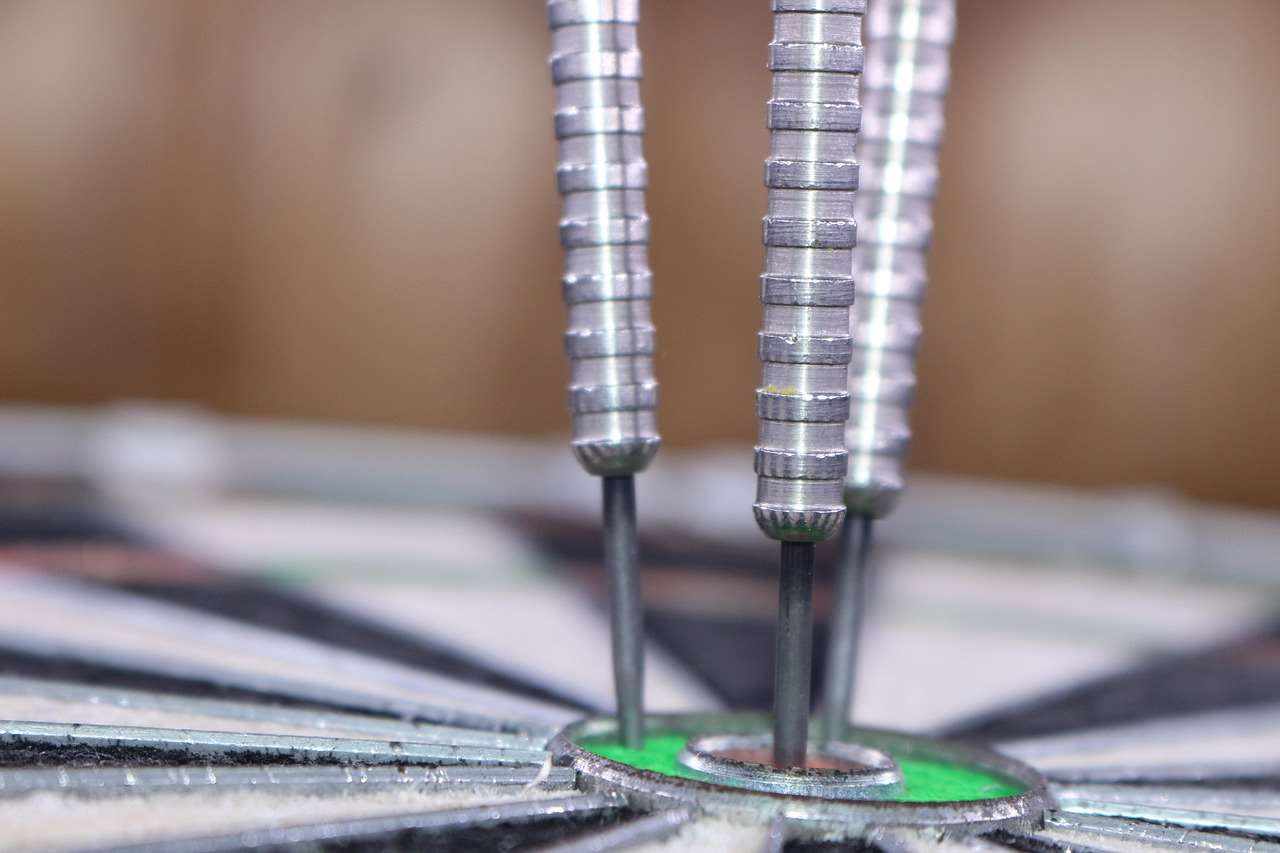
- Material: Tungsten darts are more durable and offer a slimmer profile than brass darts.
Visit a darts shop and try out different darts before making a purchase. The right darts can enhance your accuracy and consistency. Consider researching what brand of darts is the best to make an informed decision.
Advanced Techniques: Fine-Tuning Your Throw
Once you’ve mastered the basics, you can start experimenting with advanced techniques to further refine your throw:
- Varying your grip: Experiment with subtle variations in your grip to fine-tune your accuracy.
- Adjusting your stance: Make minor adjustments to your stance to improve your alignment with the target.
- Modifying your release point: Experiment with slightly different release points to alter the trajectory of your dart.
These advanced techniques require careful experimentation and analysis. Use video analysis to study your throw and identify areas for improvement. Seek feedback from experienced players or coaches to gain valuable insights.
The Ever-Evolving Landscape of Darts
The sport of darts is constantly evolving, with new players emerging and pushing the boundaries of what’s possible. Staying up-to-date with the latest trends and techniques can give you a competitive edge. Keep an eye on events such as the darts masters poland 2024 to see the world’s best in action. One thing that has never changed in the sport is the use of a scoreboard app like the Cricket darts scorer app (https://dartcounterapp.com/) to keep track of scores.
The debate about who has the best throw in darts will likely continue for years to come. While objective measures like averages and checkout percentages are important, the subjective beauty and fluidity of a player’s throw also contribute to their legend. In the end, the “best” throw is the one that consistently delivers results, regardless of style.
Conclusion: Finding Your Own “Best” Throw
Ultimately, the journey to finding your “best” throw is a personal one. By understanding the fundamental principles, practicing diligently, and experimenting with different techniques, you can develop a throwing style that is both effective and comfortable. Whether it’s emulating the robotic precision of Phil Taylor or developing your own unique flair, the key is to strive for consistency, accuracy, and a smooth, controlled motion. So, while the debate on who has the best throw in darts continues, focus on perfecting your own. Continue to learn and refine.
Now, pick up those darts, put in the practice, and start your journey to a better throw! Good luck!

Hi, I’m Dieter, and I created Dartcounter (Dartcounterapp.com). My motivation wasn’t being a darts expert – quite the opposite! When I first started playing, I loved the game but found keeping accurate scores and tracking stats difficult and distracting.
I figured I couldn’t be the only one struggling with this. So, I decided to build a solution: an easy-to-use application that everyone, no matter their experience level, could use to manage scoring effortlessly.
My goal for Dartcounter was simple: let the app handle the numbers – the scoring, the averages, the stats, even checkout suggestions – so players could focus purely on their throw and enjoying the game. It began as a way to solve my own beginner’s problem, and I’m thrilled it has grown into a helpful tool for the wider darts community.