Ultimately, **what weight darts are best for me** boils down to personal preference and experimentation; most players find a weight between 22 and 26 grams to be a good starting point. This article will guide you through the factors that influence your dart weight choice, helping you find the perfect darts to elevate your game.
⚠️ Still Using Pen & Paper (or a Chalkboard)?! ⚠️
Step into the future! The Dart Counter App handles all the scoring, suggests checkouts, and tracks your stats automatically. It's easier than you think!
Try the Smart Dart Counter App FREE!Ready for an upgrade? Click above!
Understanding Dart Weight and Its Impact
The weight of your darts significantly impacts your throwing style, accuracy, and overall comfort. A heavier dart might feel more stable in your hand, requiring less force to throw, while a lighter dart might offer more control and finesse. Finding the right balance is key to consistent performance. Considering the various factors that affect your darts game is important for a successful experience.
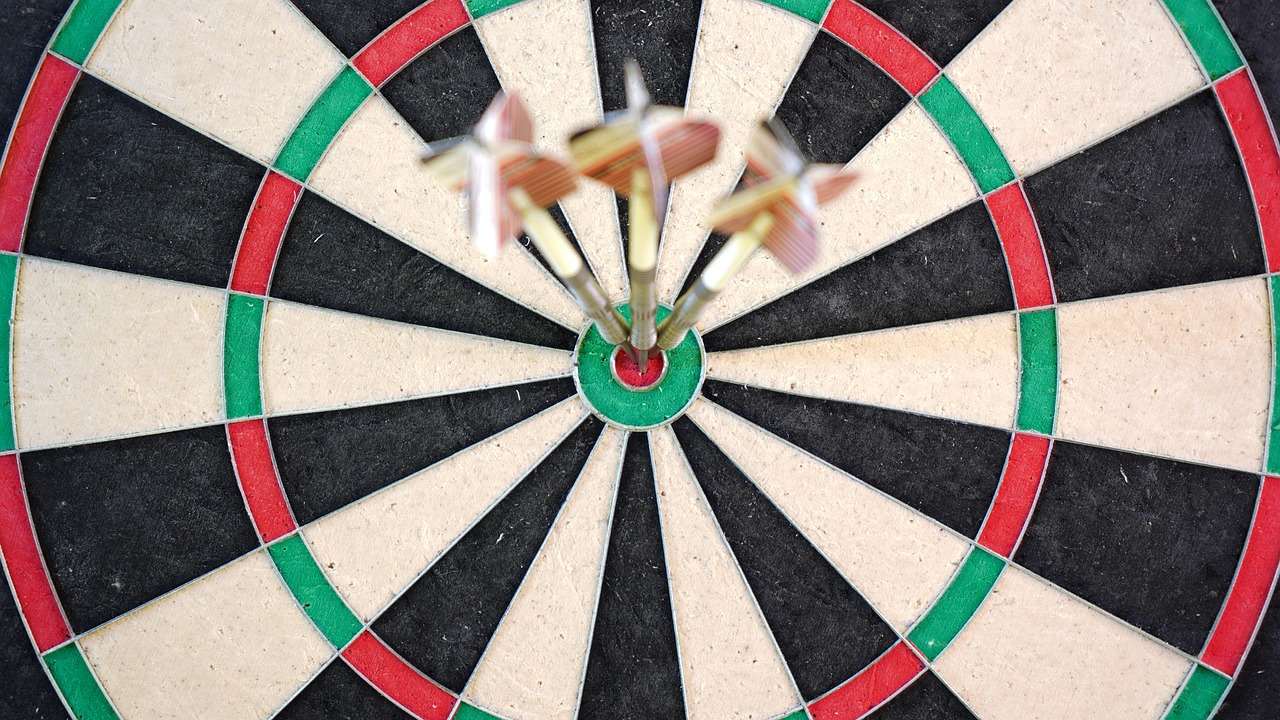
Several factors contribute to how a particular dart weight feels to you. These include your throwing style (overhand vs. underhand, wrist flick vs. full arm motion), hand size, grip, and the type of flights and shafts you use. It’s a holistic system where each element affects the others. For example, heavier flights can balance out a lighter barrel. Conversely, lighter flights work better with a heavier barrel.
Before diving into specific weights, it’s worth noting that dart weight is usually measured in grams. Standard dart weights typically range from 16 grams to 30 grams, with the most common range falling between 20 and 26 grams. Professional players often use darts within this range, but there’s no hard and fast rule. Choosing the right dart weight requires understanding the interplay of several variables.
How To Determine: What Weight Darts Are Best For Me
Finding the optimal dart weight isn’t an exact science, but here’s a systematic approach to help you narrow down your options and discover **what weight darts are best for me**:
- Start with a Common Weight: Begin with darts in the 22-24 gram range. This is a widely used weight that provides a good balance of stability and control for most players.
- Experiment with Different Weights: Once you’ve thrown with the initial weight for a while, try darts that are slightly heavier (25-26 grams) and slightly lighter (20-21 grams). Pay attention to how each weight feels in your hand and how it affects your throw.
- Focus on Consistency: The primary goal is to find a weight that allows you to throw consistently. Note which weight produces the most repeatable throws and groupings on the dartboard.
- Consider Your Throwing Style: If you have a strong, forceful throw, you might prefer a lighter dart that offers more control. If you have a smoother, more relaxed throw, a heavier dart might provide more stability.
- Take Note of Release: Observe your release point. Do you tend to release early or late? A slightly heavier dart might compensate for an early release, while a lighter dart might suit a late release.
Factors Influencing Dart Weight Selection
Several personal and physical attributes can impact your ideal dart weight. Consider these when making your selection:
Throwing Style and Technique
Your throwing style is a significant determinant of dart weight. If you use a full-arm motion, a heavier dart (24-26 grams) might be a good choice, as the extra weight can help maintain stability throughout the throw. Players who use a flick-of-the-wrist technique might find lighter darts (20-22 grams) easier to control, allowing for greater accuracy. If you have questions on dart setups, try and Choose Best Dart Equipment that best suits your needs.
Hand Size and Grip
Hand size also plays a role. Individuals with larger hands might find heavier darts more comfortable to grip and control, while those with smaller hands might prefer lighter darts. Your grip style—whether you grip the dart tightly or loosely—can further influence your weight preference. A tighter grip might require a lighter dart to prevent over-steering, while a looser grip might benefit from the stability of a heavier dart.
Dartboard Setup
The dartboard itself can influence the ideal dart weight. If your dartboard is older or made of a particularly hard material, heavier darts might penetrate the board more effectively, reducing bounce-outs. Conversely, if your dartboard is new and relatively soft, lighter darts might suffice.
Exploring Different Dart Materials and Their Impact
While weight is crucial, the material used in the dart barrel also plays a significant role in the overall feel and performance of the dart.
Tungsten Darts
Tungsten darts are a popular choice among serious players due to their high density. Tungsten’s density allows for a slimmer barrel design, which promotes tighter groupings on the dartboard. Tungsten darts typically range from 80% to 97% tungsten content, with higher percentages indicating a denser, slimmer barrel.
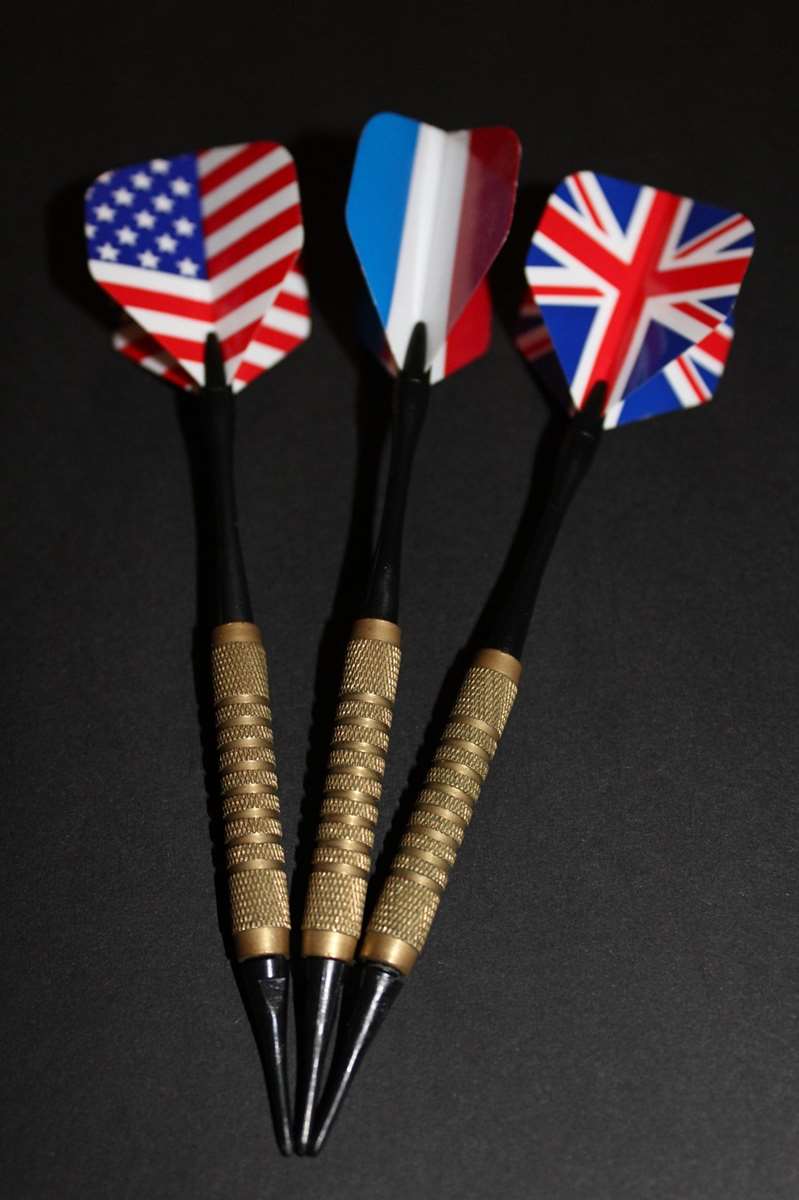
Brass Darts
Brass darts are a more affordable option, often favored by beginners. Brass is less dense than tungsten, resulting in thicker barrels for the same weight. While brass darts are generally less expensive, they can be less durable and may not provide the same level of performance as tungsten darts. A good dartboard lighting system is a helpful accessory to consider.
Nickel Silver Darts
Nickel silver darts offer a middle ground between brass and tungsten. They are more durable than brass darts but less expensive than tungsten darts. Nickel silver darts provide a decent balance of performance and affordability, making them a suitable option for intermediate players.
The material of the dartboard can also be a factor. Are you familiar with the Optimal Dartboard Lighting Solutions Guide?
The Role of Flights and Shafts in Dart Balance
Flights and shafts significantly contribute to the overall balance and aerodynamics of your darts. Experimenting with different flight shapes, sizes, and materials, as well as different shaft lengths and materials, can fine-tune the performance of your darts.
Flights
Flights affect the stability and trajectory of the dart in flight. Larger flights provide more stability, slowing the dart down and causing it to fly straighter. Smaller flights offer less stability, allowing for a faster, more direct trajectory. Common flight shapes include standard, kite, slim, and pear, each with its own aerodynamic properties.
Shafts
Shafts connect the flight to the barrel and influence the dart’s center of gravity. Longer shafts shift the center of gravity towards the rear of the dart, potentially promoting a smoother, more stable flight. Shorter shafts shift the center of gravity forward, potentially increasing control and reducing wobble. Shafts are typically made of nylon, aluminum, or carbon fiber, each with varying degrees of durability and weight.
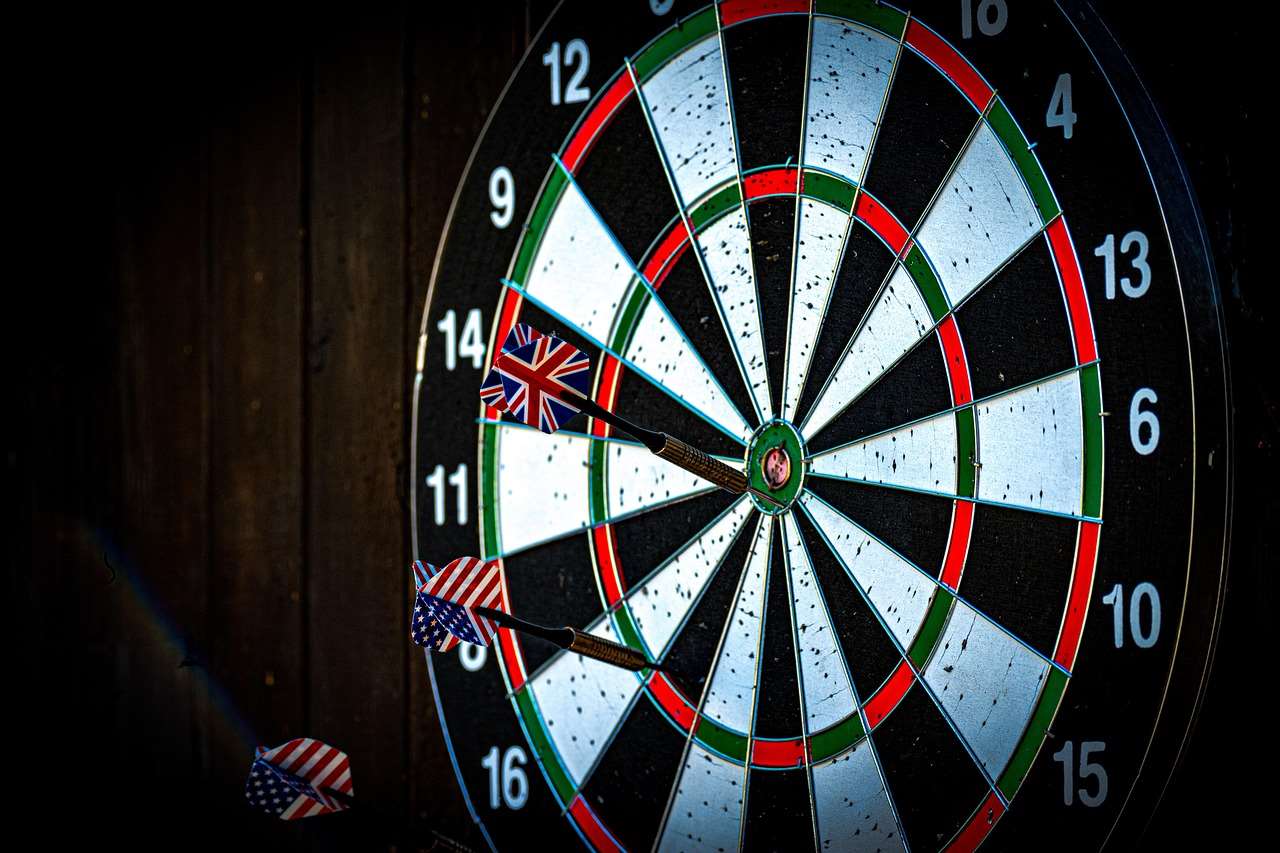
Fine-Tuning Your Dart Setup
Once you’ve found a comfortable dart weight, the next step is to fine-tune your setup to optimize your performance. This involves experimenting with different combinations of flights, shafts, and grips to achieve the perfect balance and feel. Be sure to check out the Best Dartboard Lighting Systems.
Experimentation is Key
Don’t be afraid to try different things! Swap out flights of different shapes and sizes, try different shaft lengths and materials, and adjust your grip until you find a combination that feels natural and produces consistent results. Small adjustments can often make a significant difference in your accuracy and overall confidence.
Observe Your Dart’s Flight
Pay close attention to how your darts fly through the air. Are they wobbling or veering off course? Adjust your flights and shafts accordingly to correct any imbalances. A stable, consistent flight is essential for accuracy.
Consider Grip Enhancements
If you’re struggling with grip, consider using grip enhancements such as dart wax or grip tape. These can improve your control and prevent slippage, especially during longer practice sessions.
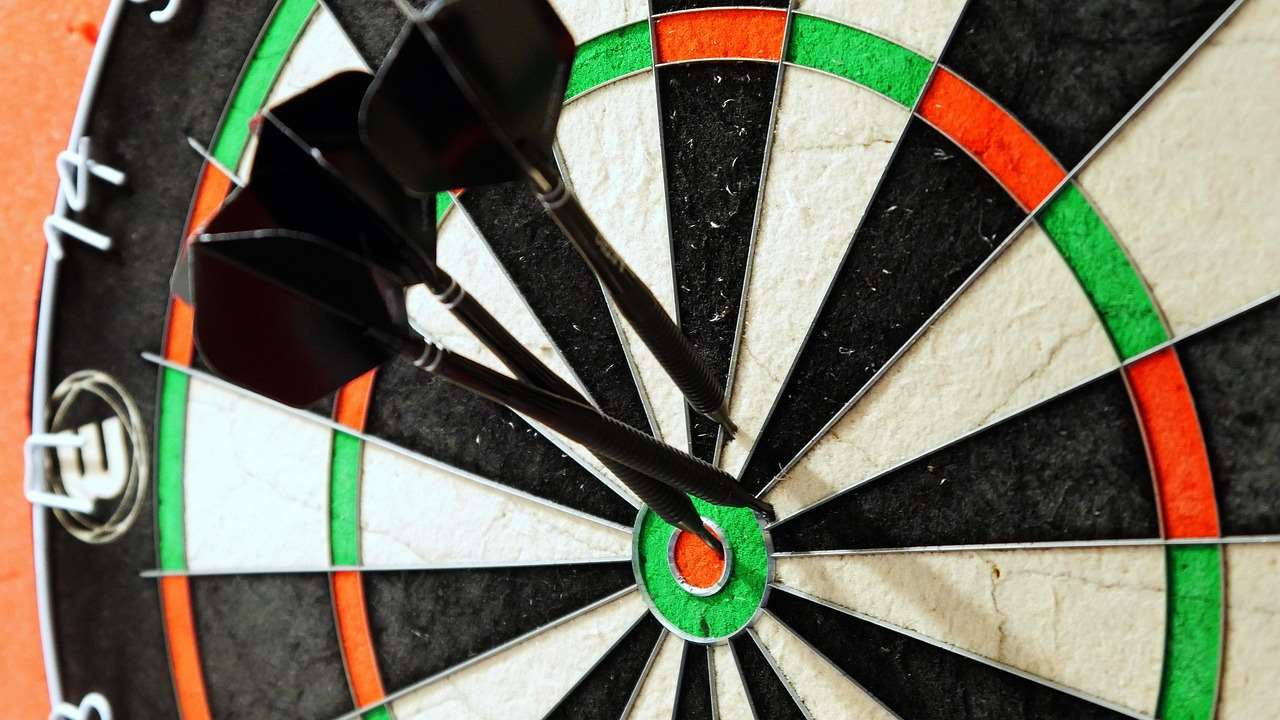
Heavier vs. Lighter Darts: A Detailed Comparison
To further clarify **what weight darts are best for me**, let’s delve into a detailed comparison of the pros and cons of heavier and lighter darts:
Heavier Darts (24-30 grams)
- Pros:
- More stable in the air, less susceptible to wobble.
- Require less force to throw, reducing strain on the arm.
- Penetrate the dartboard more effectively, reducing bounce-outs.
- Good for players with a smoother, more relaxed throwing style.
- Cons:
- Can be more difficult to control for players with a wrist flick.
- May not be suitable for players with smaller hands.
- Can lead to over-throwing if not properly controlled.
Lighter Darts (16-23 grams)
- Pros:
- Easier to control and maneuver.
- Suitable for players with a wrist flick or a more forceful throwing style.
- Can promote tighter groupings on the dartboard.
- Good for players with smaller hands.
- Cons:
- Less stable in the air, more susceptible to wobble.
- Require more force to throw, potentially leading to fatigue.
- May not penetrate the dartboard as effectively, increasing bounce-outs.
Final Thoughts and Recommendations
Choosing the right dart weight is a personal journey that requires experimentation and careful consideration. Start with a common weight (22-24 grams), experiment with different weights, and pay close attention to how each weight feels in your hand and how it affects your throw. Consider your throwing style, hand size, grip, and the type of dartboard you’re using. Don’t be afraid to fine-tune your setup by experimenting with different flights and shafts. The more you experiment, the closer you’ll get to deciding **what weight darts are best for me**.
Ultimately, the best dart weight is the one that allows you to throw consistently and accurately. So, grab a few different sets of darts, head to the dartboard, and start throwing! If you’re thinking about upgrading your lighting, consider How To Light Your Dartboard for improved performance.
Ready to find your perfect darts? Visit your local dart shop or browse online retailers to explore a wide range of dart weights and styles. Start your journey to becoming a more consistent and accurate darts player today!

Hi, I’m Dieter, and I created Dartcounter (Dartcounterapp.com). My motivation wasn’t being a darts expert – quite the opposite! When I first started playing, I loved the game but found keeping accurate scores and tracking stats difficult and distracting.
I figured I couldn’t be the only one struggling with this. So, I decided to build a solution: an easy-to-use application that everyone, no matter their experience level, could use to manage scoring effortlessly.
My goal for Dartcounter was simple: let the app handle the numbers – the scoring, the averages, the stats, even checkout suggestions – so players could focus purely on their throw and enjoying the game. It began as a way to solve my own beginner’s problem, and I’m thrilled it has grown into a helpful tool for the wider darts community.