Understanding the **weight difference in dart sets** is crucial because it directly impacts your throwing style, accuracy, and overall comfort. This article explores how dart weight affects your game, helping you choose the perfect set. We’ll cover everything from the common weight ranges to how different weights suit different players and throwing styles.
⚠️ Still Using Pen & Paper (or a Chalkboard)?! ⚠️
Step into the future! The Dart Counter App handles all the scoring, suggests checkouts, and tracks your stats automatically. It's easier than you think!
Try the Smart Dart Counter App FREE!Ready for an upgrade? Click above!
Understanding the Impact of Weight Difference In Dart Sets
The **weight difference in dart sets** can be subtle, but its influence on your game is significant. Heavier darts tend to fly straighter and are less affected by minor inconsistencies in your throw, making them a good choice for beginners or those who prefer a more forceful throw. Lighter darts, on the other hand, require a smoother, more controlled release and allow for greater finesse. Ultimately, the best weight depends on your personal preference and throwing style.
Common Dart Weights and Their Characteristics
Most dart sets fall within a **weight range of 16 to 30 grams**. Here’s a breakdown of the common weight categories and their general characteristics:
- Light Darts (16-22 grams): These darts are generally favored by players with a soft, delicate throwing style. They require less force to throw and can be more forgiving of minor imperfections in grip or release. Lighter darts are also good for players who experience arm fatigue quickly.
- Medium Darts (23-26 grams): This is the most common weight range and is often considered a good starting point for new players. Medium-weight darts offer a balance of stability and control, making them suitable for a wide range of throwing styles.
- Heavy Darts (27-30 grams): Heavy darts are typically preferred by players who throw with more power and want a straighter trajectory. The added weight makes them less susceptible to wobbling or drifting in the air, providing greater consistency.
Choosing the Right Dart Weight for Your Throwing Style
Selecting the ideal dart weight is a highly personal process that involves considering your throwing style, physical strength, and desired level of control. Factors to consider include your arm speed, release point, and the amount of force you generate. Remember, there’s no one-size-fits-all answer; experimentation is key. You might also want to consider the dart barrel material.
Analyzing Your Throwing Technique
Before purchasing a new set of darts, take some time to analyze your current throwing technique. Ask yourself the following questions:
- Do I throw with a smooth, fluid motion, or a more forceful, jerky one?
- Do I release the dart early, late, or at the optimal point?
- Do I tend to throw high, low, left, or right of the target?
The answers to these questions will provide valuable insights into the type of dart weight that will best complement your throwing style. For example, if you tend to throw high, a heavier dart might help to bring your throws down. Another thing to consider is your grip.
Experimenting with Different Weights
The best way to determine the ideal dart weight for you is to experiment with different sets. Many dart shops offer test boards where you can try out various weights and styles. Borrow darts from friends or purchase a few inexpensive sets in different weights to see which feels the most comfortable and produces the most consistent results. Pay attention to how the dart feels in your hand, how it flies through the air, and how it groups on the board. Considering the dart flights is also important when experimenting.

It is a great idea to Choose Best Dart Equipment for your needs.
The Role of Dart Components in Overall Weight and Balance
While the overall weight of the dart is important, the distribution of that weight also plays a significant role in its flight characteristics. The weight distribution is affected by the dart’s components, including the barrel, shaft, and flights. Understanding how these components interact can help you fine-tune your dart setup for optimal performance.
Barrel Material and Weight Distribution
The barrel is the main body of the dart and accounts for the majority of its weight. Barrels are typically made from brass, nickel silver, or tungsten. Tungsten darts are denser than brass or nickel silver darts, which means that a tungsten barrel can be smaller and slimmer while maintaining the same weight. This allows for tighter groupings on the dartboard.
- Brass darts are the most affordable option but are also the bulkiest.
- Nickel silver darts offer a good balance of cost and performance.
- Tungsten darts are the most expensive but provide the best performance due to their slim profile and high density.
The weight distribution within the barrel can also vary. Some barrels are front-weighted, meaning that the majority of the weight is concentrated towards the front of the dart. Front-weighted darts tend to be more stable and fly straighter, while rear-weighted darts are more maneuverable. Center-weighted darts offer a balance of stability and maneuverability. Thinking about dart grip can also help with choosing the right weight distribution for you.
Shaft Length and Material
The shaft connects the barrel to the flight and affects the dart’s overall balance and stability. Shafts are typically made from nylon, aluminum, or carbon fiber. The length of the shaft also influences the dart’s trajectory.
- Shorter shafts tend to make the dart fly at a steeper angle, while longer shafts make it fly at a flatter angle.
- Nylon shafts are the most common and affordable option.
- Aluminum shafts are more durable and offer a more consistent weight.
- Carbon fiber shafts are the lightest and most expensive option.
You should always consider the dart balance while deciding on what shaft material and length to get.
Flight Shape and Size
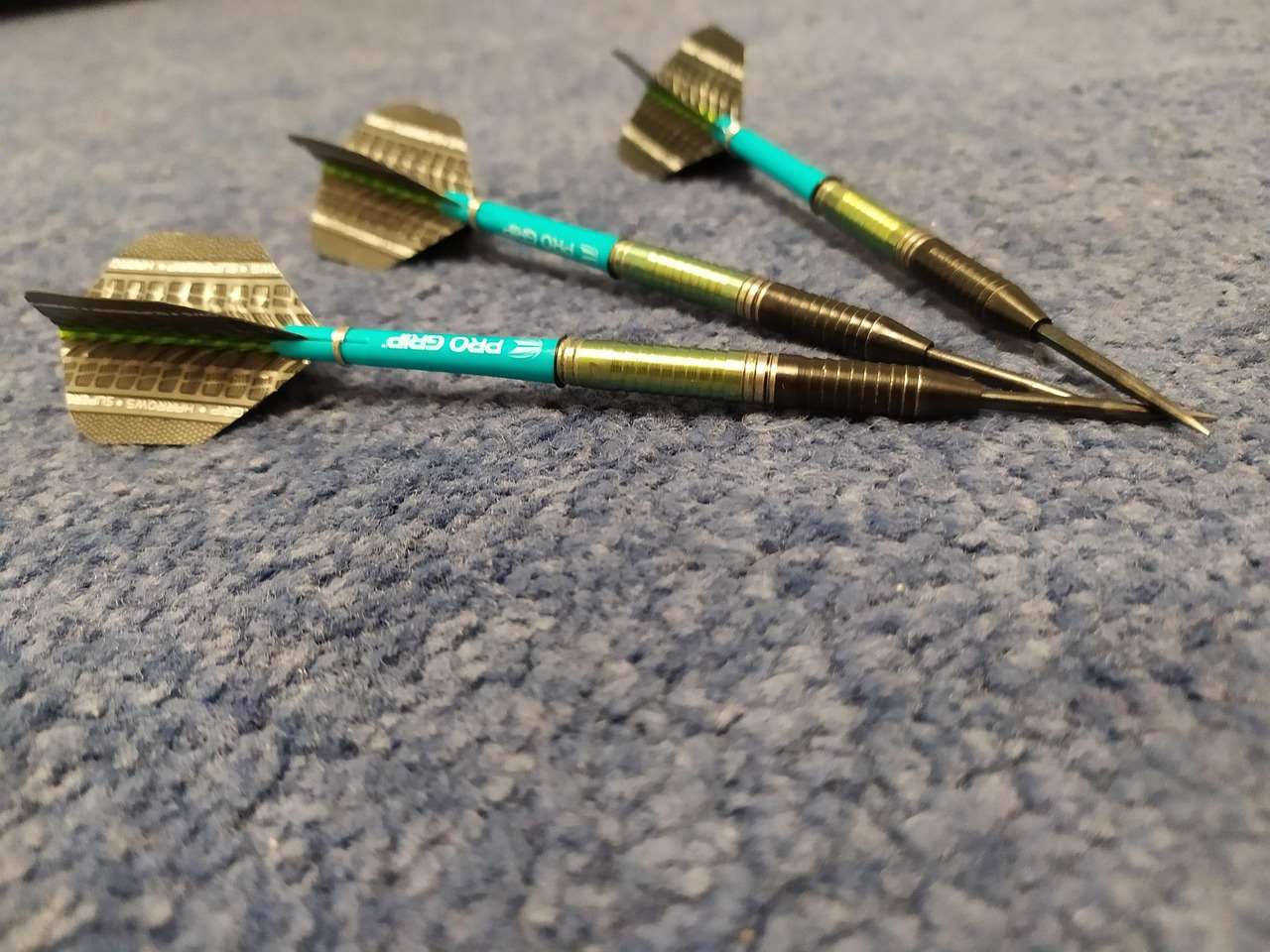
The flight is the fin-like component at the back of the dart that provides stability and controls its trajectory. Flights come in various shapes and sizes, each affecting the dart’s flight characteristics differently.
- Standard flights are the most common and offer a good balance of stability and drag.
- Slim flights provide less drag and are often preferred by players who throw with more power.
- Kite flights are a hybrid of standard and slim flights and offer a balance of stability and speed.
Larger flights create more drag, which slows the dart down and makes it more stable. Smaller flights create less drag, allowing the dart to fly faster and straighter. As flights can affect the dart aerodynamics, it’s important to test many of them when you are choosing the right set for you.
Adjusting Dart Weight for Specific Game Strategies
Advanced dart players often adjust their dart weight based on the specific game they are playing or the strategy they are employing. For example, a player might use heavier darts for games that require greater accuracy, such as Cricket, and lighter darts for games that require more speed and finesse, such as 501.
Using Heavier Darts for Accuracy
Heavier darts are generally more accurate because they are less susceptible to wobbling or drifting in the air. This makes them a good choice for games that require precise placement, such as hitting doubles or trebles. The stability of heavier darts can also be beneficial when playing under pressure.
Using Lighter Darts for Speed and Finesse
Lighter darts require less force to throw and can be more easily maneuvered, making them a good choice for games that require speed and finesse. For example, a player might use lighter darts when attempting to hit a difficult target or when trying to close out a game quickly. This can also have an impact on your Types Optimal Dartboard Lighting you may choose.
Maintenance and Care for Different Weight Dart Sets
Proper maintenance and care are essential for prolonging the life of your dart set and ensuring consistent performance, regardless of the weight. Regular cleaning, sharpening, and replacement of worn-out components can significantly improve your game.
Cleaning and Sharpening Your Darts
Over time, dirt, oil, and other debris can accumulate on your darts, affecting their grip and flight characteristics. To clean your darts, simply wipe them down with a soft cloth or use a specialized dart cleaning solution. Sharpening the points of your darts is also important for ensuring that they stick properly in the dartboard. Use a dart sharpener to maintain a sharp, consistent point.
Replacing Worn-Out Components
Dart shafts and flights are subject to wear and tear and should be replaced regularly. Cracked or broken shafts can affect the dart’s balance and stability, while damaged flights can cause the dart to wobble or drift in the air. Replacing these components as needed will help to maintain consistent performance. Keep an eye on your Optimal Dartboard Lighting Solutions Guide as well.
Conclusion: Finding Your Ideal Weight Difference In Dart Sets
The **weight difference in dart sets** is a key factor in achieving optimal performance. By understanding how different weights affect your throwing style and experimenting with various options, you can find the perfect set to elevate your game. Remember to consider your throwing technique, the materials used in the dart’s construction, and the overall balance of the dart. Take the time to experiment and find what feels right for you. Armed with this knowledge, you’re well-equipped to make an informed decision and invest in a dart set that complements your style and helps you reach your full potential. Now, go out there, experiment with different weights, and improve your game. Consider Best Dartboard Lighting Systems for improved visibility.

Hi, I’m Dieter, and I created Dartcounter (Dartcounterapp.com). My motivation wasn’t being a darts expert – quite the opposite! When I first started playing, I loved the game but found keeping accurate scores and tracking stats difficult and distracting.
I figured I couldn’t be the only one struggling with this. So, I decided to build a solution: an easy-to-use application that everyone, no matter their experience level, could use to manage scoring effortlessly.
My goal for Dartcounter was simple: let the app handle the numbers – the scoring, the averages, the stats, even checkout suggestions – so players could focus purely on their throw and enjoying the game. It began as a way to solve my own beginner’s problem, and I’m thrilled it has grown into a helpful tool for the wider darts community.