Mastering the rhythm of throwing in 501 darts hinges on consistency and controlled movement, turning a seemingly simple act into a finely tuned performance. This article will break down the key elements of that rhythm, from stance and grip to release and follow-through, and show you how to develop a reliable and repeatable throw that consistently finds its mark. We’ll also explore the mental aspects of maintaining rhythm under pressure and provide practical drills to hone your technique.
⚠️ Still Using Pen & Paper (or a Chalkboard)?! ⚠️
Step into the future! The Dart Counter App handles all the scoring, suggests checkouts, and tracks your stats automatically. It's easier than you think!
Try the Smart Dart Counter App FREE!Ready for an upgrade? Click above!
Understanding The Rhythm of Throwing in 501 Darts
The journey to consistently hitting your targets in 501, or any darts game, starts with understanding that darts is a game of precision and rhythm. It’s not just about strength or luck; it’s about developing a consistent and repeatable motion that allows you to release the dart at the same point every time. This “rhythm” encompasses everything from your stance to your follow-through, and mastering it is key to achieving consistent scores.
Think of a golfer’s swing or a basketball player’s free throw; both are highly refined and consistent motions. The same principle applies to darts. By developing the perfect darts throw and a strong mental game, you can elevate your darting ability significantly.
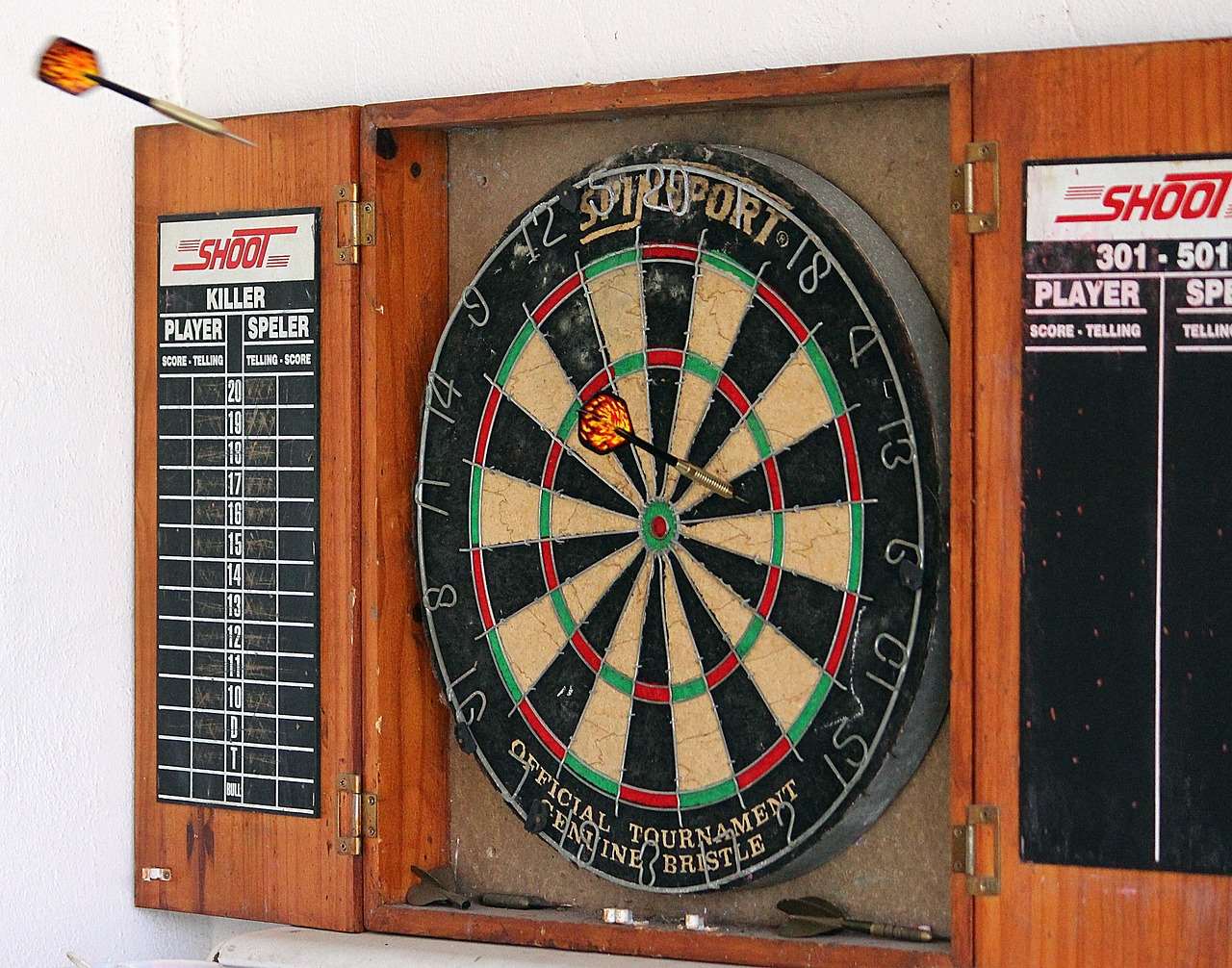
Before diving deep into the elements of a good throw, it’s crucial to have a proper dartboard setup. The standard height for the dartboard is 5 feet 8 inches from the floor to the bullseye, and the throwing distance (oche) is 7 feet 9 1/4 inches. Ensuring these are accurate sets the stage for consistent practice.
The Stance: Your Foundation for Success
Your stance provides the foundation for your throw. A stable and balanced stance is critical for consistent accuracy. There are several common stances, including:
- The Forward Stance: This involves facing the board directly with your throwing-side foot forward. This stance provides maximum stability but can limit your range of motion.
- The Side Stance: This involves standing sideways to the board, with your throwing-side foot slightly ahead. This stance allows for a greater range of motion and a smoother swing.
- The Angled Stance: A hybrid of the two, this involves standing at a slight angle to the board. Find what feels most natural and balanced for you.
Experiment with different stances to find what feels most comfortable and allows you to maintain balance throughout your throw. Remember to keep your weight evenly distributed and your body relaxed.
Ultimately, the right stance is the one that promotes consistency. Ensure your stance allows you to comfortably reach the oche without leaning excessively or feeling strained. Many pros advise aligning your throwing shoulder with the target for better aim.
Grip, Aim, and The Importance of a Smooth Release
With your stance locked in, your grip becomes the next vital element. How you hold the dart greatly influences its flight path and accuracy. Experiment with different grips to find what works best for you. There’s no one-size-fits-all solution; personal preference is key. However, there are some general guidelines to consider.
Finding the Right Grip for You
A good grip should provide control without requiring excessive force. Avoid squeezing the dart too tightly, as this can introduce tension and affect your release. A loose, relaxed grip will allow for a smoother, more natural throw. Some common grips include:
- The Two-Finger Grip: Holding the dart between your thumb and index finger, with the middle finger providing support.
- The Three-Finger Grip: Adding the middle finger to the two-finger grip for increased control.
- The Four-Finger Grip: Using all four fingers for maximum stability.
Focus on consistency with your grip. Always hold the dart in the same way, at the same point on the barrel, to ensure a repeatable throw. Adjust your grip slightly as needed based on the type of dart you’re using or if adapting darts rules for small spaces: tips and tricks.
Aiming is also extremely important. Visualize the trajectory of the dart before you throw. Focus intently on your target (e.g., the treble 20). Avoid wavering, and maintain a steady gaze.
The release is perhaps the most critical part of the entire motion. A clean and consistent release ensures that the dart flies true to its intended path. Aim for a smooth, fluid motion, avoiding any jerky movements or sudden stops. The release point should be consistent, and your fingers should naturally “uncurl” to allow the dart to leave your hand without imparting any unwanted spin or wobble. Practicing drills can help with aim and release; Basic Darts Fundamentals for Beginners can help improve throwing basics.
The Swing and Follow-Through: Completing The Rhythm of Throwing in 501 Darts
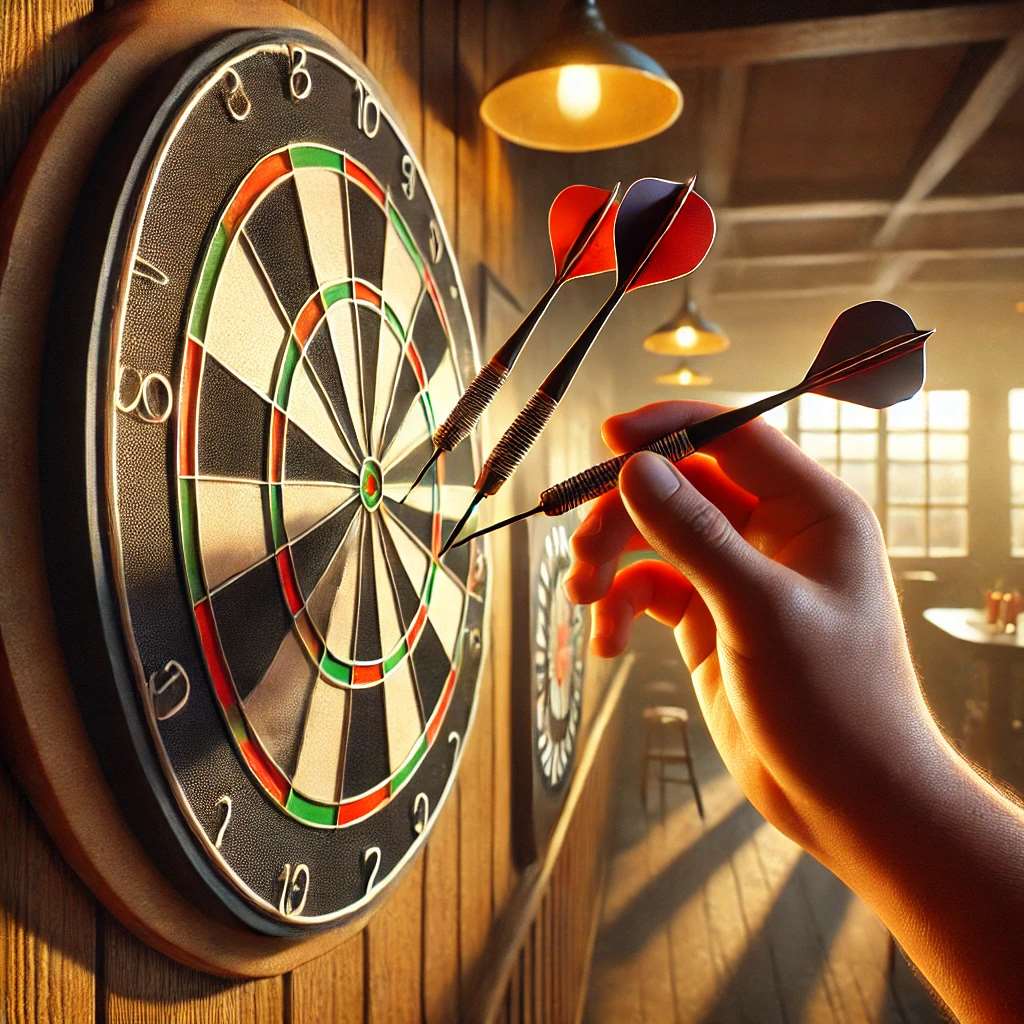
The swing is a crucial component of the rhythm of throwing in 501 darts. Your swing should be smooth, controlled, and consistent. Avoid any jerky or rushed movements. Picture a pendulum swinging back and forth, and try to replicate that smooth, fluid motion with your arm. Keep your elbow steady and use your forearm to generate the power for your throw. A stable elbow will minimize variations in your release point, leading to improved accuracy.
The follow-through is just as important as the swing. Don’t stop your arm abruptly after releasing the dart. Instead, allow your arm to continue its motion naturally, pointing towards the target. This ensures a complete and fluid transfer of energy to the dart and prevents any last-minute adjustments that can throw off your aim. A good follow-through also helps you maintain your balance and stability throughout the throw.
Imagine you are pointing to the exact spot you were aiming for after you release the dart. This visualization can drastically improve your follow-through. It’s also important to record yourself throwing so that you can analyze areas for improvement, for example if the dart wobbles it can indicate you are not fully following through.
Drills to Improve Your Swing and Follow-Through
Several drills can help you improve your swing and follow-through:
- The “Clock Face” Drill: Focus on keeping your elbow stable and moving your forearm in a smooth arc, like the hand of a clock.
- The “Mirror” Drill: Practice your swing in front of a mirror to identify any flaws in your technique.
- The “Target” Drill: Focus on following through towards a specific point on the board after each throw.
The Mental Game: Staying in Rhythm Under Pressure
Darts is not just a physical game; it’s also a mental one. Maintaining your rhythm under pressure is crucial for success. Nerves and anxiety can disrupt your concentration and lead to rushed or erratic throws. Learning to manage your emotions and stay focused on your technique is essential for consistent performance.
One effective technique is visualization. Before each match, visualize yourself throwing accurately and consistently. Imagine the feeling of a smooth release and the satisfaction of hitting your target. This can help you build confidence and reduce anxiety.
Another helpful strategy is deep breathing. When you feel your heart rate rising or your concentration wavering, take a few deep breaths to calm your nerves. Focus on your breath and try to clear your mind of any distractions. Mindfulness can be the key to maintaining composure when modifying rules for mixed-level dart players and facing tough opponents.
It’s also important to develop a pre-throw routine. This could involve a specific series of steps or movements that you perform before each throw. Having a consistent routine can help you get into the right mental state and maintain your rhythm, even under pressure.
Tips for Staying Focused During a Match
- Focus on the Process, Not the Outcome: Concentrate on executing your technique correctly, rather than worrying about the score.
- Stay Positive: Avoid dwelling on mistakes. Focus on the next throw and believe in your ability to succeed.
- Take Breaks When Needed: If you feel overwhelmed, step away from the board for a few moments to collect yourself.
Practice Drills to Perfect Your Throwing Rhythm
Consistent practice is essential for developing and maintaining your throwing rhythm. Regular practice sessions will help you refine your technique, build muscle memory, and improve your consistency.
Drills for Building Consistency
Here are a few practice drills you can use to perfect your throwing rhythm:
- The “Around the Clock” Drill: Starting at the 1, throw three darts at each number on the board, working your way around the clock. This drill helps you develop accuracy and consistency across the entire board.
- The “Double-Out” Drill: Practice finishing games by focusing on hitting doubles. This drill is crucial for improving your ability to close out legs of 501.
- The “Treble 20” Drill: Focus on hitting the treble 20 with each throw. This drill helps you improve your scoring ability and build confidence in your accuracy.
Remember to focus on quality over quantity during practice sessions. It’s better to throw a few darts with perfect technique than to throw dozens of darts with sloppy form. Consider recording your practice sessions and identifying any areas for improvement.

Advanced Techniques for Refining Your Darts Rhythm
Once you’ve mastered the basic elements of the rhythm of throwing in 501 darts, you can start exploring advanced techniques to further refine your game.
Fine-Tuning Your Technique
- Analyzing Your Dart Flight: Pay attention to the way your darts fly through the air. Are they wobbling or flying straight? If they’re wobbling, it could indicate a problem with your grip or release.
- Adjusting Your Equipment: Experiment with different darts, shafts, and flights to find the combination that works best for you. Even minor adjustments to your equipment can have a significant impact on your accuracy and consistency.
- Seeking Expert Advice: Consider working with a darts coach or experienced player to get personalized feedback on your technique. A coach can help you identify any flaws in your form and provide guidance on how to correct them.
Conclusion: Embrace The Rhythm of Throwing in 501 Darts for Long-Term Improvement
Mastering the rhythm of throwing in 501 darts is a journey that requires dedication, patience, and consistent practice. By focusing on the key elements of stance, grip, swing, release, follow-through, and mental game, you can develop a reliable and repeatable throw that will significantly improve your accuracy and consistency. Remember, darts is a game of inches, and even small improvements in your technique can make a big difference in your scores. By embracing fun dart game variations with modified rules, you can introduce a fun element to enhance your learning.
So, take the time to practice these techniques, experiment with different approaches, and find what works best for you. With consistent effort and a commitment to improvement, you’ll be well on your way to mastering the art of darts and consistently hitting your targets. Now go out there, practice your rhythm, and start racking up those scores!

Hi, I’m Dieter, and I created Dartcounter (Dartcounterapp.com). My motivation wasn’t being a darts expert – quite the opposite! When I first started playing, I loved the game but found keeping accurate scores and tracking stats difficult and distracting.
I figured I couldn’t be the only one struggling with this. So, I decided to build a solution: an easy-to-use application that everyone, no matter their experience level, could use to manage scoring effortlessly.
My goal for Dartcounter was simple: let the app handle the numbers – the scoring, the averages, the stats, even checkout suggestions – so players could focus purely on their throw and enjoying the game. It began as a way to solve my own beginner’s problem, and I’m thrilled it has grown into a helpful tool for the wider darts community.