Understanding and compensating for target darts drop is crucial for consistent accuracy in darts; it involves adjusting your aim slightly upwards to account for gravity’s effect on the dart’s trajectory, especially over longer distances. This article explains the physics behind dart flight, techniques to mitigate drop, and factors influencing it, ultimately helping you improve your scoring.
⚠️ Still Using Pen & Paper (or a Chalkboard)?! ⚠️
Step into the future! The Dart Counter App handles all the scoring, suggests checkouts, and tracks your stats automatically. It's easier than you think!
Try the Smart Dart Counter App FREE!Ready for an upgrade? Click above!
Understanding the Physics Behind Target Darts Drop
The seemingly simple act of throwing a dart involves a surprisingly complex interplay of physics. While the initial velocity and angle you impart to the dart are critical, gravity continuously exerts its influence. This downward force is what we refer to as target darts drop. The longer the dart is in the air, the more pronounced the effect of gravity becomes, requiring players to adjust their aim accordingly.
Several factors contribute to the amount of drop observed:
- Distance: As mentioned, distance is the most obvious factor. The further the target, the more time the dart spends in flight, and thus, the greater the drop.
- Dart Weight: Heavier darts are less susceptible to the effects of gravity than lighter darts, though the difference might be subtle.
- Dart Aerodynamics: The shape of the dart, including the flights and barrel, affects its aerodynamic properties and how it interacts with air resistance. Poorly designed flights can lead to instability and increased drag, ultimately impacting the trajectory.
- Initial Velocity: A faster throw reduces the time the dart is subject to gravity, thus minimizing drop.
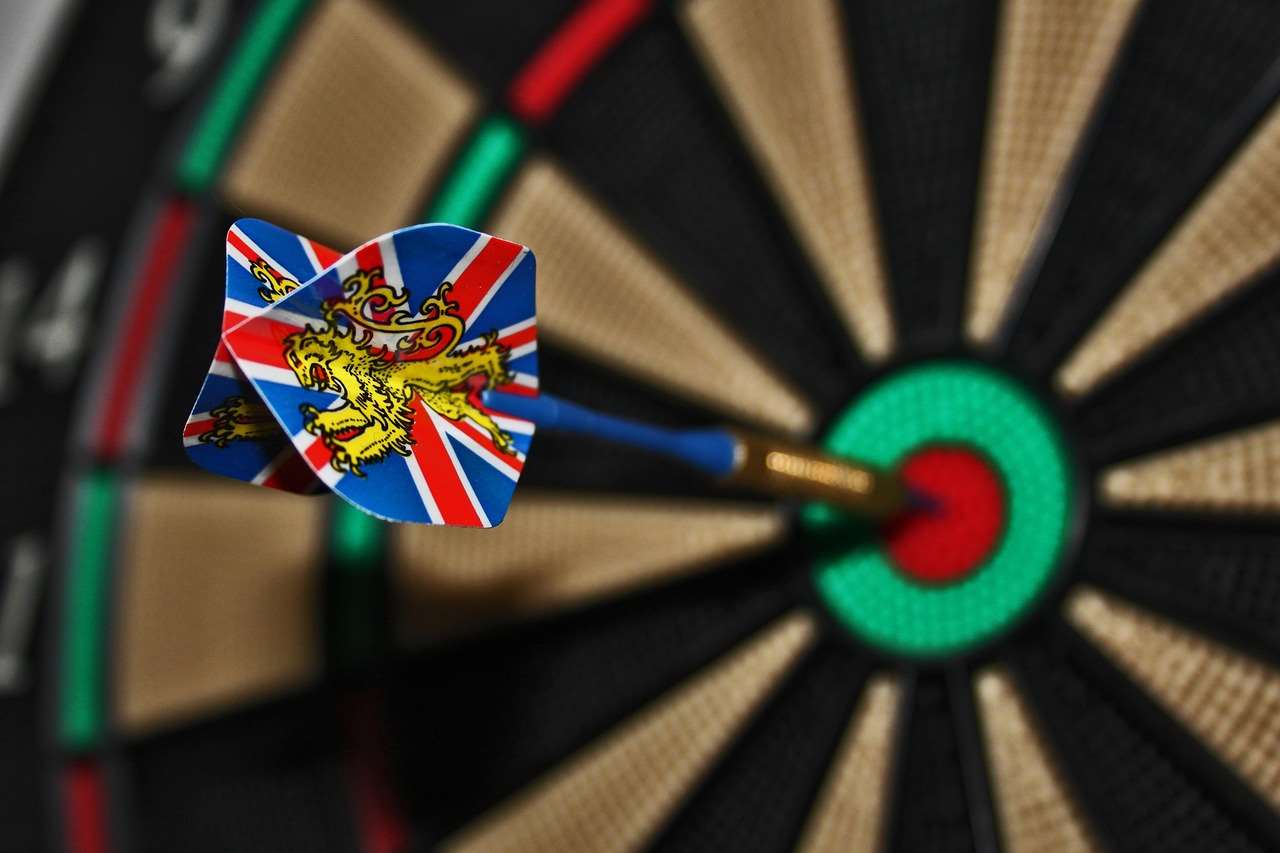
Mastering Aim Adjustment for Target Darts Drop
The key to consistent scoring is learning to compensate for target darts drop through precise aim adjustment. This involves consciously aiming slightly higher than the intended target to counteract the gravitational pull. Here’s how to develop this skill:
Developing Your Feel for the Drop
There’s no magic formula; it’s all about practice and developing a “feel” for the drop. Start by throwing darts at the bullseye from the standard throwing distance. Pay close attention to where your darts land. If they consistently land below the bullseye, gradually increase your aiming point upwards. Focus on maintaining a consistent throwing motion each time.
Visualizing the Trajectory
Many professional players mentally visualize the trajectory of the dart before they throw. This helps them anticipate the drop and make the necessary adjustments. Imagine a slight arc in the dart’s flight path. The apex of this arc should be above your intended target.
Experimenting with Different Dart Setups
As noted above, the type of darts you use can impact the amount of drop. Experiment with different dart barrel balance to find what works best for you. Heavier darts might require less adjustment, while lighter darts might necessitate a more pronounced upward aim. Also, consider the shape and size of your flights. Larger flights provide more stability but can also increase drag. Consult with an expert at a darts winkel kim huybrechts to explore different options.
Factors Influencing Dart Trajectory
Beyond the inherent physics of dart flight and your aim adjustments, several external factors can also influence the trajectory of your darts and contribute to the perceived target darts drop. Being aware of these factors allows you to make further refinements to your technique.
Environmental Conditions
Air currents, even subtle ones, can significantly affect the path of your dart, especially in larger venues. Be mindful of drafts from windows, doors, or air conditioning systems. Adjust your stance or aim slightly to compensate for these currents. Changes in air pressure can also make a small difference, but this is usually only noticeable in highly controlled environments.
Dartboard Condition
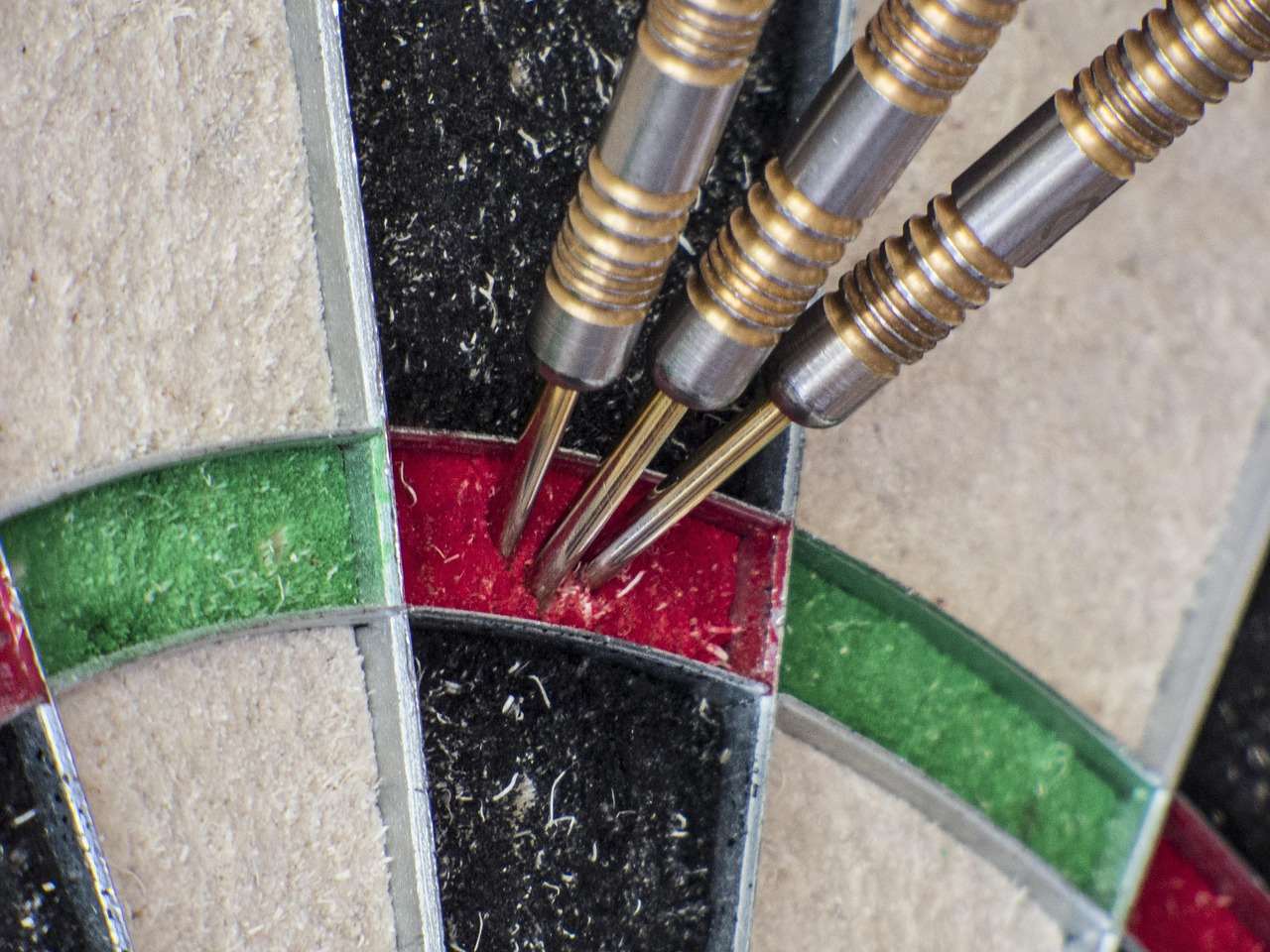
A worn or damaged dartboard can also contribute to inconsistent dart landings. Loose fibers can cause the dart to wobble or deviate from its intended path. Ensure your dartboard is in good condition and rotate it regularly to distribute wear evenly.
Consistency in Throwing Technique
Perhaps the most critical factor is maintaining a consistent throwing technique. Any variations in your stance, grip, arm movement, or release point will affect the dart’s trajectory and make it difficult to accurately compensate for target darts drop. Practice diligently to develop a smooth, repeatable throwing motion.
Advanced Techniques to Minimize Target Darts Drop
Once you’ve mastered the fundamentals of aim adjustment and are aware of the external factors influencing dart flight, you can explore some advanced techniques to further minimize target darts drop and improve your accuracy.
The Importance of Follow-Through
A proper follow-through is crucial for imparting consistent velocity and direction to the dart. After releasing the dart, continue your arm motion smoothly towards the target. Avoid abruptly stopping your arm, as this can disrupt the dart’s trajectory. Imagine “reaching” towards the target even after the dart has left your hand.
Utilizing Spin
Some players intentionally impart a slight spin to the dart as they release it. This spin can help stabilize the dart in flight and reduce the effects of air resistance. Experiment with different grips and release techniques to find a spin that works for you. Some believe this can slightly reduce the effects of target darts drop.
The Role of Dart Counter Apps
While a Darts scoreboard app won’t directly reduce the drop, consistent practice tracking your averages and analyzing shot placement will definitely help you identify trends and adjust accordingly. These apps can help you fine-tune your game and better understand your own tendencies when it comes to compensating for the drop.
Furthermore, many such apps offer training modes that can help to improve your dart throwing skills.
Choosing the Right Equipment to Combat Target Darts Drop
Selecting the right darts and accessories can play a crucial role in mitigating the effects of target darts drop. It’s not just about personal preference, but also understanding how different components interact to affect dart flight.
Dart Weight and Material
As previously mentioned, heavier darts are generally less susceptible to gravity. However, the optimal weight depends on your individual throwing style and strength. Experiment with different weights to find what feels most comfortable and allows you to maintain a consistent throwing motion. Common dart materials include tungsten (denser and allows for slimmer barrels) and brass (more affordable but less dense).
Flight Shape and Size
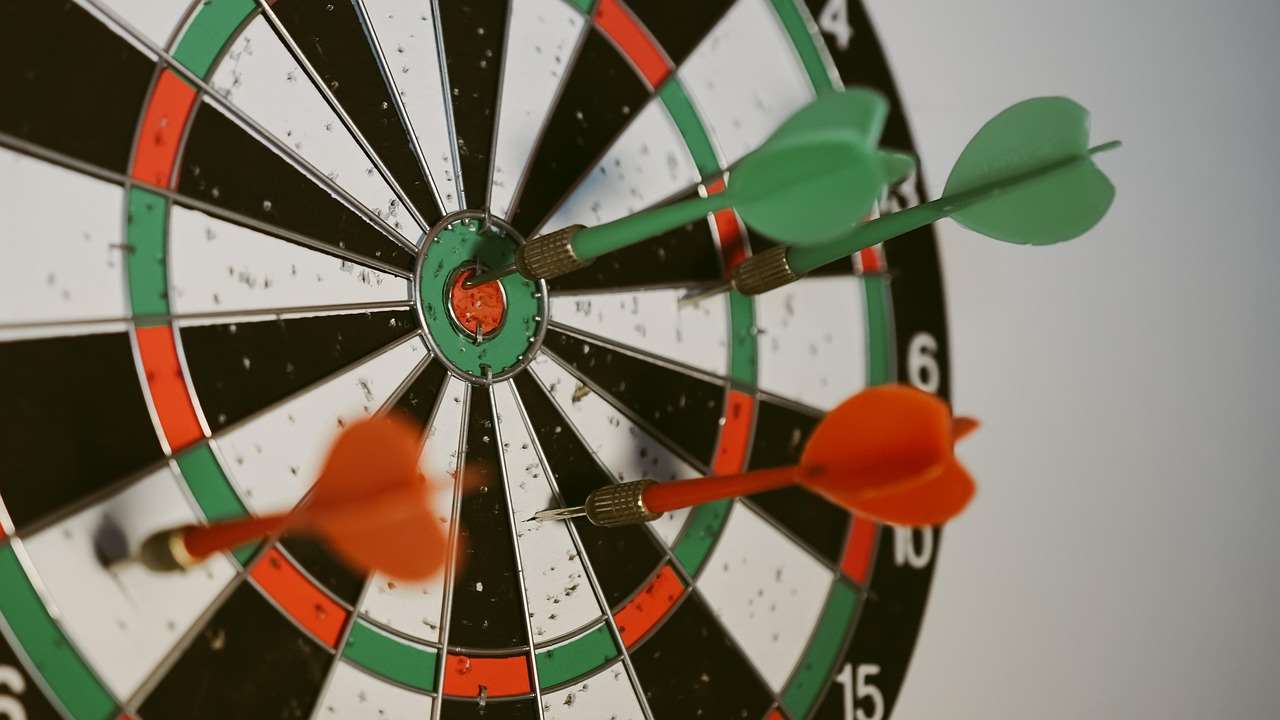
Flights are essential for stabilizing the dart in flight. Larger flights provide more stability but also increase drag. Smaller flights are more aerodynamic but can make the dart more susceptible to wobbling. Common flight shapes include standard, kite, slim, and pear. Consider the effects of the dart flight, as it is an important aspect of target darts drop and overall performance.
Shaft Length and Material
Shafts connect the flights to the barrel and also influence the dart’s balance and stability. Longer shafts generally provide more stability, while shorter shafts are more aerodynamic. Common shaft materials include nylon, aluminum, and carbon fiber. Each offers varying degrees of durability and weight.
Analyzing Your Performance and Refining Your Approach
The journey to mastering aim adjustment for target darts drop is an ongoing process of analysis, experimentation, and refinement. Continuously evaluating your performance and making adjustments to your technique and equipment is crucial for long-term improvement.
Tracking Your Shot Placement
Keep a record of your shot placement during practice sessions. Note any patterns or tendencies, such as consistently landing below the target or drifting to one side. This data will help you identify areas where you need to make adjustments to your aim or throwing technique.
Seeking Feedback from Experienced Players
Don’t hesitate to seek feedback from experienced dart players or coaches. They can provide valuable insights into your technique and offer suggestions for improvement. A fresh pair of eyes can often spot flaws that you might not be aware of.
Adapting to Different Conditions
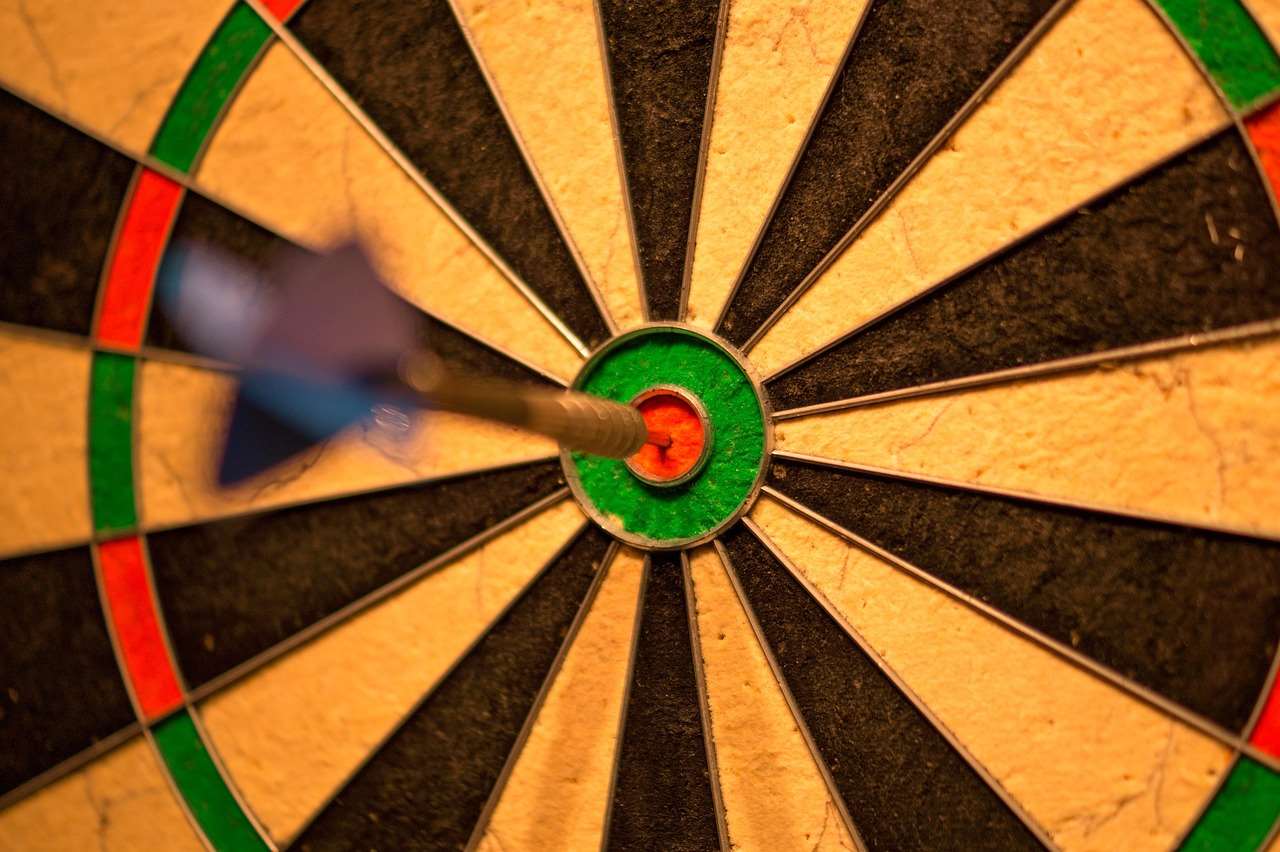
Remember that the amount of target darts drop can vary depending on the environment. Be prepared to adjust your aim based on factors such as distance, air currents, and dartboard condition. The ability to adapt to changing conditions is a hallmark of a skilled dart player.
Psychological Aspects of Target Darts Drop Compensation
While technique and equipment are essential, the psychological aspect of compensating for target darts drop should not be overlooked. Maintaining focus, confidence, and a positive mental attitude can significantly impact your performance.
Visualization Techniques
Before each throw, visualize the dart following its intended trajectory and hitting the target. This mental rehearsal can help reinforce your aim and build confidence. Imagine the slight upward angle needed to counteract the drop.
Managing Pressure
The pressure of competition can sometimes lead to tension and errors in technique. Practice throwing under pressure to develop the ability to maintain focus and execute your throws consistently, even in high-stakes situations. Remembering to consciously adjust for target darts drop can actually help focus the mind.
The Power of Belief
Believe in your ability to compensate for the drop and hit your target. A positive mental attitude can make a significant difference in your performance. Avoid negative self-talk and focus on your strengths. Remember the darts match scene in ted lasso? Believe!
Final Thoughts on Target Darts Drop
Successfully mitigating target darts drop involves a combination of understanding the underlying physics, developing a consistent throwing technique, choosing the right equipment, and maintaining a positive mental attitude. By mastering these elements, you can significantly improve your accuracy and consistency on the dartboard. Remember that practice and patience are key. Keep throwing, keep analyzing, and keep refining your approach, and you’ll be well on your way to mastering the art of compensating for gravity’s pull. Happy darting!
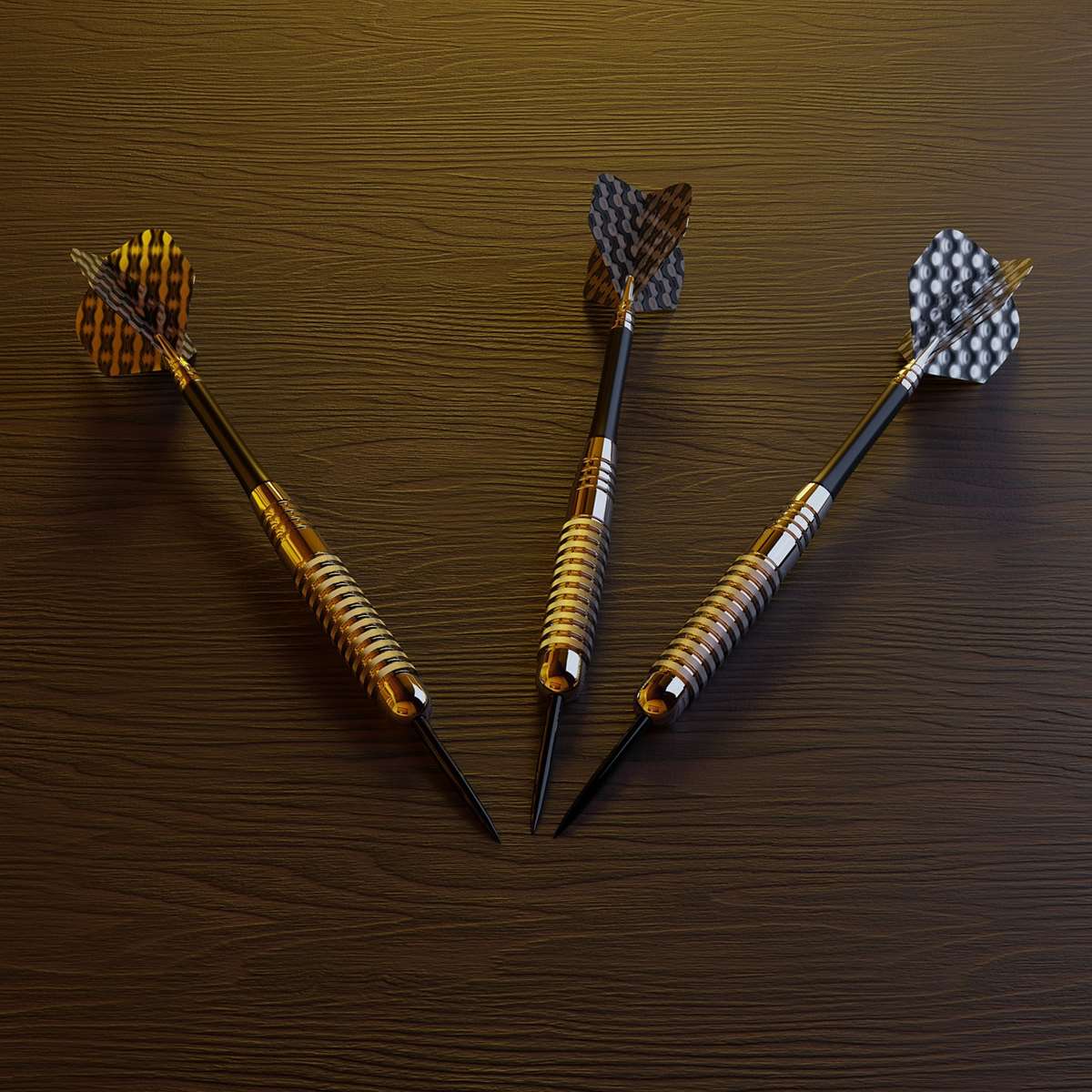
So, go out there, experiment with different techniques, and most importantly, enjoy the process of improving your darts game. Perhaps even set up your own unicorn dart board set up!

Hi, I’m Dieter, and I created Dartcounter (Dartcounterapp.com). My motivation wasn’t being a darts expert – quite the opposite! When I first started playing, I loved the game but found keeping accurate scores and tracking stats difficult and distracting.
I figured I couldn’t be the only one struggling with this. So, I decided to build a solution: an easy-to-use application that everyone, no matter their experience level, could use to manage scoring effortlessly.
My goal for Dartcounter was simple: let the app handle the numbers – the scoring, the averages, the stats, even checkout suggestions – so players could focus purely on their throw and enjoying the game. It began as a way to solve my own beginner’s problem, and I’m thrilled it has grown into a helpful tool for the wider darts community.