The sudden death round Halve It tie break is a thrilling and decisive method for resolving tied games, particularly popular in darts, where competitors face immediate elimination if they fail to score on specific targets. This article will explore the rules, strategy, and excitement of this intense tie-breaker, providing a comprehensive guide to understanding and excelling in this high-pressure scenario.
⚠️ Still Using Pen & Paper (or a Chalkboard)?! ⚠️
Step into the future! The Dart Counter App handles all the scoring, suggests checkouts, and tracks your stats automatically. It's easier than you think!
Try the Smart Dart Counter App FREE!Ready for an upgrade? Click above!
Understanding the Sudden Death Round Halve It Tie Break
The sudden death round Halve It tie break is designed to quickly and fairly determine a winner when two or more players are tied after a regulation game. It’s most frequently employed in darts, but the core concept can be adapted for other scoring-based games. The key principle is that players must hit designated targets within a limited number of throws, or their score is halved, potentially leading to swift elimination. The format provides a dramatic and efficient way to break ties.
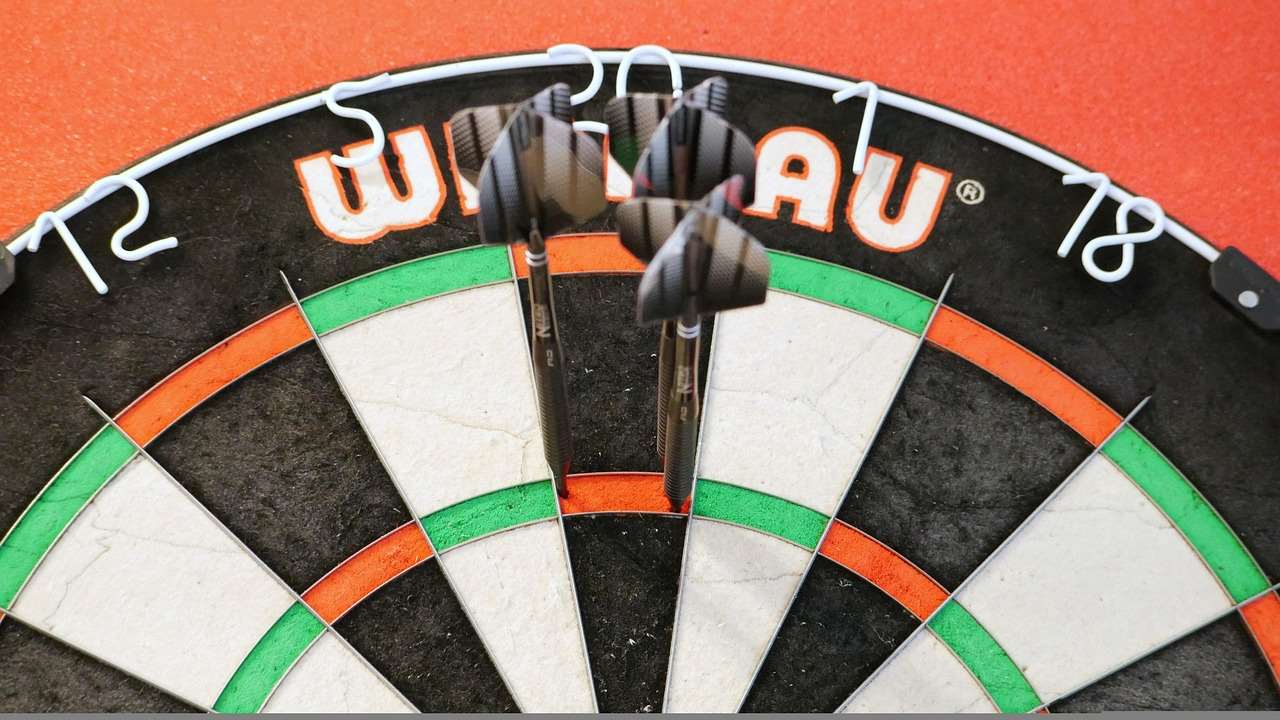
The Rules of Halve It
Before diving into strategy, it’s crucial to understand the precise rules of a Halve It tie break, as even small variations can significantly impact your approach. A standard Halve It game typically involves the following:
- Target Numbers: A series of numbers are predetermined as target numbers. These can be sequentially chosen or randomly selected.
- Rounds: Each player has a specific number of darts to throw at each target number (usually three).
- Scoring: A player must score on the target number in each round to avoid a penalty. If they fail to score on the target number, their current overall score is halved (rounded down to the nearest whole number).
- Elimination: The game continues until only one player remains with a positive score. Players whose score drops to zero are eliminated.
For example, consider a scenario where the target number is 20. A player with a score of 100 throws three darts. If they fail to hit a 20 (single, double, or triple), their score is halved to 50.
Strategic Considerations for Sudden Death Round Halve It
While accuracy is paramount in a sudden death round Halve It tie break, strategy plays a significant role in maximizing your chances of success. The pressure of potential score reduction demands a calculated approach.
Target Selection and Prioritization
If you have any influence over the target numbers selected, try to steer them towards numbers you are confident in hitting consistently. For instance, if you struggle with hitting specific numbers on the dartboard, avoid suggesting them as potential targets. If you can Darts Variants Fun Games, explore those options.
Managing Risk and Reward
The Halve It format inherently involves a risk-reward dynamic. Should you go for a risky shot (like a triple) or play it safe with a single? The answer depends on several factors:
- Your current score: If you have a substantial lead, playing it safe might be the best approach. If you’re trailing, you might need to take more risks to close the gap.
- Your opponent’s score: Consider their position. If they are struggling, you might be able to afford to be more conservative.
- Your accuracy: Be honest about your abilities. Don’t attempt a shot you’re unlikely to hit consistently, especially when your score is on the line.
Mental Fortitude
The sudden death round Halve It tie break is as much a mental game as it is a test of skill. The pressure of knowing that a missed dart can drastically reduce your score can be immense. Maintaining composure and focus is crucial. Practice techniques such as deep breathing and positive self-talk to stay calm under pressure. Visualizing success before each throw can also be beneficial. Consider reviewing the English Cricket darts rules to understand how focus impacts the overall performance in other darts games. Consider reviewing the English Cricket darts rules to understand how focus impacts the overall performance in other darts games.
Practicing for the High-Pressure Environment
While natural talent is helpful, consistent practice is essential for mastering the sudden death round Halve It tie break. Simulating the pressure of a real tie-breaker during practice sessions can significantly improve your performance under stress.
Simulating Game Conditions
Recreate the environment of a real Halve It game as closely as possible. This includes:
- Random target selection: Use a random number generator to select the target numbers for each round. This will force you to adapt to different targets quickly.
- Pressure practice: Introduce consequences for missed targets during practice, such as doing push-ups or running laps. This will help you get used to performing under pressure.
- Competition simulation: Practice with friends or teammates and treat the sessions like real matches. This will help you get used to the competitive environment.
Targeted Drills
Focus on drills that improve your accuracy on the target numbers commonly used in Halve It games. This includes:
- Repetitive practice: Dedicate time to repeatedly throwing at specific target numbers. Aim for consistency and accuracy.
- Varying distance: Practice throwing from different distances to improve your accuracy at various ranges.
- Grouping: Focus on grouping your darts close together, even if you don’t hit the exact target. This will increase your chances of scoring on the next throw.
Variations of Halve It
While the standard rules of Halve It are widely accepted, some variations exist. Understanding these variations can prepare you for different scenarios.

Modified Scoring Systems
Some variations might modify the scoring system. For example, instead of halving the score for a missed target, the penalty might be a fixed deduction. Or, a bullseye might count as a hit on any target number.
Team Halve It
Another variation involves teams competing against each other. In this format, each team member takes turns throwing at the target number. The team’s overall score is halved if no one on the team hits the target. This version adds a layer of teamwork and strategy to the game.
Progressive Halve It
In progressive Halve It, the difficulty increases with each round. For example, the target size might decrease or the distance to the dartboard might increase. This variation tests your adaptability and skill under progressively challenging conditions.
The Psychology of Sudden Death
Understanding the psychological aspects of the sudden death round Halve It tie break can give you a competitive edge. The pressure and stress of the situation can affect your performance, so it’s important to develop mental strategies to cope.

Controlling Nerves
Nerves are a natural part of competition, but they can be detrimental if not managed effectively. Here are some techniques for controlling nerves:
- Deep breathing: Practice deep breathing exercises to calm your nerves and slow your heart rate.
- Visualization: Visualize yourself succeeding in the tie-breaker. Imagine hitting the target numbers and feeling confident and relaxed.
- Positive self-talk: Replace negative thoughts with positive affirmations. Tell yourself that you are capable and prepared.
Focus and Concentration
Maintaining focus and concentration is crucial for success in a sudden death round Halve It tie break. Distractions can easily derail your performance. Here are some strategies for improving focus:
- Mental rehearsal: Before each throw, mentally rehearse the steps involved in your throwing technique. This will help you stay focused on the task at hand.
- Eliminate distractions: Minimize distractions by focusing on the dartboard and blocking out external noises and movements.
- Stay present: Avoid dwelling on past mistakes or worrying about future outcomes. Focus on the present moment and the task at hand.
By mastering the technical and mental aspects of the sudden death round Halve It tie break, you can significantly increase your chances of success. Remember to practice consistently, develop a strategic approach, and stay calm under pressure. Understanding the nuances of this format can make all the difference in high-stakes competition. If you’re interested in other darts games, check out English Cricket darts strategy tips. For details, you can learn Scoring runs English Cricket darts or the Target numbers English Cricket game. Understanding other darts games may provide a broader perspective.
Conclusion
The sudden death round Halve It tie break offers a fast-paced, high-pressure resolution to tied games, demanding both accuracy and strategic thinking. By understanding the rules, practicing under simulated game conditions, and mastering the mental aspects of competition, you can significantly improve your performance in this exciting format. Embrace the challenge, hone your skills, and prepare to excel when the pressure is on. Now go out there and dominate your next Halve It game! Consider reviewing the How play English Cricket darts rules to enhance your darts game knowledge.

Hi, I’m Dieter, and I created Dartcounter (Dartcounterapp.com). My motivation wasn’t being a darts expert – quite the opposite! When I first started playing, I loved the game but found keeping accurate scores and tracking stats difficult and distracting.
I figured I couldn’t be the only one struggling with this. So, I decided to build a solution: an easy-to-use application that everyone, no matter their experience level, could use to manage scoring effortlessly.
My goal for Dartcounter was simple: let the app handle the numbers – the scoring, the averages, the stats, even checkout suggestions – so players could focus purely on their throw and enjoying the game. It began as a way to solve my own beginner’s problem, and I’m thrilled it has grown into a helpful tool for the wider darts community.