The beauty of the Clock darts game lies in its simplicity: hit each number on the board in sequence, from 1 to 20, aiming to be the first to reach the bullseye and “finish the clock.” This article will guide you through the **simple rules easy darts game Clock**, explore variations to keep it fresh, and offer strategies to improve your game. You’ll learn how to play, adapt the game for different skill levels, and discover why Clock is a fantastic choice for players of all abilities.
⚠️ Still Using Pen & Paper (or a Chalkboard)?! ⚠️
Step into the future! The Dart Counter App handles all the scoring, suggests checkouts, and tracks your stats automatically. It's easier than you think!
Try the Smart Dart Counter App FREE!Ready for an upgrade? Click above!
Understanding the Simple Rules Easy Darts Game Clock
The **simple rules easy darts game Clock** make it a perfect introduction to the world of darts. Here’s a breakdown of the standard game:
- Objective: Be the first player to hit all numbers 1 through 20 in order, followed by the bullseye.
- Turns: Players take turns throwing three darts per round.
- Gameplay:
- The first player aims for the number 1. If they hit it with any of their three darts, they then move on to the number 2 in the next round.
- If they miss the number, they must try again in the following round.
- Only one hit per number per round counts. For example, if a player hits the number 5 twice in one round while trying to hit it for the first time, it only counts as one hit.
- Players must proceed sequentially; they cannot skip numbers.
- Winning: The first player to successfully hit all numbers from 1 to 20 in order and then hit the bullseye wins the game.
This straightforward gameplay makes it easy for beginners to pick up and play. The Clock game is excellent for practicing accuracy and developing a consistent throwing technique. You might also enjoy Darts Variants Fun Games, offering different challenges.
Why Clock is a Great Game for All Skill Levels
Clock’s appeal extends beyond its simplicity. Its adaptability makes it suitable for players of all skill levels. Here are a few reasons why:
- Beginners: The **simple rules** allow beginners to focus on hitting the target without being overwhelmed by complex scoring systems. It’s a great way to learn the layout of the dartboard and develop basic throwing skills.
- Intermediate Players: Clock can be used to refine accuracy and consistency. Players can set personal goals, such as hitting a certain number of targets in a row, to challenge themselves.
- Advanced Players: Even experienced dart players can benefit from Clock. It can be used as a warm-up exercise or to practice specific target areas. The pressure of hitting each number in sequence can also simulate the pressure of a competitive match.
The game also presents opportunities to practice different throwing techniques and experiment with aiming points. Considering the diverse range of players, understanding Darts games different skill levels is very important.
Variations of the Clock Darts Game for Added Challenge
To keep the Clock game interesting and challenging, consider these variations:
- Double Clock: Players must hit the double of each number in sequence. This significantly increases the difficulty and requires greater accuracy.
- Treble Clock: Similar to Double Clock, but players must hit the treble of each number. This is the most challenging variation.
- Reverse Clock: Players start at 20 and work their way down to 1. This changes the mental approach and requires players to adjust their aiming strategy.
- Around the Clock (Singles Only): Only the single segment of each number counts. This is a good variation for practicing precision and avoiding accidental doubles or trebles.
- Handicapped Clock: Give less experienced players a head start by allowing them to start at a higher number, such as 5 or 10. This helps to level the playing field and make the game more enjoyable for everyone. Implementing a Handicap system fun dart games ensures inclusivity.

Strategies to Improve Your Clock Game Performance
While the **simple rules easy darts game Clock** might seem straightforward, employing effective strategies can significantly enhance your performance:
- Develop a Consistent Throw: Consistency is key in darts. Practice your throwing motion until it becomes natural and repeatable.
- Focus on Your Aim: Take your time to aim carefully before each throw. Visualize the dart hitting the target.
- Maintain Proper Stance: A stable stance is essential for accuracy. Find a stance that feels comfortable and balanced.
- Follow Through: Ensure you follow through with your throwing motion after releasing the dart. This helps to maintain accuracy and consistency.
- Practice Regularly: The more you practice, the better you will become. Dedicate time each week to practice your darts game.
- Analyze Your Performance: Pay attention to your strengths and weaknesses. Identify areas where you need to improve and focus your practice accordingly.
Mastering these strategies will help you progress from a novice to a skilled Clock player. The simple act of Adjusting dart game rules can lead to big improvements.
Essential Darts Equipment for Playing Clock
To enjoy the **simple rules easy darts game Clock**, you’ll need a few essential pieces of equipment:
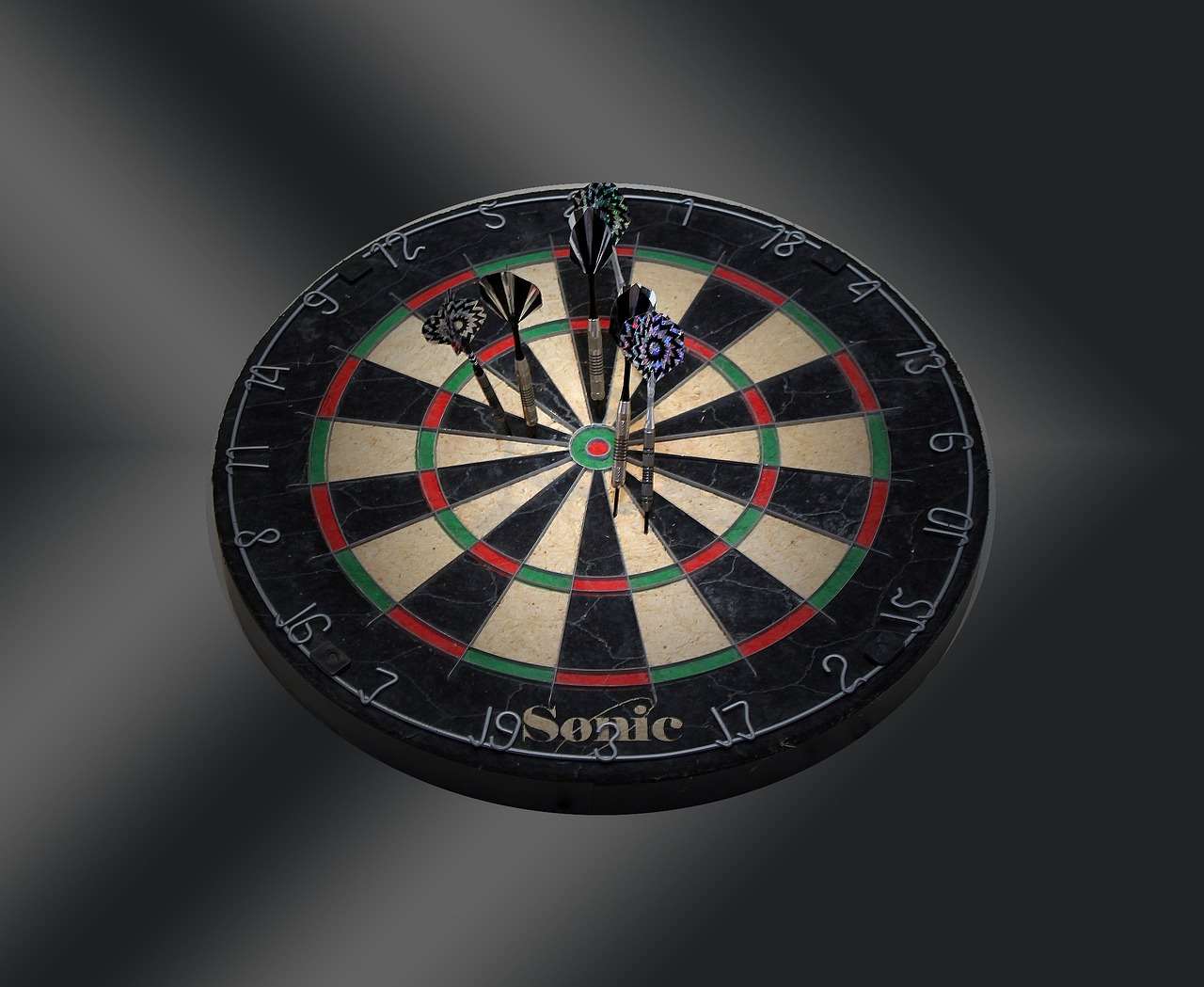
- Dartboard: A standard 18-inch sisal dartboard is recommended. Ensure it is properly mounted at the correct height (5 feet 8 inches to the bullseye).
- Darts: Choose darts that are comfortable for you to hold and throw. Experiment with different weights and styles to find what works best.
- Oche (Throwing Line): Mark the throwing line at the correct distance from the dartboard (7 feet 9 1/4 inches).
- Lighting: Adequate lighting is essential for clear visibility of the dartboard.
- Scoreboard: A scoreboard is helpful for tracking your progress. You can use a traditional chalkboard or a modern electronic scoreboard.
The Mental Game of Clock: Staying Focused and Composed
The **simple rules easy darts game Clock** can still present mental challenges. Maintaining focus and composure is crucial for success:
- Stay Present: Focus on each throw individually. Don’t dwell on past mistakes or worry about future shots.
- Visualize Success: Imagine the dart hitting the target before each throw.
- Manage Pressure: Learn to manage the pressure of hitting each number in sequence. Take deep breaths and stay relaxed.
- Stay Positive: Maintain a positive attitude, even when you miss the target. Believe in your ability to succeed.
Developing a strong mental game will help you perform at your best, even under pressure. Always remember that Scaling dart game difficulty means understanding your mental strength.
Adapting Clock for Team Play
While Clock is typically played as an individual game, it can also be adapted for team play. Here’s how:
- Team Clock: Divide players into teams. Each team takes turns throwing three darts per round. The first team to hit all numbers from 1 to 20 in order and then hit the bullseye wins.
- Alternate Throws: Team members alternate throws. This requires coordination and communication.
- Combine Scores: Combine the scores of all team members. This adds a strategic element to the game.
Team Clock can be a fun and engaging way to play darts with friends and family. Enjoying darts in Darts for mixed ability groups is very possible through teamwork.
Clock as a Practice Tool for Other Darts Games
The **simple rules easy darts game Clock** makes it an ideal practice tool for improving your overall darts skills, which can then be applied to other games like 501 or Cricket.
- Accuracy Training: Clock forces you to aim at specific targets, improving your accuracy and target acquisition.
- Consistency Development: The repetitive nature of Clock helps you develop a consistent throwing motion.
- Pressure Simulation: The pressure of hitting each number in sequence can simulate the pressure of a competitive match, preparing you for other games.
- Warm-up Routine: Clock is an excellent warm-up exercise before playing other darts games.
By using Clock as a practice tool, you can develop the fundamental skills needed to excel in other darts games. Practice different parts of the game with Adapting darts games skills.
Safety Considerations When Playing Darts Clock Game
While darts is generally safe, it’s important to take certain precautions to prevent accidents and injuries:
- Clear the Area: Ensure that the area around the dartboard is clear of obstacles and distractions.
- Safe Throwing Distance: Maintain a safe throwing distance from the dartboard.
- Never Throw When Someone is in Front: Never throw darts when someone is standing in front of the dartboard.
- Proper Dartboard Mounting: Ensure that the dartboard is properly mounted and securely attached to the wall.
- Supervise Children: Supervise children when they are playing darts.
- Use a Dartboard Surround: A dartboard surround can help to protect the wall from stray darts.
Conclusion: Mastering the Clock Darts Game
The **simple rules easy darts game Clock** offer an accessible and enjoyable way to get into darts, improve your accuracy, and challenge yourself. Whether you’re a beginner or an experienced player, Clock provides a fun and engaging experience that can be adapted to suit your skill level. By understanding the rules, employing effective strategies, and practicing regularly, you can master the Clock game and take your darts skills to the next level. So, grab your darts, aim for that number one, and start your journey around the clock! Start practicing today and maybe you’ll want to also check out Making darts games fair players.

Hi, I’m Dieter, and I created Dartcounter (Dartcounterapp.com). My motivation wasn’t being a darts expert – quite the opposite! When I first started playing, I loved the game but found keeping accurate scores and tracking stats difficult and distracting.
I figured I couldn’t be the only one struggling with this. So, I decided to build a solution: an easy-to-use application that everyone, no matter their experience level, could use to manage scoring effortlessly.
My goal for Dartcounter was simple: let the app handle the numbers – the scoring, the averages, the stats, even checkout suggestions – so players could focus purely on their throw and enjoying the game. It began as a way to solve my own beginner’s problem, and I’m thrilled it has grown into a helpful tool for the wider darts community.