Mastering shanghai darts finishing practice is crucial for consistently winning games; this article provides a structured approach to improving your accuracy and strategic decision-making in Shanghai, the dart game. We’ll cover effective practice routines, target selection, and mental strategies to elevate your game and help you achieve consistent finishes.
⚠️ Still Using Pen & Paper (or a Chalkboard)?! ⚠️
Step into the future! The Dart Counter App handles all the scoring, suggests checkouts, and tracks your stats automatically. It's easier than you think!
Try the Smart Dart Counter App FREE!Ready for an upgrade? Click above!
Why Shanghai Darts Finishing Practice Matters
In the world of darts, reaching the checkout first is paramount. While scoring high is important, the ability to finish a leg efficiently is what truly separates good players from great ones. The Shanghai variation of darts, with its focus on hitting specific numbers for maximum score, heavily rewards precise finishing skills. Therefore, dedicated shanghai darts finishing practice becomes essential.
Unlike some other games where simply reaching zero is the goal, Shanghai demands hitting a specific number and its corresponding double and treble to win instantly. This means your finishing game needs to be both accurate and strategic. You need to be able to reliably hit those crucial doubles and trebles under pressure. Furthermore, you must be adept at setting yourself up for these finishes, taking into account the potential for busts and missed opportunities.

Effective Shanghai Darts Finishing Practice Drills
There are several highly effective drills you can incorporate into your shanghai darts finishing practice routine. These drills focus on key aspects of the game, from target selection to accuracy under pressure. Here are a few to get you started:
- Around the Clock Doubles: Start with the double one and work your way around the board, hitting each double in sequence. This improves your overall double accuracy, a critical skill for Shanghai. Focus on your stance, grip, and release for each dart.
- Shanghai Number Targeting: Select a number (e.g., 15). Throw three darts aiming for the single, double, and treble of that number. Track your success rate and adjust your aim accordingly. Increase the difficulty by setting a time limit.
- Checkout Practice: Start with a random score (e.g., 86) and practice finishing it in as few darts as possible, focusing on optimal setups for hitting the double. Consider using darts checkout charts to aid your calculations and improve your strategic decision-making.
- Pressure Doubles: Set a target double and a consequence for missing (e.g., doing push-ups, buying a round). This adds a level of pressure that simulates a real game situation. The added pressure will improve your focus and mental toughness.
Remember, consistency is key. Don’t just practice these drills once in a while; make them a regular part of your training regimen. The more you practice, the more natural these movements and calculations will become.
Strategic Target Selection for Shanghai Finishes
Beyond accuracy, strategic target selection is crucial in Shanghai. Knowing which number to aim for and how to set yourself up for the finish can make all the difference. It’s not always about going for the highest available number; sometimes, it’s about creating a more manageable checkout for your next turn.
Understanding the Shanghai Finish
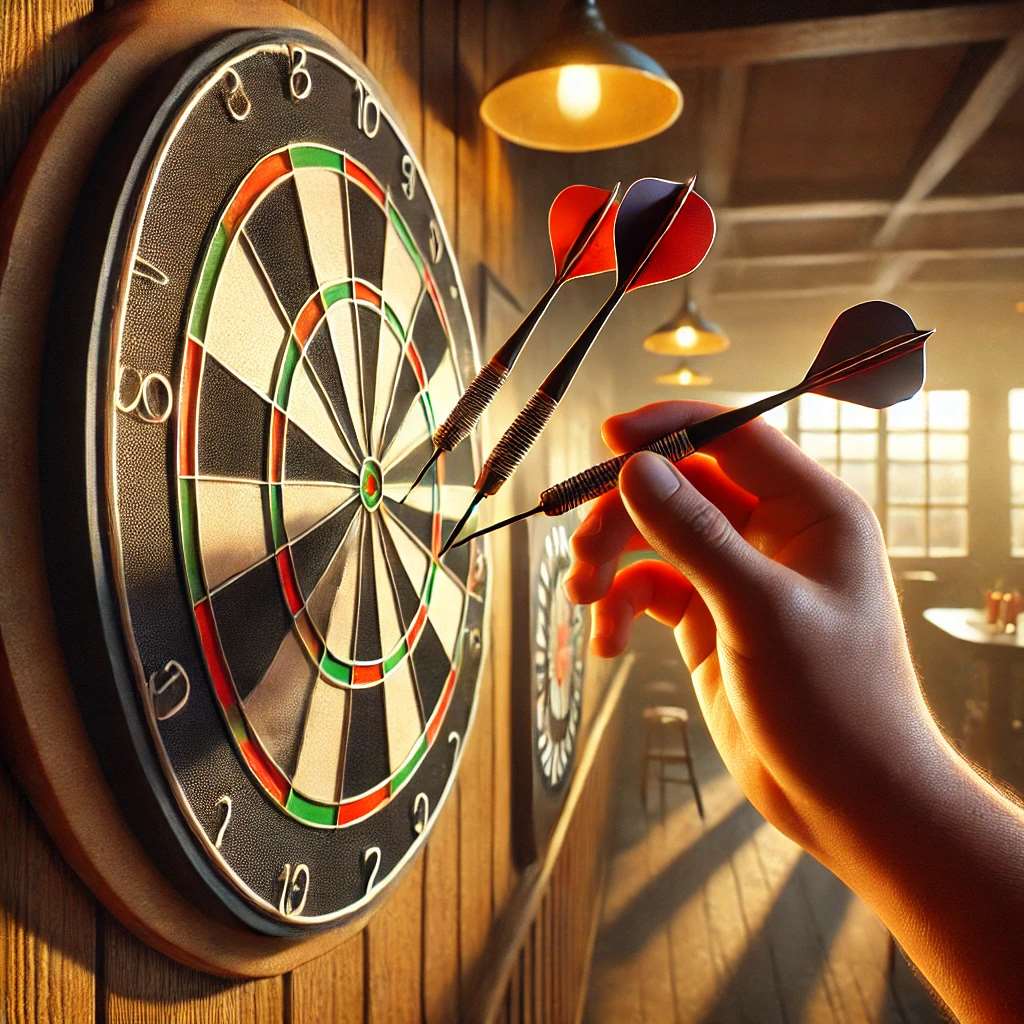
The core of Shanghai lies in hitting the single, double, and treble of a specific number in the same round. This instantly wins the game. However, this isn’t always a realistic goal. The likelihood of hitting all three perfectly is relatively low, especially under pressure. Therefore, you need to consider alternative strategies.
Prioritizing High Scores and Checkout Setups
Often, the best approach is to prioritize scoring as high as possible while also setting yourself up for a manageable checkout. For example, if you have a score of 120, aiming for treble 20 (60) leaves you with 60, which can be easily finished with a treble 20. However, if you miss the treble 20 and hit a single 20, you’re left with 100, a more awkward number to finish. This also connects to some Darts Variants Fun Games you may want to practice as a warm up.
Consider the numbers that give you comfortable checkouts. Some players prefer leaving themselves with a double 16 (32), while others prefer a double 20 (40). Find what works best for you and tailor your target selection accordingly. Familiarizing yourself with common darts combinations is essential for swift decision-making.
Mental Toughness and Focus in Shanghai Darts
Darts, like many sports, is as much a mental game as it is a physical one. Maintaining focus, managing pressure, and bouncing back from setbacks are crucial for success in Shanghai. A solid mental game can often bridge the gap between practice ability and tournament performance.
Dealing with Pressure
The pressure of a close game can be immense. One missed dart can be the difference between victory and defeat. To manage this pressure, practice under simulated game conditions. Introduce stakes, such as playing for a small amount of money or performing a forfeit for losing. This will help you get used to the feeling of pressure and develop strategies for coping with it.
Staying Focused
Maintaining focus throughout a match can be challenging, especially when fatigue sets in. Develop routines that help you stay in the present moment. This could involve taking deep breaths between throws, focusing on a specific point on the dartboard, or repeating a positive affirmation to yourself. Don’t let negative thoughts creep in; instead, focus on your process and trust your training.
Bouncing Back from Setbacks
Everyone has bad throws and unlucky bounces. The key is to not let these setbacks derail your game. Acknowledge the mistake, learn from it, and move on. Don’t dwell on the past; focus on the next throw and the opportunity to redeem yourself. Cultivate a resilient mindset that allows you to bounce back from adversity.
Equipment Considerations for Shanghai Darts Finishing Practice
While skill and practice are paramount, using appropriate equipment can also enhance your performance. Consider the following factors when selecting your darts and dartboard:
- Dart Weight and Grip: Experiment with different dart weights and grip styles to find what feels most comfortable and allows you to throw consistently. A dart that feels natural in your hand will promote better accuracy.
- Dart Flights and Shafts: Different flights and shafts affect the dart’s trajectory and stability. Try out various combinations to find what works best for your throwing style. Smaller flights offer more speed, while larger flights provide more stability.
- Dartboard Quality: Invest in a high-quality dartboard made of sisal fibers. A good dartboard will provide a consistent playing surface and minimize bounce-outs. Regular rotation of the board also extends its lifespan.
Finding the right equipment is a personal process. What works well for one player may not work as well for another. Don’t be afraid to experiment and find what suits your individual needs and preferences. Proper maintenance of your equipment, such as cleaning your darts regularly, will also contribute to consistent performance. Many old old dart games rules even have tips for dart care.
Advanced Shanghai Darts Finishing Practice Techniques
Once you’ve mastered the basics, you can move on to more advanced techniques to further refine your shanghai darts finishing practice. These techniques involve more complex calculations, strategic planning, and mental strategies.
Advanced Checkout Calculations
Expand your knowledge of checkout combinations beyond the standard ones. Learn to calculate more complex routes to the finish, taking into account the potential for misses and the need to leave yourself with a favorable number. This requires a deep understanding of the dartboard and the scoring system. Tools like darts checkout calculators can be helpful for learning and memorizing these combinations.
Strategic Game Planning
Develop a game plan based on your opponent’s strengths and weaknesses. If your opponent is a strong scorer, you may need to take more risks to keep up. If your opponent struggles with doubles, you may want to focus on setting yourself up for those finishes. Adapting your strategy based on the situation is a hallmark of a skilled darts player.
Visualisation Techniques
Before each throw, visualize the dart hitting the target. Imagine the trajectory of the dart and the feeling of it landing in the desired location. This can help improve your focus and confidence, leading to more accurate throws. Visualisation is a powerful tool used by many top athletes in various sports.
Tracking Your Progress in Shanghai Darts Finishing Practice
To ensure your shanghai darts finishing practice is effective, it’s essential to track your progress. This will allow you to identify areas where you’re improving and areas where you still need to focus your efforts. There are several ways to track your progress:
- Record Your Scores: Keep a record of your scores in each practice session. This will allow you to see how your average is improving over time.
- Track Your Accuracy: Measure your accuracy on specific targets, such as doubles and trebles. This will help you identify which areas you need to work on the most.
- Analyze Your Games: Review your games to identify mistakes and areas where you could have made better decisions. This will help you learn from your experiences and improve your strategic thinking.
There are many darts tracking apps and software programs available that can help you with this process. These tools can automate the tracking process and provide valuable insights into your performance. By monitoring your progress closely, you can ensure that you’re on track to achieve your goals.
Don’t be discouraged by setbacks. Progress is not always linear. There will be times when you feel like you’re not improving, but it’s important to keep practicing and stay positive. The key is to stay consistent and keep learning from your experiences. Remember also the impact of knowing your history of darts games uk to give you insight into how others have improved.

Joining a Darts League for Enhanced Shanghai Darts Finishing Practice
While individual practice is essential, joining a **darts league** offers unparalleled opportunities for improvement and real-game experience. The competitive environment, combined with regular play against diverse skill levels, dramatically enhances your **shanghai darts finishing practice** in a way that solo sessions simply cannot replicate. You will find yourself using these drills and putting them to the test consistently.
A **local darts league** provides a structured platform to refine your skills under pressure, develop strategic thinking, and learn from other players. The varied playing styles and competitive atmosphere force you to adapt and elevate your game. Additionally, the social aspect of league play fosters camaraderie and provides a supportive community for continued growth. Find a good league and you will soon see the results.
Conclusion
Mastering shanghai darts finishing practice is an ongoing journey that requires dedication, strategic thinking, and a resilient mindset. By incorporating the drills and techniques outlined in this article into your training regimen, you can significantly improve your accuracy, target selection, and mental toughness. Remember to track your progress, analyze your games, and seek out opportunities to compete and learn from other players. Take the leap and begin today!

Hi, I’m Dieter, and I created Dartcounter (Dartcounterapp.com). My motivation wasn’t being a darts expert – quite the opposite! When I first started playing, I loved the game but found keeping accurate scores and tracking stats difficult and distracting.
I figured I couldn’t be the only one struggling with this. So, I decided to build a solution: an easy-to-use application that everyone, no matter their experience level, could use to manage scoring effortlessly.
My goal for Dartcounter was simple: let the app handle the numbers – the scoring, the averages, the stats, even checkout suggestions – so players could focus purely on their throw and enjoying the game. It began as a way to solve my own beginner’s problem, and I’m thrilled it has grown into a helpful tool for the wider darts community.