Scram darts is a fantastic game for beginners because the simple rules make it easy to pick up and play immediately, while also providing a fun challenge. This article will guide you through everything you need to know to play scram darts, focusing on the simple rules beginners can grasp quickly, and explore some strategy tips to help you win!
⚠️ Still Using Pen & Paper (or a Chalkboard)?! ⚠️
Step into the future! The Dart Counter App handles all the scoring, suggests checkouts, and tracks your stats automatically. It's easier than you think!
Try the Smart Dart Counter App FREE!Ready for an upgrade? Click above!
Understanding Scram Darts: Simple Rules Beginners Need to Know
Scram darts is an asymmetrical game, meaning that the players have different roles and objectives. This adds an interesting twist compared to traditional darts games like 501. The game is played with two players, and one player is designated as the “scorer” or “attacker,” while the other is the “stopper” or “defender.” The objective of the scorer is to accumulate as many points as possible, while the stopper tries to “scram” (or close) the numbers to prevent the scorer from getting points. Let’s break down the simple rules beginners need.

Setting Up the Game
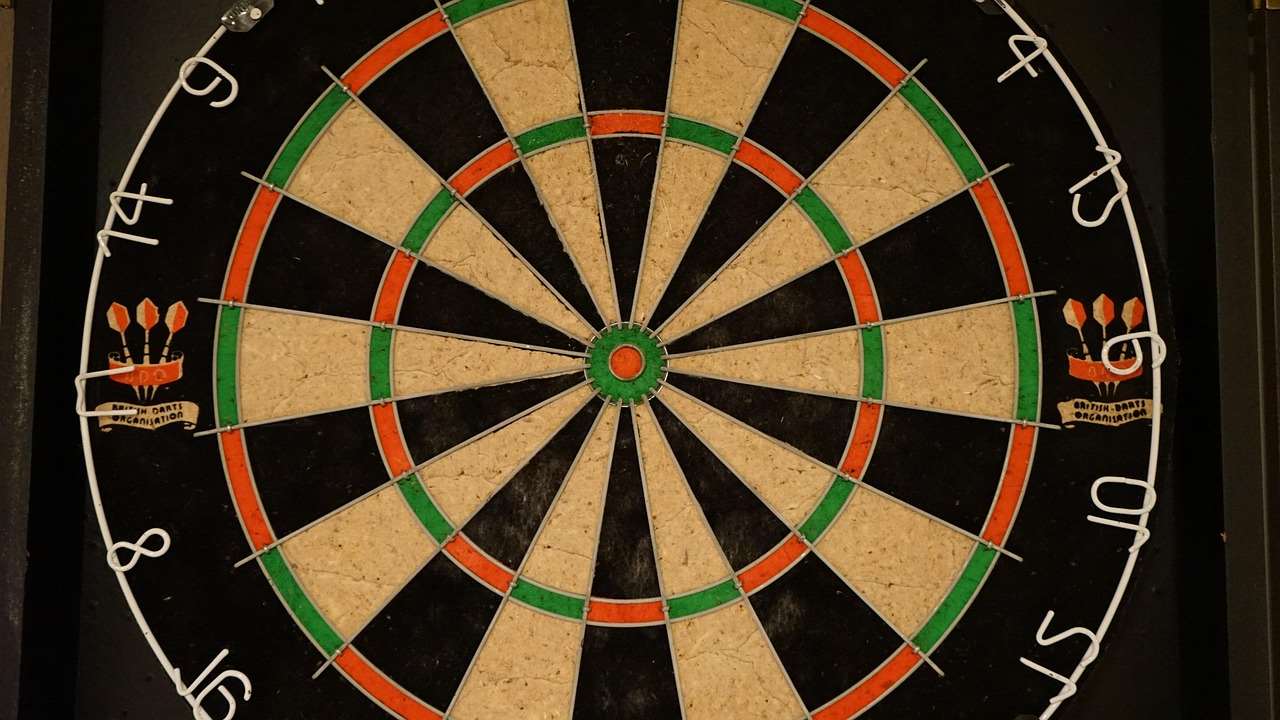
- Dartboard Setup: Use a standard dartboard.
- Number Assignment: All 20 numbers on the dartboard are in play, as well as the bullseye (both the outer bull and double bull).
- Player Roles: Determine who will be the scorer and the stopper. Flipping a coin is a common method.
The Scorer’s Turn
The scorer goes first. Their goal is to score as many points as possible by hitting any open number on the board. The score is calculated by the number hit. For example, hitting a single 20 scores 20 points, a double 20 scores 40 points, and a triple 20 scores 60 points. All three darts are thrown each turn.
The Stopper’s Turn
After the scorer throws their three darts, it’s the stopper’s turn. The stopper’s goal is to “close” or “scram” numbers on the board. To close a number, the stopper must hit that number (single, double, or triple) to close the corresponding section of the dartboard. Numbers are closed individually.
Closing a Number
Once a number is closed by the stopper, the scorer can no longer score points by hitting that number. Only the stopper can close numbers. If both scorer and stopper are struggling with the old dart games rules, remember to keep the game fun.
Ending the Game
The game ends when the stopper has closed all 20 numbers and the bullseye. After that, players switch roles. The player with the highest score after both rounds wins.
Detailed Scram Darts Rules and Gameplay
Now that you know the basic scram darts simple rules beginners should know, let’s dive into more detailed aspects of the gameplay. This section clarifies specific situations and addresses common questions.
Scoring Specifics
As mentioned, the scorer accumulates points for each number hit. Double and triple rings count as double and triple the number’s value, respectively. The outer bullseye is worth 25 points, and the inner bullseye (double bull) is worth 50 points. This is consistent with traditional dart scoring. If you are interested in learning more about Darts Variants Fun Games, this is just the beginning.

Opening Numbers for the Scorer
Unlike closing numbers, only the stopper can close numbers. The scorer simply gets to start racking up the points on the first round, and continues to do so on the second round after roles are switched, avoiding numbers the other player has closed. The attacker goes first, which is a huge advantage, but also faces the challenge of the defender attempting to close the board, in order to stop the scorer racking up points.
Closing a Number Quickly
The stopper must hit the desired number only once (single, double, or triple) to close it. There is no cumulative effect from hitting the number multiple times in the same turn. The goal is simply to hit that number to shut it down for the scorer.
Dealing with Bounces and Missed Throws
If a dart bounces out of the dartboard or misses entirely, it scores zero points. A dart must remain in the board until all three darts are thrown for it to count. This is standard darts etiquette.
What if a Dart Closes a Number and Scores Points?
In the rare scenario when the defender manages to close the number that was previously targeted by the attacker, the number is simply closed without any scoring points.
Strategy and Tactics for Scram Darts
Understanding the scram darts simple rules beginners need is only the first step. To truly excel, you’ll need to develop a sound strategy. Here are some tips for both the scorer and the stopper.
Scorer Strategies
- Prioritize High-Value Numbers: Focus on hitting the 20, 19, and 18 initially to maximize your score.
- Spread Your Shots: Avoid clustering all your darts on a single number, especially if the stopper is accurate.
- Adapt to the Stopper’s Game: If the stopper is consistently closing certain numbers, shift your focus to others.
- Bullseye Focus: Don’t neglect the bullseye (both outer and inner) as it offers significant points and can be easier to hit consistently.
Stopper Strategies
- Target the Scorer’s Hot Spots: Identify which numbers the scorer is hitting most frequently and prioritize closing those.
- Anticipate the Scorer’s Next Move: Pay attention to patterns in the scorer’s throws and try to anticipate which numbers they will target next.
- Close High-Value Numbers Early: Preventing the scorer from accumulating large scores on the 20, 19, and 18 can significantly impact their overall score.
- Mix Up Your Targets: Don’t always target the same numbers, as this can become predictable. Throw in some unexpected closures to keep the scorer off balance.
Common Mistakes Beginners Make in Scram Darts
Even with the scram darts simple rules beginners, there are some common pitfalls to avoid. Recognizing these mistakes can help you improve your game faster.
Scorer Mistakes
- Ignoring Defense: Some scorers become so focused on scoring that they fail to adapt to the stopper’s defensive moves.
- Chasing Individual Numbers: Focusing too heavily on a single number, especially if it’s well-defended, can lead to wasted darts.
- Neglecting Accuracy: Trying to score quickly at the expense of accuracy will ultimately reduce your overall score.
Stopper Mistakes
- Being Predictable: Consistently targeting the same numbers makes it easy for the scorer to avoid them.
- Ignoring Low-Value Numbers: Sometimes, closing low-value numbers can disrupt the scorer’s rhythm and force them to take risks.
- Rushing Throws: Take your time to aim and focus on your target. Accuracy is more important than speed.
Practice Drills to Improve Your Scram Darts Game
Consistent practice is key to improving your dart skills. Here are some drills to help you hone your accuracy and strategy in scram darts.
Accuracy Drills
- Number Focus: Choose a number and try to hit it repeatedly with all three darts.
- Double Practice: Focus specifically on hitting the double ring of various numbers.
- Triple Practice: Focus specifically on hitting the triple ring of various numbers.
- Bullseye Challenge: Aim for the bullseye (outer and inner) repeatedly.
Strategic Drills
- Scorer Simulation: Practice scoring against a simulated “stopper” (e.g., randomly closing numbers after each turn).
- Stopper Simulation: Practice closing numbers based on a simulated “scorer” (e.g., focusing on the numbers they are hitting most frequently).
- Combination Drill: Alternate between accuracy and strategic drills to develop a well-rounded game.

Adapting Scram Darts for Different Skill Levels
The scram darts simple rules beginners version is excellent for a friendly game, but you can modify the rules to make the game more challenging or accessible. The advantage of learning obscure dartboard games list is to have variety.
Handicapping
For players of different skill levels, consider handicapping the stronger player. For example, you could give the weaker player a head start by allowing them to close a few numbers before the stronger player gets to be the stopper.
Modified Scoring
You can adjust the scoring system to make the game more challenging. For instance, you could require the stopper to hit a double or triple of a number to close it.
Limited Turns
To shorten the game, you could limit the number of turns each player gets in each role.
Beyond Scram Darts: Exploring Other Dart Games
Once you’ve mastered scram darts and understand the simple rules beginners edition, you can explore other exciting dart games. Darts offer a wide range of ancient dart throwing games.
501
This is the most popular dart game. Each player starts with 501 points and must reduce their score to zero by hitting numbers on the board. The final dart must be a double or the bullseye. This game is a dart classic for good reason, providing many hours of entertainment as you challenge your friends, family, or even compete in leagues around the country.
Around the Clock
In this game, players must hit the numbers 1 through 20 in sequence, starting with 1 and ending with 20. The first player to hit all the numbers in order wins. This game is a great way to improve your accuracy.
Cricket
Cricket is a strategic dart game where players aim to close numbers (20, 19, 18, 17, 16, 15, and the bullseye) by hitting them three times. Once a number is closed, only the player who closed it can score on that number. The first player to close all the numbers and have the highest score wins. Learning the history of darts games uk can provide an appreciation for the evolution of different game types.
Conclusion: Scram Darts and Beyond
Scram darts simple rules beginners edition offers a unique and engaging dart experience that combines scoring and defensive strategy. By understanding the simple rules, developing effective strategies, and avoiding common mistakes, you can quickly become a proficient player. Remember to practice regularly and adapt the game to suit your skill level. Now that you know everything you need to get started, grab some darts and a friend, and enjoy the exciting challenge of scram darts! Ready to put your knowledge to the test? Head to your local dart supply store or online retailer and get equipped to start playing today!

Hi, I’m Dieter, and I created Dartcounter (Dartcounterapp.com). My motivation wasn’t being a darts expert – quite the opposite! When I first started playing, I loved the game but found keeping accurate scores and tracking stats difficult and distracting.
I figured I couldn’t be the only one struggling with this. So, I decided to build a solution: an easy-to-use application that everyone, no matter their experience level, could use to manage scoring effortlessly.
My goal for Dartcounter was simple: let the app handle the numbers – the scoring, the averages, the stats, even checkout suggestions – so players could focus purely on their throw and enjoying the game. It began as a way to solve my own beginner’s problem, and I’m thrilled it has grown into a helpful tool for the wider darts community.