Understanding and practicing proper scoreboard etiquette in darts: marking and calling is crucial for fair play and a positive experience. This article delves into the specifics of marking scores accurately, calling scores clearly, and the unwritten rules that contribute to a respectful and enjoyable darts environment.
⚠️ Still Using Pen & Paper (or a Chalkboard)?! ⚠️
Step into the future! The Dart Counter App handles all the scoring, suggests checkouts, and tracks your stats automatically. It's easier than you think!
Try the Smart Dart Counter App FREE!Ready for an upgrade? Click above!
The Importance of Accurate Scorekeeping in Darts
In darts, the **scoreboard** is more than just a record of points; it’s the backbone of the game. Accurate scorekeeping ensures fairness, prevents disputes, and allows players to focus on their game without distraction. A clear and legible scoreboard promotes good sportsmanship and adds to the overall enjoyment of the match.
Think of it this way: imagine meticulously aiming for a triple 20, only to have your score incorrectly recorded. The frustration is palpable. By adhering to best practices in marking and calling, you contribute to a more professional and respectful atmosphere, regardless of the setting – from a friendly game in the pub to a competitive tournament.

Responsibilities of the Marker
The **marker** (also sometimes called the scorer) has a significant responsibility. They are the official record-keeper for the game, and their accuracy is paramount. The key responsibilities include:
- Recording each player’s score accurately and promptly.
- Announcing the score after each throw. This prevents confusion and allows players to adjust their strategy accordingly.
- Calculating the remaining score for each player. This is especially important as players approach the finish.
- Verifying the winning score with the player. Before declaring a win, the marker should confirm the final score to avoid any errors.
- Maintaining a clear and legible scoreboard. The scores should be easily readable for all players.
Methods of Marking: Traditional vs. Digital
While digital scoreboards are becoming increasingly common, especially in professional settings, the traditional method of marking with chalk remains prevalent in many pubs and home games. Both methods have their advantages and disadvantages.
Traditional Chalk Scoreboard Marking
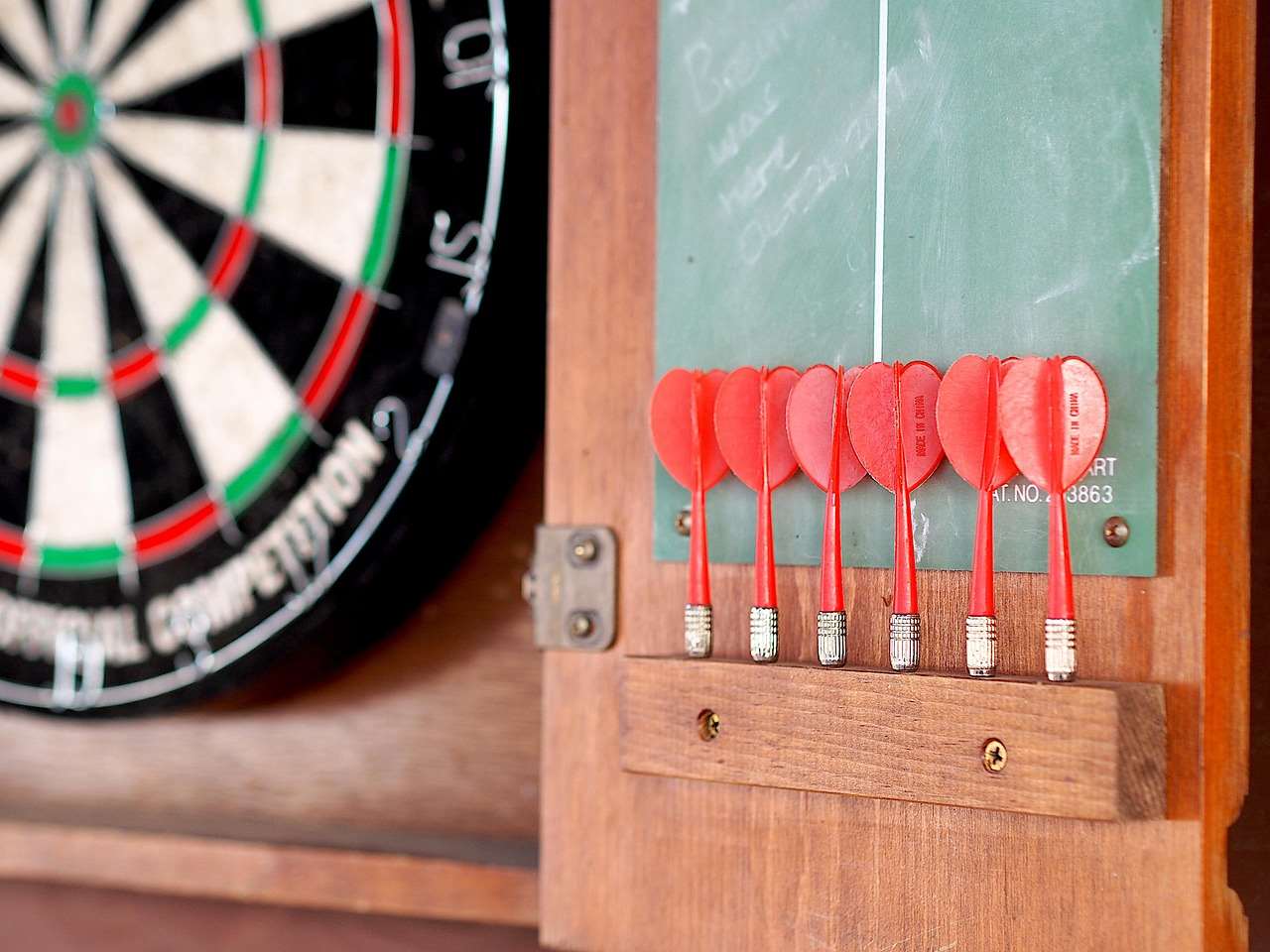
The traditional method involves using chalk on a designated chalkboard. Here’s a breakdown of the typical marking system:
- Each player’s name is written at the top of a column.
- The starting score (usually 501 or 301) is written below the name.
- After each throw, the score is deducted from the remaining total. The new total is then written below the previous one.
- Lines are often drawn to separate rounds of throws (usually three darts). This makes it easier to track the game’s progress.
- Special markings can be used to indicate specific achievements, such as a 180 (three treble 20s).
Accuracy is paramount when using a chalk scoreboard. Double-check each calculation and ensure the markings are clear and legible. If a mistake is made, erase it neatly and correct the score.
Many find that understanding basic darts fundamentals for beginners is crucial before taking on the role of marker. Click here to learn more.
Digital Scoreboards
Digital scoreboards offer several advantages over traditional chalkboards:
- Automatic score calculation: This eliminates the risk of human error in subtraction.
- Clear and legible display: Digital displays are easy to read, even from a distance.
- Additional features: Many digital scoreboards offer features such as game statistics, player profiles, and even online connectivity.
However, digital scoreboards can also be more expensive and require a power source. It’s also important to ensure that the device is properly calibrated and functioning correctly.

Calling the Score: Clarity and Precision
Calling the score is just as important as marking it accurately. Clear and precise score calls ensure that everyone involved in the game is aware of the current standings and what’s needed to win. **Calling the score** includes announcing the individual scores of each dart, and the total for the throw.
Standard Score Calling Protocol
The standard protocol for calling the score is as follows:
- Announce each dart individually: For example, “Treble 20,” “Single 5,” “Single 1.”
- Announce the total score for the throw: For example, “Total of 66.”
- The marker then repeats the total score, confirming the number with the player.
- The marker then announces the remaining score: For example, “Remaining score is 435.”
Clarity is key. Speak clearly and loudly enough for everyone to hear, especially in a noisy environment.
Addressing Discrepancies
If there’s a discrepancy between the player’s perceived score and the marker’s record, it’s important to address it calmly and respectfully. Review the throws together, if needed replay a video if available, and double-check the calculations. The goal is to resolve the issue fairly and amicably.
Sometimes, you might need to consider modifying rules for mixed-level dart players to accommodate different skill levels and ensure everyone enjoys the game.
Unspoken Rules: Beyond the Basics
Beyond the technical aspects of marking and calling, there are several unspoken rules that contribute to good scoreboard etiquette in darts: marking and calling.
Respect for Players and the Game
Treat all players with respect, regardless of their skill level. Avoid making distracting noises or movements while someone is throwing. Refrain from offering unsolicited advice or criticism.
Maintaining a Clean and Orderly Scoreboard
Keep the scoreboard clean and orderly. Erase mistakes neatly and avoid cluttering the board with unnecessary markings. A well-maintained scoreboard reflects a respect for the game and the players.
Avoiding Gamesmanship
Gamesmanship refers to actions that are technically within the rules but are designed to gain an unfair advantage. Examples include deliberately distracting an opponent or intentionally mis-marking the score. Good sportsmanship is essential for maintaining a fair and enjoyable game.
Advanced Techniques for Scorekeeping
For more competitive games, consider using these advanced techniques to enhance the accuracy and efficiency of scorekeeping:
Using a Scorekeeping App
Scorekeeping apps can automate the entire process, from calculating scores to tracking statistics. Many apps also offer features such as player profiles, game history, and even online multiplayer capabilities. These often include handicap features to help make darts fairer with handicap rules.
Employing a Second Marker
In highly competitive matches, it’s common to have two markers: one to call the score and another to record it. This helps to ensure accuracy and reduces the risk of errors.
Common Mistakes to Avoid
Even experienced markers can make mistakes. Here are some common pitfalls to watch out for:
- Incorrect subtraction: Double-check each calculation to avoid errors.
- Misreading the board: Pay close attention to the placement of the darts and avoid misinterpreting the score.
- Failing to announce the score clearly: Speak clearly and loudly enough for everyone to hear.
- Not verifying the winning score: Always confirm the final score with the player before declaring a win.
Practicing Scoreboard Etiquette
The best way to master scoreboard etiquette in darts: marking and calling is through practice. Volunteer to be the marker in friendly games and pay close attention to the techniques described in this article. With experience, you’ll develop the skills and confidence to keep score accurately and efficiently in any setting.
Resources for Improving Your Skills
There are many resources available to help you improve your scorekeeping skills, including online tutorials, instructional videos, and even books on the subject. Take advantage of these resources to hone your skills and become a more proficient marker.
Conclusion
Mastering scoreboard etiquette in darts: marking and calling is essential for fair play, a positive experience, and maintaining the integrity of the game. By understanding the responsibilities of the marker, employing accurate marking techniques, and adhering to the unspoken rules of the game, you can contribute to a more enjoyable and respectful darts environment. Remember to always prioritize accuracy, clarity, and good sportsmanship. Now, grab some chalk (or your tablet), step up to the oche, and put your newfound knowledge into practice! Consider checking out more information on alternative darts rules for home play to add some variety to your games.

Hi, I’m Dieter, and I created Dartcounter (Dartcounterapp.com). My motivation wasn’t being a darts expert – quite the opposite! When I first started playing, I loved the game but found keeping accurate scores and tracking stats difficult and distracting.
I figured I couldn’t be the only one struggling with this. So, I decided to build a solution: an easy-to-use application that everyone, no matter their experience level, could use to manage scoring effortlessly.
My goal for Dartcounter was simple: let the app handle the numbers – the scoring, the averages, the stats, even checkout suggestions – so players could focus purely on their throw and enjoying the game. It began as a way to solve my own beginner’s problem, and I’m thrilled it has grown into a helpful tool for the wider darts community.