Mastering the Round the World darts challenge is a fantastic way to improve your accuracy and darting skills by systematically targeting each number on the board; the key is consistent practice and strategic aiming. This article will guide you through the rules, offer practice strategies, and provide tips for dominating this classic darts game.
⚠️ Still Using Pen & Paper (or a Chalkboard)?! ⚠️
Step into the future! The Dart Counter App handles all the scoring, suggests checkouts, and tracks your stats automatically. It's easier than you think!
Try the Smart Dart Counter App FREE!Ready for an upgrade? Click above!
Understanding the Round the World Darts Challenge
The Round the World darts challenge, also known as “Around the Clock”, is a popular darts game perfect for solo practice or competitive play. The objective is simple: hit each number on the dartboard in sequence, starting with 1 and progressing to 20. Once you’ve successfully hit 20, you win! However, there are variations to keep things interesting.
Basic Rules of Round the World
- Players take turns throwing three darts at the board.
- The first dart must land in the segment corresponding to the current number in sequence. For instance, to start, you must hit the “1” segment.
- If the player successfully hits the required number, they move on to the next number in the sequence.
- If the player fails to hit the required number with any of their three darts, their turn ends, and play passes to the next player.
- The first player to successfully hit all numbers from 1 to 20 (in sequence) wins the game.
Variations on the Standard Rules
To make the game more challenging or tailored to different skill levels, you can introduce various rule modifications. Here are a few common variations:
- Doubles Only: The player must hit the double segment of each number to advance.
- Trebles Only: The player must hit the treble segment of each number to advance (considerably more difficult!).
- Inner/Outer Bullseye: Include the inner and outer bullseye as the 21st and 22nd targets after hitting 20.
- Clockwise/Counter-Clockwise: Players proceed either clockwise or counter-clockwise around the board.
- Limited Darts: Set a maximum number of darts allowed to complete the round. If a player fails to complete the challenge within the limit, they lose.
Strategies for Conquering the Round the World Darts Challenge
While luck undoubtedly plays a small role, mastering the Round the World darts challenge relies heavily on skill, precision, and a well-thought-out strategy. Here are some tips to elevate your game:
Perfecting Your Throwing Technique
A consistent and accurate throwing technique is the foundation of success. Focus on these aspects:
- Stance: Maintain a stable and balanced stance. Experiment to find what feels most comfortable and repeatable.
- Grip: Use a comfortable grip that allows you to control the dart without excessive tension.
- Arm Motion: Develop a smooth and consistent arm motion, keeping your elbow relatively still.
- Release: Focus on a clean and controlled release point.
- Follow-Through: Follow through completely with your arm motion after releasing the dart.

Targeting and Aiming Techniques
Knowing where to aim is crucial, especially as you progress around the board. Consider these tips:
- Visualize the Target: Before throwing, visualize the dart hitting the exact spot you’re aiming for.
- Focus Your Eyes: Maintain unwavering focus on the target throughout your throw.
- Use Reference Points: Utilize visual cues on the board to help you align your throw, especially for segments that are further away from your dominant eye.
- Adjust for Error: As you practice, you’ll learn to compensate for slight variations in your throw. Make subtle adjustments to your aiming point based on previous results.
Practice Drills for Round the World
Consistent practice is essential for improving your accuracy and consistency. Here are some specific drills to help you master the Round the World darts challenge:
- Individual Number Practice: Focus on repeatedly hitting a single number until you can consistently land darts in that segment.
- Segment Transition Drills: Practice transitioning between adjacent numbers to improve your ability to quickly adjust your aim.
- Full Round Simulation: Play full rounds of “Round the World” to simulate game conditions and build your stamina.
- Varying Target Practice: Incorporate targets beyond the standard numbers (e.g., doubles, trebles, bullseye) to diversify your skills.
Remember that adapting darts games skills is a continuous process.
Advanced Strategies and Tactics
Once you’ve mastered the basics, you can incorporate more advanced strategies to gain a competitive edge. These involve understanding the dartboard layout and exploiting its nuances.
Understanding Dartboard Geometry
The dartboard’s layout isn’t random; it’s designed to penalize inaccurate throws. Adjacent numbers are often strategically placed to minimize scoring when a dart strays from the intended target. Understanding this layout can help you choose more strategic aiming points.

Strategic Dart Placement
In some variations of the game, especially when targeting doubles or trebles, strategic dart placement becomes critical. If your first dart lands close to, but not in, the desired segment, you can adjust your subsequent throws to either correct the error or set up an easier shot. This requires careful observation and quick decision-making.
Mental Game and Focus
Darts, like many sports, has a significant mental component. Maintaining focus, managing pressure, and overcoming distractions are crucial for success. Develop techniques to stay calm and composed, even when facing setbacks or crucial throws. This might involve deep breathing exercises, visualization techniques, or simply taking a moment to collect yourself between throws.
Common Mistakes to Avoid in the Round the World Darts Challenge
Even experienced players can fall victim to common mistakes that hinder their performance. Being aware of these pitfalls can help you avoid them and improve your overall game.
Inconsistent Throwing Motion
An inconsistent throwing motion is a major source of inaccuracy. Ensure that you are using the same grip, stance, and arm motion on every throw. Video recording yourself can help you identify inconsistencies that you may not be aware of.
Poor Aiming Habits
Rushing your aim or not focusing on the target can lead to erratic throws. Take your time, visualize the target, and maintain unwavering focus throughout your throw. Avoid distractions and clear your mind of any negative thoughts or anxieties.
Ignoring Equipment Maintenance
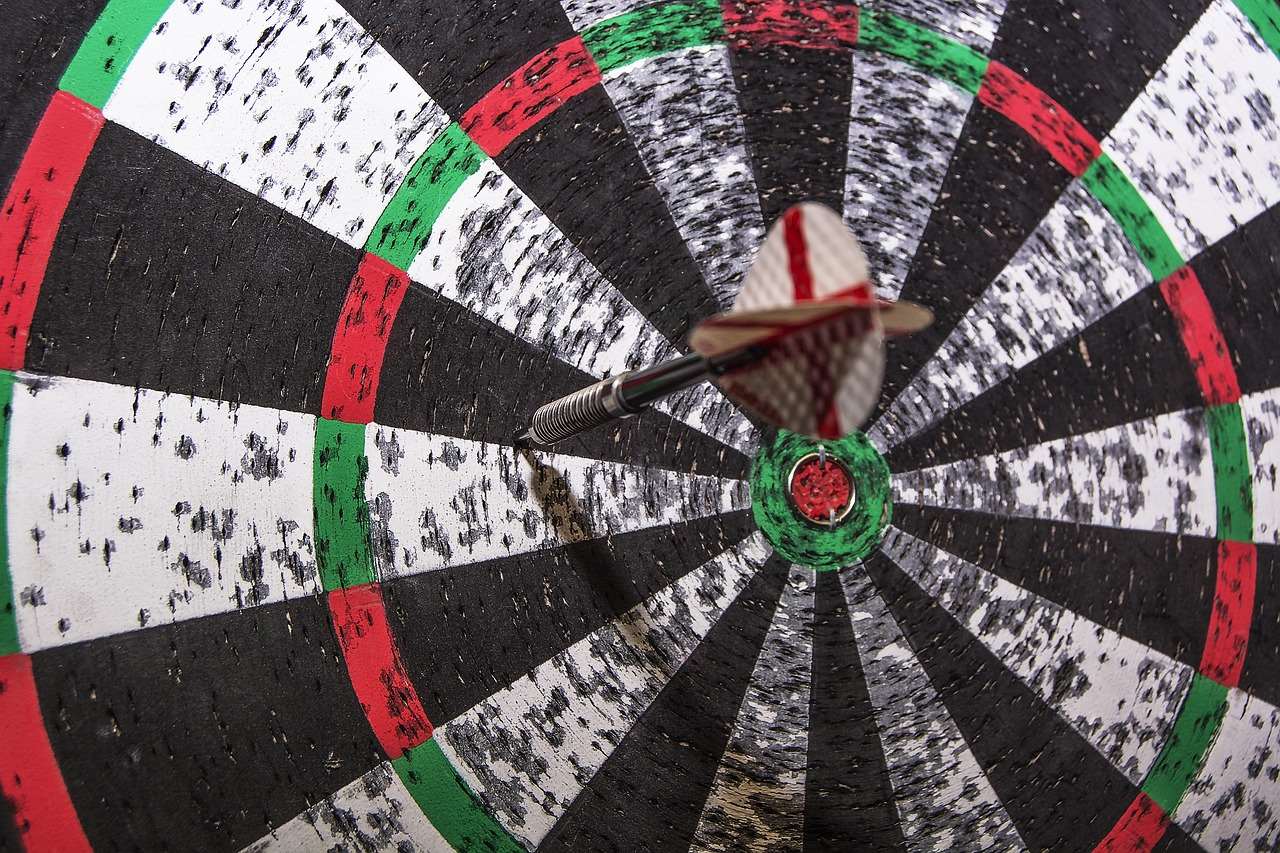
Dirty or damaged darts can significantly impact your accuracy. Regularly clean your darts to remove dirt and grime, and inspect them for any signs of damage, such as bent flights or loose points. Replace damaged parts promptly to maintain optimal performance. And, learn about Darts Variants Fun Games too.
Overthinking and Analysis Paralysis
While strategy is important, overthinking can be detrimental. Avoid getting bogged down in excessive analysis or second-guessing your decisions. Trust your instincts and focus on executing your throws with confidence. Find out how modify dart games skill gap.
Choosing the Right Equipment
Selecting the right darts and accessories can significantly impact your performance. Here’s a quick guide:
Dart Weight and Material
Darts come in various weights, typically ranging from 16 to 30 grams. Lighter darts are generally easier to control, while heavier darts offer more stability in flight. Experiment with different weights to find what feels most comfortable and accurate for you. Darts are typically made from brass, nickel-silver, or tungsten. Tungsten darts are more dense and allow for a slimmer profile, which can be advantageous for grouping darts closer together.
Shafts and Flights
Shafts connect the dart barrel to the flights. They come in various lengths and materials, such as nylon, aluminum, and carbon fiber. Longer shafts tend to provide more stability, while shorter shafts offer greater maneuverability. Flights are the wings of the dart and are responsible for stabilizing its flight path. They come in various shapes, sizes, and materials. Larger flights provide more stability but can also create more drag. Experiment with different combinations of shafts and flights to find what works best for your throwing style.

Dartboard Quality
A high-quality dartboard is essential for accurate scoring and durability. Sisal fiber dartboards are the most common and durable type. Look for a dartboard with thin wires to minimize bounce-outs and a self-healing surface that will withstand repeated use. Rotating your dartboard regularly can also help to extend its lifespan.
Round the World Darts Challenge: A Fun and Effective Training Tool
The Round the World darts challenge isn’t just a game; it’s a valuable training tool for improving your overall darting skills. By systematically targeting each number on the board, you’ll develop greater accuracy, consistency, and mental focus. Whether you’re a beginner or an experienced player, incorporating “Round the World” into your practice routine can help you elevate your game to the next level.

Conclusion: Embrace the Challenge
The Round the World darts challenge offers a simple yet effective way to hone your darting skills. By understanding the rules, implementing strategic techniques, avoiding common mistakes, and choosing the right equipment, you can transform yourself into a more accurate and consistent player. Whether you’re practicing solo or competing with friends, embrace the challenge and enjoy the journey of mastering this classic darts game. Now, grab your darts, step up to the oche, and start your journey around the world! Don’t forget to track your progress and set new goals to continually improve your game. Good luck and happy darting!

Hi, I’m Dieter, and I created Dartcounter (Dartcounterapp.com). My motivation wasn’t being a darts expert – quite the opposite! When I first started playing, I loved the game but found keeping accurate scores and tracking stats difficult and distracting.
I figured I couldn’t be the only one struggling with this. So, I decided to build a solution: an easy-to-use application that everyone, no matter their experience level, could use to manage scoring effortlessly.
My goal for Dartcounter was simple: let the app handle the numbers – the scoring, the averages, the stats, even checkout suggestions – so players could focus purely on their throw and enjoying the game. It began as a way to solve my own beginner’s problem, and I’m thrilled it has grown into a helpful tool for the wider darts community.