The core of successful puzzle element darts game design lies in cleverly integrating logical challenges with the skill-based mechanics of darts, creating an engaging and intellectually stimulating experience. This article explores various methods to achieve this synergy, covering puzzle integration strategies, difficulty scaling, and example game designs to inspire your own creations.
⚠️ Still Using Pen & Paper (or a Chalkboard)?! ⚠️
Step into the future! The Dart Counter App handles all the scoring, suggests checkouts, and tracks your stats automatically. It's easier than you think!
Try the Smart Dart Counter App FREE!Ready for an upgrade? Click above!
Exploring the Fusion of Puzzles and Darts
Combining the strategic thinking required by puzzles with the physical dexterity of darts offers a unique gameplay experience. The key is to find ways to make the darts themselves the tool for solving the puzzle, rather than simply a means to an end. Think beyond simply hitting targets – consider targets with specific properties, sequences that must be followed, or spatial relationships that need to be manipulated.
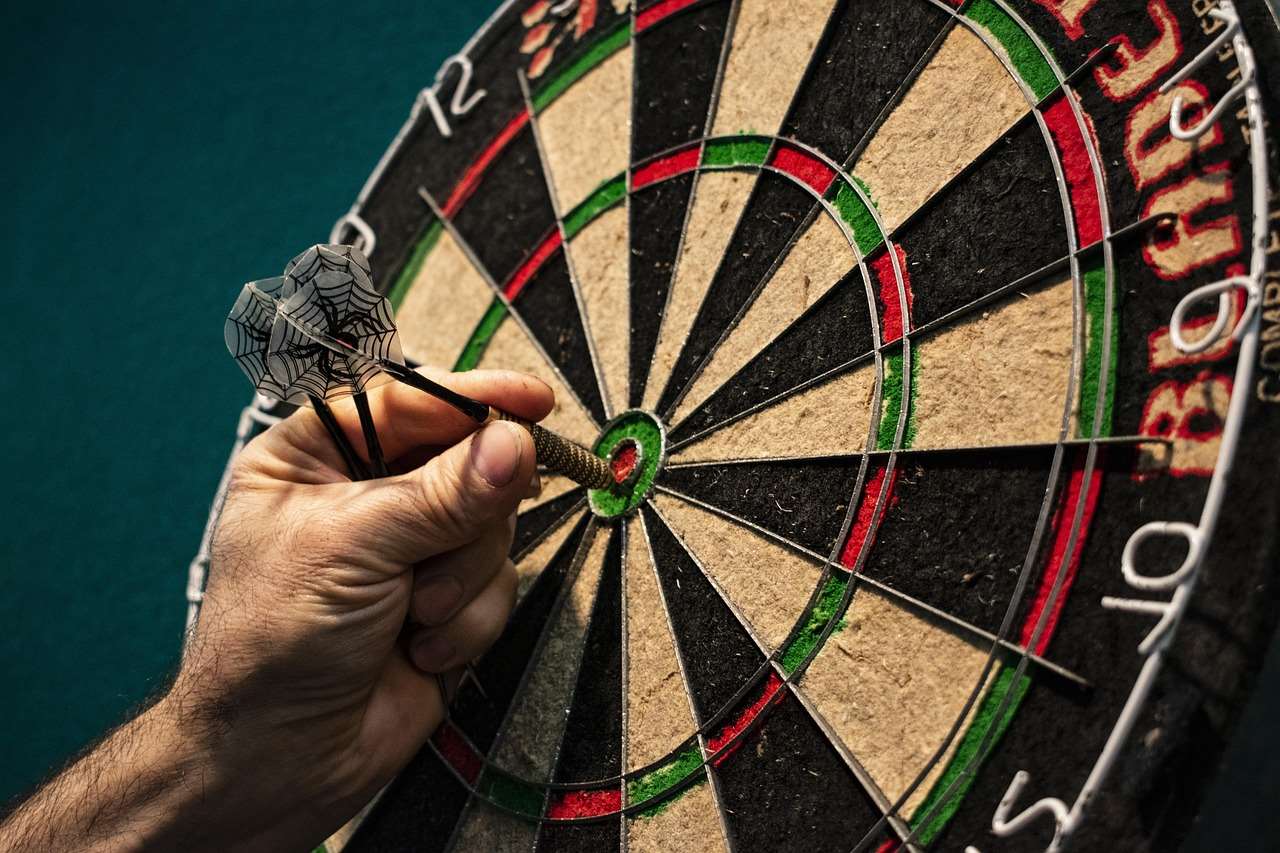
The challenge lies in balancing the **puzzle element** with the inherent randomness and skill component of darts. A puzzle that is too easy trivializes the darts aspect, while one that is too difficult can lead to frustration and a feeling that skill is irrelevant. Careful consideration must be given to the target arrangement, scoring system, and the specific rules of the game.
Strategies for Integrating Puzzles into Darts Games
Several approaches can be employed to effectively integrate puzzles into a darts game. Here are a few core strategies:
- Sequential Targeting: Require players to hit targets in a specific order to unlock further gameplay or score points. This could involve hitting numbered targets in ascending order, or following a more complex sequence indicated by a visual cue.
- Spatial Reasoning: Present targets arranged in a particular pattern, and require players to analyze the pattern to determine the optimal dart placement. This could involve recreating a mirror image, hitting targets to form a specific shape, or using the darts to “draw” a line through a series of targets.
- Mathematical Puzzles: Incorporate mathematical equations or calculations into the game. For example, players might need to hit targets that add up to a specific number, or solve a simple algebraic equation by assigning numerical values to different targets. This might involve adjusting dart game rules depending on the skill level.
- Logic Puzzles: Introduce elements of logic and deduction. Targets could be assigned different attributes (e.g., color, shape, symbol), and players need to follow a set of rules to determine which targets to hit.
- Obstacle Course: Add physical obstacles between the player and the dartboard to make the game more challenging and engaging. This encourages adapting darts games skills.
Scaling Difficulty in Puzzle Darts Games
A crucial aspect of puzzle element darts game design is the ability to scale the difficulty of the puzzles to accommodate different skill levels. This ensures that the game remains challenging and engaging for both novice and experienced players.
Methods for Adjusting Puzzle Difficulty:
- Target Size and Placement: Larger targets are easier to hit, while smaller targets and more challenging placements increase the difficulty.
- Time Limits: Adding a time limit increases the pressure and requires players to think more quickly.
- Number of Darts: Limiting the number of darts available increases the stakes and forces players to be more precise.
- Complexity of the Puzzle: The more complex the puzzle, the more challenging it will be to solve. This could involve increasing the number of steps required, adding more variables, or introducing more abstract concepts.
- Obstacle Complexity: Adding more obstacles will likely make the game harder, and require more skill.
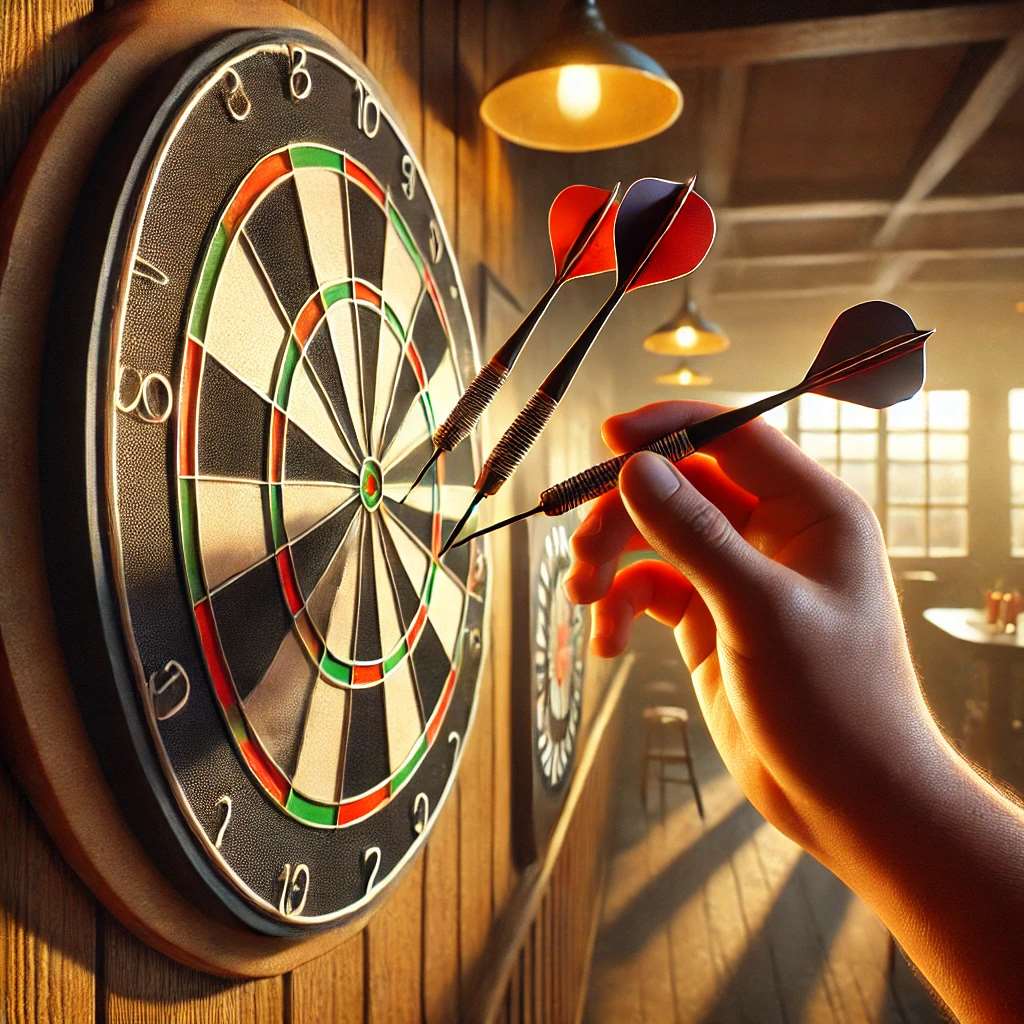
Consider implementing a handicap system to further balance the playing field. This is particularly useful in darts for mixed ability groups. A handicap system can involve giving less skilled players more darts, larger target sizes, or bonus points.
Example Puzzle Darts Game Designs
To illustrate the concepts discussed above, here are a few example game designs that incorporate puzzle element darts game design:
Code Breaker Darts
This game combines sequential targeting with logic puzzles. The dartboard is divided into sections, each representing a different symbol (e.g., square, triangle, circle). A code is presented to the player, consisting of a sequence of symbols. The player must hit the corresponding sections of the dartboard in the correct order to “break the code” and score points. This can be achieved when making darts games fair players.
Math Darts
This game involves mathematical calculations. Each section of the dartboard is assigned a numerical value. The player is given a target number and must hit sections of the dartboard that add up to the target number. Variations could include multiplication, division, or algebraic equations.
Shape Shifter Darts
This game focuses on spatial reasoning. The dartboard is divided into sections, and the player is presented with a geometric shape. The player must hit the sections of the dartboard that correspond to the shape. Difficulty can be increased by using more complex shapes or by requiring the player to recreate the shape in a specific orientation. Make sure the Darts Variants Fun Games are safe for the player.
Color Code Darts
Each section of the dartboard is assigned a color. The player is presented with a sequence of colors. The player must hit the corresponding sections of the dartboard in the correct order to score points. This could be a simple memory game.
Advanced Considerations for Puzzle Element Darts Game Design
Beyond the basic concepts, several advanced considerations can further enhance the quality and appeal of your puzzle element darts game design:
- Thematic Integration: Consider integrating the puzzle elements into a broader theme or narrative. This can add depth and immersion to the gameplay experience.
- Dynamic Puzzles: Implement puzzles that change dynamically based on the player’s actions or the current state of the game.
- User Interface (UI) Design: A well-designed UI can significantly enhance the player experience by providing clear instructions, visual cues, and feedback. This is especially important for complex puzzles.
- Testing and Iteration: Thoroughly test your game with different players and iterate on the design based on their feedback.
- Consider Different Darts games different skill levels.
Tools and Technologies for Creating Puzzle Darts Games
While traditional darts games require only a dartboard and darts, creating more complex puzzle-based games may benefit from leveraging technology. Consider using the following:
- Software Development Kits (SDKs): SDKs can be used to create custom scoring systems, puzzle generators, and user interfaces.
- Computer Vision: Computer vision technology can be used to track the position of darts and provide real-time feedback to the player.
- Projection Mapping: Projection mapping can be used to create dynamic and interactive visuals on the dartboard.
The Future of Puzzle Darts Games
The future of puzzle element darts game design is bright, with potential for innovative and engaging experiences that combine the best of physical skill and mental acuity. As technology continues to evolve, we can expect to see even more sophisticated and immersive puzzle darts games that push the boundaries of what is possible. Embrace creative thinking, experiment with different puzzle types, and leverage technology to create truly unique and unforgettable gaming experiences.
Conclusion
In conclusion, integrating puzzle elements into darts games opens up a world of possibilities for creating engaging and intellectually stimulating experiences. By carefully balancing skill and strategy, scaling difficulty appropriately, and leveraging technology, you can design puzzle darts games that appeal to a wide range of players. Remember to prioritize clear game mechanics, user-friendly design, and thorough testing to ensure a rewarding and enjoyable experience. Embrace the challenge, explore new ideas, and create the next generation of innovative puzzle darts games. Start designing your own game today!

Hi, I’m Dieter, and I created Dartcounter (Dartcounterapp.com). My motivation wasn’t being a darts expert – quite the opposite! When I first started playing, I loved the game but found keeping accurate scores and tracking stats difficult and distracting.
I figured I couldn’t be the only one struggling with this. So, I decided to build a solution: an easy-to-use application that everyone, no matter their experience level, could use to manage scoring effortlessly.
My goal for Dartcounter was simple: let the app handle the numbers – the scoring, the averages, the stats, even checkout suggestions – so players could focus purely on their throw and enjoying the game. It began as a way to solve my own beginner’s problem, and I’m thrilled it has grown into a helpful tool for the wider darts community.