Finding the sweet spot in price vs performance dart equipment means understanding where to invest your money to improve your game without breaking the bank; this article will guide you through selecting the best dart setup for your skill level and budget, covering everything from darts and dartboards to accessories.
⚠️ Still Using Pen & Paper (or a Chalkboard)?! ⚠️
Step into the future! The Dart Counter App handles all the scoring, suggests checkouts, and tracks your stats automatically. It's easier than you think!
Try the Smart Dart Counter App FREE!Ready for an upgrade? Click above!
Understanding the Landscape of Price vs Performance Dart Equipment
When evaluating price vs performance dart equipment, it’s essential to understand that price doesn’t always equate to performance. A higher price tag might indicate better materials or craftsmanship, but it might not translate directly into improved scores for every player. Instead, the ideal equipment depends on individual factors such as grip style, throwing technique, and personal preferences.
Before diving into specific equipment, let’s clarify what we mean by “performance.” In darts, performance generally refers to:
- Accuracy: How consistently you hit your intended target.
- Consistency: How repeatable your throws are over time.
- Comfort: How well the equipment feels in your hand, impacting your confidence and control.
These factors are all interconnected and influenced by the dart’s weight, shape, grip, and material, as well as the dartboard’s construction and the surrounding setup. Thinking about these metrics will help you when you Choose Best Dart Equipment.
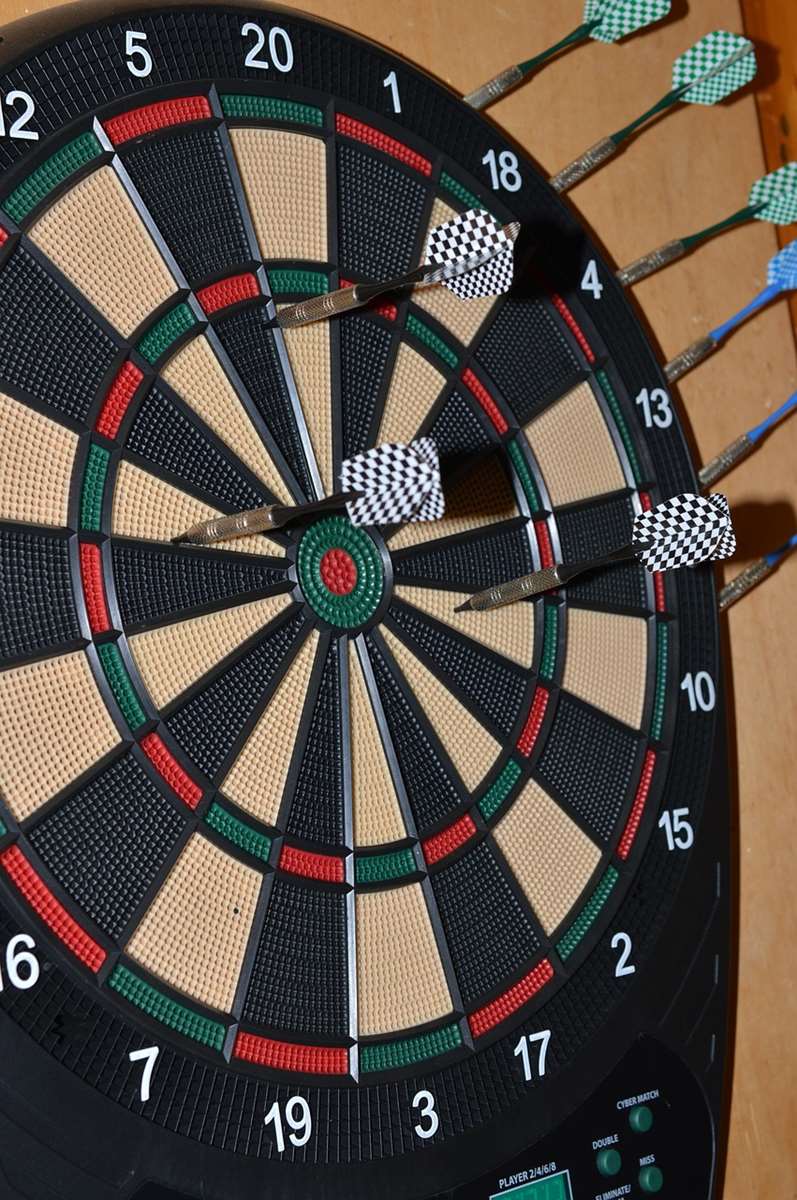
Darts: Steel Tip vs Soft Tip
The first major decision is whether to go with steel tip or soft tip darts. Steel tip darts are primarily used on bristle dartboards and are generally favored in professional settings and traditional pubs. Soft tip darts, on the other hand, are designed for electronic dartboards and are more common in casual settings and arcades.
Steel Tip Darts: Material and Weight
Steel tip darts are typically made of brass, nickel silver, or tungsten. Each material offers a different balance of durability, density, and price:
- Brass: The most affordable option, brass darts are good for beginners. They are bulkier than other materials, which can affect grouping, and may not last as long.
- Nickel Silver: A step up from brass, nickel silver darts offer better durability and a slightly slimmer profile.
- Tungsten: The premium choice, tungsten darts are incredibly dense, allowing for a slimmer barrel. This leads to tighter groupings and more consistent throws, especially for experienced players. Tungsten darts come in varying percentages (e.g., 80%, 90%, 95%), with higher percentages indicating greater density and price. Think about What Makes Darts Premium Quality when selecting darts.
Weight is another critical factor. Darts typically range from 18 to 30 grams. Lighter darts may be easier to control for beginners, while heavier darts can offer more stability in the air. Experiment to find what weight feels most comfortable and natural for you.
Soft Tip Darts: Considerations
Soft tip darts also come in various materials, but the weight is often limited to a maximum of 18 grams due to electronic dartboard regulations. The tips are made of plastic and are designed to break upon impact to protect the board. Replacing tips is a routine part of playing soft tip darts.
When choosing soft tip darts, focus on the grip and barrel shape, just like with steel tip darts. The weight distribution and balance should feel comfortable and allow for a consistent release. Also, consider the cost of replacement tips when factoring in the long-term expense of soft tip darts.
Dartboards: Bristle vs Electronic
The dartboard is just as crucial as the darts themselves. Again, you have the choice between bristle (steel tip) and electronic (soft tip) dartboards. The choice here is essential, as it will influence your selection of darts as well.
Bristle Dartboards: Quality and Construction
Bristle dartboards are made from tightly packed sisal fibers. Quality bristle boards offer several advantages:
- Self-Healing: The fibers naturally close up after being pierced by a dart, extending the board’s lifespan.
- Minimal Bounce-Outs: High-quality boards have thin wire dividers and staple-free bullseyes, reducing the chance of darts bouncing out.
- Durability: A well-made bristle dartboard can last for years with proper care and rotation.
Look for boards with thin, knife-edged wiring and a consistent fiber density. Rotating the board regularly will help distribute wear and tear evenly, prolonging its life.
Electronic Dartboards: Features and Benefits
Electronic dartboards offer automated scoring, game variations, and player tracking. They are ideal for social gatherings and practice sessions. However, they also have some drawbacks:
- Plastic Segments: The plastic segments are more prone to wear and tear than bristle fibers and can develop “spider webbing” over time.
- Noise: The electronic scoring mechanism can be noisy, which may be a concern in quiet environments.
- Dependence on Power: Electronic dartboards require a power source, limiting their portability.
When choosing an electronic dartboard, look for models with durable segments, clear displays, and a wide range of game options. Consider the noise level and power requirements before making a purchase.
Accessories: Enhancing Your Darts Experience
Beyond darts and dartboards, several accessories can enhance your darts experience and improve your performance. These include flights, shafts, dart mats, and lighting.
Flights and Shafts: Fine-Tuning Your Throw
Flights and shafts are the most customizable parts of a dart. Flights affect the dart’s aerodynamics, while shafts influence its balance and stability. Experiment with different shapes, sizes, and materials to find the combination that works best for you. A good starting point might be exploring a Buying Guide Budget Premium Dart Sets.
- Flights: Common flight shapes include standard, kite, slim, and pear. Larger flights provide more stability but can slow the dart down. Smaller flights offer less drag but may be less forgiving.
- Shafts: Shafts come in various lengths and materials, such as nylon, aluminum, and carbon fiber. Longer shafts move the center of gravity towards the rear of the dart, while shorter shafts move it forward.
Replacing flights and shafts regularly is essential, as they wear out over time and can affect your throw’s consistency.
Dart Mats and Lighting: Creating the Perfect Setup
A dart mat protects your floor from stray darts and provides a consistent throwing distance. Look for mats with clearly marked oche lines (the line you stand behind when throwing). Good lighting is also crucial for accurate aiming. Position a light above the dartboard to eliminate shadows and provide clear visibility.
Price Breakdown: Budget vs. Premium Options
Let’s examine the price ranges for different types of price vs performance dart equipment:
- Budget Darts (Brass/Entry-Level): $15 – $30
- Mid-Range Darts (Nickel Silver/80% Tungsten): $30 – $75
- Premium Darts (90%+ Tungsten): $75+
- Budget Bristle Dartboards: $30 – $50
- Mid-Range Bristle Dartboards: $50 – $100
- Premium Bristle Dartboards: $100+
- Entry-Level Electronic Dartboards: $50 – $100
- Advanced Electronic Dartboards: $100+
Keep in mind that these are just estimates, and prices can vary depending on the brand, features, and retailer. When Finding Value Budget Dart Sets, remember that sales and discounts can significantly impact the final cost.
Making the Right Choice: Balancing Cost and Performance
When deciding on your dart equipment, consider the following factors:
- Skill Level: Beginners may not need to invest in premium equipment right away. Entry-level darts and dartboards can provide a solid foundation for learning the game.
- Frequency of Play: If you play darts frequently, investing in more durable and high-quality equipment is a worthwhile investment.
- Personal Preferences: Experiment with different weights, shapes, and materials to find what feels most comfortable and natural for you.
Conclusion: Invest Wisely in Your Dart Game
The key to achieving optimal price vs performance dart equipment is to carefully evaluate your needs, budget, and preferences. Start with the fundamentals – a decent set of darts and a good dartboard – and gradually upgrade your equipment as your skills improve. Don’t be afraid to experiment with different accessories and setups to find what works best for you. Ultimately, the goal is to create a comfortable and consistent setup that allows you to enjoy the game and improve your performance. Ready to upgrade your game? Investing In Premium Dart Equipment might be the next step for you.

Hi, I’m Dieter, and I created Dartcounter (Dartcounterapp.com). My motivation wasn’t being a darts expert – quite the opposite! When I first started playing, I loved the game but found keeping accurate scores and tracking stats difficult and distracting.
I figured I couldn’t be the only one struggling with this. So, I decided to build a solution: an easy-to-use application that everyone, no matter their experience level, could use to manage scoring effortlessly.
My goal for Dartcounter was simple: let the app handle the numbers – the scoring, the averages, the stats, even checkout suggestions – so players could focus purely on their throw and enjoying the game. It began as a way to solve my own beginner’s problem, and I’m thrilled it has grown into a helpful tool for the wider darts community.