The act of pointing in darts directly influences your accuracy; consistently pointing towards your desired target before each throw significantly improves your chances of hitting it. This article dives into the nuances of effective pointing in darts, exploring techniques, stance, and mental preparation to help you sharpen your game and enhance your overall darting experience.
⚠️ Still Using Pen & Paper (or a Chalkboard)?! ⚠️
Step into the future! The Dart Counter App handles all the scoring, suggests checkouts, and tracks your stats automatically. It's easier than you think!
Try the Smart Dart Counter App FREE!Ready for an upgrade? Click above!
Understanding the Importance of Pointing in Darts
Many players underestimate the power of pointing in darts, often rushing the process or neglecting it altogether. However, this simple action is a crucial element in establishing a consistent and accurate throw. Effective pointing in darts isn’t just about aiming; it’s about creating a mental and physical connection between your intention and the dart’s trajectory. It helps to focus your mind on the target, visualize the path of the dart, and align your body for optimal delivery.
Think of pointing in darts as a pre-shot routine, similar to what golfers or basketball players use. It’s a moment to gather yourself, visualize success, and set the stage for a confident throw. By incorporating a consistent pointing technique, you can minimize distractions and increase your chances of landing your dart where you intend.
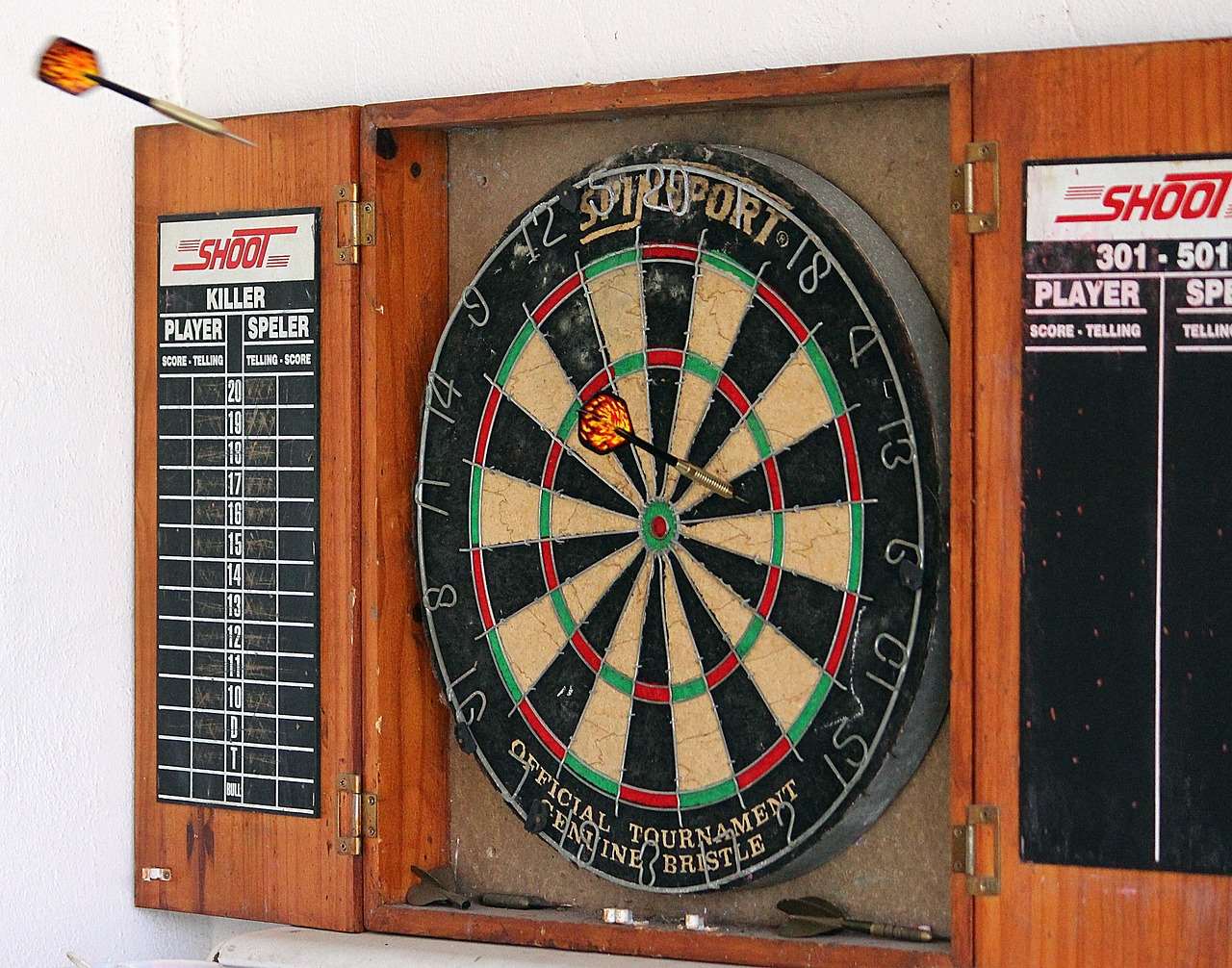
Techniques for Effective Pointing in Darts
There isn’t a single “right” way to point in darts; the best technique will depend on your individual style and preferences. However, there are some key principles that can help you develop a more effective pointing routine:
- Consistent Stance: A stable and balanced stance is the foundation for any good throw. Before you even think about pointing, ensure that your feet are planted firmly and your body is aligned with the target. Experiment with different stances to find what feels most comfortable and natural.
- Visual Focus: Once you’re in position, direct your gaze intently at your target. Avoid looking at the dartboard as a whole; instead, focus on the specific area you’re aiming for (e.g., the treble 20, a double, or a specific number).
- The Arm Extension: Extend your throwing arm towards the target, keeping your elbow relatively still. Some players prefer a full extension, while others prefer a slightly bent arm. Find what allows you to maintain control and accuracy.
- Dart Alignment: As you extend your arm, pay attention to the angle of the dart. It should be aligned with your target, allowing for a smooth and direct release. Use your wrist and fingers to make subtle adjustments to the dart’s position.
- The Pause: Before you release the dart, take a brief pause at the end of your pointing motion. This allows you to solidify your aim and mentally prepare for the throw.
Practice each of these elements individually, then gradually combine them into a seamless pointing routine. With consistent practice, you’ll develop a technique that feels natural and helps you to improve your accuracy. Don’t forget to check out Dart Counter App (https://dartcounterapp.com/) to track your progress.
Fine-Tuning Your Grip for Better Pointing
Your dart grip plays a crucial role in how accurately you can execute your pointing in darts technique. A grip that’s too tight can cause tension and lead to erratic throws, while a grip that’s too loose can result in a loss of control. Strive for a grip that’s firm enough to maintain control of the dart, but relaxed enough to allow for a smooth release. Experiment with different grip styles (e.g., two-finger, three-finger, four-finger) to find what works best for you. Proper grip will also help with dart trajectory.
Stance and Alignment: Essential for Accurate Pointing
Your stance in darts is the bedrock upon which your entire throw is built. If your stance is unstable or misaligned, even the most precise pointing in darts technique will be compromised. Most players favor an angled stance, positioning their throwing-side foot slightly forward and towards the oche. This allows for a natural swing and reduces the risk of leaning too far forward. Ensure your shoulders are aligned with the target, and your weight is evenly distributed. Remember to adjust your stance according to your preference. If you are struggling with your throw it may be helpful to review some darts tutorials.
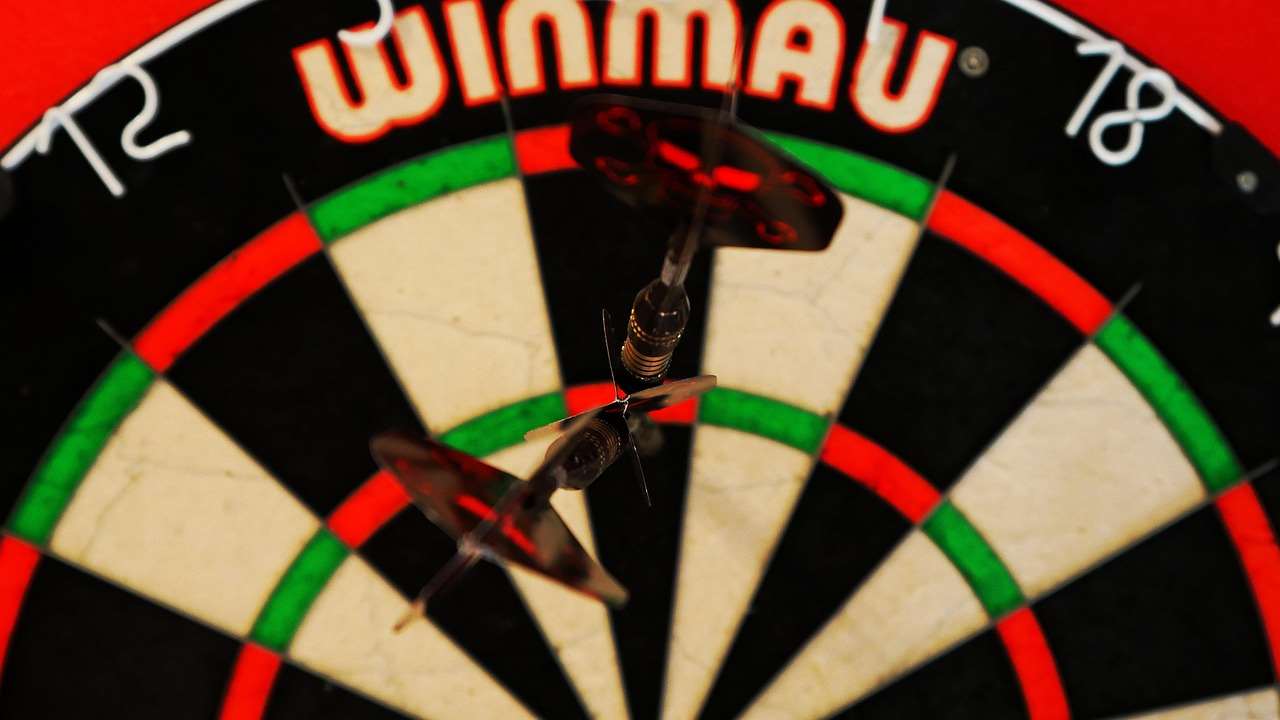
Experiment with different foot positions and angles to find what feels most comfortable and stable. A solid stance will provide a stable base for your pointing motion and help you to maintain consistency throughout your throw. Consider a loxley the bull darts review if you are looking for new darts.
The Mental Game: Visualizing Your Pointing
Pointing in darts isn’t just a physical act; it’s also a mental one. Before you step up to the oche, take a moment to visualize your throw. Imagine the dart leaving your hand, flying through the air, and landing precisely where you want it to. This mental rehearsal can help to boost your confidence and improve your focus. During the pointing process, reinforce this mental image by focusing intently on your target. Block out any distractions and maintain a clear picture of your desired outcome. If you want to add some fun to your practices, try using some darts scoreboard ideas.
Positive self-talk can also be a powerful tool. Remind yourself of your skills and your ability to hit the target. Replace any negative thoughts or doubts with positive affirmations. A strong mental game can make a significant difference in your overall performance. It can also help to overcome dartitis.
Common Mistakes to Avoid in Pointing
Even with the best intentions, it’s easy to fall into common traps that can undermine your pointing in darts technique. Here are some mistakes to watch out for:
- Rushing the Pointing Process: Don’t hurry your pointing routine. Take your time to align your body, focus your mind, and visualize your throw. Rushing the process can lead to sloppy throws and missed targets.
- Drifting Eyes: Avoid looking away from your target during the pointing process. Maintain consistent visual focus on the specific area you’re aiming for.
- Tension in the Arm: Keep your throwing arm relaxed and fluid. Tension can disrupt your throw and reduce your accuracy.
- Inconsistent Routine: Varying your pointing routine from throw to throw can lead to inconsistent results. Strive to develop a consistent routine and stick to it as much as possible.
- Overthinking: While mental focus is important, overthinking can be detrimental. Try to find a balance between focusing on your technique and letting your natural instincts take over.
Drills and Exercises to Improve Pointing
Practice is essential for mastering any skill, and pointing in darts is no exception. Here are some drills and exercises you can use to improve your technique:
- Target Practice: Spend time focusing solely on your pointing technique, without worrying about your score. Aim for specific targets on the dartboard and focus on maintaining a consistent routine.
- Mirror Practice: Practice your pointing routine in front of a mirror to identify any flaws in your technique. Pay attention to your stance, arm position, and visual focus.
- Blind Practice: With your eyes closed, go through your pointing routine. This will help you to develop a better feel for your body position and alignment.
- Pressure Practice: Simulate the pressure of a real game by setting up challenging scenarios (e.g., requiring a specific checkout) and practicing your pointing technique under pressure.
Remember to be patient and persistent. It takes time and effort to develop a consistent and accurate pointing technique. As you practice, focus on making small improvements and celebrating your progress along the way. You can even enjoy some darts winner music while practicing to help you stay motivated.
Gear and Equipment Considerations
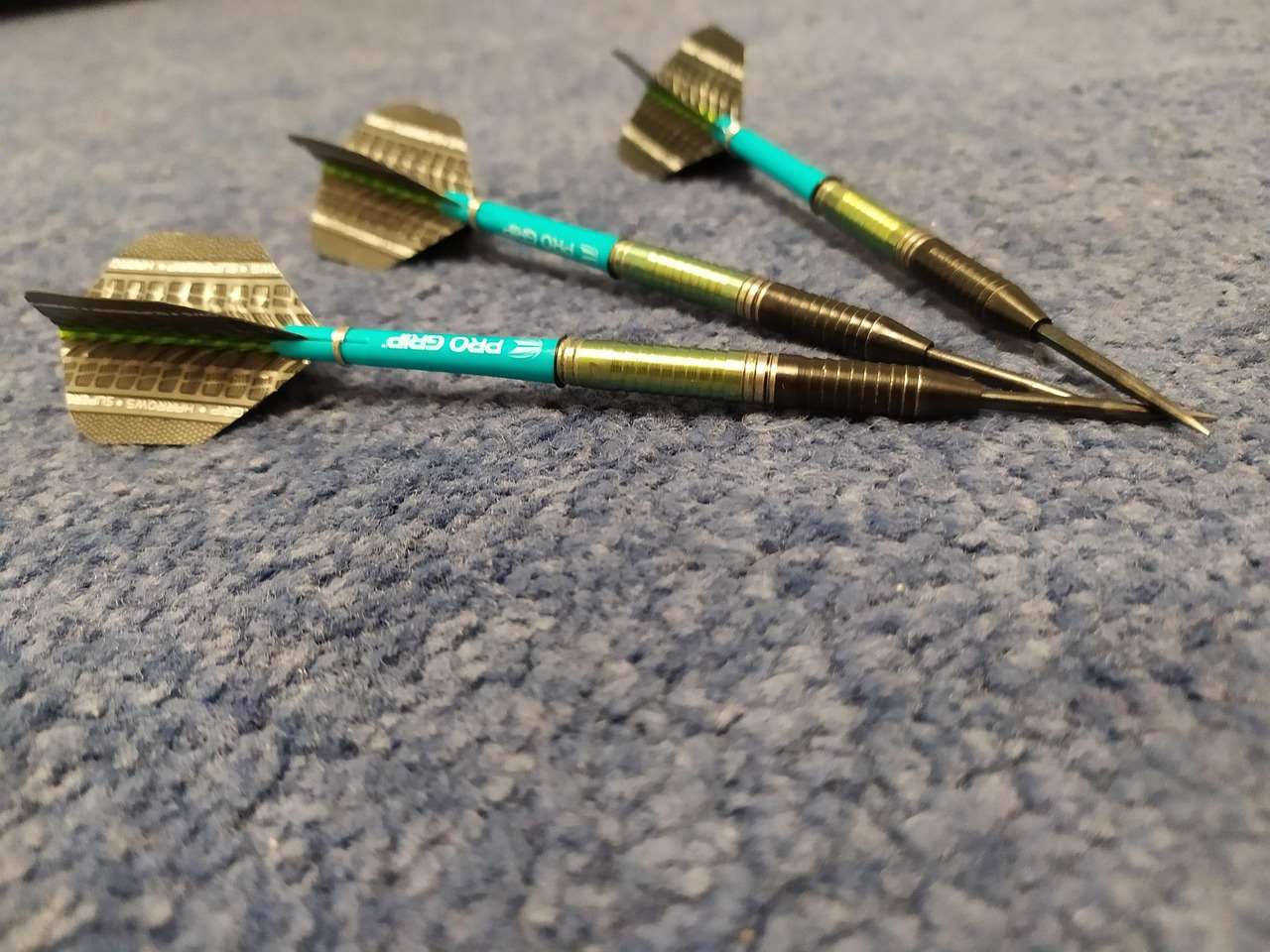
While technique is paramount, having the right gear can also contribute to your success in darts. Choosing the right darts, dartboard, and accessories can enhance your overall playing experience and potentially improve your accuracy. Consider factors such as dart weight, barrel grip, and flight shape when selecting your darts. Experiment with different combinations to find what feels most comfortable and suits your throwing style. Additionally, make sure your dartboard is properly mounted and well-lit to ensure optimal visibility. Getting familiar with darts equipment will also help.
Advanced Techniques and Strategies
Once you’ve mastered the fundamentals of pointing in darts, you can start exploring more advanced techniques and strategies. One such technique is to use your pointing motion to subtly adjust your aim based on previous throws. For example, if your first dart lands slightly to the left of your target, you can adjust your pointing to compensate for this error on your subsequent throws. Another strategy is to use different pointing techniques for different targets. For example, you might use a more deliberate and focused pointing routine when aiming for a difficult double, and a more relaxed and intuitive pointing routine when throwing for a simple single. It is also useful to learn about dart pow double strategy.
Adapting Pointing to Different Dartboard Setups
Dartboard setups can vary slightly depending on the venue or league rules. It’s important to be adaptable and adjust your pointing in darts accordingly. Factors such as the height of the dartboard, the distance to the oche, and the lighting conditions can all affect your aim. Before you start playing, take a few moments to familiarize yourself with the setup and make any necessary adjustments to your stance and pointing technique. If the dartboard is slightly higher or lower than usual, you may need to adjust your arm angle. If the lighting is poor, you may need to focus more intently on your target to compensate for the reduced visibility.
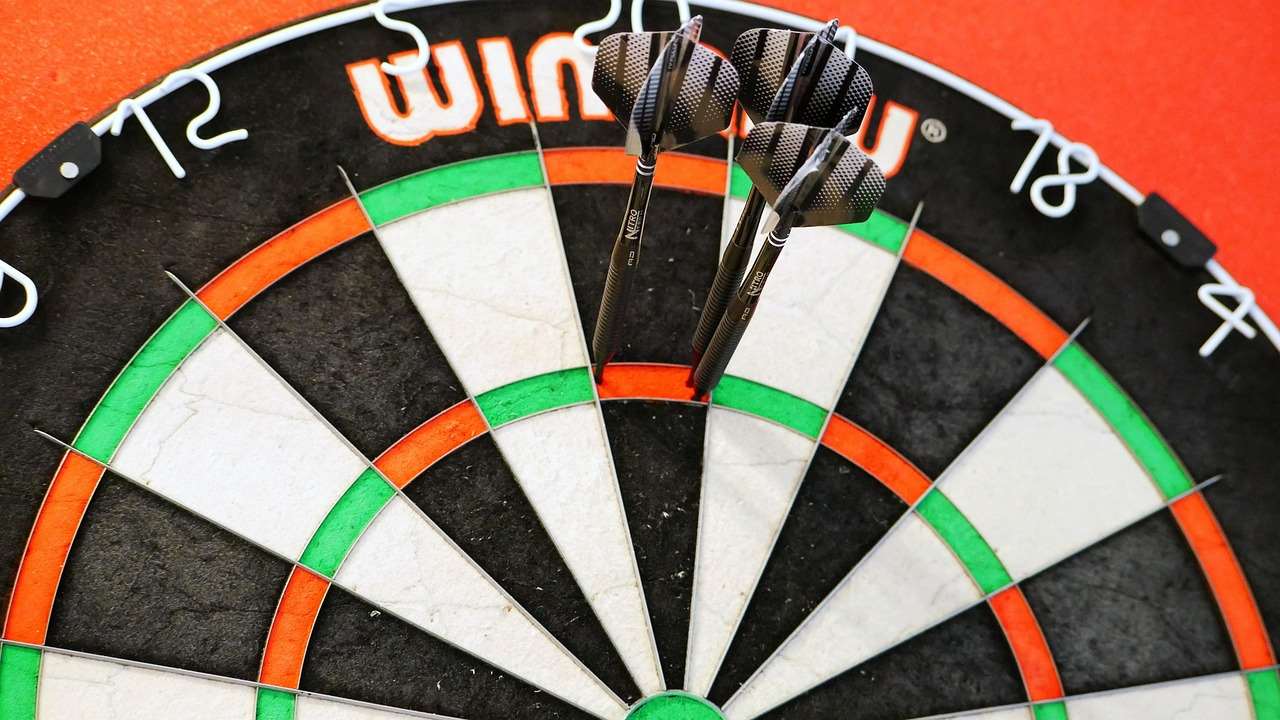
Conclusion: Mastering the Art of Pointing in Darts
Pointing in darts is a fundamental skill that can significantly impact your accuracy and consistency. By understanding the principles of effective pointing, practicing regularly, and avoiding common mistakes, you can develop a technique that works for you and helps you to achieve your darting goals. Remember to focus on your stance, alignment, visual focus, and mental game. With dedication and perseverance, you can master the art of pointing in darts and take your game to the next level. Now go out there, practice your pointing, and start hitting those targets! Consider entering darts major events to put your skills to the test.

Hi, I’m Dieter, and I created Dartcounter (Dartcounterapp.com). My motivation wasn’t being a darts expert – quite the opposite! When I first started playing, I loved the game but found keeping accurate scores and tracking stats difficult and distracting.
I figured I couldn’t be the only one struggling with this. So, I decided to build a solution: an easy-to-use application that everyone, no matter their experience level, could use to manage scoring effortlessly.
My goal for Dartcounter was simple: let the app handle the numbers – the scoring, the averages, the stats, even checkout suggestions – so players could focus purely on their throw and enjoying the game. It began as a way to solve my own beginner’s problem, and I’m thrilled it has grown into a helpful tool for the wider darts community.