The point length effect accuracy refers to how the length of your dart point impacts your dart’s stability in flight and its ability to stick in the dartboard; selecting the right point length can significantly improve your scores. This article delves into the science behind this effect, helping you understand how point length affects dart trajectory, board retention, and overall throwing accuracy, plus provides practical tips for choosing the optimal point length for your specific darts and throwing style.
⚠️ Still Using Pen & Paper (or a Chalkboard)?! ⚠️
Step into the future! The Dart Counter App handles all the scoring, suggests checkouts, and tracks your stats automatically. It's easier than you think!
Try the Smart Dart Counter App FREE!Ready for an upgrade? Click above!
Understanding Point Length and Its Significance
The seemingly simple dart point plays a critical role in the dart’s overall performance. When discussing point length effect accuracy, we’re really talking about balancing aerodynamics, weight distribution, and board grip. A point that’s too short might cause excessive bounce-outs, while a point that’s too long could destabilize the dart’s flight. Achieving optimal dart accuracy is a pursuit for most dart players, and point length is a key component of this.
Here’s a breakdown of why point length matters:
- Weight Distribution: The point contributes to the overall weight distribution of the dart. A longer point shifts the center of gravity forward, potentially influencing the dart’s trajectory.
- Aerodynamics: The point interacts with the air as the dart flies. A longer point might offer more stability in certain conditions, while a shorter point could reduce drag.
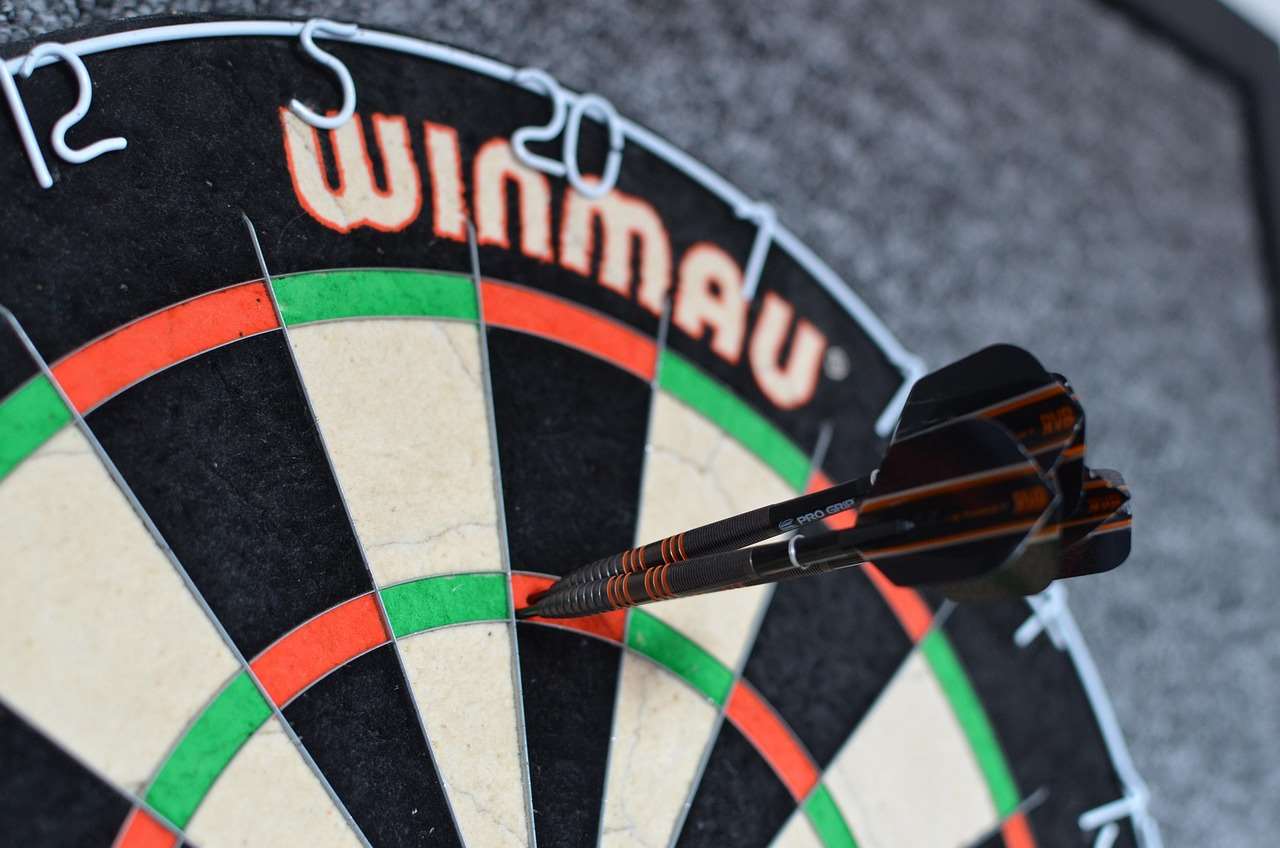
- Board Grip: The primary function of the point is to securely grip the dartboard. The length and design of the point determine how effectively it penetrates and holds within the sisal fibers.

How Point Length Affects Dart Trajectory
The length of your dart point directly impacts its trajectory. A longer point, by shifting the weight forward, can make the dart fly with a slightly lower arc. This is because the forward center of gravity encourages the dart to straighten out earlier in its flight path. Conversely, a shorter point might lead to a higher arc, especially if the dart’s weight is concentrated towards the rear. Experimenting with different lengths can help you find the ideal trajectory for your throwing style.
Consider these points:
- Forward Weight: Longer points increase forward weight, potentially leading to a flatter trajectory and reduced fishtailing.
- Air Resistance: While minimal, a longer point can offer slightly more resistance, which might stabilize the dart in turbulent air.
- Personal Preference: Ultimately, the ideal trajectory depends on your individual throwing motion and release point.
Understanding the subtle interplay between point length and trajectory is crucial for achieving enhanced dart performance.
The Impact of Point Length on Board Retention and Bounce-Outs
One of the most frustrating experiences for any dart player is a bounce-out. The point length effect accuracy extends to how well your dart sticks in the board. A point that is too short might not penetrate deeply enough, leading to a higher chance of bouncing out. On the other hand, a point that is too long might not fit properly into the sisal fibers or cause excessive wear on the board.
Several factors influence board retention:
- Point Sharpness: A sharp point is essential for clean penetration, regardless of length.
- Point Design: Some points are designed with grooves or textures to improve grip.
- Board Condition: A worn-out dartboard will have looser fibers, making it harder for any point to hold.

Choosing the Right Point Length: Factors to Consider
Selecting the right point length isn’t a one-size-fits-all solution. Several factors come into play:
- Dart Weight: Heavier darts often benefit from slightly longer points for better balance.
- Dart Material: The barrel material can influence weight distribution, affecting the optimal point length.
- Throwing Style: Some players prefer a flatter trajectory, while others prefer a higher arc.
- Dartboard Type: Different dartboards have varying sisal densities, which can impact point penetration.
It’s generally recommended to start with a standard point length (around 30-35mm) and then experiment based on your experiences. Minor adjustments can make a significant difference in your dart throwing technique.
Practical Tips for Optimizing Point Length for Enhanced Accuracy
Optimizing your point length can drastically improve your scores. Here are some practical tips:
- Experimentation: Try different point lengths and carefully observe the impact on your dart’s flight and board retention.
- Recording Results: Keep track of your scores and bounce-out rates with different point lengths to identify patterns.
- Point Maintenance: Regularly check your points for sharpness and burrs. A dull or damaged point will negatively impact accuracy.
- Consider Conversion Points: For soft-tip dart players switching to steel-tip, conversion points allow the use of steel-tip boards. Choose Best Dart Equipment with the right conversion points will help.
Remember, achieving optimal Point Length Effect Accuracy requires patience and a willingness to fine-tune your setup. Small adjustments can lead to substantial improvements in your game.
Point Material and its impact on Point Length Effect Accuracy
While the point length itself is the primary factor discussed within Point Length Effect Accuracy, the material the point is made of also plays a subtle role. Common materials include steel, titanium, and various coatings that affect grip and durability. Steel points are the most common and generally offer a good balance of grip and longevity. Titanium points are lighter and can affect the dart’s overall weight distribution. Coatings can enhance grip or reduce friction when entering the board. Furthermore, the sharpness of the point material is critical for minimizing bounce outs. Regularly sharpening or replacing points can enhance dartboard retention, regardless of point length.

Advanced Techniques and Fine-Tuning
Once you have a good understanding of the basics, you can explore more advanced techniques to fine-tune your Point Length Effect Accuracy. This might involve experimenting with different point shapes, such as cone-shaped or rounded points. It could also involve using specialized tools to precisely measure and adjust the weight distribution of your darts. Furthermore, the type of dartboard and its age and wear impacts the ideal dartpoint material and length.
Consider the following advanced tips:
- Point Profiles: Experiment with different point profiles (e.g., smooth, grooved, knurled) to optimize grip.
- Weight Balancing: Use specialized tools to fine-tune the weight distribution of your darts.
- Professional Advice: Consult with experienced dart players or retailers for personalized recommendations.
Continual refinement is key to maximizing your potential darting performance.
Conclusion: Mastering Point Length for Superior Dart Accuracy
Mastering the Point Length Effect Accuracy is a journey that requires understanding, experimentation, and attention to detail. By carefully considering the factors discussed in this article – dart weight, throwing style, board type, and point material – you can significantly enhance your dart’s flight, board retention, and overall accuracy. Remember to prioritize regular point maintenance and be open to fine-tuning your setup over time. Choosing the right dart equipment, including proper point length, sets the foundation for improving your skills.
Take the time to experiment with different point lengths and find what works best for you. Consistent practice and thoughtful adjustments will ultimately lead to improved scores and a more enjoyable darting experience. Now, go out there and put your newfound knowledge into practice!

Hi, I’m Dieter, and I created Dartcounter (Dartcounterapp.com). My motivation wasn’t being a darts expert – quite the opposite! When I first started playing, I loved the game but found keeping accurate scores and tracking stats difficult and distracting.
I figured I couldn’t be the only one struggling with this. So, I decided to build a solution: an easy-to-use application that everyone, no matter their experience level, could use to manage scoring effortlessly.
My goal for Dartcounter was simple: let the app handle the numbers – the scoring, the averages, the stats, even checkout suggestions – so players could focus purely on their throw and enjoying the game. It began as a way to solve my own beginner’s problem, and I’m thrilled it has grown into a helpful tool for the wider darts community.