Ultimately, **matching flight shape to setup** hinges on balancing stability, aerodynamics, and personal grip and throwing style to achieve consistent dart trajectory and target accuracy; this article will explore the different flight shapes, shaft lengths, dart weights, and other factors influencing dart flight, offering practical advice on finding the ideal combination for your game.
⚠️ Still Using Pen & Paper (or a Chalkboard)?! ⚠️
Step into the future! The Dart Counter App handles all the scoring, suggests checkouts, and tracks your stats automatically. It's easier than you think!
Try the Smart Dart Counter App FREE!Ready for an upgrade? Click above!
The Importance of Matching Flight Shape To Setup
The world of darts is more complex than it might seem at first glance. Beyond just throwing a pointed projectile at a board, it’s a game of physics, precision, and personal preference. One crucial aspect of achieving consistent results is **matching flight shape to setup**. The dart flight, that often-overlooked piece of plastic or feather at the back of your dart, plays a vital role in determining its stability and trajectory.
Think of your dart as an airplane. The flights are like the wings and tail, providing lift and stability as it travels through the air. A well-chosen flight will help your dart fly straight and true, while an ill-suited one can cause wobbling, diving, or even prevent your dart from sticking in the board. Optimizing this connection is key to consistent scores. Choosing the right **dart stem** or **shaft length** can also play a massive part.
Understanding Different Flight Shapes
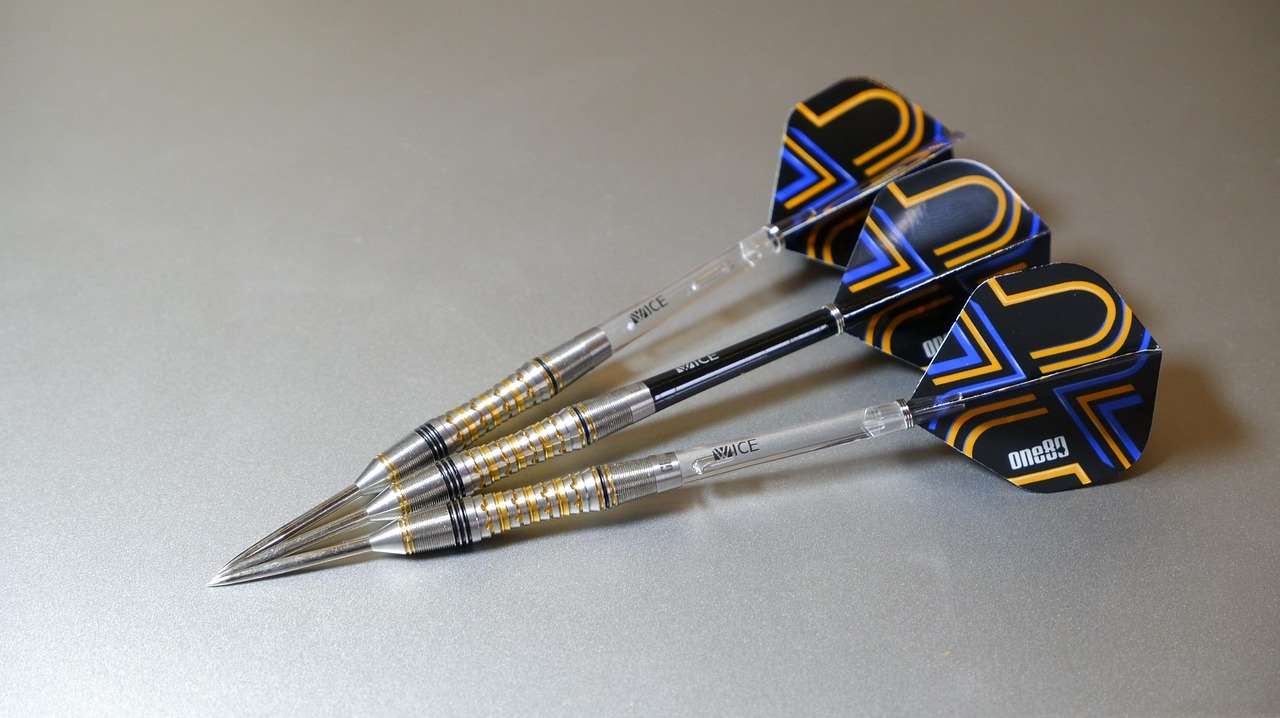
Dart flights come in a wide variety of shapes and sizes, each with its own unique aerodynamic properties. Some of the most common flight shapes include:
- Standard Flights: These are the most common and largest type of flight, offering maximum surface area and therefore, maximum stability. They are a good starting point for beginners and those who prefer a more controlled flight path.
- Slim Flights: As the name suggests, slim flights are narrower than standard flights, offering less drag and a faster, more direct flight. They are often favored by players with a faster throwing motion.
- Kite Flights: Kite flights are a hybrid shape, offering a balance between stability and speed. They are a good option for players who are looking for a versatile flight that can handle a variety of throwing styles.
- Pear Flights: Pear flights are wider at the base and taper towards the tip, offering a good balance of stability and drag. They are often used by players who have a powerful throw but struggle with accuracy.
- Vortex Flights: These flights have cuts in them which are designed to make the dart spin more.
Ultimately, the best flight shape for you will depend on your individual throwing style and preferences. Experimenting with different shapes is the best way to find what works best for you.
The Role of Shaft Length
Shaft length is another important factor to consider when setting up your darts. Longer shafts move the center of gravity further back, which can increase stability and reduce wobbling. Shorter shafts, on the other hand, move the center of gravity forward, which can increase speed and make the dart feel more responsive. Often beginners will buy the Choose Best Dart Equipment and neglect this element.
As a general rule, longer shafts are best suited for players who prefer a more controlled throwing style, while shorter shafts are better for players who prefer a more aggressive style. However, there are always exceptions to the rule, and the best way to find the right shaft length for you is to experiment. Remember, **shaft materials** (aluminum, nylon, etc.) also contribute to the overall feel and performance of the dart.
How Dart Weight Affects Flight
The weight of your dart also plays a significant role in its flight characteristics. Heavier darts tend to be more stable and less affected by air resistance, while lighter darts are more maneuverable and can be thrown with less effort. The weight of your dart has a huge impact on **dart aerodynamics**.
If you’re struggling with accuracy, try switching to a heavier dart. If you’re finding it difficult to throw your darts with enough power, try switching to a lighter dart. Again, experimentation is key to finding the perfect weight for your throwing style.
Matching Flight Shape To Setup: Practical Tips
Here are some practical tips for **matching flight shape to setup** and finding the right combination of flight shape, shaft length, and dart weight for your individual style:
- Start with Standard Flights: If you’re not sure where to start, standard flights are a good starting point. They offer a good balance of stability and control, making them suitable for a wide range of throwing styles.
- Adjust Shaft Length Based on Wobble: If your darts are wobbling in flight, try switching to a longer shaft. If they are diving downwards, try a shorter shaft.
- Experiment with Different Weights: Try throwing darts of different weights to see what feels most comfortable and produces the best results.
- Consider Your Grip: Your grip can also influence the type of flight that works best for you. If you have a loose grip, you may benefit from using a more stable flight. If you have a firm grip, you may be able to use a faster flight.
- Pay attention to flight wear and tear: Damaged flights can severely affect dart trajectory. Regularly check and replace worn flights.
Troubleshooting Common Flight Problems
Even with the right setup, you may still encounter problems with your dart flight. Here are some common issues and how to troubleshoot them:
- Dart is Wobbly: This can be caused by a number of factors, including an ill-suited flight shape, an improper shaft length, or an inconsistent grip. Try experimenting with different flight shapes and shaft lengths until you find a combination that eliminates the wobble.
- Dart is Diving Downwards: This is often caused by a shaft that is too long, or a flight that is too small. Try switching to a shorter shaft or a larger flight.
- Dart is Flying at an Angle: This can be caused by an inconsistent grip, an unbalanced dart, or a warped flight. Make sure you are gripping the dart consistently and that the flight is not damaged.
Advanced Considerations: Aerodynamics and Trajectory
For players looking to fine-tune their setup even further, understanding the principles of aerodynamics and trajectory can be beneficial. Flights generate lift and drag, influencing the dart’s path through the air. Smaller flights create less drag, resulting in a flatter trajectory and potentially higher speed. Larger flights provide more stability, which can be helpful for players with less consistent throws. Players often look into **budget vs premium darts compared** for the best results.
Experimenting with different flight shapes in conjunction with analyzing your dart’s trajectory can lead to significant improvements in accuracy and consistency. Consider filming your throws to identify any inconsistencies and make adjustments accordingly.
The Mental Game and Flight Selection
Believe it or not, the mental aspect of darts also plays a role in flight selection. Confidence in your equipment can translate into improved performance. If you feel more comfortable and confident with a particular flight shape, even if it’s not the “optimal” choice based on aerodynamic principles, stick with it. The psychological edge can be just as important as the technical advantages.
Don’t underestimate the power of belief. If you believe your darts will fly straight and true, they are more likely to do so. Of course, this belief should be based on a solid foundation of proper setup and technique.
Beyond the Basics: Customization and Personalization
Once you have a solid understanding of the fundamentals, you can start to explore more advanced customization options. This could involve experimenting with different flight materials (e.g., polyester, nylon, holographic), shaft materials (e.g., aluminum, carbon fiber), or even customizing your flights with your own designs or logos. Always consider the **quality comparison budget premium darts** when making choices on equipment.
The possibilities are endless, and the only limit is your imagination. However, it’s important to remember that the goal is to improve your performance, not just to make your darts look cool. Always prioritize functionality over aesthetics.
Finding the Right Balance: A Continuous Process
Finding the perfect dart setup is an ongoing process of experimentation and refinement. Your throwing style may evolve over time, and you may need to adjust your equipment accordingly. Don’t be afraid to try new things and to challenge your assumptions. The key is to stay open-minded and to always be looking for ways to improve.
Remember, there is no one-size-fits-all solution. What works for one player may not work for another. The best way to find what works for you is to experiment, to learn from your mistakes, and to never give up on your quest for the perfect dart setup. The process of **matching flight shape to setup** is ongoing and iterative.
The Future of Dart Flight Technology
The world of darts is constantly evolving, and new technologies are emerging all the time. In the future, we may see even more advanced dart flights that offer even greater stability, accuracy, and control. Imagine flights that automatically adjust to wind conditions, or flights that provide real-time feedback on your throwing technique. Players are always Finding Value Budget Dart Sets.
The possibilities are endless, and the future of darts is bright. As technology continues to advance, we can expect to see even more exciting innovations that will help players of all skill levels improve their game.
Conclusion
In conclusion, **matching flight shape to setup** is crucial for achieving consistent accuracy and improving your dart game. By understanding the different flight shapes, shaft lengths, and dart weights, and by experimenting with different combinations, you can find the perfect setup for your individual throwing style. Remember to consider your grip, analyze your trajectory, and don’t be afraid to customize your equipment to suit your personal preferences. Finding the right balance is a continuous process, so stay open-minded and keep experimenting until you find what works best for you. Now go out there and start experimenting with different flight shapes to discover what works best for your throwing style! Check out our other articles to learn more about darts and find the best equipment for you. Remember that consistent practice with properly-matched equipment will lead to improved scores and more enjoyment of the game. You can Investing In Premium Dart Equipment to help you reach your dart goals.

Hi, I’m Dieter, and I created Dartcounter (Dartcounterapp.com). My motivation wasn’t being a darts expert – quite the opposite! When I first started playing, I loved the game but found keeping accurate scores and tracking stats difficult and distracting.
I figured I couldn’t be the only one struggling with this. So, I decided to build a solution: an easy-to-use application that everyone, no matter their experience level, could use to manage scoring effortlessly.
My goal for Dartcounter was simple: let the app handle the numbers – the scoring, the averages, the stats, even checkout suggestions – so players could focus purely on their throw and enjoying the game. It began as a way to solve my own beginner’s problem, and I’m thrilled it has grown into a helpful tool for the wider darts community.