The choice between long vs short dart points hinges on your throwing style, dartboard type, and desired grip. In essence, longer points generally offer better grip on the board and can reduce bounce-outs, while shorter points may be preferred by players who group their darts tightly. This article explores the nuances of dart point length, helping you choose the best option for your game.
⚠️ Still Using Pen & Paper (or a Chalkboard)?! ⚠️
Step into the future! The Dart Counter App handles all the scoring, suggests checkouts, and tracks your stats automatically. It's easier than you think!
Try the Smart Dart Counter App FREE!Ready for an upgrade? Click above!
Understanding the Basics: What are Dart Points?
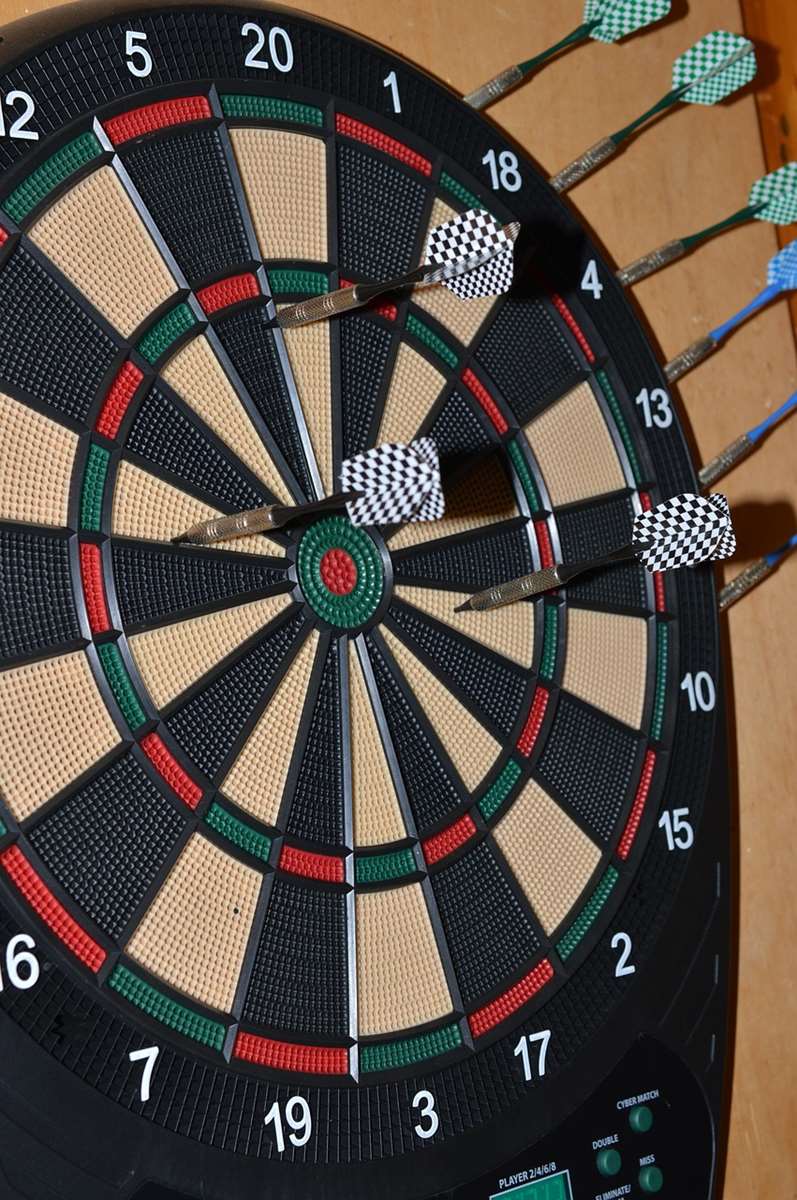
Before diving into the specifics of long vs short dart points, it’s important to understand what dart points actually are. Dart points, also known as tips, are the sharp, often metal, ends of your darts that penetrate the dartboard. They are designed to provide a secure hold in the board, allowing your darts to stay in place and score points. They can be made from various materials, including steel, titanium, and even coated materials to enhance grip and reduce wear.
Fixed vs. Replaceable Dart Points
Dart points come in two primary types: fixed and replaceable. Fixed points are permanently attached to the dart barrel and cannot be easily removed or replaced. These are typically found on lower-cost darts. Replaceable points, on the other hand, can be removed and replaced using a specialized tool. This allows you to customize your darts with different point lengths, materials, and textures, and also allows for easy replacement of damaged or worn points.
The Advantages and Disadvantages of Long Dart Points
Longer dart points, typically measuring around 30-41mm, offer several potential benefits, but also come with certain drawbacks.
- Increased Board Grip: The primary advantage of long dart points is the increased surface area that makes contact with the dartboard. This can provide a more secure grip and reduce the likelihood of bounce-outs, particularly on older or harder dartboards.
- Reduced Deflections: Longer points can also help reduce deflections if your dart lands near a wire. The extra length can sometimes guide the dart around the wire and into the scoring area.
- Potential Drawbacks: The increased length can make it more difficult to group your darts tightly together, especially if you have a tendency to throw with a tail-heavy angle. They can also increase the risk of your darts sticking into each other.
- Weight Distribution: Longer points can slightly alter the overall weight distribution of your dart. This can be a positive or negative depending on your throwing style and preference.
The Advantages and Disadvantages of Short Dart Points
Shorter dart points, generally ranging from 25-30mm, present a different set of advantages and disadvantages compared to their longer counterparts.
- Tighter Grouping: A significant benefit of short dart points is the potential for tighter grouping. They take up less space on the dartboard, reducing the likelihood of your darts colliding with each other, which is something you will notice if you Choose Best Dart Equipment.
- Faster Release: Some players find that shorter points offer a faster, more responsive release.
- Aesthetics: Some players simply prefer the look and feel of shorter points.
- Reduced Board Grip: The primary disadvantage is reduced surface area, which can lead to more bounce-outs, especially on older or harder boards.
- Increased Deflections: With less length, there is a higher chance the dart will deflect off of the wire.
Factors to Consider When Choosing Dart Point Length
Choosing between long vs short dart points involves considering several factors specific to your individual needs and preferences.
Your Throwing Style
Your throwing style is a crucial factor. If you have a clean, straight throw, shorter points might work well. However, if your throw has a pronounced arc or tail-heavy angle, longer points may provide better grip and reduce bounce-outs. Consider your typical dart angle upon impact with the board.
Dartboard Condition
The condition of your dartboard also plays a significant role. If you frequently play on older, harder boards, longer points are often a better choice, as they provide more gripping power. Softer, newer boards may work well with either length.
Dart Weight and Balance
Experiment with different point lengths to find the balance that feels most comfortable and natural for you. A heavier dart might benefit from a longer point to maintain stability, while a lighter dart might perform better with a shorter point for increased agility.
Personal Preference
Ultimately, the best dart point length is the one that feels most comfortable and allows you to throw your best game. Don’t be afraid to experiment with different lengths and see what works best for you. Personal preference plays a significant role in finding the right fit.
How to Change Dart Points (Replaceable Points)
If you’ve decided to experiment with different dart point lengths, you’ll need to know how to change them. This applies only to darts with replaceable points.
- Gather Your Tools: You’ll need a dart point removal tool, a dart point replacement tool (often the same tool), and your new dart points.
- Remove the Old Point: Insert the dart point into the removal tool and firmly twist and pull until the old point comes loose. Be careful not to damage the dart barrel.
- Prepare the Barrel: Clean any debris or fragments from the barrel’s point socket. This will ensure a secure fit for the new point.
- Insert the New Point: Place the new dart point into the replacement tool and align it with the barrel’s socket.
- Secure the Point: Apply firm, even pressure to push the new point into the barrel until it is fully seated. The replacement tool should ensure the point is inserted straight and securely.
Practice this process a few times to become comfortable with it. Always use the correct tools to avoid damaging your darts.
Materials Matter: Point Material and Grip
While length is a key factor, the material and grip of your dart points also influence performance. Steel points are the most common and durable, while titanium points offer a lighter weight and potentially improved grip. Coated points, such as those with diamond or micro-groove patterns, provide enhanced grip for reduced bounce-outs.
Point Maintenance
Regardless of the material, regular maintenance is essential. Use a sharpening stone or honing tool to keep your points sharp and free from burrs. This will ensure consistent penetration and reduce the risk of bounce-outs.
Experimentation is Key: Finding What Works Best for You
The best way to determine the ideal dart point length for you is to experiment with different options. Purchase a few sets of different lengths and materials and try them out during practice sessions. Pay attention to your scores, grouping, and the frequency of bounce-outs. Keep a log of your results to track your progress and identify the optimal setup for your game. Consider that the Budget vs Premium Darts Compared can also influence the lifespan of your dartpoints.
Long Vs Short Dart Points: Impact on Accuracy and Scoring
Ultimately, the impact of long vs short dart points on accuracy and scoring is highly individual. Some players may find that longer points provide a more consistent and reliable throw, leading to improved scores. Others may prefer the feel and control of shorter points, resulting in tighter groupings and more accurate shots. There’s no one-size-fits-all answer; the best option depends on your unique throwing style, equipment, and preferences.
The Psychological Aspect
Don’t underestimate the psychological aspect. Confidence in your equipment can have a significant impact on your performance. If you feel more confident with a particular dart point length, that confidence can translate into better throws and higher scores. Always choose the option that makes you feel the most comfortable and confident at the oche.
Other Factors Affecting Dart Performance
While long vs short dart points are important, remember that they are just one component of your overall dart setup. Other factors, such as dart weight, barrel shape, shaft length, and flight shape, also play a significant role in your dart’s trajectory and performance. Experiment with different combinations of these components to find the setup that maximizes your accuracy and scoring potential.
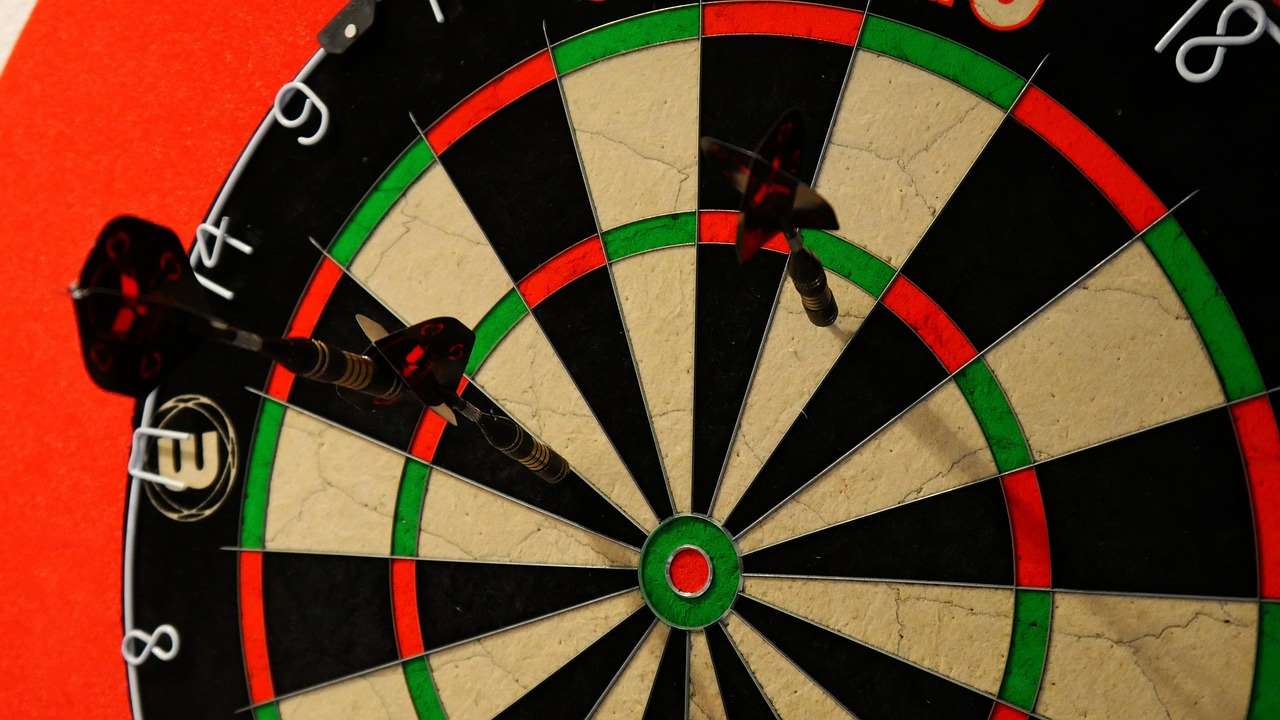
Conclusion: Choosing the Right Dart Point Length
In conclusion, the decision between long vs short dart points is a personal one that depends on various factors, including your throwing style, dartboard condition, and personal preference. Longer points generally offer better grip and reduced bounce-outs, while shorter points may facilitate tighter grouping. Experimentation is key to finding the perfect fit for your game. Don’t be afraid to try different lengths and materials until you discover the setup that optimizes your accuracy and scoring potential. Start experimenting today and elevate your dart game!

Hi, I’m Dieter, and I created Dartcounter (Dartcounterapp.com). My motivation wasn’t being a darts expert – quite the opposite! When I first started playing, I loved the game but found keeping accurate scores and tracking stats difficult and distracting.
I figured I couldn’t be the only one struggling with this. So, I decided to build a solution: an easy-to-use application that everyone, no matter their experience level, could use to manage scoring effortlessly.
My goal for Dartcounter was simple: let the app handle the numbers – the scoring, the averages, the stats, even checkout suggestions – so players could focus purely on their throw and enjoying the game. It began as a way to solve my own beginner’s problem, and I’m thrilled it has grown into a helpful tool for the wider darts community.