In 501 darts, how dart scores are calculated 501 is straightforward: you start with 501 points and subtract the value of each dart thrown until you reach zero. This article provides a comprehensive guide to understanding the scoring system, strategic play, and the nuances that make 501 a thrilling game.
⚠️ Still Using Pen & Paper (or a Chalkboard)?! ⚠️
Step into the future! The Dart Counter App handles all the scoring, suggests checkouts, and tracks your stats automatically. It's easier than you think!
Try the Smart Dart Counter App FREE!Ready for an upgrade? Click above!
Understanding the Basics of 501 Scoring
501 is one of the most popular dart games played worldwide. The objective is simple: be the first player to reduce your score from 501 to exactly zero. However, there are specific rules that govern how dart scores are calculated 501, and understanding these rules is crucial for success. This involves understanding the dartboard’s layout and the point values associated with each section.
Dartboard Layout and Point Values
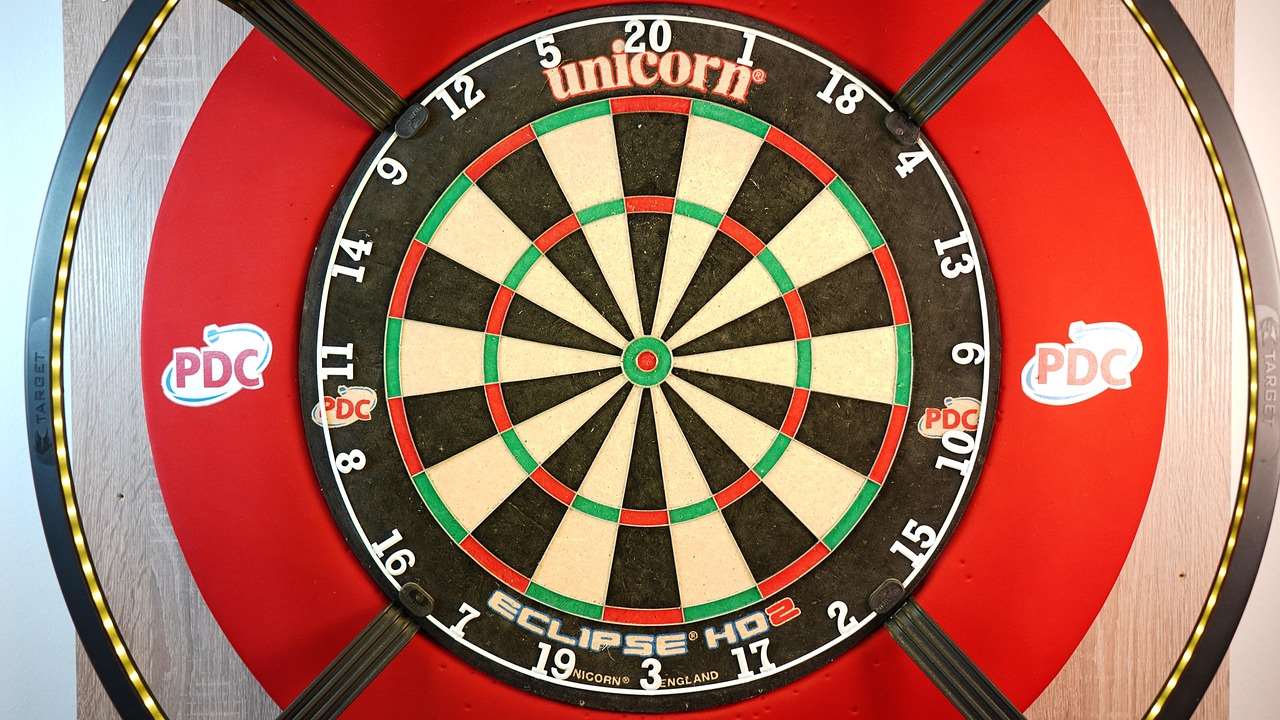
The dartboard is divided into several sections, each with a different point value:
- Single numbers: The numbers around the outer edge of the board represent single values (1 to 20).
- Double ring: The outer ring doubles the value of the corresponding number. Hitting the double 20, for instance, scores 40 points.
- Treble ring: The inner ring triples the value of the corresponding number. A treble 20 scores 60 points.
- Bullseye: The outer bullseye (green) scores 25 points.
- Double Bullseye (Bull): The inner bullseye (red) scores 50 points.
These different sections make up the essence of dart scoring, allowing for various strategic possibilities throughout the game.

The Importance of Doubles and Finishing
A key element of how dart scores are calculated 501 involves the finishing rule. You must end the game by hitting a double or the bullseye. This means your last dart must land in one of these sections to reach exactly zero. For example, if you have a score of 32, you need to hit a double 16 to win. If you have a score of 50, you need to hit bullseye to win. Attempting a double is a crucial aspect of ending the game and is an essential part of mastering 501 darts.
Step-by-Step Guide: Calculating Your Score in 501
Now that we’ve covered the basics, let’s delve into a step-by-step guide on how dart scores are calculated 501 during a game.
Starting the Game
Both players or teams start with a score of 501. A throw consists of three darts, and players alternate turns. The goal is to reduce your score to zero before your opponent while adhering to the finishing rule.
Calculating Each Throw
After each throw, you need to calculate the total score achieved and subtract it from your current score. Here’s how to do it:
- Identify the segment: Determine the value of each dart thrown based on where it landed on the board (single, double, treble, bullseye).
- Sum the values: Add up the values of all three darts to get the total score for that throw.
- Subtract from the current score: Deduct the total score from your current score to find your new score.
For example, if a player throws a 20, a treble 20 (60), and a 5, their total score for that throw is 85. If their current score was 501, their new score would be 501 – 85 = 416.
Dealing with Busts
A “bust” occurs when a player scores more than they need to reach zero, or when they fail to finish on a double or bullseye. If a player busts, their score does not change for that turn, and it’s their opponent’s turn. This is a common part of the learning process when understanding how dart scores are calculated 501.
For instance, if a player needs 32 to win and throws a single 20, then a single 20 again, they have exceeded their needed score. Their turn ends, and their score remains unchanged.

Advanced Strategies for Score Calculation and Gameplay
Beyond the basic mechanics of how dart scores are calculated 501, there are advanced strategies that can significantly improve your game. These strategies involve planning your throws, setting up doubles, and understanding the odds of hitting certain segments. Basic Darts Fundamentals for Beginners are a great place to start when building these skills.
Strategic Planning: Setting Up Doubles
Effective players don’t just throw darts randomly; they plan their throws to leave themselves with a favorable double for finishing. Here are some common strategies:
- Leaving a double: Aim to leave yourself with a manageable double number (like double 16, double 20, or double 8) for your final dart.
- Avoiding awkward numbers: Try to avoid leaving scores that require hitting uncommon doubles or combinations.
- The 161 setup: An example of strategic planning is the “161 setup,” where you aim to score 121 with your first two darts, leaving you with 40 (double 20) to finish.
Understanding the Odds and Probabilities
Knowing the probabilities of hitting different segments of the dartboard can help you make informed decisions about your throws. For instance, aiming for the treble 20 is high-risk, high-reward, whereas aiming for the single 20 is more consistent, albeit lower scoring. This understanding is key to improving your dart game.
Mental Math and Quick Calculation
Being able to quickly calculate your score and plan your next throws is a significant advantage. Practice mental math to improve your speed and accuracy. This will help you adapt to changing game situations and make better decisions under pressure.
Common Challenges and How to Overcome Them
Even experienced players face challenges when it comes to how dart scores are calculated 501. Here are some common issues and how to overcome them.
Difficulty Hitting Doubles
Many players struggle with hitting doubles consistently. Here are some tips to improve your double accuracy:
- Practice: Dedicate practice time specifically to throwing at doubles.
- Consistency: Maintain a consistent throwing routine and stance.
- Target focus: Focus intently on the double you are aiming for.
- Mental approach: Stay calm and confident when throwing at doubles.
Dealing with Pressure Situations
Playing under pressure can affect your scoring ability. Here are some techniques to manage pressure:
- Deep breathing: Use deep breathing exercises to calm your nerves.
- Visualization: Visualize yourself successfully hitting your target.
- Focus on the process: Concentrate on your throwing technique rather than the outcome.
Avoiding Busts
As we’ve discussed, busting can happen easily if you lose focus. Here are some techniques to ensure you avoid going bust:
- Accurate mental math: Ensure you are always calculating correctly what score you have remaining.
- Clear focus: Do not be distracted and make sure you know where you’re aiming.

Adapting 501 for Different Skill Levels
While standard 501 rules apply to competitive play, you can adapt the game to accommodate different skill levels and make it more enjoyable for beginners. Here are some ways to adjust the rules and scoring:
Starting Scores for Beginners
For novice players, starting with a lower score, such as 301 or even 201, can make the game more accessible and less daunting. This allows them to experience the thrill of finishing without having to endure lengthy matches. Remember that Adapting darts rules for beginners can significantly enhance their enjoyment and learning experience. This ensures a better introduction to dart scoring.
Handicap Systems
Implement a handicap system to level the playing field between players of different skill levels. For example, the stronger player might have to start with a higher score or finish on a more difficult double. This promotes fairer competition and encourages improvement for all players. You can further explore different ways on how to make darts fairer with handicap rules.
Simplified Finishing Rules
For very young or inexperienced players, you could temporarily remove the requirement to finish on a double or bullseye. This makes the game much simpler and allows them to focus on basic throwing skills and score calculation. As they progress, you can gradually introduce the standard finishing rule.
Resources for Improving Your 501 Game
To further enhance your understanding of how dart scores are calculated 501 and improve your overall dart-playing skills, consider exploring these resources:
- Online tutorials and videos: Many websites and video platforms offer tutorials on dart-throwing techniques, score calculation, and strategic gameplay.
- Dart forums and communities: Join online forums and communities to connect with other dart players, share tips, and ask questions.
- Professional coaching: Consider seeking guidance from a professional dart coach for personalized instruction and feedback.
- Practice, Practice, Practice: The best way to truly grasp the process of calculating your score is to play the game. Over time, you will be able to calculate quickly and effectively.
There are also ways to keep the game exciting by trying Fun dart game variations with modified rules, keeping the game enjoyable and lighthearted.
Conclusion
Understanding how dart scores are calculated 501 is fundamental to enjoying and excelling at this popular game. By mastering the basic scoring system, implementing strategic planning, and overcoming common challenges, you can significantly improve your game. Remember to adapt the rules for different skill levels and utilize available resources to continue learning and developing your skills. Now, grab your darts, practice your calculations, and aim for that winning double! Start improving your game today by joining a local darts league or setting up a practice session with friends. You’ll be amazed at how quickly you progress with dedicated practice and a solid understanding of the scoring principles.

Hi, I’m Dieter, and I created Dartcounter (Dartcounterapp.com). My motivation wasn’t being a darts expert – quite the opposite! When I first started playing, I loved the game but found keeping accurate scores and tracking stats difficult and distracting.
I figured I couldn’t be the only one struggling with this. So, I decided to build a solution: an easy-to-use application that everyone, no matter their experience level, could use to manage scoring effortlessly.
My goal for Dartcounter was simple: let the app handle the numbers – the scoring, the averages, the stats, even checkout suggestions – so players could focus purely on their throw and enjoying the game. It began as a way to solve my own beginner’s problem, and I’m thrilled it has grown into a helpful tool for the wider darts community.