The key to successfully **hitting doubles first Clock variant** lies in prioritizing consistent accuracy over chasing high scores; focusing on hitting the required doubles early will give you a significant advantage. This article will delve into the strategies, techniques, and practice methods needed to excel in this variant of darts, covering everything from stance and grip to mental approach and strategic target selection.
⚠️ Still Using Pen & Paper (or a Chalkboard)?! ⚠️
Step into the future! The Dart Counter App handles all the scoring, suggests checkouts, and tracks your stats automatically. It's easier than you think!
Try the Smart Dart Counter App FREE!Ready for an upgrade? Click above!
Understanding the Clock Variant and the “Doubles First” Twist
The Clock, also known as Around the Clock or simply ‘Clock’, is a classic darts game where players must hit each number on the board in sequential order, starting with 1 and progressing all the way to 20, followed by the bullseye. The standard version allows players to hit any section of the number – single, double, or treble – to advance. However, the “Doubles First” variant throws in a crucial twist: you must hit the double of each number *before* you can move on to the next number in sequence. This dramatically alters the strategy and requires a much higher degree of accuracy.
Why “Doubles First” Changes Everything
In the standard Clock game, a degree of luck and scatter can still lead to success. A stray treble can inadvertently set you up for the next number. In contrast, the “Doubles First” variant eliminates almost all margin for error. Hitting doubles first Clock variant demands precision and consistent throwing technique. This increased difficulty makes it a fantastic training exercise for improving overall accuracy and mental fortitude under pressure.
The mental game becomes even more critical. Players must learn to remain calm and focused, even after missing several attempts at a double. This variant truly tests your ability to perform under pressure, making it an excellent practice tool for competitive play in other darts games like 501 or 301.
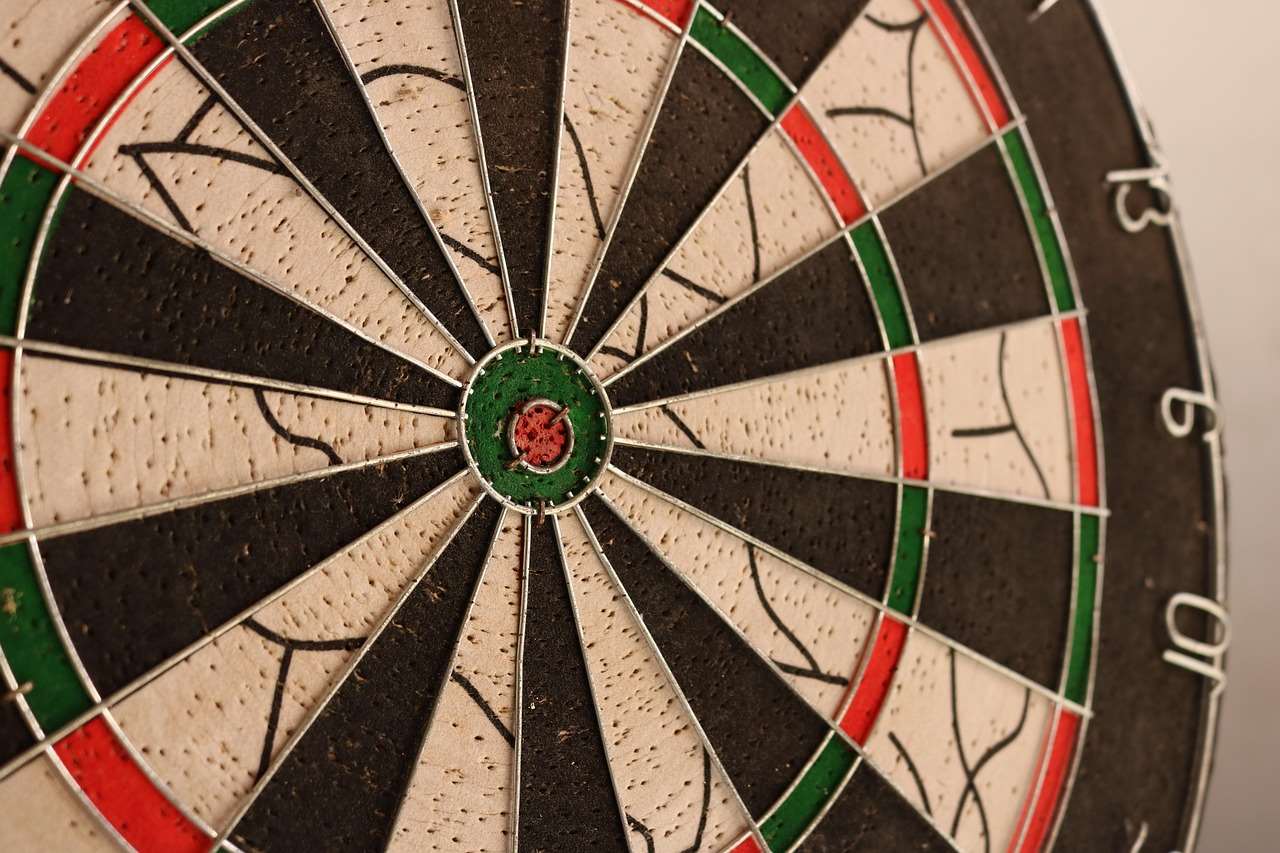
Essential Techniques for Hitting Doubles First
Mastering the “Doubles First” Clock variant requires a focus on specific techniques. It’s not just about throwing darts; it’s about throwing them with deliberate accuracy. Here are some key areas to concentrate on:
- Stance: A stable and consistent stance is the foundation of accurate dart throwing. Find a stance that feels comfortable and allows you to maintain balance throughout your throw. Most players adopt either a parallel or angled stance relative to the oche (throw line). Experiment to find what works best for you.
- Grip: The grip is how you connect with the dart, and it significantly influences your control. Avoid gripping the dart too tightly, as this can lead to tension and erratic throws. A relaxed, comfortable grip will allow for a smoother release. Try different grip styles (e.g., 2-finger, 3-finger, 4-finger) to discover your ideal configuration.
- Aiming: Precise aiming is obviously crucial. Focus your eyes on the specific double you’re targeting. Visualize the dart’s trajectory and trust your muscle memory. Consistency in your pre-throw routine (stance, grip, aiming) will help improve accuracy.
- Release: A smooth, controlled release is essential. Avoid jerking or snatching the dart. Follow through with your arm motion, pointing towards your target after the dart leaves your hand.
- Follow-Through: Maintain your follow-through after releasing the dart. This helps ensure consistency in your throw and prevents you from prematurely cutting off your arm motion.
Practicing for Precision
Simply understanding the techniques isn’t enough; consistent practice is essential to internalize them and improve your accuracy. Here are some effective practice drills:
- Double-Only Practice: Dedicate practice sessions solely to throwing at doubles. Focus on hitting specific doubles repeatedly. This helps develop muscle memory and builds confidence.
- Targeted Practice: Choose 2-3 doubles to focus on during each practice session. Rotate the targets to avoid boredom and develop accuracy across the entire board.
- Segmented Practice: Divide the board into segments and practice hitting doubles within each segment. This can help improve your overall accuracy and target acquisition.
Strategic Target Selection in the Clock “Doubles First” Variant
While the game dictates the order of numbers you must hit, you still have some strategic decisions to make. For instance, if you are struggling with a particular double, consider alternative approaches:
- Break it Down: If you repeatedly miss the double, aim slightly inside or outside the double segment. Analyze where your darts are landing and adjust your aim accordingly. Small adjustments can often make a big difference.
- Mental Reset: After a series of misses, take a brief pause to reset mentally. Clear your mind of any frustration and refocus on your target.
- Check Your Fundamentals: Revisit your stance, grip, and throwing motion. Ensure you are maintaining proper technique and not falling into any bad habits.

Mental Game and Focus
The “Doubles First” Clock variant is as much a mental challenge as it is a physical one. The pressure of needing to hit a double before progressing can be intense. Developing a strong mental game is crucial for success.
Tips for Mental Toughness
- Positive Self-Talk: Replace negative thoughts with positive affirmations. Tell yourself you *can* hit the double.
- Visualization: Visualize yourself successfully hitting the double before you throw. This can help build confidence and improve focus.
- Stay Present: Focus on the current dart and the current target. Avoid dwelling on past misses or worrying about future shots.
- Manage Frustration: It’s inevitable that you will miss doubles. Learn to manage your frustration and avoid letting it affect your subsequent throws. Take a deep breath and refocus.
Consider incorporating mindfulness techniques into your pre-game routine to improve focus and reduce anxiety. Regular practice will not only improve your physical skills but also strengthen your mental resilience. Adapting darts games skills requires a strong mental approach to handle the pressure.
Equipment Considerations for Improved Accuracy
The right equipment can contribute to improved accuracy, although it won’t magically transform you into a world champion. Here’s what to consider:
- Dart Weight and Material: Experiment with different dart weights and materials to find what feels most comfortable and balanced in your hand. Brass darts are generally more affordable, while tungsten darts are denser and allow for slimmer barrels.
- Shafts and Flights: The length and shape of your shafts and flights can affect the dart’s trajectory. Try different combinations to find what provides the most stable and accurate flight path for your throwing style.
- Dartboard Quality: A high-quality dartboard with consistent scoring segments can improve your accuracy by providing a reliable target.
Remember that equipment is a personal preference. What works well for one player may not work well for another. Take the time to experiment and find what suits your individual needs and throwing style.
Advanced Strategies for Clock “Doubles First”
Once you’ve mastered the fundamentals, you can start exploring more advanced strategies to optimize your performance in the “Doubles First” Clock variant:
Grouping and Fine Adjustments
Pay close attention to your grouping. Even if you’re not hitting the double consistently, observe where your darts are landing relative to the target. Are they consistently high, low, left, or right? Use this information to make subtle adjustments to your aim and throwing motion.

Utilizing the “Adjacent Number” Strategy
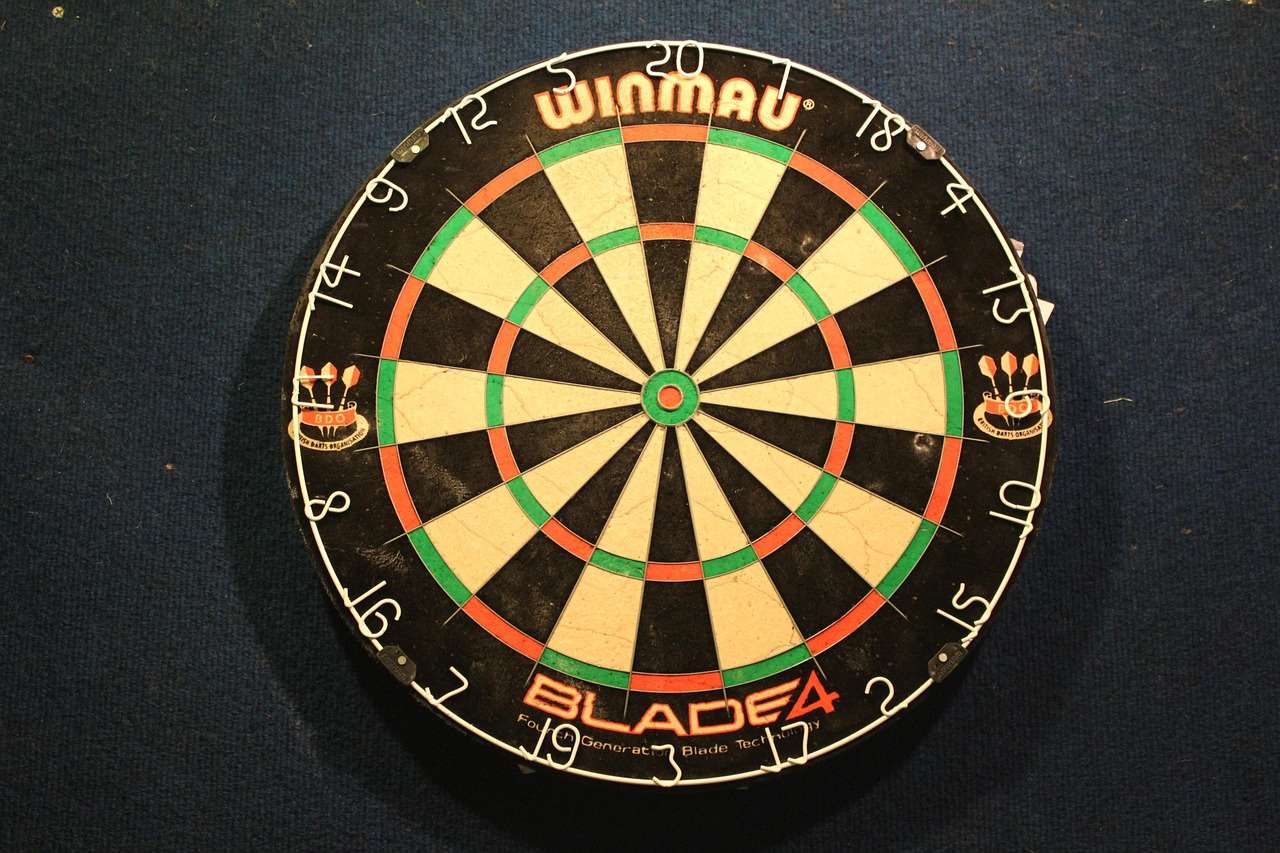
In some cases, if you are consistently missing the double on one side, try aiming for the single number adjacent to the double. A slight adjustment can often bring your dart closer to the double segment. For example, if you keep missing the double 20 to the left, try aiming for the single 1. This is adjusting dart game rules to your skill set, which in this case is a skill you’re developing.
Analyzing Your Performance
Keep track of your performance in practice and in games. Note which doubles you consistently struggle with and which ones you excel at. Use this data to tailor your practice sessions and focus on improving your weaknesses. You can modify dart games skill gap to allow for practice during gameplay for more advanced players. Consider using a dart scoring app or notebook to record your scores and track your progress over time. This is one way of scaling dart game difficulty.
Related Darts Games for Skill Development
Besides the “Doubles First” Clock variant, many other darts games can help you improve your accuracy and overall skill. These games can be excellent training tools and provide a fun way to challenge yourself and your friends.
- Around the World: This game is similar to Clock, but you can choose the order in which you hit the numbers. This allows you to focus on your weaker areas.
- Shanghai: In Shanghai, you aim to hit the single, double, and treble of a specific number in the same round. This requires precise aiming and consistency.
- Cricket: While primarily a strategic game, Cricket also demands accuracy in hitting specific numbers and doubles. It is one of the darts variants fun games.

Adapting the “Doubles First” Rule for Different Skill Levels
While the standard “Doubles First” Clock variant can be challenging, you can adapt the rules to make it more accessible for players of different skill levels. This is particularly useful when playing darts for mixed ability groups.
Modified Rules for Beginners
- “Close Enough” Rule: Allow players to progress if they hit a dart within a certain radius of the double segment. This provides a more forgiving challenge for beginners.
- Multiple Attempts: Allow players multiple attempts to hit the double before moving on to the next number.
- Simplified Scoring: Award points for hitting the double, regardless of whether they hit it on the first attempt.
Increasing the Difficulty for Advanced Players
- “Trebles First” Variant: Increase the difficulty by requiring players to hit the treble before the double.
- Limited Darts: Limit the number of darts players can throw at each double.
- Progressive Scoring: Award progressively more points for hitting the double on the first, second, or third attempt.
Adapting darts games different skill levels ensures that everyone can enjoy the game and improve their skills at their own pace. Consider using a handicap system fun dart games to level the playing field further.
Conclusion: Mastering the “Doubles First” Clock Challenge
Successfully **hitting doubles first Clock variant** is an impressive feat that showcases a high level of accuracy, mental fortitude, and strategic thinking. By focusing on proper technique, consistent practice, and a positive mental approach, you can significantly improve your performance in this challenging darts game.
Remember to prioritize accuracy over speed, stay focused on your target, and manage your frustration. Embrace the challenge, and you’ll not only improve your skills in the “Doubles First” Clock variant but also enhance your overall darts game. Now it’s time to go out there and start practicing! Aim for those doubles, and watch your accuracy soar! The benefits of beginner vs pro dart game rules are apparent when you are hitting those bullseyes, and remember that making darts games fair players is all part of the fun.

Hi, I’m Dieter, and I created Dartcounter (Dartcounterapp.com). My motivation wasn’t being a darts expert – quite the opposite! When I first started playing, I loved the game but found keeping accurate scores and tracking stats difficult and distracting.
I figured I couldn’t be the only one struggling with this. So, I decided to build a solution: an easy-to-use application that everyone, no matter their experience level, could use to manage scoring effortlessly.
My goal for Dartcounter was simple: let the app handle the numbers – the scoring, the averages, the stats, even checkout suggestions – so players could focus purely on their throw and enjoying the game. It began as a way to solve my own beginner’s problem, and I’m thrilled it has grown into a helpful tool for the wider darts community.