When comparing Halve It vs other penalty games, the core distinction lies in its unique risk-reward system where strategic target selection dictates your survival. This article delves into the nuances of Halve It, contrasting it with common penalty-based dart games, exploring its rules, strategy, and relative advantages.
⚠️ Still Using Pen & Paper (or a Chalkboard)?! ⚠️
Step into the future! The Dart Counter App handles all the scoring, suggests checkouts, and tracks your stats automatically. It's easier than you think!
Try the Smart Dart Counter App FREE!Ready for an upgrade? Click above!
Understanding Halve It and Its Uniqueness
Halve It is a darts game where players aim to score on predetermined targets in a specific order. Failing to score on a target results in your total score being halved. This introduces a significant element of risk and strategy, making it distinct from other penalty games. The pressure mounts with each round, as a single missed shot can drastically reduce your score.
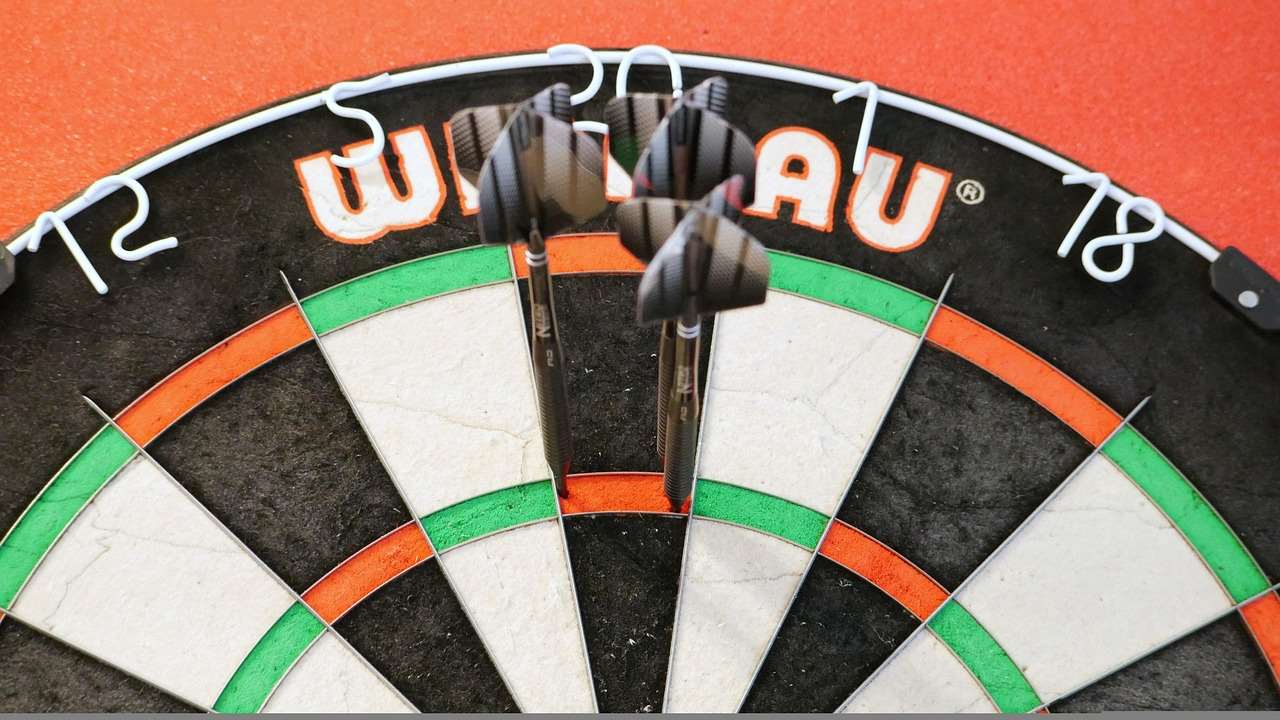
The Core Mechanics of Halve It
- Target Selection: Before the game, specific targets (numbers on the dartboard, doubles, trebles, bullseye) are chosen for each round.
- Scoring Rounds: Players must hit the designated target within three darts.
- The Penalty: Failing to hit the target in three darts results in the player’s total score being halved (rounded down).
- Winning: The player with the highest score at the end of all rounds wins.
This simple yet punishing mechanic makes Halve It a test of accuracy and nerve, separating it from games where penalties are less severe or frequent.
Halve It vs Other Penalty Games: A Detailed Comparison
Several dart games incorporate penalties for missed shots or rule violations. However, the severity and impact of these penalties vary significantly. Let’s examine how Halve It vs other penalty games stack up in terms of penalty mechanics.
Cricket Darts and Penalty Considerations
While standard Cricket doesn’t inherently penalize missed shots with score deductions, variations exist that introduce penalties. For example, some house rules penalize closing numbers too early, potentially negating points scored. To improve your understanding of different darting games, consider learning more about Darts Variants Fun Games and how they differ from one another.

Around the World: Consistency over Risk
In “Around the World,” players must hit each number on the board in sequential order. A missed number simply means the player must attempt it again on their next turn. There’s no direct score penalty, making it more about consistency than high-stakes risk management, unlike the punishing nature of Halve It. However, missed throws allow opponents to gain ground, creating an indirect “penalty” of falling behind.
Elimination: A Direct Competition Scenario
“Elimination” focuses on reducing your score to zero by hitting specific numbers, often the highest available. While there’s no direct penalty for missing a throw, failing to hit a target can allow opponents to reach zero first, effectively “eliminating” you from contention. The competitive pressure arises from the race to zero, not the fear of immediate score reduction like in Halve It.
The Strategic Depth of Halve It
Halve It isn’t just about hitting targets; it’s about strategic risk assessment. Players must consider their skill level, the difficulty of the current target, and the potential consequences of failure.

Target Selection: A Crucial Decision
Experienced players might strategically choose easier targets when leading, minimizing the risk of halving their score. Conversely, when behind, they might gamble on more challenging targets for a chance to catch up quickly. This dynamic target selection is a key element absent in many other penalty-based dart games.
Managing Risk and Reward
The “halving” penalty creates a significant risk-reward trade-off. While scoring big is tempting, the potential for a disastrous round forces players to carefully weigh their options. This strategic depth elevates Halve It beyond a simple game of accuracy.
Tips and Tricks for Mastering Halve It
To excel in Halve It, focus on improving your accuracy and developing a strategic mindset.
- Practice Your Aim: Consistent practice on the specific targets used in the game is crucial.
- Develop a Strategy: Analyze your strengths and weaknesses to determine which targets to attempt and when to play it safe.
- Stay Calm Under Pressure: The pressure of the halving penalty can be nerve-wracking. Practice staying calm and focused, even when facing a difficult shot.
Variations and House Rules in Halve It
Like many dart games, Halve It is often subject to variations and house rules. These variations can alter the difficulty and strategic landscape of the game.

Increasing Target Difficulty
One common variation involves increasing the difficulty of the targets. For example, instead of simply hitting the number, players might be required to hit a specific double or treble of that number. This raises the stakes and makes the game even more challenging.
Adding Additional Penalties
Some house rules introduce additional penalties for specific actions, such as accidentally hitting the wrong target. These penalties can further complicate the game and add another layer of strategy.
Why Choose Halve It Over Other Penalty Games?
Halve It offers a unique blend of accuracy, strategy, and risk management that sets it apart from other penalty-based dart games. The halving penalty creates a dynamic and engaging experience, forcing players to constantly adapt their strategy and assess their risk tolerance. If you’re looking for a dart game that tests your skills and keeps you on the edge of your seat, Halve It is an excellent choice.

The Thrill of the Unexpected
The potential for sudden score swings makes Halve It a thrilling game to watch and play. Even a seemingly insurmountable lead can be quickly erased by a series of missed shots, adding an element of unpredictability that keeps players engaged until the very end.
A True Test of Skill and Strategy
While accuracy is important, Halve It also rewards strategic thinking and risk assessment. Players who can carefully weigh their options and make smart decisions are more likely to succeed, even if they aren’t the most accurate throwers. This strategic depth makes Halve It a truly rewarding game for players of all skill levels.
Conclusion
In the realm of dart games with penalties, Halve It vs other penalty games highlights its standout feature: a high-stakes halving mechanic. This creates a uniquely strategic experience requiring both accuracy and calculated risk. While other games penalize errors, Halve It’s severe penalty adds an element of thrilling unpredictability. Ready to test your skills and strategic thinking? Gather your friends, set up the dartboard, and experience the unique challenge of Halve It.

Hi, I’m Dieter, and I created Dartcounter (Dartcounterapp.com). My motivation wasn’t being a darts expert – quite the opposite! When I first started playing, I loved the game but found keeping accurate scores and tracking stats difficult and distracting.
I figured I couldn’t be the only one struggling with this. So, I decided to build a solution: an easy-to-use application that everyone, no matter their experience level, could use to manage scoring effortlessly.
My goal for Dartcounter was simple: let the app handle the numbers – the scoring, the averages, the stats, even checkout suggestions – so players could focus purely on their throw and enjoying the game. It began as a way to solve my own beginner’s problem, and I’m thrilled it has grown into a helpful tool for the wider darts community.