Want to learn a fast-paced and challenging darts game? Halve It darts game rules explained simply: you’re trying to score points on specifically chosen numbers, and if you fail to score on a number in a round, your total score is halved! This article will provide a comprehensive guide to playing Halve It, from setup to strategy, ensuring you understand every aspect of this exciting darts variant.
⚠️ Still Using Pen & Paper (or a Chalkboard)?! ⚠️
Step into the future! The Dart Counter App handles all the scoring, suggests checkouts, and tracks your stats automatically. It's easier than you think!
Try the Smart Dart Counter App FREE!Ready for an upgrade? Click above!
Understanding the Core Principles of Halve It Darts
The allure of Halve It lies in its simplicity and the potential for dramatic swings in fortune. Unlike some darts games that rely on intricate scoring systems, Halve It focuses on hitting specific targets while managing the risk of losing points. The game tests not only your accuracy but also your nerve, as consistent scoring is key to success. As a fun alternative, consider exploring other Darts Variants Fun Games for added variety.
The Objective: Avoid Halving!
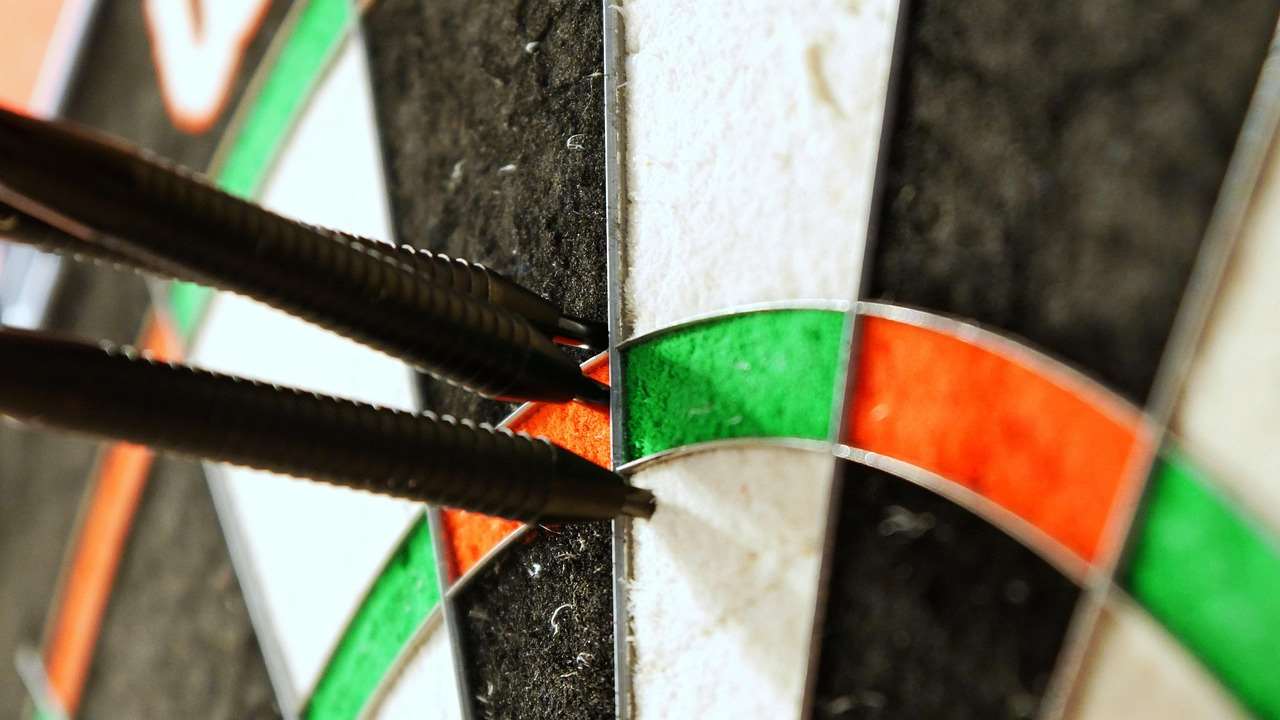
The primary goal in Halve It is to be the player with the highest score at the end of all the designated rounds. What makes this challenging is the “halving” rule: if you fail to score on the target number assigned for that round, your entire score is halved. This penalty can be devastating, especially if you’ve accumulated a substantial lead. Therefore, consistent scoring is paramount.
Halve It Darts Game Rules Explained: A Step-by-Step Guide
Let’s delve into the specifics of how to play Halve It darts, covering everything from setup to gameplay.
1. Setting Up the Game
First, you’ll need a standard dartboard, a set of darts, and a way to keep score. Players also must agree on the numbers that will be targeted in each round. The most common approach is to use the numbers 20, 19, 18, 17, 16, 15, Bullseye, but you can customize this depending on the skill level of the players. Write these numbers down in order, as this will be the sequence for each round.
2. Determining the Order of Play
There are several ways to decide who goes first. A common method is to have each player throw a single dart at the bullseye. The player closest to the bullseye goes first, and so on. Alternatively, you can flip a coin or simply agree on an order beforehand.
3. The Round Structure
Each round focuses on a single target number. Players take turns throwing three darts, aiming to score as many points as possible on that target number only. For example, in the round focusing on the number 20, only darts that land in the single 20, double 20, or triple 20 segments will count. All other scores are disregarded for that round.
4. Scoring and the Halving Penalty
At the end of each player’s turn, they tally their score for that round. If a player scores at least one point on the target number, that score is added to their cumulative total. However, if a player fails to score any points on the target number, their total score is halved (rounded down to the nearest whole number). It’s crucial to understand this halving penalty, as it can significantly impact your overall score.

Strategic Considerations for Halve It Darts
While accuracy is essential, strategy plays a crucial role in mastering Halve It. Here are some tips to help you improve your game:
Risk Assessment and Target Selection
Consider your strengths and weaknesses when choosing the target numbers. If you struggle with a particular number, you might want to avoid including it in the rotation, especially early in the game when a halving penalty can be particularly damaging. The target number selection should reflect the abilities of all players for balanced gameplay.
Playing Defensively
Sometimes, the best strategy is to play defensively. If you have a significant lead, focus on consistent scoring rather than taking risky shots for higher scores. Aiming for the single segment of the target number is often a safer bet than going for the double or triple, especially under pressure. Consider the strategic implications when learning English Cricket darts strategy tips, as similar principles apply.
Managing the Pressure
The halving penalty can create intense pressure, especially in later rounds. It’s essential to stay calm and focused, even if you’ve just had a bad round. Avoid dwelling on past mistakes and concentrate on the next throw. Developing mental resilience is key to performing well under pressure.
Variations on the Classic Halve It Darts Game Rules Explained
While the standard rules of Halve It are widely accepted, there are several variations that can add a new twist to the game. These variations often tweak the scoring system, the target numbers, or the halving penalty to create a different level of challenge.
Custom Target Number Sequences
One common variation involves customizing the sequence of target numbers. This allows you to tailor the game to the specific skill levels of the players. For example, you might choose to include more challenging numbers like the bullseye or the treble 20 later in the game, when players have already accumulated a significant score. Alternatively, consider exploring the Target numbers English Cricket game for inspiration.
Modified Halving Penalty
Another variation involves modifying the halving penalty. Instead of halving the entire score, you might only deduct a fixed number of points. This can make the game less punishing and more forgiving, especially for beginners. Another option is to only apply the halving penalty if the player fails to score on the target number for two consecutive rounds.
Team Halve It
Halve It can also be played in teams. This adds a new layer of strategy, as teammates must coordinate their throws and decide who should take the riskier shots. The team dynamic changes the gameplay considerably.
Common Mistakes to Avoid When Playing Halve It
Even experienced darts players can make mistakes in Halve It. Here are some common pitfalls to avoid:
Neglecting Practice
Like any skill, darts requires practice. Don’t expect to become a master of Halve It overnight. Dedicate time to practicing your throws and focusing on your accuracy, especially on the target numbers you find most challenging. Consistent darts practice improves consistency in the long run.
Ignoring Your Mental Game
Mental toughness is just as important as physical skill in Halve It. Don’t let a bad round throw you off your game. Stay focused, stay positive, and remember that even the best players have slumps. As a challenging twist, consider learning How play English Cricket darts to improve mental stamina.
Poor Dart Maintenance
Regularly inspect your darts for any damage or wear and tear. A bent flight or a loose tip can significantly affect your accuracy. Take the time to maintain your darts properly to ensure optimal performance. Proper dart maintenance is often overlooked but essential.

Advanced Halve It Strategies
Once you’ve mastered the basics of Halve It, you can start exploring more advanced strategies to gain a competitive edge:
Strategic Targeting of Doubles and Trebles
While aiming for the single segment is often the safest option, there are times when it makes sense to go for the double or treble. If you need to catch up to your opponent, or if you’re confident in your accuracy, taking a risk on a higher-scoring shot can pay off. Weigh the risk vs. reward of going for doubles and trebles.
Adjusting Your Throwing Style
Experiment with different throwing styles to find what works best for you. Some players prefer a slow, deliberate throw, while others prefer a faster, more aggressive approach. The key is to find a style that allows you to maintain accuracy and consistency over long periods. You might even find a parallel to Batsman bowler roles English Cricket in adapting your throw to the situation.
Analyzing Your Opponent’s Weaknesses
Pay attention to your opponent’s strengths and weaknesses. If they consistently struggle with a particular number, you can exploit that weakness by including it in the target sequence. Similarly, if they tend to choke under pressure, you can try to create situations that will put them in a difficult position.

Conclusion: Mastering the Halve It Darts Game Rules Explained
Halve It darts game rules explained are relatively simple, but mastering the game requires a blend of accuracy, strategy, and mental toughness. By understanding the core principles, practicing consistently, and avoiding common mistakes, you can significantly improve your chances of success. Remember to assess risk, maintain your darts, and stay focused, even under pressure. Ready to put your skills to the test? Grab your darts and start playing! Now you have a comprehensive grasp on how to play Halve It, so why not challenge your friends and see who comes out on top?

Hi, I’m Dieter, and I created Dartcounter (Dartcounterapp.com). My motivation wasn’t being a darts expert – quite the opposite! When I first started playing, I loved the game but found keeping accurate scores and tracking stats difficult and distracting.
I figured I couldn’t be the only one struggling with this. So, I decided to build a solution: an easy-to-use application that everyone, no matter their experience level, could use to manage scoring effortlessly.
My goal for Dartcounter was simple: let the app handle the numbers – the scoring, the averages, the stats, even checkout suggestions – so players could focus purely on their throw and enjoying the game. It began as a way to solve my own beginner’s problem, and I’m thrilled it has grown into a helpful tool for the wider darts community.