Understanding Gary Anderson Darts Specs is key to emulating his legendary performance; he primarily uses 23g Unicorn Phase 5 darts, though slight variations have appeared throughout his career. This article delves into the specifics of Anderson’s darts, exploring weight, dimensions, materials, and how these choices contribute to his unique throwing style and phenomenal success on the oche.
⚠️ Still Using Pen & Paper (or a Chalkboard)?! ⚠️
Step into the future! The Dart Counter App handles all the scoring, suggests checkouts, and tracks your stats automatically. It's easier than you think!
Try the Smart Dart Counter App FREE!Ready for an upgrade? Click above!
Decoding Gary Anderson Darts Specs
When aspiring darts players seek to improve their game, studying the equipment of the professionals is a common starting point. For those admiring the “Flying Scotsman,” understanding Gary Anderson Darts Specs is crucial. He’s known for his smooth, effortless throwing style, and while talent plays a massive role, his equipment is equally important.
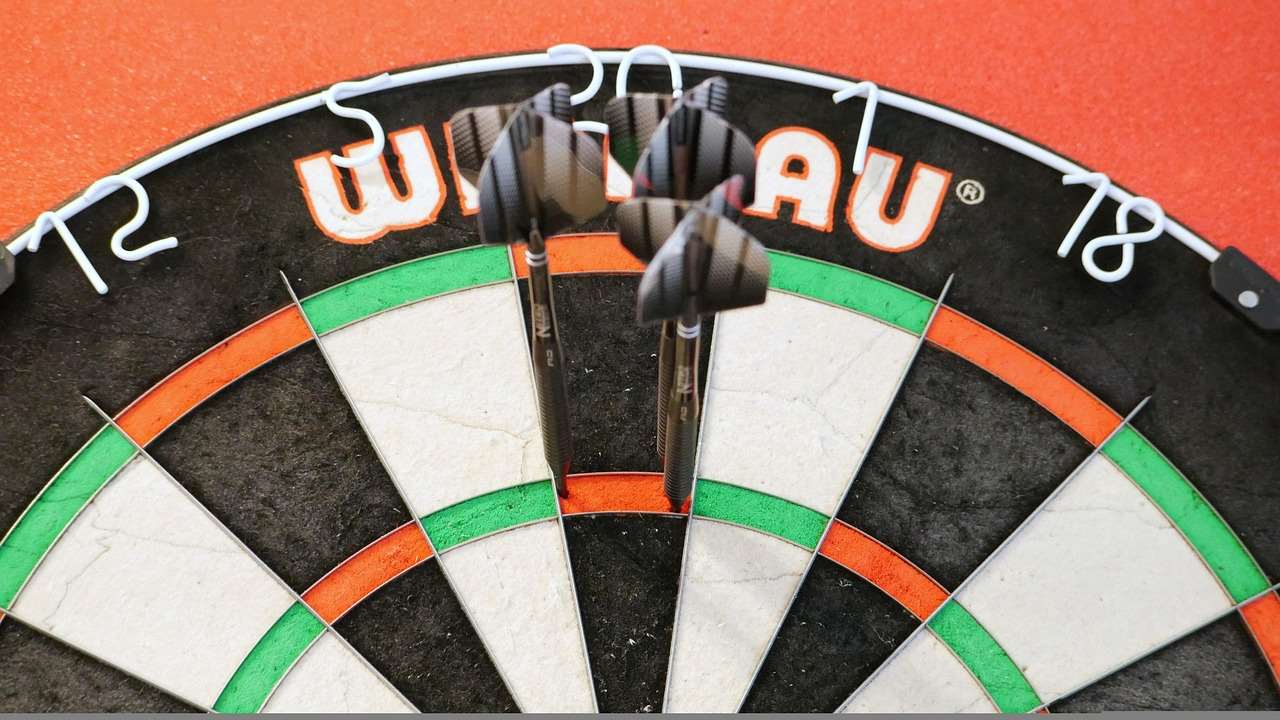
Anderson’s dart setup isn’t static. He has experimented with various weights and configurations over the years. However, his core setup revolves around the **Unicorn Phase 5 darts**, typically around 23 grams. This is a comfortable weight for many professional players, offering a balance between control and momentum.
A Closer Look at Weight and Dimensions
The weight of a dart significantly affects its trajectory and feel in the hand. Anderson’s preference for 23g darts provides a good compromise. Lighter darts can be easier to control but may be more susceptible to air resistance, while heavier darts offer greater stability but require more effort to throw consistently. The 23g weight allows Anderson to maintain his effortless throw while achieving a stable and accurate flight path.
Beyond weight, the dimensions of Gary Anderson’s darts, including length and diameter, are also important. While the exact measurements can vary slightly depending on the specific set and manufacturer, Anderson generally prefers a dart with a moderate length and diameter. This allows for a comfortable grip and release, contributing to his consistent accuracy.
Understanding Dart Balance
Balance is another crucial factor. Anderson’s darts are typically **center-weighted or slightly front-weighted**. This means that the center of gravity is either in the middle of the dart or slightly towards the front. A front-weighted dart tends to fly straighter and penetrate the dartboard more easily, while a center-weighted dart offers a more balanced feel. This preference likely contributes to his throwing style, influencing the dart’s stability and trajectory.
Material Matters: Tungsten’s Role in Gary Anderson’s Darts
The material used in dart construction is another key aspect of Gary Anderson Darts Specs. Professional-level darts, like Anderson’s, are typically made from **tungsten alloy**. Tungsten is a dense metal, allowing for a slimmer dart profile while maintaining the desired weight. This is advantageous because it reduces the chances of “grouping” problems – darts deflecting off each other when clustered together in the dartboard.
The use of tungsten also contributes to the dart’s durability. Tungsten darts are less likely to bend or break compared to darts made from softer metals like brass. This is essential for professional players who subject their darts to constant use and impact.
Grip and Coating Considerations
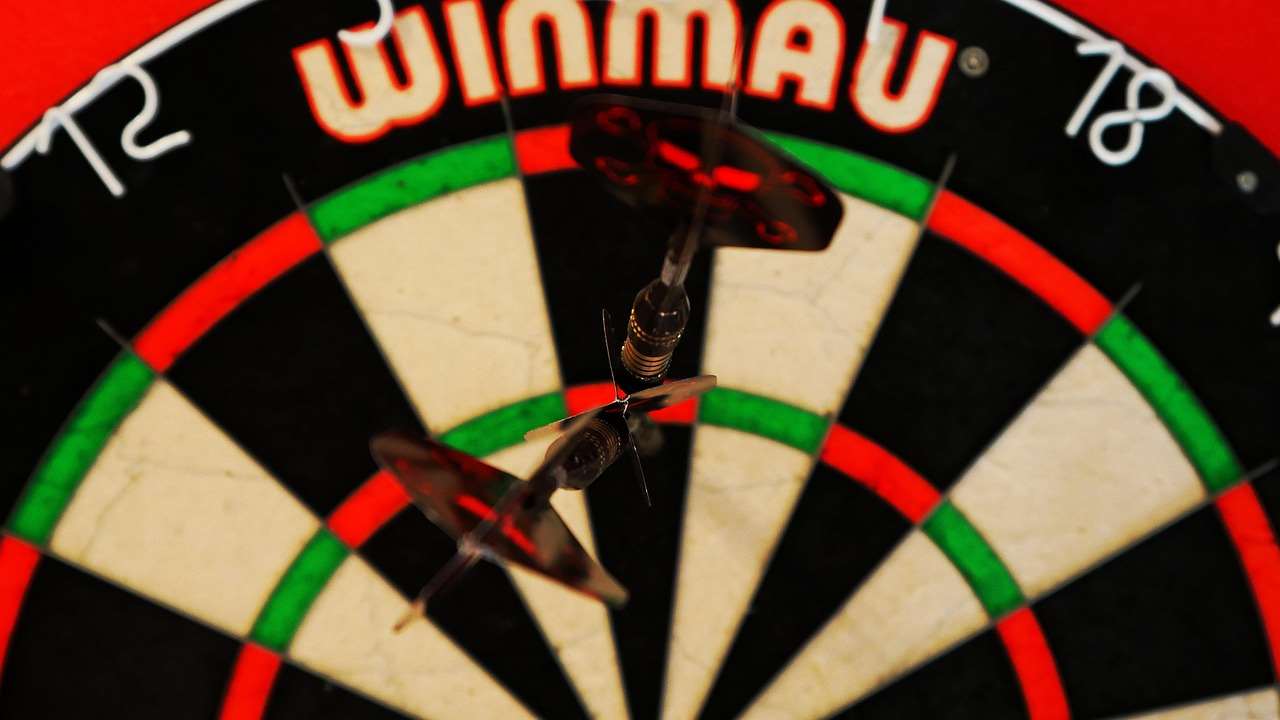
The grip area of the dart is critical for control and release. Anderson’s darts typically feature a **knurled or ringed grip pattern** in specific sections of the barrel. These patterns provide enhanced grip and prevent slippage during the throw. The grip style and placement often vary between players, reflecting individual preferences and throwing techniques. Experimenting with different grip styles can help you find what works best for your hand. Choosing the best dart equipment is a journey of personal preference.
The coating applied to the dart barrel can also influence grip and feel. Some darts have a bare tungsten finish, while others have a coated finish, such as titanium or nickel. These coatings can affect the dart’s texture and how it interacts with the player’s fingers. The choice of coating is often a matter of personal preference, with some players preferring the tactile feel of bare tungsten, while others opt for the enhanced grip provided by a coating.
Flights and Shafts: Fine-Tuning Performance
While the dart barrel is the core component, flights and shafts play a vital role in the overall performance of Gary Anderson’s darts. Flights affect the dart’s stability and trajectory in the air, while shafts connect the flight to the barrel and influence the dart’s balance and rotation.
Anderson typically uses **standard-shaped flights**. These flights provide a good balance between stability and drag. Standard flights are a popular choice among professional players because they offer a reliable and predictable flight path. However, different flight shapes, such as kite, slim, or pear-shaped, can be used to fine-tune the dart’s performance based on individual throwing styles and preferences.
Shaft Length and Material
Shaft length is another crucial consideration. Anderson often utilizes **medium-length shafts**. Longer shafts tend to increase the dart’s stability, while shorter shafts can make the dart more maneuverable. The optimal shaft length depends on the player’s throwing style and the dart’s overall balance. Players with a faster, more aggressive throw might prefer shorter shafts, while those with a smoother, more controlled throw might benefit from longer shafts.
Shafts are typically made from materials like **nylon or aluminum**. Nylon shafts are lightweight and flexible, while aluminum shafts are more durable and rigid. The choice of material depends on the player’s preference for feel and durability. Nylon shafts are more prone to breaking, but they can also absorb impact and protect the dart barrel from damage. Aluminum shafts are more resistant to breakage but can transmit more impact to the barrel. You may also want to consider the optimal dartboard lighting solutions guide for a comprehensive setup.
How Gary Anderson Darts Specs Influence His Throw
Understanding the specifications of Gary Anderson’s darts helps to appreciate how they complement his unique throwing style. He is known for his incredibly smooth and relaxed throw, generating exceptional power and accuracy seemingly effortlessly. His dart setup is tailored to enhance this natural throwing motion.
The 23g weight allows Anderson to maintain a consistent rhythm and tempo throughout his throw. The moderate length and diameter of the dart provide a comfortable grip and release, minimizing unnecessary tension and maximizing control. The combination of these factors enables him to generate consistent and accurate throws, making him one of the most dangerous players in the world.
The weighting (center or slightly front-weighted) can help to keep the dart flying true, even if his release is not perfectly aligned. The tungsten construction ensures a slim profile, minimizing deflections and maximizing scoring opportunities.
Adapting Gary Anderson Darts Specs to Your Own Game
While it’s tempting to simply copy the exact Gary Anderson Darts Specs, it’s important to remember that every player is different. What works for Anderson might not necessarily work for you. The key is to understand the principles behind his setup and adapt them to your own throwing style and preferences.
Consider experimenting with different weights, lengths, diameters, grip patterns, and flight shapes to find the combination that feels most comfortable and produces the best results for you. Don’t be afraid to try different things and make adjustments along the way. Darts is a game of feel, and finding the right equipment is an essential part of the journey.
Tips for Finding Your Ideal Dart Setup
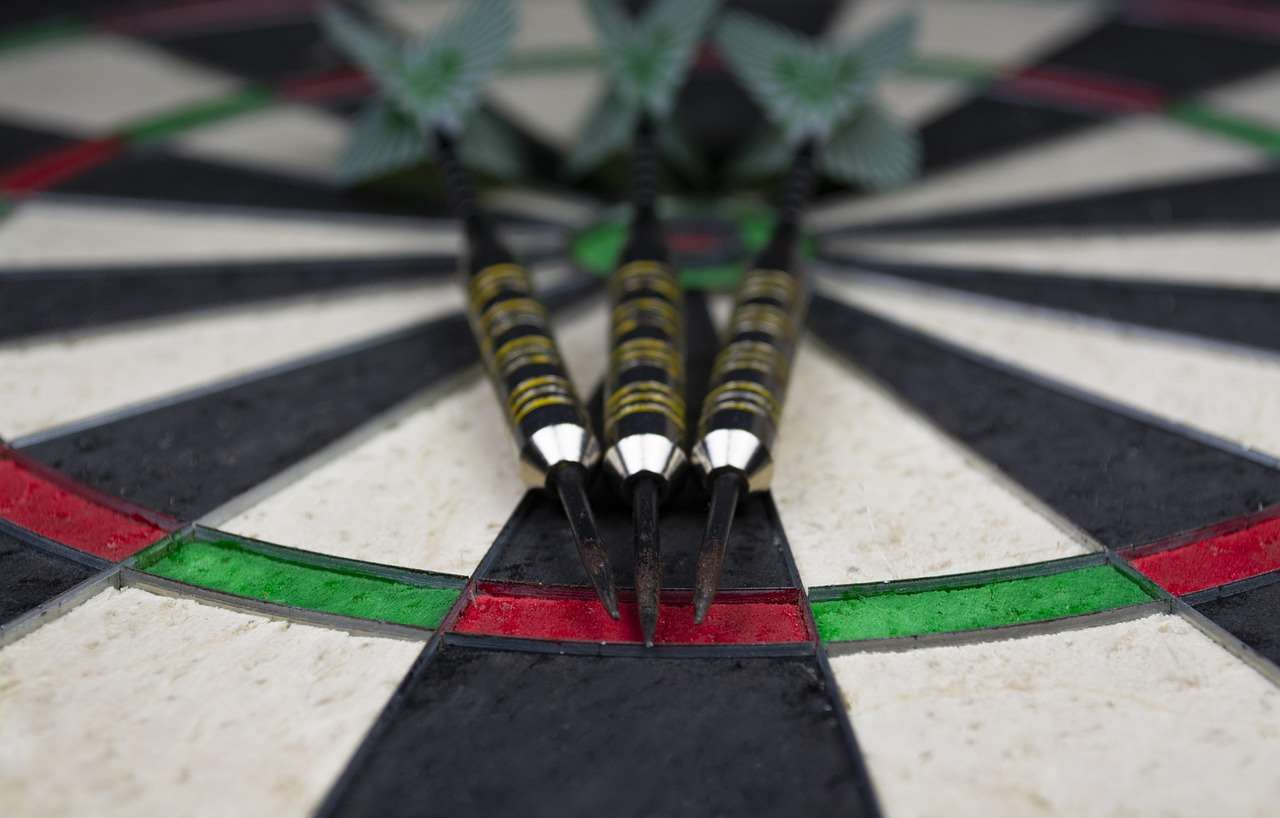
- Start with a common weight: 22-24 grams is a good starting point for many players.
- Experiment with grip: Try different grip styles (knurled, ringed, smooth) and placements on the dart barrel.
- Consider flight shape: Standard flights are a good starting point, but explore other shapes to fine-tune stability and trajectory.
- Test different shaft lengths: Medium shafts are a common choice, but try shorter or longer shafts to see how they affect your throw.
- Don’t be afraid to experiment: Darts is a game of personal preference, so don’t be afraid to try new things and make adjustments until you find what works best for you.
Remember that even the best equipment won’t magically transform you into a world-class darts player. Practice, dedication, and a solid understanding of the fundamentals are equally important. However, finding the right dart setup can provide a significant advantage and help you to reach your full potential. Also, consider How To Light Your Dartboard for better visibility.
Beyond the Basics: Further Customization
Once you’ve dialed in the basic Gary Anderson Darts Specs or adapted them to your liking, you can explore even further customization options. This might include adding custom points, repointing your darts, or even having custom-made darts designed to your exact specifications.
Custom points can affect the dart’s penetration into the board and its overall balance. Repointing allows you to replace worn or damaged points and ensure consistent performance. Custom-made darts are the ultimate expression of personalization, allowing you to create a dart that is perfectly tailored to your unique throwing style and preferences. Whether you seek the Types Optimal Dartboard Lighting solutions, or the right darts, customizing your equipment can improve your game.
Conclusion: Mastering Your Game with Informed Equipment Choices
Understanding Gary Anderson Darts Specs provides valuable insights into the equipment choices of a world-class darts player. While replicating his setup exactly might not be the key to success for everyone, analyzing the weight, dimensions, materials, flights, and shafts he uses can inform your own equipment decisions. Remember to experiment, adapt, and find the combination that feels most comfortable and produces the best results for you. Consider what Ring Light Dartboard Pros Cons exist when planning your setup.
Ultimately, darts is a game of skill and precision, and the right equipment can help you to unlock your full potential. By understanding the principles behind dart design and customization, you can make informed choices that improve your accuracy, consistency, and overall enjoyment of the game. So, take what you’ve learned about Gary Anderson Darts Specs, experiment with different setups, and discover the equipment that helps you achieve your darting goals. Get out there and start throwing!

Hi, I’m Dieter, and I created Dartcounter (Dartcounterapp.com). My motivation wasn’t being a darts expert – quite the opposite! When I first started playing, I loved the game but found keeping accurate scores and tracking stats difficult and distracting.
I figured I couldn’t be the only one struggling with this. So, I decided to build a solution: an easy-to-use application that everyone, no matter their experience level, could use to manage scoring effortlessly.
My goal for Dartcounter was simple: let the app handle the numbers – the scoring, the averages, the stats, even checkout suggestions – so players could focus purely on their throw and enjoying the game. It began as a way to solve my own beginner’s problem, and I’m thrilled it has grown into a helpful tool for the wider darts community.