Want to seriously up your darts game while having a blast? The key is to integrate fun practice games darts improve your accuracy, strategy, and consistency without the pressure of a formal match. This article explores a variety of engaging dart games that make practice feel less like work and more like fun, covering everything from classic variations to custom drills designed to target specific skills.
⚠️ Still Using Pen & Paper (or a Chalkboard)?! ⚠️
Step into the future! The Dart Counter App handles all the scoring, suggests checkouts, and tracks your stats automatically. It's easier than you think!
Try the Smart Dart Counter App FREE!Ready for an upgrade? Click above!
Why Fun Practice Games Make You a Better Darts Player
Traditional dart practice can sometimes feel monotonous. Throwing hundreds of darts at the same numbers, while effective, can lead to burnout and a plateau in your progress. By incorporating fun practice games, you introduce variety, challenge different skills, and keep your mind engaged. This not only makes practice more enjoyable but also accelerates your development as a dart player. Plus, exploring darts variants fun games can boost your creativity and strategic thinking.
Here’s why these games are so effective:
- Increased Focus: Games require you to concentrate on specific targets or objectives, improving your focus and mental game.
- Skill Diversification: Different games work on different aspects of your game, such as accuracy, doubles hitting, checkout combinations, and scoring strategy.
- Reduced Pressure: The playful nature of games takes the pressure off, allowing you to relax and perform better.
- Enhanced Motivation: When practice is fun, you’re more likely to stick with it consistently.
- Problem Solving: Many games require strategic thinking and problem-solving skills, making you a more adaptable player.
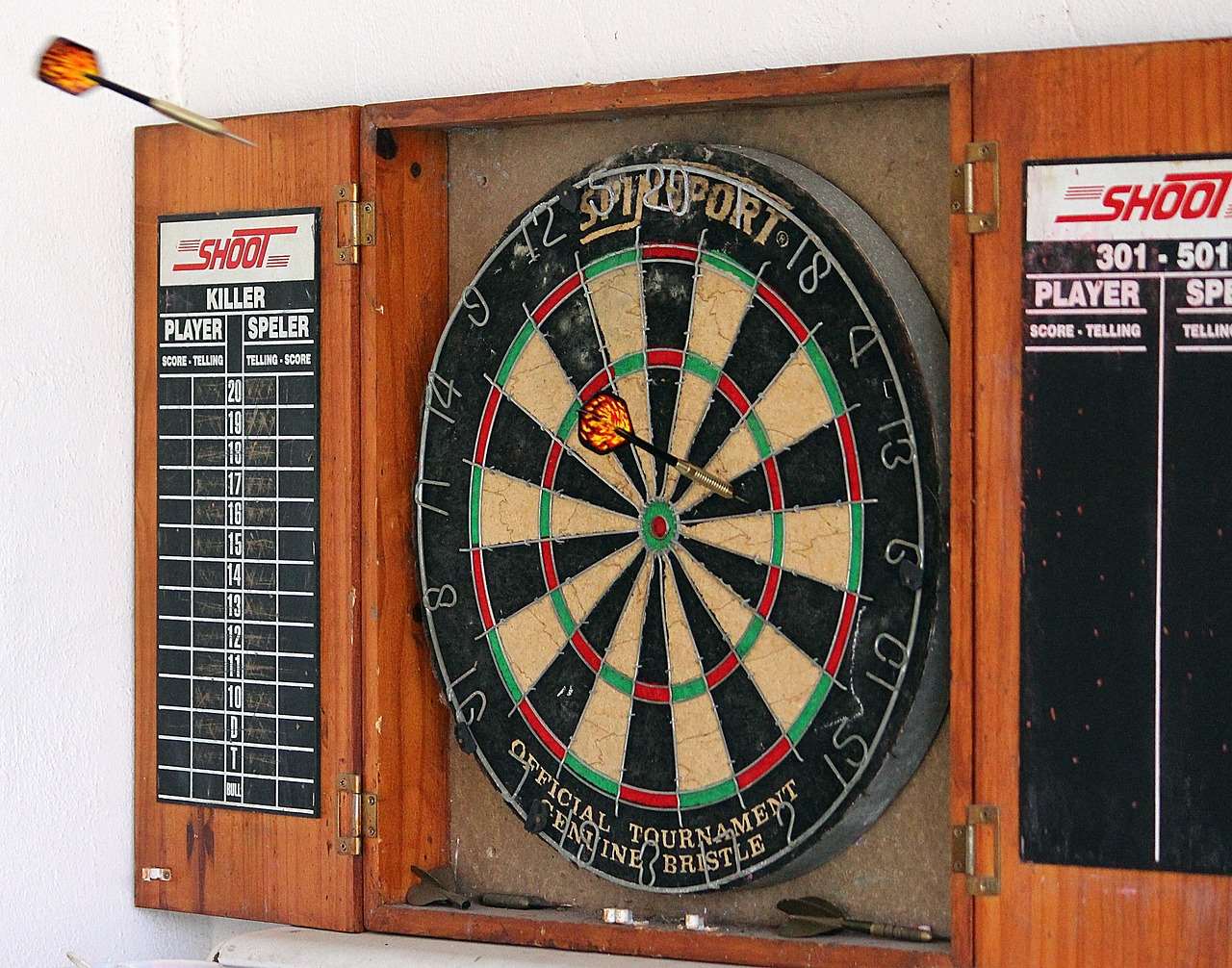
Top Fun Practice Games Darts Improve Your Skills
Ready to transform your practice sessions? Here are some of the most effective and enjoyable dart games you can use to improve your game:
Around the World
Around the World is a classic game that focuses on accuracy and hitting specific numbers in sequence. The goal is to hit each number on the dartboard, from 1 to 20, in order. You can choose to play single, double, or treble “around the world,” requiring you to hit those specific segments of each number. Missing a number means you stay on that number until you hit it. The first player to complete the circuit wins.
This game is excellent for improving accuracy and consistency on individual numbers. It also helps you become more comfortable hitting different parts of the dartboard.
Killer
Killer is a strategic game that involves both offense and defense. Each player chooses a number on the dartboard (usually by throwing a dart with their non-dominant hand – whatever number they hit is their number). To become a “killer,” you must hit your number three times. Once you’re a killer, you can target other players’ numbers to eliminate them. If a player’s number is hit three times by a killer, they are out of the game. The last player remaining wins. Remember that the rules of Darts Variants Fun Games can differ a little depending on where you play.
Killer improves accuracy under pressure and develops strategic thinking. It forces you to balance your own scoring with disrupting your opponents.

Shanghai
Shanghai is a fast-paced game that tests your ability to hit singles, doubles, and trebles. Each round focuses on a specific number, starting with 1 and progressing to 20. In each round, you aim to score as many points as possible on that number by hitting the single, double, or treble. The game continues until you reach 20. However, if a player scores a “Shanghai” (hitting a single, double, and treble of the same number in one round), they instantly win the game.
Shanghai helps you improve your ability to hit different segments of the dartboard quickly and accurately. It also teaches you to prioritize scoring opportunities.
Cricket
Cricket is a popular game that combines scoring with strategic defense. The numbers 20, 19, 18, 17, 16, 15, and the bullseye are “in play.” To “close” a number, you must hit it three times (in any combination of singles, doubles, or trebles). Once a number is closed, only you can score on it. If your opponent hasn’t closed the number, you score points for every hit until they close it. The first player to close all the numbers and have a higher or equal score wins.
Cricket improves your ability to hit specific numbers under pressure and teaches you strategic thinking about closing numbers and scoring opportunities. It is one of the more popular forgotten pub dart games.
Bob’s 27
Bob’s 27 starts with a score of 27. You aim to hit each double on the board, starting with double 1, then double 2, and so on. If you hit the double, you add the double’s value to your score. If you miss, you subtract the double’s value. The goal is to finish with the highest score possible after hitting all the doubles. If your score reaches zero or below at any point, the game is over.
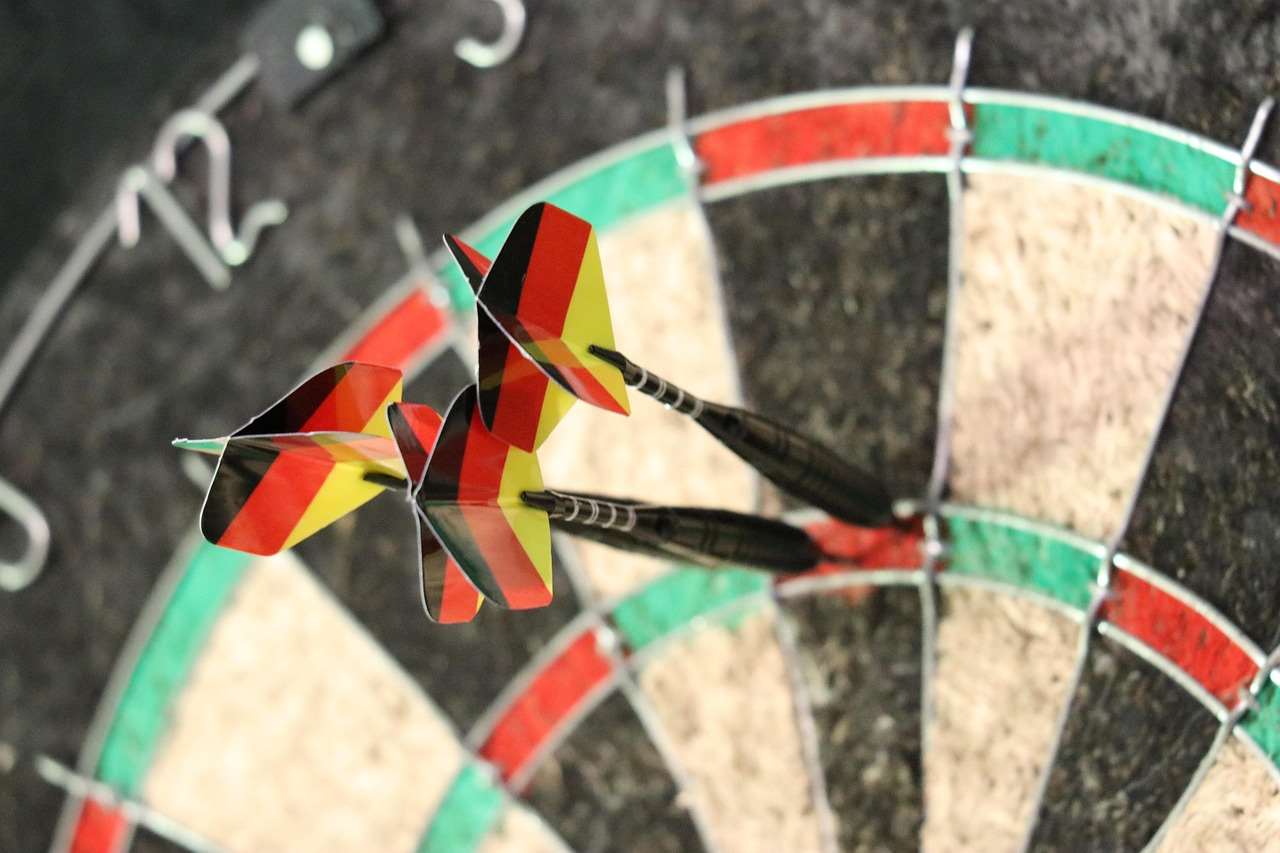
Bob’s 27 is a fantastic game for improving your accuracy on doubles. It also teaches you to manage risk and reward.
Chase the Dragon
Chase the Dragon requires two or more players. The first player throws at the single 20. If they hit it, they then throw at the single 19, and so on down to 1. If they miss, the next player attempts to hit the 20. The goal is to be the first player to successfully “chase the dragon” from 20 down to 1. This game builds accuracy and consistency while introducing a competitive element.
Custom Practice Drills to Sharpen Specific Skills
Beyond established games, you can create custom practice drills to target specific areas of your game:
Doubles Practice
Focus solely on hitting doubles. Choose a specific double (e.g., double 16) and throw 20 darts at it. Track how many you hit. Repeat with other doubles. This helps improve your accuracy and confidence on crucial checkout shots.
Checkout Combinations
Practice finishing specific checkout combinations. For example, practice finishing 81 (T20, S15, D3) or 86 (T20, D13). This improves your mental arithmetic and your ability to execute under pressure.
Scoring Practice
Simulate a leg of 501 and practice scoring consistently. Aim for high scores (e.g., 100+) each visit to the board. This helps you develop your scoring rhythm and maximize your potential.
Advanced Tips for Maximizing Your Practice
To get the most out of your practice sessions, consider these advanced tips:
- Set Specific Goals: Before each practice session, set a clear goal (e.g., hit 50% of your doubles).
- Track Your Progress: Keep a record of your scores and performance in each game or drill. This allows you to monitor your improvement and identify areas that need more work.
- Vary Your Practice: Don’t just stick to the same games or drills every time. Introduce variety to keep your mind engaged and challenge different skills.
- Practice Under Pressure: Simulate match conditions by introducing distractions or setting time limits. This helps you develop your ability to perform under pressure.
- Analyze Your Game: Review your performance and identify areas where you can improve. Watch videos of professional players to learn new techniques and strategies.

Mental Game Matters: Focus and Visualization
Darts is as much a mental game as it is a physical one. Develop your focus and concentration by practicing mindfulness techniques. Visualize yourself hitting your targets before each throw. This helps you build confidence and improve your mental game. Understanding the history of darts games uk can help you to see why you are playing the game now, and get your mind in the right place.
Here are some helpful mental exercises:
- Deep Breathing: Before each throw, take a few deep breaths to calm your nerves and focus your mind.
- Positive Self-Talk: Replace negative thoughts with positive affirmations. Believe in your ability to hit your target.
- Visualization: Visualize the dart hitting the target before you throw. See the trajectory and the outcome in your mind’s eye.
Equipment and Setup for Effective Practice
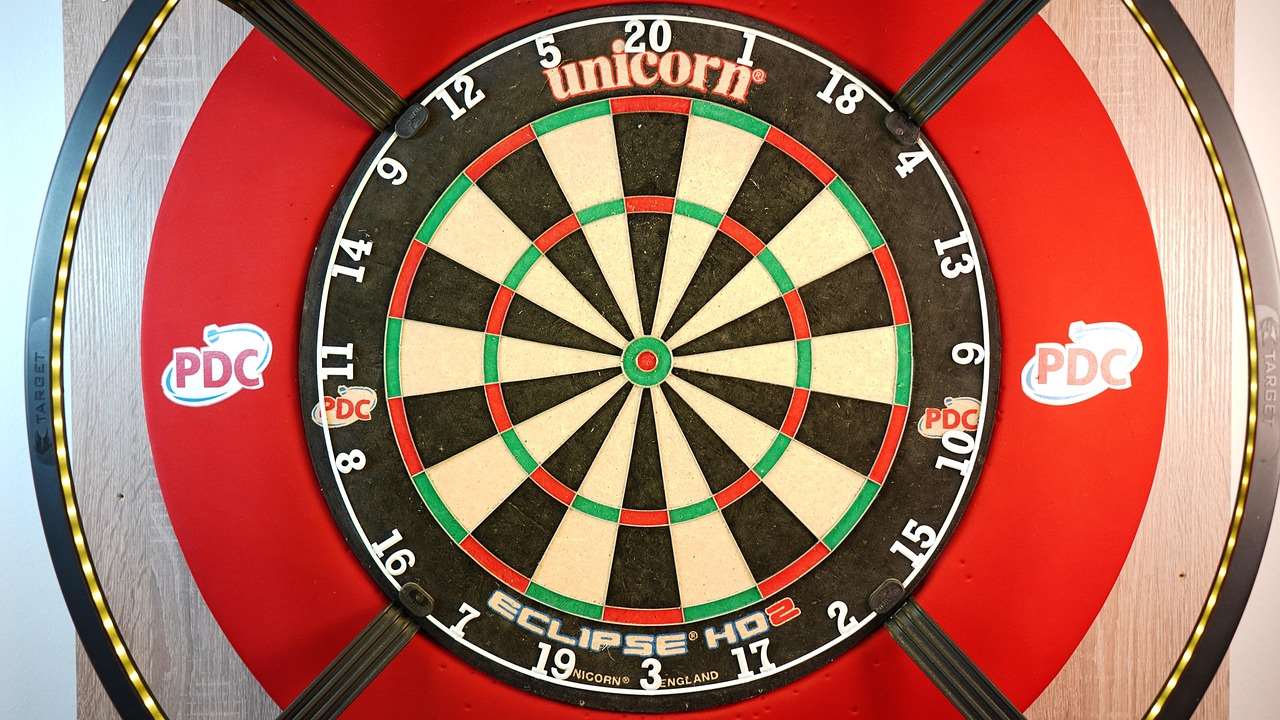
Having the right equipment and setup can significantly impact your practice. Ensure your dartboard is properly mounted at the correct height (bullseye at 5 feet 8 inches) and distance (7 feet 9 1/4 inches from the oche to the face of the board). Use darts that are comfortable and suit your throwing style. Good lighting is also essential to ensure you can see the board clearly. Good maintenance is a necessity – your dartboard should be rotated regularly to extend its life.
Conclusion: Elevate Your Game with Fun Practice Games
Integrating fun practice games darts improve your skills far more effectively than repetitive drills alone. By incorporating games like Around the World, Killer, Shanghai, and custom drills, you can diversify your practice, enhance your motivation, and accelerate your development as a dart player. Remember to focus on specific goals, track your progress, and practice under pressure to maximize your results. Don’t forget the mental aspect: focus, visualization, and positive self-talk are critical for success. So, grab your darts, gather your friends, and start having some fun while you improve your game! Why not review some old dart games rules and see if any can give you inspiration.
Ready to take your darts game to the next level? Start incorporating these fun practice games into your routine today and watch your skills soar!

Hi, I’m Dieter, and I created Dartcounter (Dartcounterapp.com). My motivation wasn’t being a darts expert – quite the opposite! When I first started playing, I loved the game but found keeping accurate scores and tracking stats difficult and distracting.
I figured I couldn’t be the only one struggling with this. So, I decided to build a solution: an easy-to-use application that everyone, no matter their experience level, could use to manage scoring effortlessly.
My goal for Dartcounter was simple: let the app handle the numbers – the scoring, the averages, the stats, even checkout suggestions – so players could focus purely on their throw and enjoying the game. It began as a way to solve my own beginner’s problem, and I’m thrilled it has grown into a helpful tool for the wider darts community.