Front weighted darts are designed to shift the center of gravity towards the front of the barrel, influencing their flight and feel. This article provides a comprehensive understanding of front weighted darts explained, covering their benefits, drawbacks, suitability for different players, and how to choose the right set.
⚠️ Still Using Pen & Paper (or a Chalkboard)?! ⚠️
Step into the future! The Dart Counter App handles all the scoring, suggests checkouts, and tracks your stats automatically. It's easier than you think!
Try the Smart Dart Counter App FREE!Ready for an upgrade? Click above!
Understanding Front Weighted Darts Explained
So, what are the advantages of using front weighted darts explained simply? The main appeal lies in the enhanced control they offer, particularly for players who prefer a smoother, more controlled throw. The forward weight distribution tends to stabilize the dart in flight, reducing wobble and promoting straighter trajectories. This can lead to increased accuracy, especially at longer distances.
However, front weighted darts aren’t a magic bullet. Their suitability depends heavily on individual throwing styles and preferences. While some players find them exceptionally helpful, others may struggle to adapt to the different feel and release point. A player might consider a test drive with a variety of dart barrel weights to optimize their throwing style.
Benefits of Using Front Weighted Darts
- Increased Stability: The forward weight provides greater stability in flight, minimizing deviations caused by minor imperfections in the throw.
- Enhanced Accuracy: The straighter trajectory can improve accuracy, particularly for players who have a tendency to “drift” their darts.
- Controlled Release: The front weight provides a more definite feel during release, allowing for greater consistency.
- Reduced Wobble: The forward balance reduces wobble, resulting in a cleaner, more predictable flight path.
Potential Drawbacks of Front Weighted Darts
- Learning Curve: Adapting to the feel of front weighted darts may require some practice, especially for players accustomed to center-weighted or rear-weighted barrels.
- Throwing Style Dependency: Front weighted darts are not suitable for all throwing styles. Players with a fast, jerky throw may find them less effective.
- Perceived Weight: Some players may perceive front weighted darts as heavier than they actually are, leading to fatigue during longer practice sessions.
Who Should Use Front Weighted Darts?
Determining whether front weighted darts are right for you requires careful consideration of your throwing style and personal preferences. Generally, they are well-suited for players who:
- Prefer a smooth, controlled throwing motion.
- Struggle with dart wobble or excessive drift.
- Seek greater stability and accuracy at longer distances.
- Want a more definite feel during the release.
Newer players will want to Choose Best Dart Equipment and consider their own style when starting to decide what sort of barrel weight they want to use.
How to Choose the Right Front Weighted Darts
Selecting the perfect set of front weighted darts involves several factors, including weight, material, grip, and barrel shape. Here’s a breakdown of the key considerations:
Weight
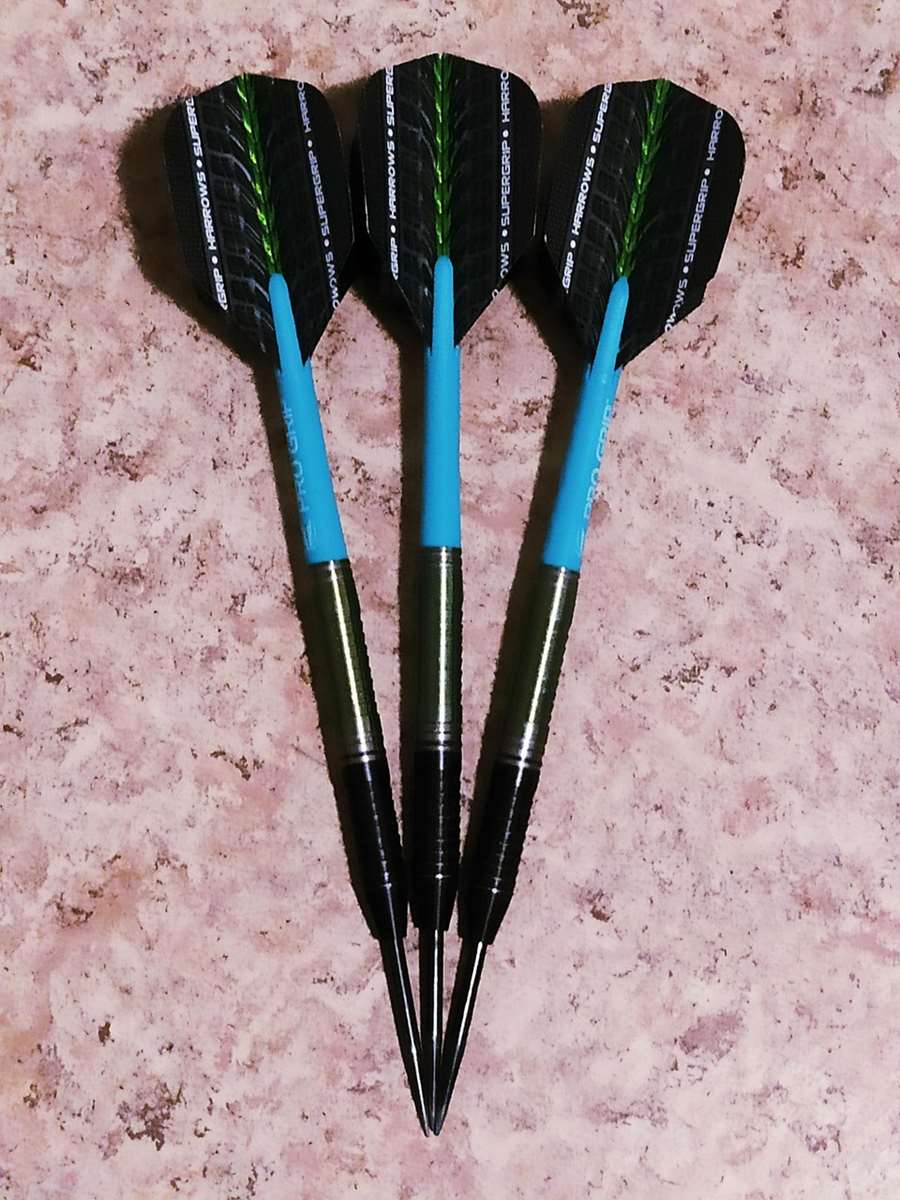
Dart weight is a crucial factor influencing feel and control. Front weighted darts are available in a range of weights, typically from 20 to 26 grams. Lighter darts are generally easier to throw, while heavier darts provide more stability. Experiment with different weights to find what feels most comfortable and effective for you.
Material
The most common materials for dart barrels are tungsten and brass. Tungsten is denser than brass, allowing for slimmer barrels with the same weight. Tungsten darts are more durable and offer a better grip, making them the preferred choice for serious players. Brass darts are more affordable but less durable and may wear down more quickly.
Grip
Grip refers to the texture of the dart barrel, which affects how well you can hold and control the dart. Front weighted darts come in a variety of grip styles, from smooth to heavily knurled. The best grip for you depends on your personal preference and the amount of grip you need to maintain control. It’s a good idea to try different grip styles to see what feels most comfortable and secure.
Barrel Shape
Barrel shape also plays a significant role in the dart’s flight characteristics. Common barrel shapes include straight, torpedo, and bomb. Straight barrels are generally the most versatile and provide a consistent feel. Torpedo barrels are thicker at the front and taper towards the back, promoting a smoother release. Bomb barrels are thicker in the middle and taper towards both ends, offering a balanced feel. Exploring these different shapes can greatly optimize your throwing results.
Mastering the Throw with Front Weighted Darts
Once you’ve chosen your set of front weighted darts, it’s time to focus on mastering your throwing technique. Here are some tips to help you improve your accuracy and consistency:
Stance
A stable and balanced stance is essential for accurate dart throwing. Position yourself comfortably at the oche (throw line) with one foot slightly forward. Lean slightly forward and maintain a relaxed posture.
Grip
Hold the dart with a comfortable and consistent grip. Avoid gripping the dart too tightly, as this can restrict your throwing motion. Experiment with different grip positions to find what feels most natural and secure.
Arm Motion
Use a smooth and controlled arm motion, keeping your elbow high and your wrist firm. Avoid jerking or snapping your wrist during the throw. Focus on releasing the dart at the same point in each throw.
Follow-Through
Complete your throwing motion with a full follow-through, extending your arm towards the target. This helps to ensure a consistent release and accurate trajectory.
Practice
Consistent practice is essential for improving your dart throwing skills. Set aside regular practice sessions and focus on refining your technique. Use a dartboard scoring system to track your progress and identify areas for improvement. You can even set up Optimal Dartboard Lighting Solutions Guide to maximize clarity.
Front Weighted Darts vs. Other Dart Types
Front weighted darts are just one type of dart available on the market. Other common types include center-weighted and rear-weighted darts. Understanding the differences between these dart types can help you make an informed decision about which one is right for you.
Center-Weighted Darts
Center-weighted darts have a balanced weight distribution, with the center of gravity located in the middle of the barrel. They are generally easier to throw than front weighted darts and are a good choice for beginners. However, they may not offer the same level of stability and accuracy as front weighted darts.

Rear-Weighted Darts
Rear-weighted darts have a weight distribution that favors the back of the barrel. They are often preferred by players who have a fast, powerful throwing motion. Rear-weighted darts can be more difficult to control than front weighted or center-weighted darts, but they can generate more speed and power.
Experimentation and Personal Preference
Ultimately, the best type of dart for you is a matter of personal preference. Experiment with different dart types, weights, and grips to find what feels most comfortable and effective for your throwing style. Don’t be afraid to try new things and adapt your technique as needed. Remember, the goal is to find a dart that allows you to throw consistently and accurately.
Proper dartboard setup is as important as the darts themselves. Choosing Best Dartboard Lighting Systems is also important to make sure you can clearly see the board and targets.
Fine-Tuning Your Setup
Beyond the barrel, other components of your dart affect performance. Consider experimenting with different:
- Shafts: Length and material can influence flight.
- Flights: Shape and size impact stability and trajectory.
Conclusion
In summary, front weighted darts explained offer enhanced stability and accuracy for players who prefer a smooth, controlled throwing motion. While they may require some adjustment, the benefits of using front weighted darts can be significant for the right player. Consider your throwing style, experiment with different weights and grips, and don’t hesitate to seek advice from experienced players. With practice and dedication, you can master the art of throwing front weighted darts and elevate your game to the next level. Now that you understand the world of front weighted darts, why not head to your local dart shop or browse online retailers to find the perfect set for you?

Hi, I’m Dieter, and I created Dartcounter (Dartcounterapp.com). My motivation wasn’t being a darts expert – quite the opposite! When I first started playing, I loved the game but found keeping accurate scores and tracking stats difficult and distracting.
I figured I couldn’t be the only one struggling with this. So, I decided to build a solution: an easy-to-use application that everyone, no matter their experience level, could use to manage scoring effortlessly.
My goal for Dartcounter was simple: let the app handle the numbers – the scoring, the averages, the stats, even checkout suggestions – so players could focus purely on their throw and enjoying the game. It began as a way to solve my own beginner’s problem, and I’m thrilled it has grown into a helpful tool for the wider darts community.