Ultimately, **finding your ideal dart weight** hinges on personal preference and throwing style; experimentation is key to discovering what feels most comfortable and yields the best results for you. This article will guide you through the factors influencing dart weight selection, the common weight ranges, how to test different weights, and ultimately, how to **optimize your dart setup** for improved accuracy and consistency.
⚠️ Still Using Pen & Paper (or a Chalkboard)?! ⚠️
Step into the future! The Dart Counter App handles all the scoring, suggests checkouts, and tracks your stats automatically. It's easier than you think!
Try the Smart Dart Counter App FREE!Ready for an upgrade? Click above!
Understanding the Impact of Dart Weight
The weight of your darts significantly influences your throwing motion, accuracy, and overall playing experience. A heavier dart might feel more stable in your hand, while a lighter dart can be easier to throw with speed. There’s no universally “best” weight; it’s all about what works best *for you*. Factors to consider include your **throwing style**, the **length of your throw**, and your **muscle strength**. **Dart grip** also plays a part; a firmer grip might benefit from a heavier dart.
Why Dart Weight Matters
- Trajectory: Heavier darts tend to have a straighter trajectory, making them less susceptible to wind or slight imperfections in your throw. Lighter darts can have a more curved trajectory.
- Control: Some players find heavier darts easier to control, especially if they have a more deliberate throwing motion. Others prefer the quick release offered by lighter darts.
- Fatigue: Over time, repeatedly throwing heavier darts can lead to muscle fatigue. This is particularly important for players who practice for extended periods.
- Grouping: The right weight can help you achieve tighter groupings on the dartboard, leading to higher scores.
Common Dart Weight Ranges
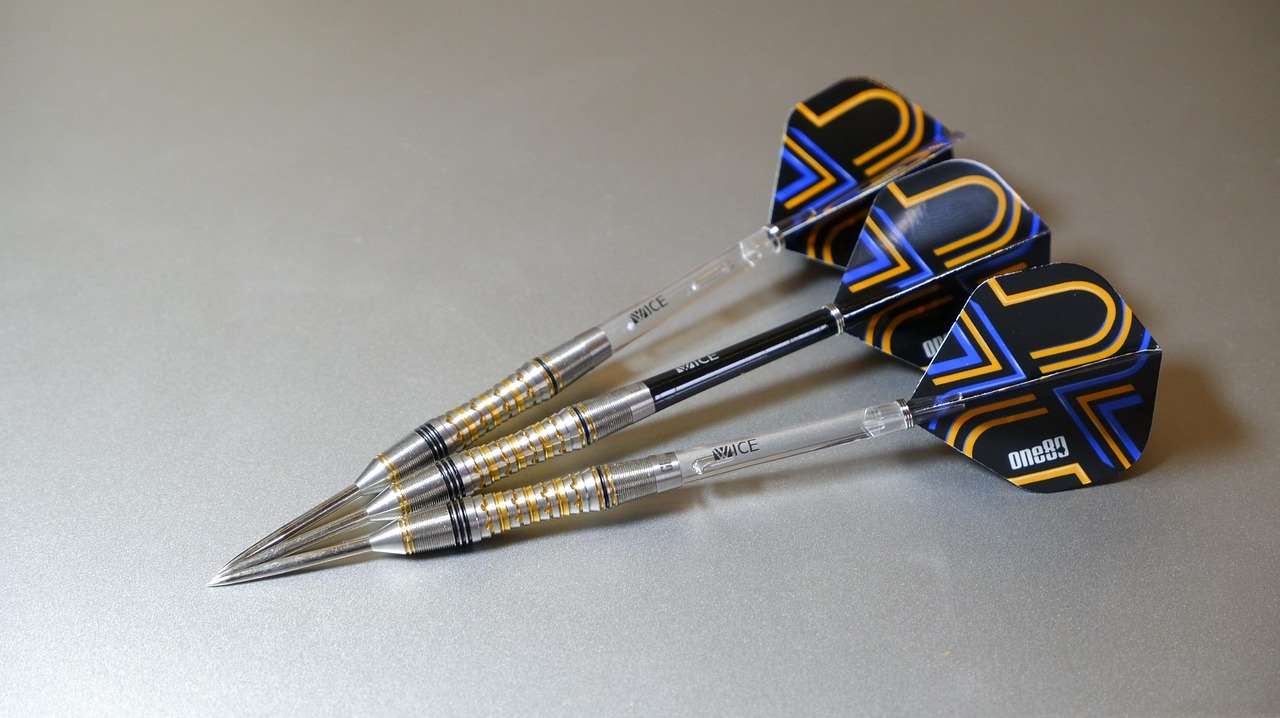
Darts are typically available in a weight range from 16 grams to 30 grams. Here’s a general overview of the common ranges:
- Light Darts (16-22 grams): Often preferred by beginners or players with a quicker, flick-of-the-wrist throwing style. They require less force to throw and can be easier to control for some.
- Medium Darts (23-26 grams): The most popular weight range, suitable for a wide variety of throwing styles. A good starting point for many players.
- Heavy Darts (27-30 grams): Typically favored by players with a more deliberate, controlled throwing motion. They can offer greater stability and reduce the impact of minor inconsistencies in your throw.
Steel Tip vs. Soft Tip Darts and Weight
It’s important to note that steel tip darts and soft tip darts have different weight considerations. Soft tip darts, used in electronic dartboards, are often lighter than steel tip darts due to the weight limitations imposed by some electronic dartboard regulations. The weight of the soft tip itself also impacts the overall feel. When **finding your ideal dart weight**, ensure you are factoring in these subtle, but crucial, differences. For choosing equipment consider Choose Best Dart Equipment.
Experimenting with Different Dart Weights
The best way to determine your ideal dart weight is to experiment! Borrow or purchase darts of different weights and spend time throwing them. Pay attention to how each weight feels in your hand, how easily you can control it, and the resulting accuracy of your throws.
Tips for Effective Experimentation
- Start with a Baseline: Begin with a dart weight in the mid-range (23-26 grams) and use it as your baseline.
- Change One Variable at a Time: When testing, only change the weight of the dart. Keep the shafts, flights, and your throwing technique consistent.
- Track Your Results: Keep a record of your scores and how each weight felt. Note any improvements or difficulties you experienced.
- Focus on Feel: Pay close attention to how the dart feels in your hand and during your throw. Does it feel comfortable and natural?
- Don’t Give Up Too Soon: It takes time to adjust to a new dart weight. Give yourself ample time to practice before making a final decision.
Other Factors Influencing Dart Selection
While weight is a crucial factor, it’s not the only one to consider when choosing darts. The dart’s barrel shape, grip, shafts, and flights also play a significant role in your overall performance.
Barrel Shape and Grip
The barrel shape affects the dart’s balance and how it feels in your hand. Common shapes include:
- Straight Barrels: Consistent thickness throughout the barrel.
- Torpedo Barrels: Thicker in the front and tapering towards the back.
- Bomb Barrels: Thickest in the middle and tapering towards both ends.
The grip refers to the texture on the barrel that helps you hold the dart securely. Grips can range from smooth to heavily knurled. Your grip style (how firmly you hold the dart) should influence your grip choice. You can have the Cabinet Lighting For Dartboards to give you a better view.
Shafts and Flights
Shafts and flights affect the dart’s aerodynamics and stability in flight. Shorter shafts generally provide more stability, while longer shafts can increase accuracy. Flights come in various shapes and sizes, each affecting the dart’s flight path differently. Experiment with different combinations to find what works best for you.
Adjusting Your Technique for Different Dart Weights
Once you’ve found a dart weight that feels comfortable, you may need to make slight adjustments to your throwing technique to optimize your accuracy. These adjustments might involve changes to your stance, grip, or release point.
Fine-Tuning Your Throw
- Stance: Experiment with different foot positions to find a stance that feels balanced and stable.
- Grip: Adjust your grip pressure to find a balance between control and relaxation.
- Release: Pay attention to your release point. A smooth, consistent release is crucial for accuracy.
- Follow-Through: Ensure a complete follow-through towards your target.
The Importance of Consistency
Regardless of the dart weight you choose, consistency is key to improving your dart game. Regular practice and a consistent throwing technique will help you develop muscle memory and improve your accuracy over time. Remember, **finding your ideal dart weight** is only part of the equation; consistent practice is equally important.
Advanced Dart Weight Considerations
As you become more experienced, you might start experimenting with more nuanced aspects of dart weight, such as the dart’s balance point. A front-weighted dart, for example, may fly differently than a rear-weighted dart.
Balance Point and Its Impact
The balance point refers to where the dart balances when held horizontally. Front-weighted darts tend to fly straighter, while rear-weighted darts can be easier to control. You can adjust the balance point by using different shafts, flights, or even adding small weights to the dart.
Maintaining Your Darts for Optimal Performance
Proper maintenance is crucial for ensuring your darts perform optimally. Regularly clean your darts to remove dirt and grime, and replace worn shafts and flights as needed. A well-maintained set of darts will help you maintain consistency and accuracy. Consider Optimal Dartboard Lighting Solutions Guide to help with consistent playing conditions.
Conclusion: Finding Your Perfect Darting Partner
**Finding your ideal dart weight** is a journey of experimentation and self-discovery. By understanding the factors influencing dart weight selection, experimenting with different weights, and fine-tuning your throwing technique, you can find the perfect darting partner to elevate your game. Don’t be afraid to try different combinations of weights, shapes, and materials until you find what feels right for you. Ultimately, the best dart is the one that helps you achieve the best results. Remember that consistency and regular practice are just as important as the dart weight itself. So, pick up those darts, start experimenting, and enjoy the process of **optimizing your dart setup**! Now that you know how to improve your equipment setup, How To Light Your Dartboard will make sure you have perfect visibility.

Hi, I’m Dieter, and I created Dartcounter (Dartcounterapp.com). My motivation wasn’t being a darts expert – quite the opposite! When I first started playing, I loved the game but found keeping accurate scores and tracking stats difficult and distracting.
I figured I couldn’t be the only one struggling with this. So, I decided to build a solution: an easy-to-use application that everyone, no matter their experience level, could use to manage scoring effortlessly.
My goal for Dartcounter was simple: let the app handle the numbers – the scoring, the averages, the stats, even checkout suggestions – so players could focus purely on their throw and enjoying the game. It began as a way to solve my own beginner’s problem, and I’m thrilled it has grown into a helpful tool for the wider darts community.