Want to throw like a pro? This Famous Dart Players Equipment Guide reveals the secrets to replicating the setups of the world’s top players, giving you insights into their preferred darts, flights, shafts, and more. We’ll explore the specific gear choices of some of the most celebrated names in darts and how you can adapt their preferences to enhance your own game.
⚠️ Still Using Pen & Paper (or a Chalkboard)?! ⚠️
Step into the future! The Dart Counter App handles all the scoring, suggests checkouts, and tracks your stats automatically. It's easier than you think!
Try the Smart Dart Counter App FREE!Ready for an upgrade? Click above!
Understanding the Essentials: A Deep Dive into Dart Equipment
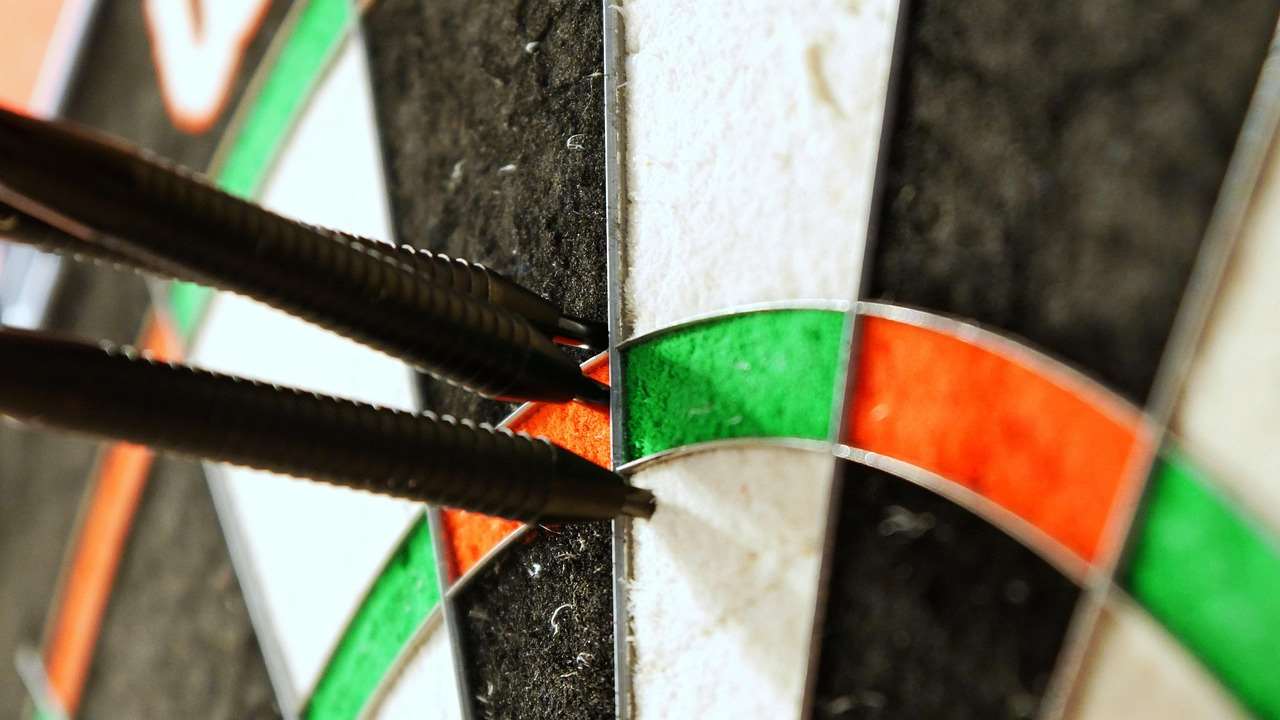
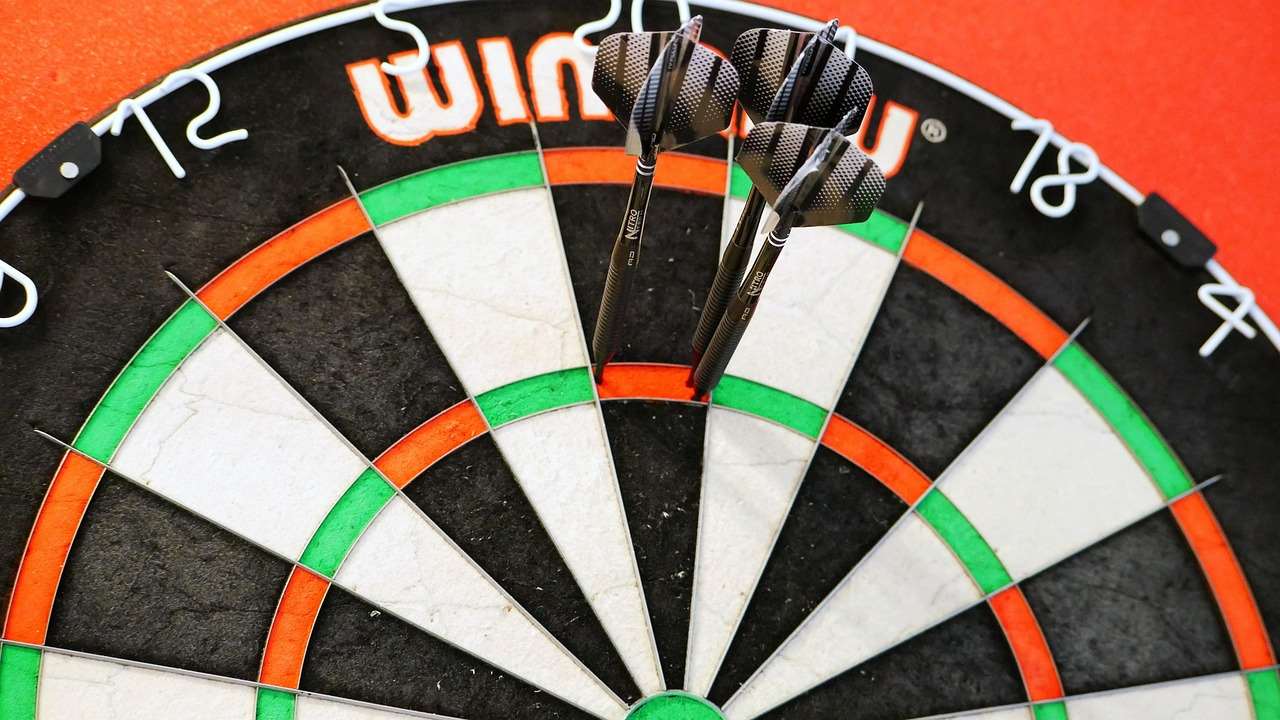
Before diving into specific player setups, it’s crucial to understand the core components of a dart and how they influence performance. The main elements are the barrel, shaft (or stem), and flights. Each component offers various materials, shapes, and weights, leading to a vast array of possible combinations. The right combination can significantly impact your throwing style and accuracy. This section will give you a solid foundation before we look at the equipment of famous dart players.
Let’s start with the barrel. The barrel is the heart of the dart, determining its weight and grip. Materials commonly used include brass, nickel-silver, and tungsten. Tungsten is denser, allowing for a slimmer barrel with the same weight, which can improve grouping on the dartboard. Different barrel shapes (straight, torpedo, bomb) and grip types (knurled, ringed, smooth) also affect how you hold and release the dart.
Next, we have the shaft. Shafts connect the barrel to the flight and come in various lengths and materials such as nylon, aluminum, and carbon fiber. Shorter shafts generally result in a steeper dart trajectory, while longer shafts create a flatter trajectory. The material affects durability and weight distribution. Experimenting with different shaft lengths is vital to finding what complements your throwing style. Understanding Choose Best Dart Equipment options will help you.
Finally, flights are attached to the shaft and provide stability and aerodynamic control during flight. Flights are available in different shapes (standard, kite, slim, pear) and materials (polyester, nylon). Larger flights offer more stability, while smaller flights reduce drag and allow for faster dart speed. The right flight shape can fine-tune your dart’s trajectory and impact its landing angle on the dartboard.
Exploring the Equipment Choices of Famous Dart Players
Now, let’s delve into the equipment choices of some famous dart players. Examining their setups can offer valuable insights into how professionals optimize their equipment for peak performance. It’s not about blindly copying their gear, but understanding the *why* behind their selections and adapting those principles to your own game. This section will cover several well-known players and their specific equipment preferences.
For example, let’s consider **Michael van Gerwen**. He is known for his use of very specific darts. Usually opting for a tungsten barrel dart designed to be front loaded, which enhances his aggressive throwing style. He also uses shorter shafts, and specific flight shapes, to help control the overall trajectory of his dart throws.
Similarly, **Phil Taylor**, arguably the greatest dart player of all time, used a setup designed for consistency and precision. Taylor historically favoured a heavier dart with a specific grip to provide a stable feel in his hand. His choices reflected his meticulous approach to the game and his unwavering focus on accuracy. In a room, that may require the Optimal Dartboard Lighting Solutions Guide.
Analyzing the equipment choices of these and other top players, such as Peter Wright, Gerwyn Price, and Gary Anderson, reveals a diverse range of preferences, reflecting their individual throwing styles and playing philosophies. By studying these examples, you can gain a better understanding of how different equipment combinations can influence dart flight, grouping, and overall performance.
Finding Your Perfect Dart Setup: A Step-by-Step Approach
Finding the perfect dart setup is a highly personal journey. There’s no one-size-fits-all solution, as the ideal equipment depends on your individual throwing style, grip, and preferences. However, there’s a systematic approach you can follow to narrow down your options and discover the setup that best suits your game. Consider this a part of your personal Famous Dart Players Equipment Guide to success!
Step 1: Assess Your Throwing Style: Begin by analyzing your natural throwing motion. Are you a smooth, controlled thrower, or do you have a more aggressive, powerful delivery? Do you prefer a straight, arcing, or looping trajectory? Understanding your throwing style is the first step in choosing the right equipment. Consider how different How To Light Your Dartboard options might even affect this!
Step 2: Experiment with Different Barrel Weights: Barrel weight significantly affects dart feel and control. Start by trying a range of weights, typically between 21 and 26 grams. Lighter darts generally require more force, while heavier darts offer more stability. See what weight feels most comfortable and allows you to maintain consistent accuracy.
Step 3: Test Various Barrel Shapes and Grips: Experiment with different barrel shapes (straight, torpedo, bomb) and grip types (knurled, ringed, smooth). The barrel shape influences the dart’s balance and how it sits in your hand, while the grip affects your control and release. Try a variety of options to see what feels most natural and secure.
Step 4: Adjust Shaft Length and Material: Shaft length affects the dart’s trajectory. Shorter shafts create a steeper angle, while longer shafts flatten the trajectory. Material also plays a role, with nylon shafts being more flexible and aluminum shafts offering more rigidity. Experiment with different lengths and materials to fine-tune your dart’s flight path.
Step 5: Select the Right Flight Shape and Size: Flight shape and size influence the dart’s stability and drag. Larger flights provide more stability, while smaller flights reduce drag and increase speed. Standard, kite, slim, and pear shapes offer different aerodynamic characteristics. Choose the flight shape that complements your throwing style and helps you achieve consistent accuracy.
The Importance of Grip and Stance
Even the best equipment won’t compensate for poor technique. A consistent grip and stance are fundamental to accuracy in darts. Experiment with different grips to find one that feels natural and allows for a smooth release. The stance should be comfortable and balanced, allowing you to maintain stability throughout your throw. These are additional key components that a Famous Dart Players Equipment Guide will also highlight!
Many players find that a three-finger grip (thumb, index, and middle finger) provides optimal control. However, some players prefer a four-finger grip, while others use a two-finger grip. The key is to find a grip that feels secure and allows you to release the dart cleanly and consistently. It’s about what *you* find to be the Best Dartboard Lighting Systems for *your* practice!
Similarly, your stance should be stable and balanced. Most players stand with one foot slightly ahead of the other, angled towards the dartboard. This allows for a comfortable and controlled throwing motion. Experiment with different stances to find the one that provides the best balance and stability for you. Practicing with different set ups will allow you to choose best dart equipment.
Remember that consistency is key. Once you’ve found a grip and stance that work for you, stick with them. Avoid making frequent changes, as this can disrupt your rhythm and accuracy. Dedicate time to practicing your grip and stance, and focus on maintaining consistency in your throwing motion.
Maintaining Your Dart Equipment for Optimal Performance
Proper maintenance is essential for ensuring your dart equipment performs at its best. Regular cleaning and care can prolong the life of your darts and maintain their accuracy. This is an often-overlooked aspect in a Famous Dart Players Equipment Guide. Clean your dart barrels regularly with a soft cloth to remove dirt, oil, and debris. This will help maintain the grip and prevent corrosion.
Check your shafts and flights for damage regularly. Replace any broken or worn parts immediately. Damaged shafts can affect the dart’s flight, while worn flights can reduce stability. Replace these components with the correct parts as soon as you see wear and tear.
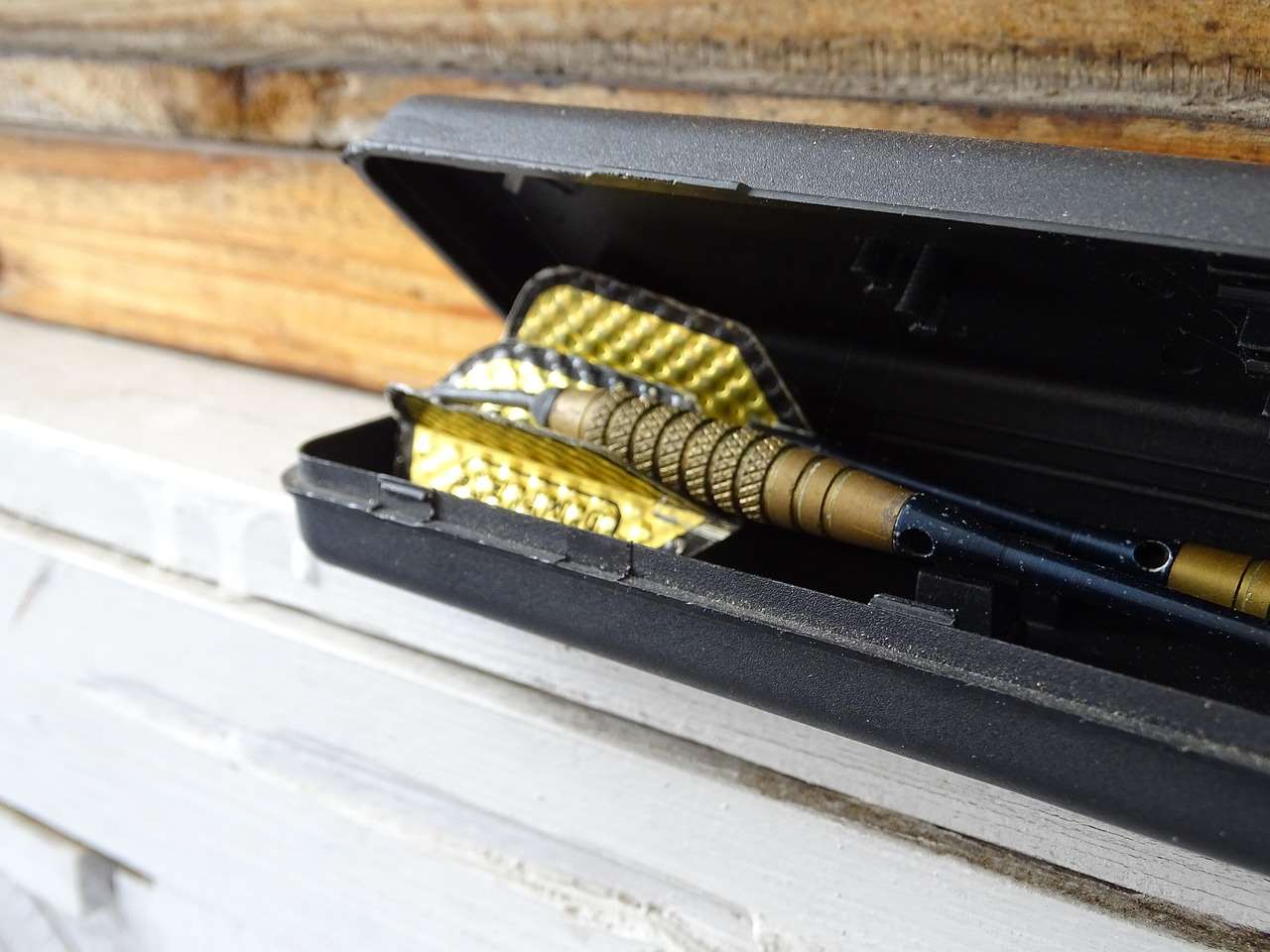
Consider using dart cases or wallets to protect your darts when not in use. This will prevent them from being damaged or bent. A good dart case will keep your darts organized and prevent them from rubbing against each other, which can damage the points and flights. Make sure you have the right Types Optimal Dartboard Lighting to see the wear and tear in the first place!
Finally, sharpen your dart points regularly to ensure they stick properly in the dartboard. Dull points can cause bounce-outs and damage the dartboard. Use a dart sharpener to maintain a sharp, consistent point on your darts.
Experimentation and Adaptation: Tailoring Equipment to Your Style
The journey to finding your perfect dart setup is an ongoing process of experimentation and adaptation. Don’t be afraid to try new things and adjust your equipment based on your performance and preferences. What works for one player may not work for another, so it’s essential to find what suits your individual style. The Famous Dart Players Equipment Guide should be seen as just that – a guide!
Keep a record of your equipment changes and track your performance. This will help you identify what adjustments are working and what aren’t. Use a notebook or spreadsheet to record your dart setups, shaft lengths, flight shapes, and grip styles, along with your scores and statistics. This data will provide valuable insights into what equipment is most effective for you.
Consider attending local dart leagues or tournaments to get feedback from other players. Observe their equipment choices and ask for advice. Networking with other dart players can provide valuable insights and help you discover new equipment options. Understanding Ring Light Dartboard Pros Cons is important, but knowing real world experience is also valuable.
Remember that your equipment preferences may change over time as your throwing style evolves. Be open to revisiting your setup and making adjustments as needed. Continuously experiment and adapt to fine-tune your equipment and optimize your performance.
The Mental Game: Equipment as a Confidence Booster
While skill and technique are paramount, the mental aspect of darts is often underestimated. Having confidence in your equipment can significantly boost your performance. Knowing that you’re using equipment that’s well-suited to your style and in good condition can give you a mental edge over your opponents. This often overlooked part of a Famous Dart Players Equipment Guide can significantly impact your game.
If you’re constantly worrying about your equipment, it will distract you from focusing on your throw. Make sure your darts are clean, sharp, and in good repair. This will eliminate any doubts about their performance and allow you to focus solely on your target. Remember, even the right Cabinet Lighting For Dartboards can help boost your confidence.
Invest in high-quality equipment that you trust. This doesn’t necessarily mean spending a fortune, but it does mean choosing equipment that’s well-made and suited to your style. When you have confidence in your equipment, you’re more likely to throw with conviction and accuracy.
Conclusion: Crafting Your Unique Darting Arsenal
Ultimately, finding the perfect dart setup is a personal journey of experimentation and adaptation. By understanding the core components of a dart, studying the equipment choices of famous players, and systematically testing different options, you can craft a unique darting arsenal that complements your individual style and maximizes your performance. Remember, this Famous Dart Players Equipment Guide is just a starting point! Embrace the process, be patient, and enjoy the journey of discovering your perfect darting setup. Now, it’s time to take these tips, find a good dart shop, and start experimenting to find the gear that will elevate your game to the next level!

Hi, I’m Dieter, and I created Dartcounter (Dartcounterapp.com). My motivation wasn’t being a darts expert – quite the opposite! When I first started playing, I loved the game but found keeping accurate scores and tracking stats difficult and distracting.
I figured I couldn’t be the only one struggling with this. So, I decided to build a solution: an easy-to-use application that everyone, no matter their experience level, could use to manage scoring effortlessly.
My goal for Dartcounter was simple: let the app handle the numbers – the scoring, the averages, the stats, even checkout suggestions – so players could focus purely on their throw and enjoying the game. It began as a way to solve my own beginner’s problem, and I’m thrilled it has grown into a helpful tool for the wider darts community.