Want to sharpen your **doubles** hitting and become a more consistent darts player? **Doubles Around the Clock darts** is the game for you. This article will explain the rules, offer practice tips, and help you improve your overall dart game.
⚠️ Still Using Pen & Paper (or a Chalkboard)?! ⚠️
Step into the future! The Dart Counter App handles all the scoring, suggests checkouts, and tracks your stats automatically. It's easier than you think!
Try the Smart Dart Counter App FREE!Ready for an upgrade? Click above!
Understanding Doubles Around the Clock Darts
**Doubles Around the Clock darts**, also known as “Around the Board Doubles,” is a fantastic practice game designed to improve your accuracy on the **double** segments of the dartboard. The game focuses specifically on hitting doubles, a crucial skill for finishing legs of 501 or other standard darts games. It’s a straightforward game, making it ideal for players of all skill levels, and allows you to track your progress as you become more proficient at hitting those critical **doubles**.
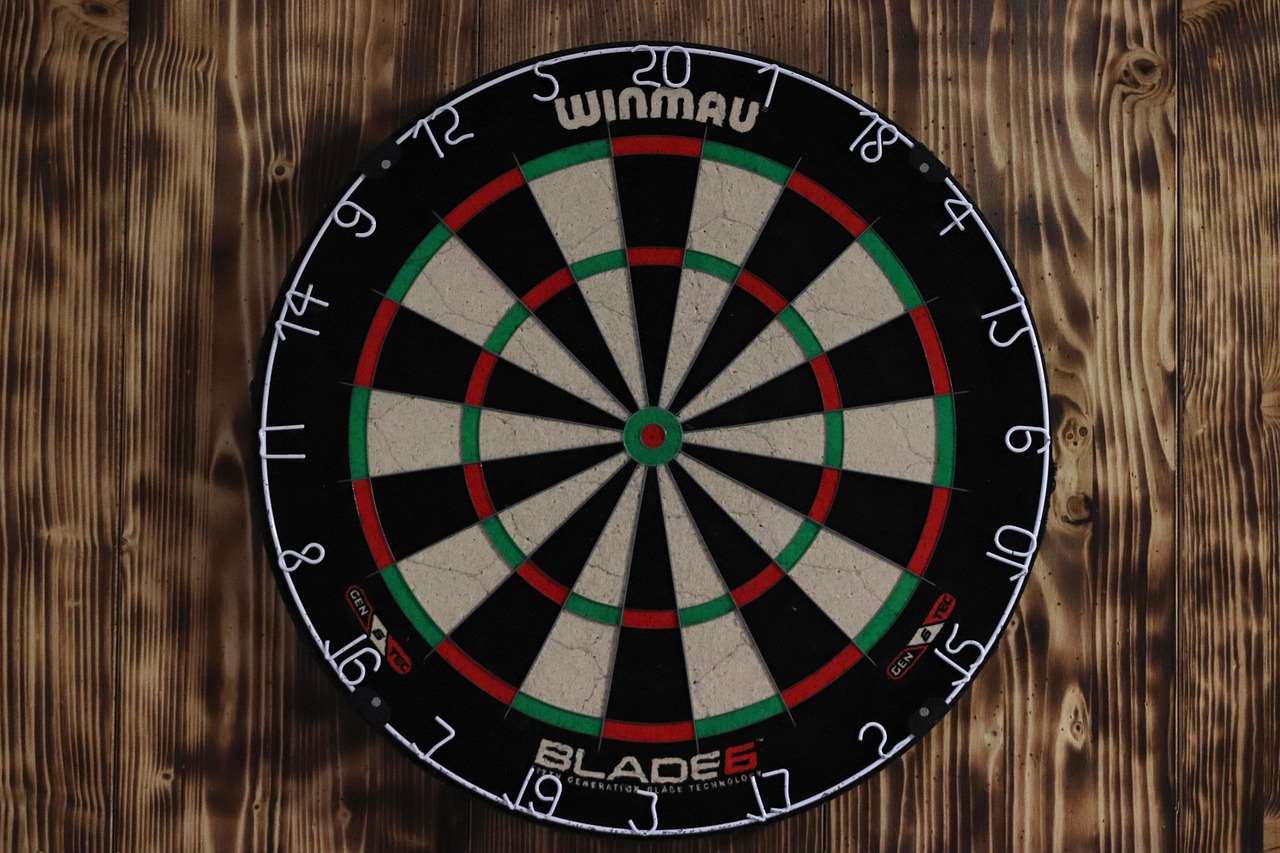
The basic premise is to start at double 1 and work your way around the board, hitting each consecutive **double** segment until you reach double 20, and then finish on the **double bullseye**. This seemingly simple task can be surprisingly challenging, especially under pressure, making it an excellent way to practice your composure and consistency.
How to Play Doubles Around the Clock Darts: The Rules
The rules of **Doubles Around the Clock darts** are simple to grasp:
- Starting Point: Begin by aiming for double 1.
- Progression: Once you successfully hit double 1, move on to double 2, then double 3, and so on.
- Order: Follow the numerical order of the segments around the dartboard.
- Scoring: No score is kept, the objective is to complete the game.
- Completion: The game is complete when you successfully hit double 20 followed by the double bullseye.
- Number of Darts: There is no limit on the number of darts you can throw at each **double**.
Essentially, you continue throwing at each **double** until you hit it before moving on to the next. While this might sound easy, the pressure of hitting each **double** consecutively can quickly add up. This is where the mental aspect of the game comes into play.
Strategic Practice Tips for Doubles Around the Clock Darts
To truly benefit from playing **Doubles Around the Clock darts**, consider these strategic practice tips:
- Warm-up: Before starting, take some time to warm up your arm and get comfortable with your throw. A few rounds of 20s or just general throwing can help.
- Focus: Concentrate on each **double** individually. Don’t get ahead of yourself or think about the **doubles** you have left to hit.
- Consistency: Strive for a consistent throwing motion each time. Minor adjustments are fine, but try to maintain a stable base.
- Mental Game: If you miss a few darts, take a deep breath and refocus. Don’t let frustration affect your throw. Remember, this is practice!
- Vary your Practice: Try playing **Doubles Around the Clock darts** under different conditions. For example, try playing after a long day at work when you’re tired or with distractions around you to simulate real game scenarios.
- Track your Progress: Note how many darts it takes you to complete the game each time you play. This will help you track your improvement over time.
Varying the Game: Adding Difficulty
Once you become proficient at the standard version of **Doubles Around the Clock darts**, you can introduce variations to increase the difficulty and challenge yourself further. Here are a few ideas:
- Limited Darts Per Double: Restrict yourself to a maximum of three darts per **double**. If you don’t hit it within three darts, you move on and add a penalty (e.g., an extra round at the end, or starting over from double 1).
- Starting with Double 20: Start at double 20 and work your way down to double 1. This can be particularly challenging as double 20 is often a high-pressure **double** in a real game.
- Alternate Doubles: Instead of hitting each consecutive **double**, skip one. For example, hit double 1, then double 3, then double 5, and so on.
- Reverse Order: After hitting double 1, attempt to hit double 20, then double 2, then double 19, etc.
Experiment with different variations to keep the game interesting and to target specific areas of your game that need improvement.
Benefits of Playing Doubles Around the Clock Darts
The benefits of incorporating **Doubles Around the Clock darts** into your practice routine are numerous:
- Improved Accuracy: The primary benefit is enhanced accuracy on **double** segments.
- Enhanced Consistency: Regular practice will lead to a more consistent throwing motion.
- Mental Toughness: The game helps develop mental fortitude and the ability to handle pressure.
- Finishing Skills: Better **double** hitting directly translates to improved finishing skills in standard darts games.
- Target Practice: It’s excellent target practice for specific areas of the dartboard.
- Fun and Engaging: It’s a more engaging way to practice than simply throwing randomly at the board.
By focusing specifically on **doubles**, you can quickly identify and address any weaknesses in your technique and build the confidence needed to consistently hit those crucial shots in a match.
Related Games to Enhance Your Doubles Skills
While **Doubles Around the Clock darts** is a fantastic game for **double** practice, there are other related games that can further enhance your skills and provide variety to your training:
- Around the World (Singles, Doubles, or Trebles): A similar concept but focuses on hitting the single, **double**, or treble segments of each number.
- Shanghai: A game where you aim for the single, **double**, and treble of a specific number in the same round.
- Killer: A game where players claim numbers and then try to eliminate their opponents by hitting their claimed number twice. Darts Variants Fun Games provides even more variant game ideas!
Combining these games with **Doubles Around the Clock darts** will provide a well-rounded practice routine that covers all aspects of your dart game.
Equipment Needed
The equipment required for playing **Doubles Around the Clock darts** is minimal:
- A Dartboard: A standard bristle dartboard is essential.
- Darts: A set of darts that you are comfortable throwing.
- A Throwing Line (Oche): A clearly marked throwing line at the correct distance from the dartboard.
- A Scoreboard (Optional): While scoring isn’t necessary, a scoreboard can be useful for tracking your progress and the number of darts thrown.

Common Mistakes to Avoid
Here are some common mistakes to avoid when playing **Doubles Around the Clock darts**:
- Rushing Your Throws: Take your time and focus on each throw. Don’t rush just to get through the game quickly.
- Ignoring Your Stance: Maintain a consistent and stable stance.
- Not Adjusting Your Aim: If you consistently miss to one side, make small adjustments to your aim.
- Getting Discouraged: Don’t get discouraged if you have a bad round. Every dart is an opportunity to improve.
Being aware of these common mistakes and actively working to avoid them will help you get the most out of your practice sessions.
Incorporating Doubles Around the Clock into Your Practice Routine
To effectively incorporate **Doubles Around the Clock darts** into your practice routine, consider the following:
- Set Specific Goals: Set realistic goals for each practice session. For example, aim to complete the game within a certain number of darts or to improve your score from the previous session.
- Consistency is Key: Practice regularly, even if it’s just for 15-20 minutes at a time. Short, frequent practice sessions are more effective than long, infrequent ones.
- Track Your Progress: Keep a record of your scores and the number of darts thrown. This will help you track your improvement over time and stay motivated.
- Focus on Weak Areas: Identify the **doubles** that you consistently struggle with and spend extra time practicing those areas. You may need to consider Adapting darts games skills to your level.
The Mental Game of Doubles
Hitting **doubles** consistently requires not only physical skill but also mental fortitude. The pressure of needing to hit a specific **double** to finish a leg or to progress in **Doubles Around the Clock darts** can be significant. Here are some tips for improving your mental game:
- Visualization: Before each throw, visualize the dart hitting the target.
- Positive Self-Talk: Replace negative thoughts with positive affirmations.
- Deep Breathing: Use deep breathing techniques to calm your nerves and focus your mind.
- Stay Present: Focus on the current throw and don’t dwell on past mistakes.
By developing a strong mental game, you can significantly improve your consistency and performance under pressure.
Conclusion: Mastering Doubles Around the Clock
**Doubles Around the Clock darts** is a valuable practice tool for any dart player looking to improve their accuracy, consistency, and mental toughness. By understanding the rules, implementing strategic practice tips, and incorporating variations to challenge yourself, you can quickly see improvements in your **double** hitting and overall dart game. Regular practice and a focused approach will lead to better finishing skills and more confident performance on the oche. So, pick up your darts, step up to the line, and start your journey to mastering **doubles around the clock**! Start practicing today and see the improvement in your game!

Hi, I’m Dieter, and I created Dartcounter (Dartcounterapp.com). My motivation wasn’t being a darts expert – quite the opposite! When I first started playing, I loved the game but found keeping accurate scores and tracking stats difficult and distracting.
I figured I couldn’t be the only one struggling with this. So, I decided to build a solution: an easy-to-use application that everyone, no matter their experience level, could use to manage scoring effortlessly.
My goal for Dartcounter was simple: let the app handle the numbers – the scoring, the averages, the stats, even checkout suggestions – so players could focus purely on their throw and enjoying the game. It began as a way to solve my own beginner’s problem, and I’m thrilled it has grown into a helpful tool for the wider darts community.