Defining ‘handicap’ in darts league terms essentially means adjusting the starting scores or adding points to level the playing field between players of varying skill levels, promoting fairer and more competitive matches. This article will delve into the various ways handicaps are implemented in darts leagues, their benefits, and how to determine appropriate handicaps for different players.
⚠️ Still Using Pen & Paper (or a Chalkboard)?! ⚠️
Step into the future! The Dart Counter App handles all the scoring, suggests checkouts, and tracks your stats automatically. It's easier than you think!
Try the Smart Dart Counter App FREE!Ready for an upgrade? Click above!
Defining ‘Handicap’ in Darts League Terms: A Comprehensive Guide
In any darts league, you’ll inevitably encounter players with different skill levels. Some might be seasoned pros consistently hitting high scores, while others are just starting out and struggling to reach even moderate averages. This difference in skill can lead to one-sided matches, which aren’t much fun for anyone involved. That’s where the concept of a handicap comes in. But what exactly does it mean to apply a handicap in a darts league, and how is it done effectively?
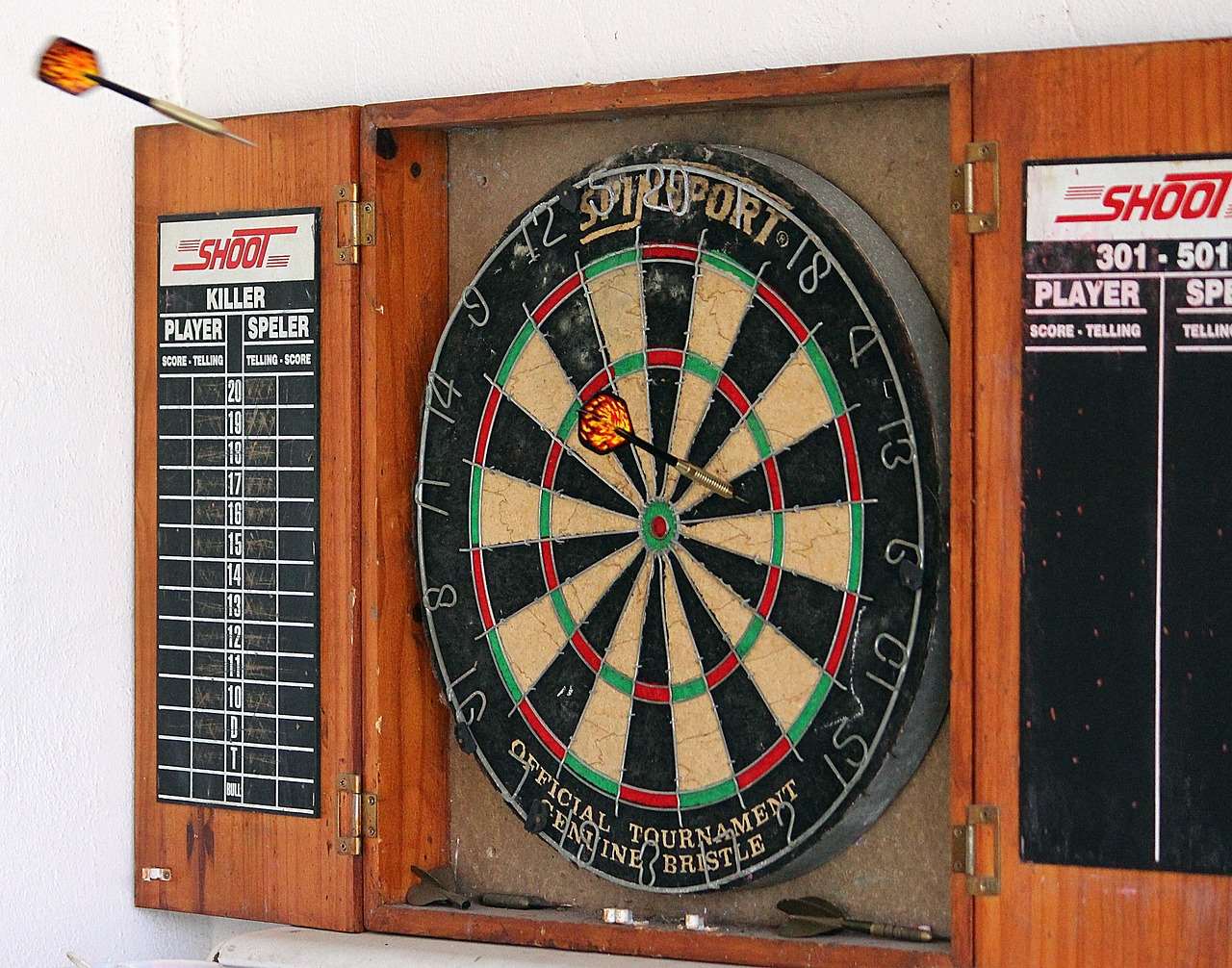
A handicap in darts is essentially a system designed to **equalize the odds** between players of different abilities. It’s a way of giving a less skilled player a head start or an advantage, making the game more competitive and enjoyable for both participants. This ensures that even a novice player has a fighting chance against a more experienced opponent.
Why Use Handicaps in Darts Leagues?
There are several compelling reasons to implement a handicap system in your darts league:
- Promotes Fairness: As mentioned earlier, handicaps level the playing field, ensuring that matches are more evenly contested.
- Increases Participation: Knowing they have a chance to win, less experienced players are more likely to join and remain active in the league.
- Enhances Enjoyment: Competitive matches are more fun for everyone involved, regardless of skill level.
- Encourages Improvement: Players are motivated to improve their game to reduce their handicap.
- Creates a More Social Atmosphere: Fair and competitive matches lead to a more positive and inclusive league environment.
Common Handicap Systems in Darts
Several different handicap systems are used in darts leagues, each with its own advantages and disadvantages. The most common include:
Starting Score Adjustment
This is arguably the simplest and most widely used handicap system. It involves adjusting the starting score of the game for one or both players. For example, in a 501 game, the weaker player might start with a score of 531 or even 561, while the stronger player starts at the standard 501. The amount of the adjustment is determined by the skill difference between the players. It is useful for modifying rules for mixed-level dart players.
Points Per Dart (PPD) Handicap
This system assigns a handicap based on each player’s average points per dart (PPD). The difference in PPD between the players determines the handicap. This can be implemented in several ways, such as:
- Giving the weaker player extra darts: This is less common as it can disrupt the flow of the game.
- Subtracting points from the stronger player’s score: This method is often considered fairer and easier to manage.
Fixed Point Allowance
In this system, the weaker player receives a fixed number of points added to their score at the beginning of each leg. This fixed point allowance remains consistent throughout the match. Determining the appropriate point allowance usually involves analyzing past performance data.

Double-In Handicap
This is a specific type of handicap that affects how a player starts a leg. Typically, in standard darts, players must hit a double to begin scoring. In a double-in handicap, the stronger player might be required to hit a specific, harder-to-reach double (like double 1 or double 3), while the weaker player only needs to hit any double to start scoring. This increases the difficulty for the stronger player and provides an advantage to the weaker player at the start of the leg.
Match Format Adjustments
Another approach involves altering the match format to favor the weaker player. For example, in a best-of-three or best-of-five match, the weaker player might only need to win one leg to win the match, while the stronger player needs to win the majority. Alternatively, you can use some fun dart game variations with modified rules to create a more level playing field.
Determining Appropriate Handicaps
The key to a successful handicap system is accurately assessing each player’s skill level and assigning an appropriate handicap. This can be a challenging task, but here are some tips:
Use Player Statistics
The most objective way to determine handicaps is to use player statistics, such as:
- Average Score Per Leg: This provides a general indication of a player’s consistency and scoring ability.
- Points Per Dart (PPD): As mentioned earlier, this is a more precise measure of scoring efficiency.
- Checkout Percentage: This reflects a player’s ability to finish legs.
- High Scores (180s, 140s, etc.): These indicate a player’s potential for bursts of high scoring.
Tracking these statistics over time provides a reliable basis for setting handicaps. You can also simplify the simplified 501 game rules for novice players by adjusting the starting score.
Consider Player Experience
While statistics are important, they don’t always tell the whole story. Consider a player’s experience level, even if their current statistics don’t fully reflect their potential. A relatively new player might be improving rapidly, and their handicap should be adjusted accordingly.
Account for Consistency
Some players are more consistent than others. A player who occasionally throws high scores but often struggles to reach even moderate scores might need a different handicap than a player who consistently scores in the same range. Consider the variability in a player’s performance when setting their handicap.

Adjust Handicaps Regularly
Handicaps shouldn’t be set in stone. As players improve or decline, their handicaps need to be adjusted accordingly. Regularly review player statistics and performance to ensure that handicaps remain fair and accurate. It’s advisable to implement a system for frequent reviews of handicaps, perhaps every few weeks or at the midpoint of the league season.
Seek Player Input
While ultimately the league organizer or handicap committee has the final say, it’s helpful to seek input from players themselves. They may have insights into their own performance or the performance of their opponents that statistics don’t capture. However, be mindful of potential biases and strive for objective assessments.
Best Practices for Implementing a Handicap System
Implementing a handicap system effectively requires more than just setting the handicaps themselves. Here are some best practices to ensure a smooth and successful implementation:
Clearly Communicate the System
Make sure all players understand how the handicap system works. Clearly explain the rules, how handicaps are determined, and how they are adjusted. Provide examples to illustrate how the system works in practice. Transparency is key to gaining player buy-in.
Be Consistent
Apply the handicap system consistently across all matches. Avoid making exceptions or deviating from the established rules, as this can undermine the fairness of the system. Consistency builds trust and ensures that all players are treated equally. You can learn about Basic Darts Fundamentals for Beginners to understand how handicaps work.
Use a Handicap Tracking System
Implement a system for tracking handicaps and performance data. This could be a simple spreadsheet or a more sophisticated software program. A well-organized tracking system makes it easier to manage handicaps, monitor player progress, and make informed adjustments.
Address Disputes Fairly
Inevitably, disputes will arise regarding handicaps. Establish a clear process for resolving disputes fairly and impartially. Listen to both sides of the story, review the relevant data, and make a decision that is consistent with the established rules and principles of the handicap system.
Promote Sportsmanship
Emphasize the importance of sportsmanship and fair play. Remind players that the purpose of the handicap system is to create a more enjoyable and competitive environment for everyone, not to provide an unfair advantage. Encourage players to respect their opponents and abide by the rules of the game.
Potential Pitfalls to Avoid
While handicaps can be a valuable tool, there are some potential pitfalls to be aware of:
Over-Handicapping
Giving a player too large of a handicap can make matches unfair in the opposite direction, essentially guaranteeing a win for the weaker player. Be careful not to overcompensate when setting handicaps.
Under-Handicapping
Similarly, not providing a sufficient handicap can render the system ineffective, leaving matches as lopsided as they would be without any handicap at all.
Sandbagging
This occurs when a player intentionally underperforms in order to receive a larger handicap. This is a form of cheating and should be addressed appropriately. Monitor player performance for suspicious patterns and take action when necessary.
Complexity
Overly complex handicap systems can be confusing and difficult to manage. Keep the system as simple and transparent as possible to ensure that all players understand it and can easily participate.
The Psychological Impact of Handicaps
It’s important to consider the psychological impact of handicaps on players. Some players may feel demoralized by receiving a handicap, viewing it as an admission of their lack of skill. Others may feel resentment towards players who receive handicaps, believing that they are being given an unfair advantage. To mitigate these potential negative effects, emphasize the positive aspects of the handicap system, such as:
- It creates more competitive matches.
- It encourages improvement.
- It makes the league more inclusive.
Frame the handicap system as a tool to enhance enjoyment and foster a sense of community, rather than as a punishment or a source of division. If you have a smaller space, think about adapting darts rules for small spaces: tips and tricks.
Conclusion
Defining ‘handicap’ in darts league terms boils down to creating a fairer and more enjoyable environment for players of all skill levels. By carefully considering player statistics, experience, and consistency, and by implementing a well-communicated and consistently applied handicap system, you can transform your darts league into a thriving community where everyone has a chance to compete and improve. Remember that the goal is not to guarantee wins for weaker players, but to make matches more competitive and engaging for everyone involved. Reviewing and adjusting handicaps regularly is essential for maintaining fairness and promoting continued growth within the league. Now, take this knowledge, discuss it with your league members, and implement a handicap system that works best for your group! Good luck, and may your darts fly true!

Hi, I’m Dieter, and I created Dartcounter (Dartcounterapp.com). My motivation wasn’t being a darts expert – quite the opposite! When I first started playing, I loved the game but found keeping accurate scores and tracking stats difficult and distracting.
I figured I couldn’t be the only one struggling with this. So, I decided to build a solution: an easy-to-use application that everyone, no matter their experience level, could use to manage scoring effortlessly.
My goal for Dartcounter was simple: let the app handle the numbers – the scoring, the averages, the stats, even checkout suggestions – so players could focus purely on their throw and enjoying the game. It began as a way to solve my own beginner’s problem, and I’m thrilled it has grown into a helpful tool for the wider darts community.