Darts worldwide is enjoyed by millions, from casual pub players to professional athletes competing for lucrative prizes. This article explores the global landscape of darts, examining its history, different game variations, the professional circuit, and tips for improving your own game.
⚠️ Still Using Pen & Paper (or a Chalkboard)?! ⚠️
Step into the future! The Dart Counter App handles all the scoring, suggests checkouts, and tracks your stats automatically. It's easier than you think!
Try the Smart Dart Counter App FREE!Ready for an upgrade? Click above!
The Global Reach of Darts Worldwide
From its humble beginnings in pubs to the bright lights of televised tournaments, the popularity of darts worldwide has exploded. The game transcends cultural boundaries, offering a simple yet challenging pastime accessible to people of all ages and skill levels. But just how far does the reach of darts extend?
While the United Kingdom is often considered the spiritual home of modern darts, the sport has a thriving presence in many other countries, including:
- The Netherlands: Home to some of the biggest names in darts, the Netherlands boasts a massive fan base and a strong professional scene.
- Germany: Darts’ popularity is rapidly growing in Germany, with large crowds attending tournaments and a rising number of talented players.
- Australia: Australia has a long history with darts, producing several world-class players and hosting major tournaments.
- North America: While perhaps not as prominent as in Europe, darts is gaining traction in the United States and Canada, with dedicated leagues and growing interest.
- Beyond: Darts is also played in various other countries across Asia, South America, and Africa, demonstrating its universal appeal.
A Brief History of Darts
The origins of darts are somewhat shrouded in mystery, but the game is believed to have evolved from military practice in medieval England. Soldiers would throw short spears or arrows at the bottom of upturned wine barrels. Over time, this evolved into a more formalized game with a standardized dartboard.
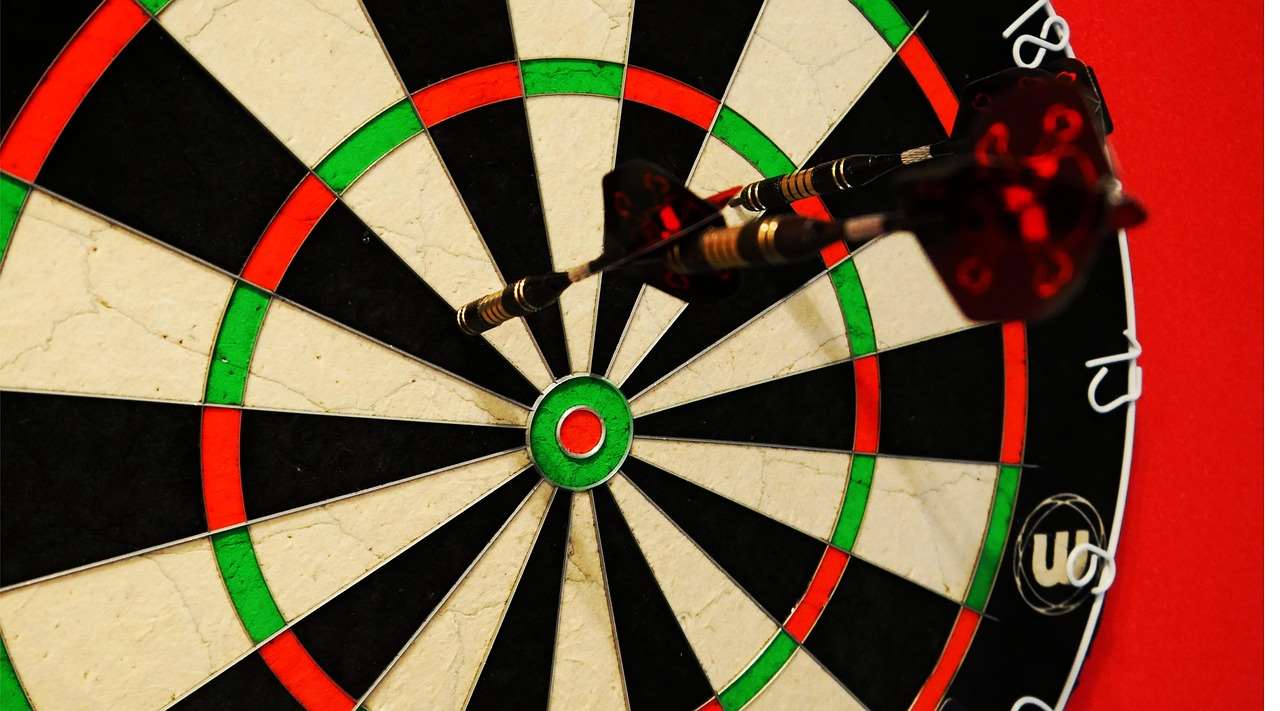
The modern dartboard is attributed to Lancashire carpenter Brian Gamlin, who is said to have devised the standard numbering system in 1896. This system, with its seemingly random arrangement of numbers, is designed to minimize the effect of luck and reward accuracy. The intricate design adds a layer of strategy to the game, rewarding precise throwing and calculated risk.
The Professional Darts Corporation (PDC), formed in 1992, played a pivotal role in professionalizing the sport. This led to increased media coverage and larger prize pools, attracting a new generation of players and fans. Today, the PDC World Darts Championship is one of the most prestigious and watched events in darts worldwide.
Find out more about the PDC.
Different Darts Game Variations
While “501” is the most commonly played format, several other darts game variations exist, each with its own unique rules and challenges.
- 501/301: The standard game, where players start with 501 (or 301) points and must reduce their score to zero, finishing with a double or the bullseye.
- Cricket: A strategic game where players must “close” specific numbers (20, 19, 18, 17, 16, 15 and bull) by hitting them three times before their opponent does.
- Around the Clock: A simple game where players must hit each number on the board in sequence, starting with 1 and ending with 20.
- Killer: A multi-player game where players must choose a number and hit it three times to become the “killer” of that number. Other players must then avoid hitting that number, or they lose a life.
The Professional Darts Circuit
The professional darts worldwide circuit is dominated by two major organizations: the Professional Darts Corporation (PDC) and the World Darts Federation (WDF).
Professional Darts Corporation (PDC)
The PDC is the leading professional darts organization, hosting prestigious tournaments such as the World Darts Championship, the Premier League Darts, and the World Matchplay. The PDC is known for its high standards of professionalism, its engaging television coverage, and its star-studded roster of players.
World Darts Federation (WDF)
The WDF is the governing body for amateur and professional darts around the world. It organizes the WDF World Championship and sanctions tournaments in numerous countries. The WDF provides a pathway for amateur players to progress to the professional ranks.
The prize money for winning these tournaments can be substantial, with top players earning millions of dollars annually through winnings, sponsorships, and endorsements.
Essential Darts Equipment
Having the right equipment is essential for playing darts effectively. Here’s a breakdown of the key components:
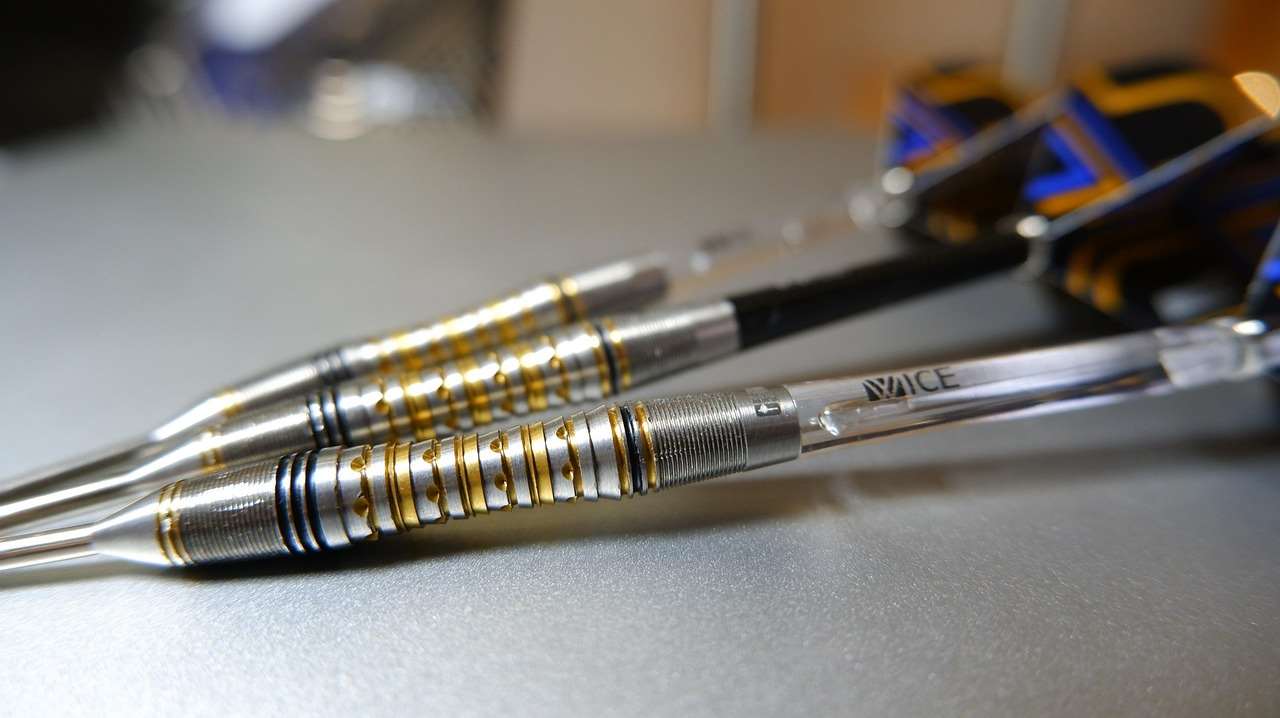
- Darts: Darts come in various weights, shapes, and materials. Experiment to find darts that feel comfortable and suit your throwing style. Consider the barrel material (brass, nickel silver, tungsten), the weight (typically 21-26 grams), and the grip.
- Dartboard: A high-quality dartboard is crucial for accurate scoring and durability. Bristle dartboards made from sisal fibers are the standard for professional play. Ensure the dartboard is properly mounted at the regulation height (5 feet 8 inches to the bullseye).
- Flights: Flights affect the dart’s stability and trajectory. Experiment with different shapes (standard, slim, kite) and materials (polyester, nylon) to find flights that suit your throwing style. Learn about darts flight shape here.
- Shafts: Shafts connect the flight to the barrel. Like flights, shafts come in various lengths and materials. Shorter shafts can increase accuracy, while longer shafts can provide more stability.
- Oche: The oche is the throwing line. Ensure the oche is positioned at the correct distance from the dartboard (7 feet 9.25 inches). An oche mat can help maintain the correct distance and protect your floor. You can find more information about the darts oche dimensions here.
Tips for Improving Your Darts Game
Improving your darts game takes practice, dedication, and the right approach. Here are some tips to help you hone your skills:
- Develop a Consistent Stance: Find a stance that feels comfortable and balanced, and stick with it. Ensure your weight is evenly distributed and your body is aligned with the target.
- Grip the Dart Correctly: Experiment with different grips to find one that allows you to release the dart smoothly and consistently. Avoid gripping the dart too tightly, as this can cause tension and affect your accuracy.
- Perfect Your Throwing Motion: Focus on a smooth, controlled throwing motion. Keep your arm straight and your wrist firm. Follow through with your arm after releasing the dart.
- Practice Regularly: Consistent practice is essential for improving your darts game. Set aside dedicated practice time each week and focus on specific areas for improvement.
- Aim and Focus: Before each throw, take a moment to focus on your target and visualize the dart hitting the desired spot. Maintain concentration throughout your throwing motion.
- Analyze Your Performance: Keep track of your scores and analyze your performance to identify areas for improvement. Consider using a free dart score app to track your progress.
Remember, even the number one player had to start somewhere, so don’t be discouraged by setbacks. Keep practicing and you’ll see improvement over time.
Darts Terminology: A Glossary
To fully understand and appreciate the game of darts, it’s helpful to familiarize yourself with some common terminology:
- 180: The maximum score possible with three darts, achieved by hitting three treble 20s.
- Bullseye: The center of the dartboard, worth 50 points.
- Double: The outer ring of the dartboard, worth twice the number. Required to finish a game of 501.
- Treble: The inner ring of the dartboard, worth three times the number.
- Oche: The throwing line.
- Leg: A single game of darts.
- Set: A collection of legs, typically the best of a certain number.
- Checkout: The final score required to win a leg, always finishing on a double or the bullseye.
The Social Aspect of Darts
Beyond the competitive element, darts worldwide is also a popular social activity. Playing darts in pubs, clubs, or at home provides an opportunity to socialize with friends and family, enjoy a friendly competition, and unwind after a long day.
Darts leagues and tournaments offer a sense of community and camaraderie, allowing players to connect with others who share their passion for the game. Whether you’re a seasoned pro or a casual player, the social aspect of darts is an integral part of its appeal.
And who knows, maybe you’ll find the special one at your local darts league!
Future Trends in Darts
The future of darts worldwide looks bright, with several exciting trends emerging:
- Growing Global Popularity: Darts is continuing to expand its reach beyond its traditional strongholds, with new markets emerging in Asia, South America, and Africa.
- Increased Media Coverage: Television and online streaming platforms are providing greater exposure for darts tournaments, attracting larger audiences and increasing sponsorship opportunities.
- Technological Advancements: Technological innovations, such as electronic dartboards and online scoring systems, are enhancing the playing experience and making the game more accessible.
- Youth Development Programs: Organizations are investing in youth development programs to nurture the next generation of darts players.
These trends suggest that darts will continue to grow in popularity and become an even more globally recognized and respected sport.
Conclusion
From its humble beginnings to its current status as a globally recognized sport, darts worldwide has captivated audiences with its blend of skill, strategy, and social interaction. Whether you’re a seasoned pro or a casual player, darts offers a challenging and rewarding pastime accessible to everyone. By understanding the history, variations, equipment, and techniques involved, you can enhance your enjoyment of the game and improve your skills.
So, grab some darts, find a board, and start practicing. Who knows, you might just become the next big thing in the world of darts! Ready to set up your own darts tournament set up?

Hi, I’m Dieter, and I created Dartcounter (Dartcounterapp.com). My motivation wasn’t being a darts expert – quite the opposite! When I first started playing, I loved the game but found keeping accurate scores and tracking stats difficult and distracting.
I figured I couldn’t be the only one struggling with this. So, I decided to build a solution: an easy-to-use application that everyone, no matter their experience level, could use to manage scoring effortlessly.
My goal for Dartcounter was simple: let the app handle the numbers – the scoring, the averages, the stats, even checkout suggestions – so players could focus purely on their throw and enjoying the game. It began as a way to solve my own beginner’s problem, and I’m thrilled it has grown into a helpful tool for the wider darts community.