Understanding the **darts score target** system is fundamental to enjoying and improving in the game. This article will break down the scoring rules, provide tips for calculating scores quickly, and explore strategies to maximize your points on the dartboard. We’ll cover everything from basic scoring to advanced checkout techniques.
⚠️ Still Using Pen & Paper (or a Chalkboard)?! ⚠️
Step into the future! The Dart Counter App handles all the scoring, suggests checkouts, and tracks your stats automatically. It's easier than you think!
Try the Smart Dart Counter App FREE!Ready for an upgrade? Click above!
Decoding the Darts Score Target: A Comprehensive Guide
The beauty of darts lies in its simplicity and complexity. While the rules are straightforward, mastering the game requires precision, strategy, and a solid understanding of the scoring system. The ultimate aim is to reduce your score from a starting point (usually 501 or 301) to exactly zero, ending with a double.

The Dartboard: Your Darts Score Target Landscape
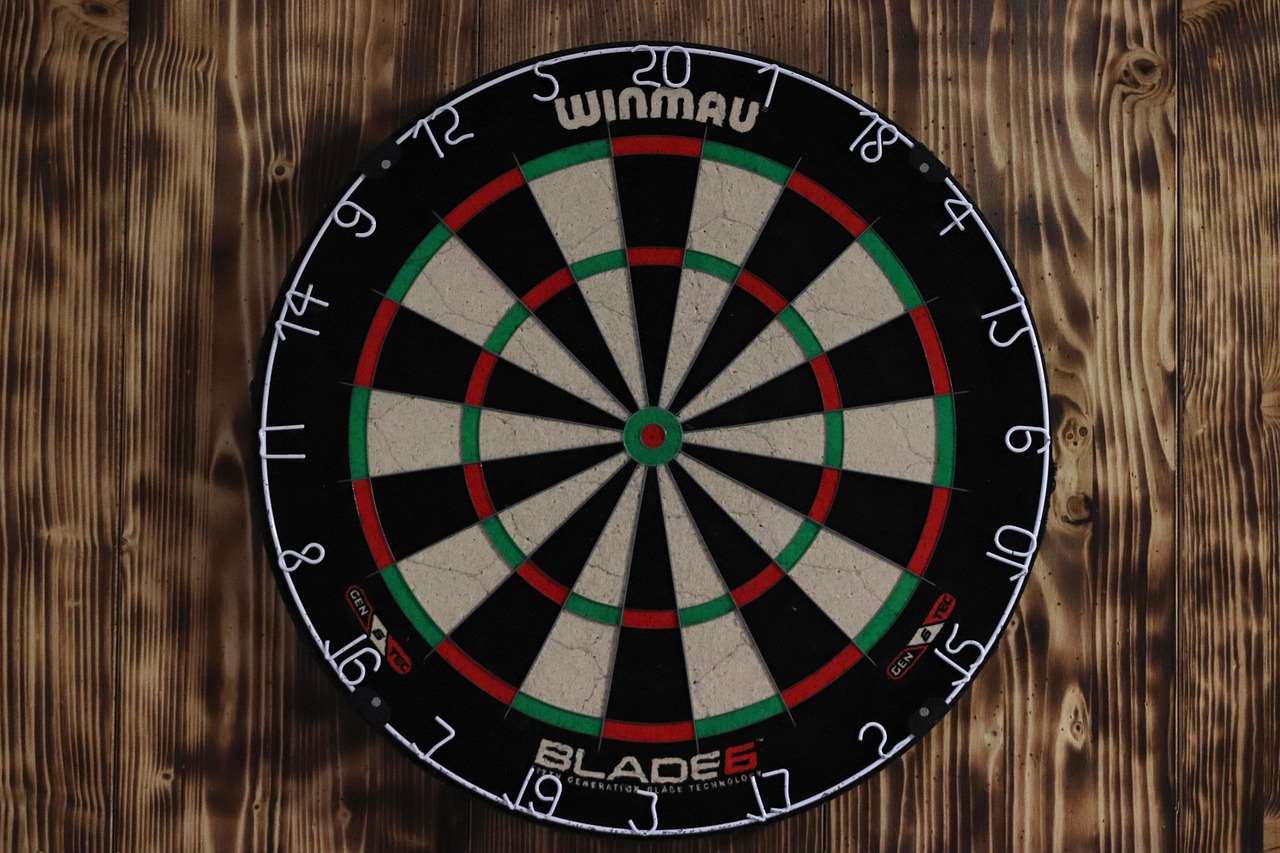
Before diving into scoring, let’s familiarize ourselves with the dartboard itself. The board is divided into twenty numbered sections, ranging from 1 to 20. Each section is further divided into segments by wires. Key areas to note are:
- Single Segments: The large areas between the wires.
- Double Ring: The outer ring of the board, doubling the value of the section.
- Treble Ring: The inner ring of the board, tripling the value of the section.
- Bullseye: The center of the board, worth 50 points.
- Outer Bull (Single Bull): The ring around the bullseye, worth 25 points.
Knowing these areas is crucial for calculating your score quickly and accurately. Many players use mental math techniques to instantly assess the value of each dart.
Darts Score Target Basics: Calculating Your Points
Calculating your **darts score target** is simple in principle. Each dart that lands within a numbered section contributes to your score based on its location. If your dart lands in the single 20, you score 20 points. If it lands in the treble 20, you score 60 points (20 x 3). The same logic applies to all other sections.
Common Scoring Scenarios
Let’s look at some common scoring scenarios to solidify your understanding:
- Three darts in the single 20: 20 + 20 + 20 = 60 points
- Two darts in the treble 20, one dart in the single 5: 60 + 60 + 5 = 125 points
- One dart in the bullseye, two darts in the single 15: 50 + 15 + 15 = 80 points
- One dart in the double 10, one dart in the single 10, one dart in the single 5: 20 + 10 + 5 = 35 points
Remember to add the values of each dart together to get your total score for that turn. Many players practice mental arithmetic to calculate the score faster under pressure.
No Score
If a dart misses the board, lands outside the scoring area, or falls out before being retrieved, it scores zero points. Also, if a player goes over zero when trying to checkout, that is called a bust. It is important to know about oche darts with a twist and common rules.

Strategic Play and Checkout Strategies to Achieve Your Darts Score Target
While hitting high scores is important, strategic play and mastering checkout techniques are essential for winning games. “Checkout” refers to finishing the game by reducing your score to exactly zero with a final dart landing in a double or the bullseye. Having a darts xinglab and understanding is crucial in these situations.
Aiming for High Scores
The treble 20 (T20) is the most sought-after target on the board, as it yields the highest possible score with a single dart (60 points). However, consistently hitting the T20 requires practice and precision. Many players also target the treble 19 (T19) as a reliable alternative, especially if they are struggling with the T20. The electronic dart board cabinet can help you track your progress and improve your accuracy.
Setting Up for Checkout
As you approach the end of the game, careful planning is crucial. You need to leave yourself with a score that can be checked out with a double. Here are some common checkout numbers and strategies:
- 40: Double 20 (D20)
- 32: Double 16 (D16)
- 16: Double 8 (D8)
- 8: Double 4 (D4)
- 2: Double 1 (D1)
- Bullseye (50): Can be used for odd numbers and strategic finishes.
Some players prefer setting up for specific doubles based on their proficiency. For example, a player comfortable with D16 might aim to leave themselves with a score of 32. Some checkout require using a darts game in french.
Checkout Combinations: Beyond the Basics
Advanced players often use complex checkout combinations involving multiple darts to achieve the desired double. These combinations require precise calculations and a deep understanding of the **darts score target** system. Here are a few examples:
- 81: T17, D15 (51 + 30 = 81)
- 100: T20, D20 (60 + 40 = 100)
- 167: T20, T19, D5 (60 + 57 + 10 = 167)
The Importance of Practice
Mastering checkout techniques requires dedicated practice. Spend time focusing on hitting specific doubles and working through different checkout combinations. There are many free apps and online resources that can help you practice checkouts and track your progress. Also, consider watching recorded matches to get a sense of the darts winner song and what it means to competitors. You can also find great examples of Free dart score app strategies.
Mental Game and Focus in Achieving Your Darts Score Target
Darts is not just a physical game; it’s also a mental one. Maintaining focus, managing pressure, and developing a positive mindset are crucial for success. If you can dart like a dragonfly crossword and still maintain focus, then the mental game shouldn’t be an issue.
Dealing with Pressure
Playing under pressure can significantly impact your performance. Learning to manage your nerves and stay calm is essential. Techniques such as deep breathing, visualization, and positive self-talk can help you maintain focus and composure during critical moments.
Visualizing Success
Before each throw, visualize your dart hitting the target. This mental rehearsal can improve your accuracy and confidence. Imagine the trajectory of the dart and the feeling of success as it lands in the desired location.
Maintaining a Positive Mindset
Even the best players experience setbacks. It’s important to maintain a positive attitude and avoid dwelling on mistakes. Learn from your errors and focus on the next throw. Remember, darts is a game of averages, and consistency is key. If you understand darts 180 paper and know the scores, this will help increase focus.
Advanced Darts Score Target Strategies: Beyond the Basics
Once you’ve mastered the basics, you can explore more advanced strategies to elevate your game. These strategies involve a deeper understanding of the **darts score target** system and the ability to anticipate your opponent’s moves.
Strategic Setup
Sometimes, the best move is not to aim for the highest score, but to strategically position yourself for the next turn. For example, if you’re close to a checkout, you might choose to leave yourself with a more favorable double, even if it means sacrificing a few points.
Blocking Strategies
In some situations, you might choose to “block” your opponent by preventing them from hitting a crucial target. This can involve aiming for a different section of the board to disrupt their rhythm or force them to adjust their strategy. Understanding when are there any darts matches today can help with seeing these kinds of strategies.
Reading Your Opponent
Pay attention to your opponent’s tendencies and patterns. Are they more comfortable with certain doubles? Do they have a preferred setup? By understanding their game, you can anticipate their moves and adjust your strategy accordingly.
Tips for Improving Your Darts Score Target Accuracy
Improving your **darts score target** accuracy requires consistent practice and attention to detail. Here are some tips to help you refine your technique:
- Grip: Experiment with different grips to find one that feels comfortable and allows for a consistent release.
- Stance: Maintain a stable and balanced stance. Your feet should be shoulder-width apart, and your weight should be evenly distributed.
- Throw: Develop a smooth and controlled throwing motion. Avoid jerking or twisting your wrist.
- Follow-Through: Follow through with your arm after releasing the dart. This will help you maintain accuracy and consistency.
- Practice Regularly: The more you practice, the better you’ll become. Set aside dedicated time for practice and focus on specific areas of your game.
By focusing on these key areas, you can gradually improve your accuracy and consistency, allowing you to hit your **darts score target** more reliably.
Conclusion: Mastering the Darts Score Target System
Mastering the **darts score target** system is essential for enjoying and excelling in the game. By understanding the scoring rules, practicing checkout techniques, and developing a strong mental game, you can significantly improve your performance. Remember that consistency, strategy, and focus are key to success. So, grab your darts, practice diligently, and aim for that perfect checkout! Now that you understand the system, why not find out about hl darts lübeck and its significance?

Hi, I’m Dieter, and I created Dartcounter (Dartcounterapp.com). My motivation wasn’t being a darts expert – quite the opposite! When I first started playing, I loved the game but found keeping accurate scores and tracking stats difficult and distracting.
I figured I couldn’t be the only one struggling with this. So, I decided to build a solution: an easy-to-use application that everyone, no matter their experience level, could use to manage scoring effortlessly.
My goal for Dartcounter was simple: let the app handle the numbers – the scoring, the averages, the stats, even checkout suggestions – so players could focus purely on their throw and enjoying the game. It began as a way to solve my own beginner’s problem, and I’m thrilled it has grown into a helpful tool for the wider darts community.