Understanding the **darts number goal** is fundamental to playing strategically; aiming for specific numbers, especially high-scoring ones like 20 and 19, drastically improves your chances of winning and achieving quick finishes. This guide covers scoring basics, strategic targeting, checkout strategies, and practice drills to help you master your aim and consistently hit your target numbers on the dartboard.
⚠️ Still Using Pen & Paper (or a Chalkboard)?! ⚠️
Step into the future! The Dart Counter App handles all the scoring, suggests checkouts, and tracks your stats automatically. It's easier than you think!
Try the Smart Dart Counter App FREE!Ready for an upgrade? Click above!
Understanding the Darts Number Goal and Basic Scoring
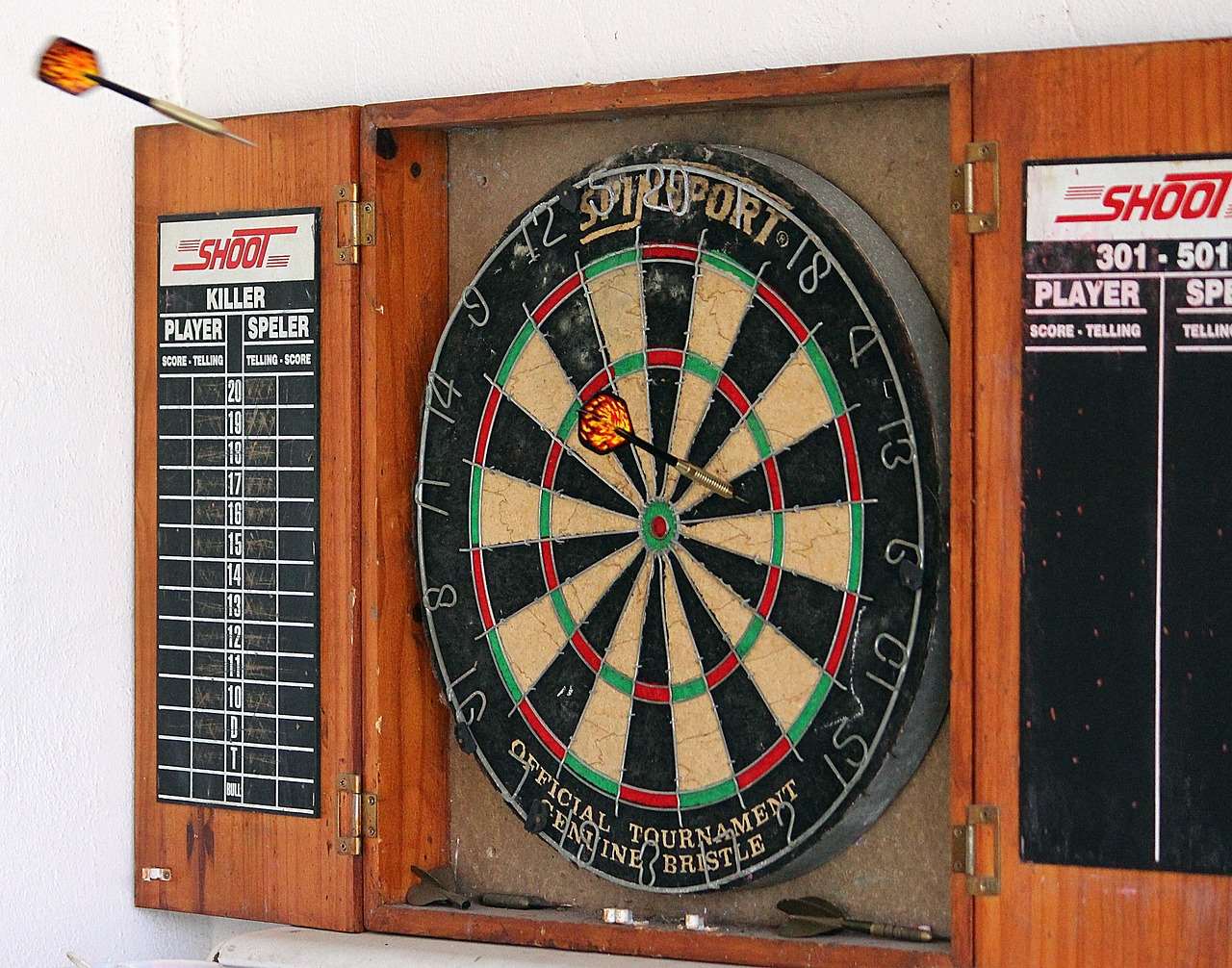
The foundation of darts lies in understanding how to score points. The standard dartboard is divided into 20 numbered sections, ranging from 1 to 20. Each section is further subdivided into single, double, and treble areas. Hitting the single area scores the number of that section, while hitting the double ring scores twice the number, and hitting the treble ring scores three times the number. The bullseye consists of an outer ring (25 points) and an inner bullseye (50 points, also known as the double bull). Aiming effectively, which often involves focusing on a **darts number goal**, begins with mastering this basic scoring system.
Familiarizing yourself with the **dartboard layout** is essential. Notice that high numbers are positioned next to low numbers (e.g., 20 is next to 1 and 5). This arrangement is designed to penalize inaccuracy. A slight miss can result in a significantly lower score. Therefore, strategic aiming and consistent throwing are key to achieving your desired scores and making progress towards your **darts number goal**.
Strategic Targeting and Dartboard Sections
While randomly throwing darts might be fun, strategic targeting is what separates casual players from serious contenders. Understanding which sections of the dartboard to target in different situations can dramatically improve your overall score. The most common strategic **darts number goal** involves aiming for the 20 and 19 segments, aiming to maximize your score with each throw.
The Importance of the 20 and 19
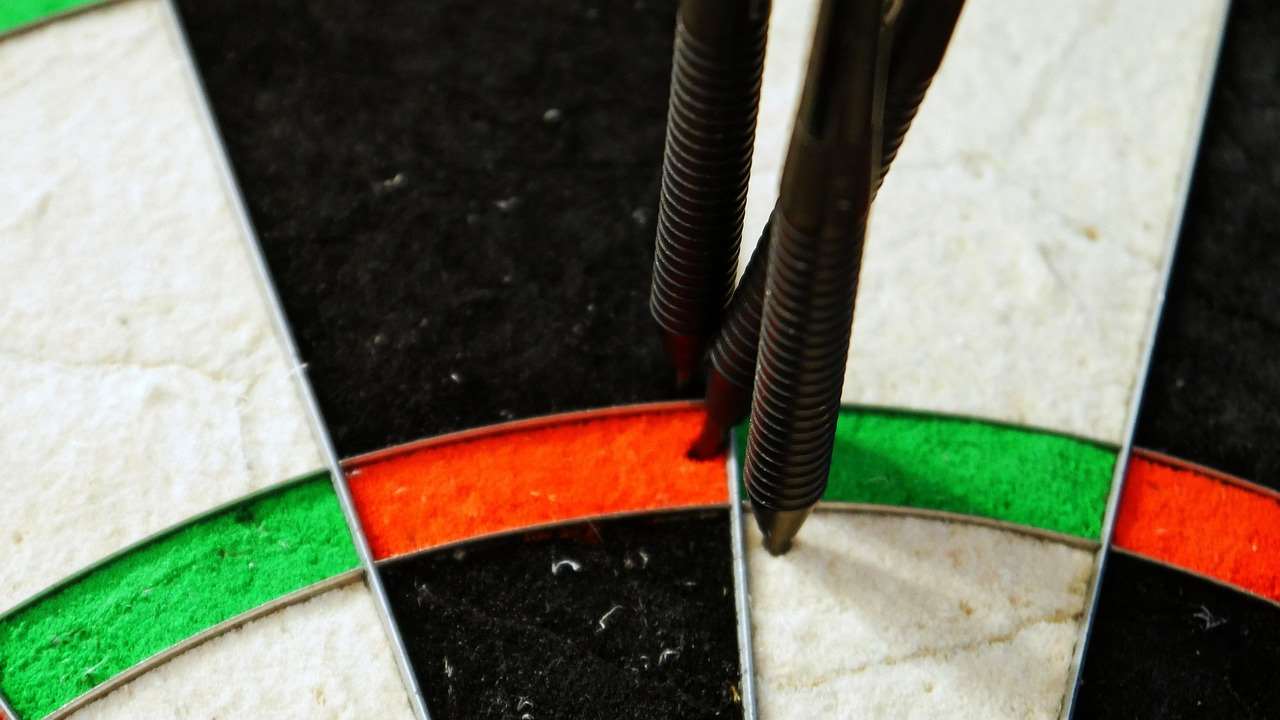
The 20 segment is the highest-scoring single area on the board, and its treble (T20) offers the potential for a maximum score of 60. For most players, the T20 is the primary target for building a lead and rapidly reducing the remaining score. If your goal is efficiency, mastering your ability to hit this section consistently is paramount. However, relying solely on the 20 can be risky. If you are off target and stray into the 1 or 5, your scoring potential is reduced dramatically.
The 19 is often seen as a viable alternative. The T19 scores 57, only slightly less than a T20, and the surrounding numbers (3 and 7) are still relatively low compared to the 1 and 5 around the 20. Many players will switch to the 19 if they feel they are struggling with the 20, providing a reliable way to continue accumulating points. Remember, the key is to set a **darts number goal** and consistently work toward it.
Considering Alternatives: 18, 16, and Beyond
While the 20 and 19 are popular choices, other numbers also have their place in a strategic game. The 18 and 16, and their trebles, can become useful depending on the remaining score and the desired checkout. For example, if you need 96 to finish, hitting two T16s will complete the checkout. Understanding these alternative options and adapting your **darts number goal** based on the situation is a mark of a skilled player. You could even check out the price of darts set that would optimize your gameplay.

Checkout Strategies: Planning Your Final Shots
Checkouts are the final act of a darts game, requiring careful planning and precise execution. Checkout numbers range from 170 down to 2, and the goal is to reduce your score to zero using a double (or the bullseye) as the final dart. Mastering checkout strategies is crucial for turning a lead into a victory and achieving your ultimate **darts number goal**.
Common Checkout Combinations
Certain checkout combinations are more common and efficient than others. The most famous checkout is 170 (T20, T20, Bullseye), but many others are frequently used. Here are a few examples:
- 160: T20, T20, D20
- 100: T20, D20
- 81: T17, D15
- 40: D20
Memorizing these combinations and understanding how to adapt them based on your current score is a vital part of becoming a successful darts player. Resources like **darts scoreboard app** (https://dartcounterapp.com/) can assist in practicing and calculating these checkouts. You can also use a darts score counter to help during live games.
The Importance of Leaving a Double
The golden rule of checkouts is to always leave yourself a double. This means that after your first or second dart of a checkout attempt, your remaining score should be an even number between 2 and 40 (or 50 for the bullseye). This ensures that you have a viable target to finish the game. If you accidentally leave an odd number (other than 1), you have effectively busted your score and will have to try again on your next turn.

Practice Drills to Improve Your Aim
Consistent practice is the key to improving your aim and hitting your **darts number goal** with greater accuracy. There are numerous drills that you can use to hone your skills and develop a reliable throwing technique.
The Round the Clock Drill
This drill is designed to improve your accuracy across the entire dartboard. Start by aiming for the 1 segment, then the 2, then the 3, and so on, until you have hit all 20 numbers in sequence. You can make it more challenging by requiring yourself to hit each number three times before moving on, or by only allowing yourself three darts per number. You can find more information on points system for q school, though this drill won’t directly address that topic.
The High Score Drill
This drill focuses on hitting the T20 and T19 segments. Set a target score for yourself (e.g., 300 points in 10 rounds) and see how quickly you can reach it. This drill helps you develop consistency in hitting your primary scoring targets.
The Checkout Drill
This drill involves practicing various checkout combinations. Start with a random score (e.g., 101) and try to finish it within three darts. You can use a darts score counter to simplify scorekeeping. Repeat this drill with different starting scores to become proficient in a wide range of checkouts. Remember that focusing on the **darts number goal** during these drills is critical for improvement.
Advanced Techniques and Mental Game
Beyond basic techniques, advanced players focus on subtle adjustments to their stance, grip, and release to maximize accuracy. They also pay close attention to the mental aspects of the game, maintaining focus and managing pressure. Knowing how to choose the right dart board online is also important.
Stance and Grip
Experiment with different stances and grips to find what works best for you. Some players prefer a wide stance, while others prefer a narrower stance. Similarly, some players grip the dart tightly, while others prefer a looser grip. The key is to find a stance and grip that feels comfortable and allows you to consistently release the dart in a smooth, controlled motion. This might also affect how you approach the **darts number goal**.
Mental Toughness
Darts is a game of precision and focus, so maintaining a positive mental attitude is essential. Don’t get discouraged by missed throws or bad scores. Instead, focus on learning from your mistakes and staying confident in your abilities. Visualization techniques, such as mentally rehearsing successful throws, can also help improve your mental toughness.
Consider investing in a dartboard light surround to improve visibility and reduce distractions, which can contribute to a better mental game.
Conclusion
Mastering the **darts number goal** is a journey that requires dedication, practice, and a strategic approach. By understanding basic scoring, targeting key numbers, learning checkout combinations, and consistently practicing drills, you can significantly improve your dart-throwing skills. Remember to focus on your mental game, experiment with different techniques, and never give up on your pursuit of becoming a better darts player. Now it’s time to put your knowledge into action! Grab your darts and start practicing those key numbers – aim for the 20, plan your checkouts, and watch your scoring soar! Want to continue improving your darts game? Check out Darts Counter App today!

Hi, I’m Dieter, and I created Dartcounter (Dartcounterapp.com). My motivation wasn’t being a darts expert – quite the opposite! When I first started playing, I loved the game but found keeping accurate scores and tracking stats difficult and distracting.
I figured I couldn’t be the only one struggling with this. So, I decided to build a solution: an easy-to-use application that everyone, no matter their experience level, could use to manage scoring effortlessly.
My goal for Dartcounter was simple: let the app handle the numbers – the scoring, the averages, the stats, even checkout suggestions – so players could focus purely on their throw and enjoying the game. It began as a way to solve my own beginner’s problem, and I’m thrilled it has grown into a helpful tool for the wider darts community.