To effectively **improve** your **darts games number hitting**, focus on consistent practice, proper stance and grip, and strategic target selection. This article will provide a comprehensive guide to refining your dart throwing technique, choosing the right equipment, and implementing practice drills to **improve** your accuracy and boost your scoring potential in any **darts** game. We will also explore various strategies to maximize your efficiency on the dartboard.
⚠️ Still Using Pen & Paper (or a Chalkboard)?! ⚠️
Step into the future! The Dart Counter App handles all the scoring, suggests checkouts, and tracks your stats automatically. It's easier than you think!
Try the Smart Dart Counter App FREE!Ready for an upgrade? Click above!
Mastering the Fundamentals to Improve Darts Games Number Hitting
The foundation of consistently hitting your target numbers lies in mastering the fundamentals of dart throwing. This encompasses your stance, grip, throwing motion, and release. Let’s break down each of these elements.
Stance and Balance
Your stance is your anchor. A stable and balanced stance allows for consistent throws. Most players adopt one of two stances: the parallel stance or the angled stance. Experiment to see which one feels most natural and comfortable. Regardless of your choice, ensure your weight is evenly distributed between both feet. This helps prevent swaying or leaning during your throw. Proper foot placement can significantly **improve darts games number hitting**.
- Parallel Stance: Feet are roughly shoulder-width apart, parallel to the oche (the throwing line).
- Angled Stance: One foot is slightly ahead of the other, creating a more open stance towards the dartboard.
Practice both stances and pay attention to how your body feels. You might find that one provides better balance and control for you. Your shoulders should be aligned towards the target.
The Perfect Grip
The grip is your connection to the dart. A consistent grip is crucial for reproducible throws. There’s no single “perfect” grip; it’s about finding what works best for you. Common grip types include:
- The Two-Finger Grip: Simplistic and often used by beginners.
- The Three-Finger Grip: Offers more control and stability.
- The Four-Finger Grip: Provides maximum control but can be restrictive.
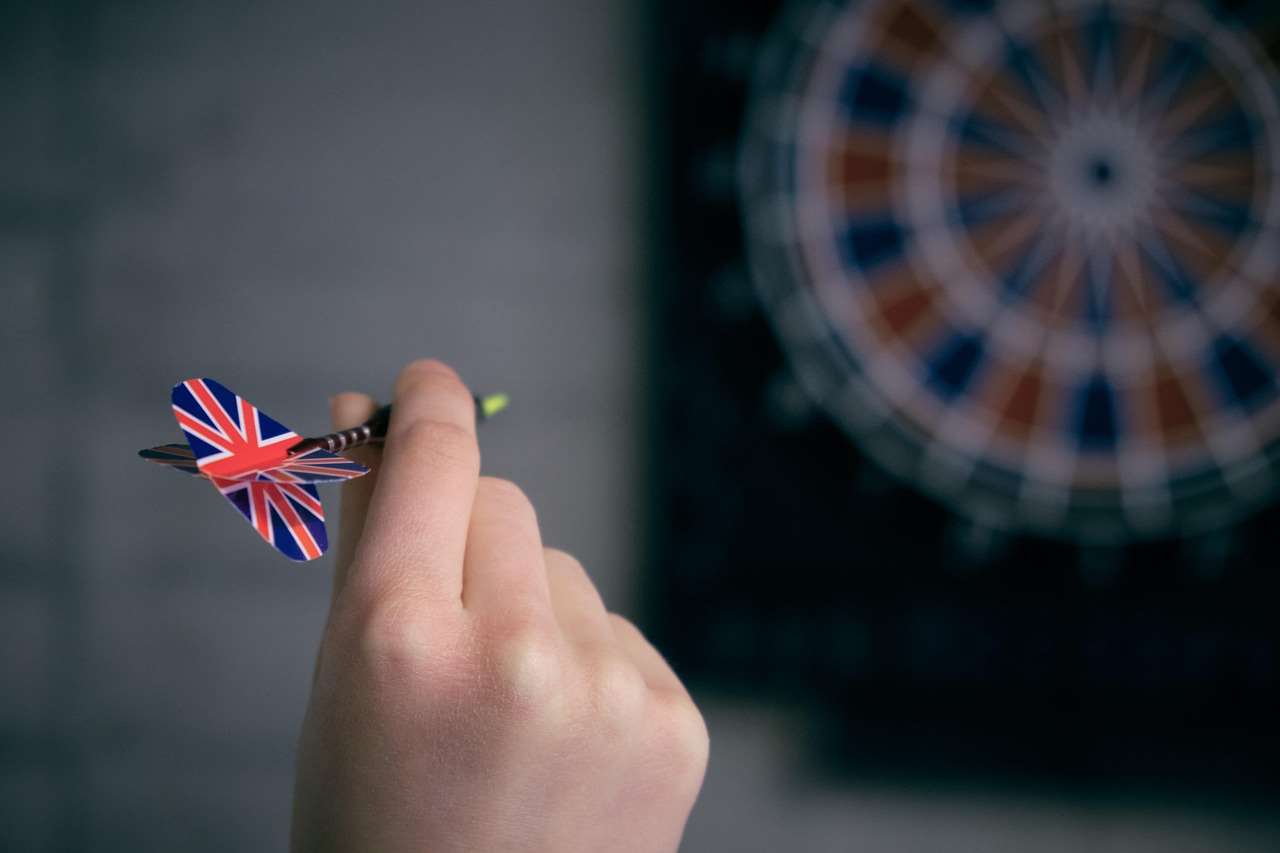
Experiment with different grip pressures. Avoid gripping the dart too tightly, as this can lead to tension and inaccuracy. A relaxed grip allows for a smoother release. Consider the weight distribution of the dart; a balanced dart feels more natural in your hand. Small adjustments to your grip can significantly **improve darts games number hitting** over time.
The Throwing Motion
A smooth, controlled throwing motion is essential for accuracy. The goal is to create a repeatable motion that minimizes variability. The motion can be broken down into several phases:
- The Setup: Bring the dart to eye level, aiming at your target.
- The Backswing: Draw the dart back in a smooth, controlled arc.
- The Forward Swing: Accelerate the dart towards the target, keeping your elbow high.
- The Release: Release the dart at the peak of your swing, extending your arm fully.
- The Follow-Through: Maintain your arm position after the release, pointing towards the target.
Pay close attention to your elbow position. Keeping your elbow high throughout the throwing motion helps maintain a consistent trajectory. Practice in front of a mirror to observe your technique and identify any areas for improvement. A consistent throwing motion is a key ingredient to **improve darts games number hitting**.
The Release
The release is the final critical element. A clean release imparts spin and stability to the dart. Avoid snatching or jerking the dart as you release it. Instead, focus on a smooth, fluid motion. Experiment with different release points to find what feels most natural and accurate. Some players prefer to release the dart slightly earlier, while others prefer a later release. Consistent practice will help you develop a feel for the optimal release point. The ability to perfect your release will absolutely **improve darts games number hitting**.
Choosing the Right Darts Equipment to Improve Number Accuracy
While technique is paramount, having the right equipment can also contribute to your success. Darts come in various weights, shapes, and materials. The ideal dart for you will depend on your personal preferences and throwing style.
Dart Weight
Dart weight is typically measured in grams. Common dart weights range from 20 to 26 grams. Heavier darts tend to be more stable in flight, while lighter darts can be thrown with more speed. Experiment with different weights to see which one feels most comfortable and accurate for you. Many players find that a weight in the middle of the range (22-24 grams) provides a good balance of stability and control.
Dart Material
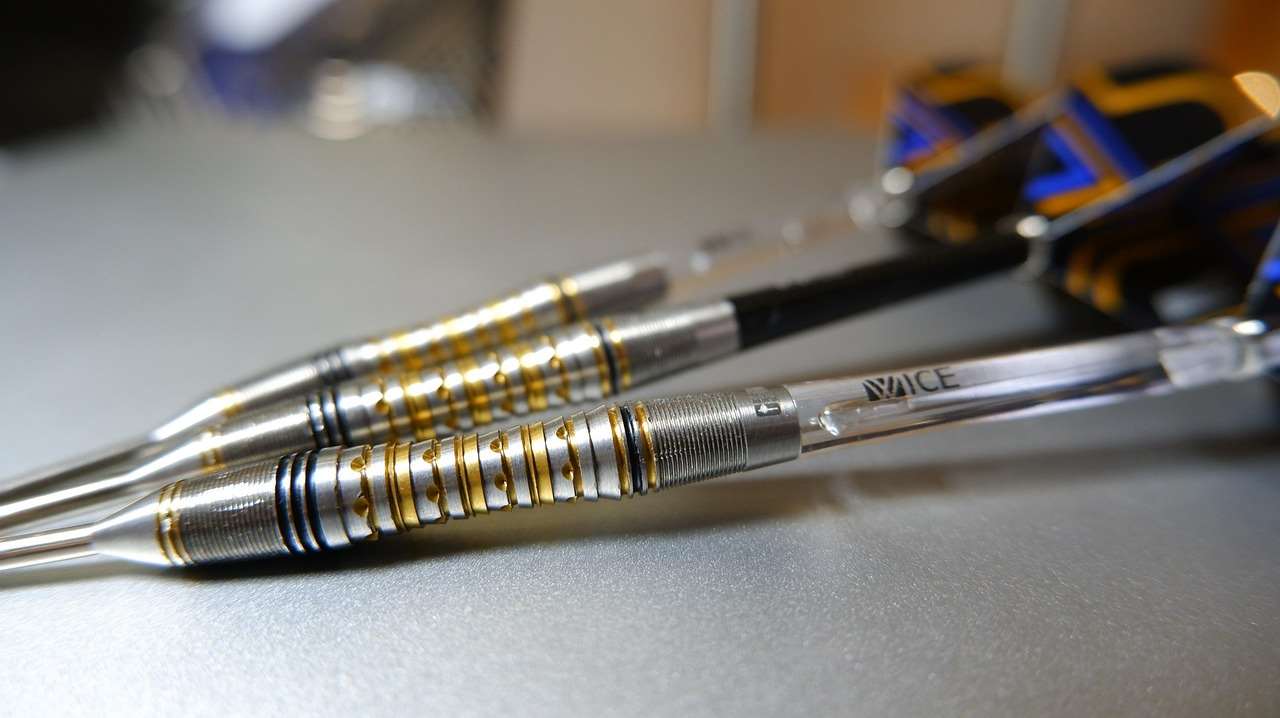
Darts are typically made from brass, nickel-silver, or tungsten. Tungsten darts are denser and more expensive than brass or nickel-silver darts. The higher density of tungsten allows for a slimmer barrel, which can improve grouping and reduce bounce-outs. For serious players looking to **improve** their game, tungsten darts are generally the preferred choice. Always consider dart maintenance to preserve the best dart performance.
Flights and Shafts
Flights and shafts affect the dart’s aerodynamics. Flights provide stability and lift, while shafts determine the dart’s overall length and balance. Experiment with different flight shapes and shaft lengths to fine-tune the dart’s flight characteristics. Larger flights provide more stability, while smaller flights offer less resistance. Shorter shafts shift the dart’s center of gravity forward, while longer shafts shift it backward. Adjusting flights and shafts is a great way to **improve darts games number hitting**.
Effective Practice Drills to Enhance Your Darts Skills
Consistent practice is the key to **improve darts games number hitting**. But simply throwing darts aimlessly won’t yield significant results. It’s important to implement structured practice drills that target specific areas of your game.
Around the Clock
The “Around the Clock” drill is a classic for improving accuracy on individual numbers. Start by aiming at the 1 segment. Once you hit it, move on to the 2 segment, and so on, until you’ve hit all 20 numbers in sequence. This drill helps develop your precision and consistency on each number of the dartboard. This basic drill is essential to **improve darts games number hitting**.
Target Practice: Doubles and Trebles
Doubles and trebles are crucial for scoring high and finishing games in many **darts variants fun games**. Dedicate practice time to specifically targeting these segments. Aim for the double 20, the treble 20, and other important doubles and trebles. Use a systematic approach, aiming for each target multiple times before moving on to the next. This focuses your aim to **improve darts games number hitting** where it matters most.
Cricket Number Practice
If you play cricket, focus your practice on the cricket numbers: 20, 19, 18, 17, 16, 15, and the bullseye. Practice hitting these numbers consistently to improve your scoring and closing ability in cricket. To **improve darts games number hitting**, concentrate on these important target areas.
Checkout Practice
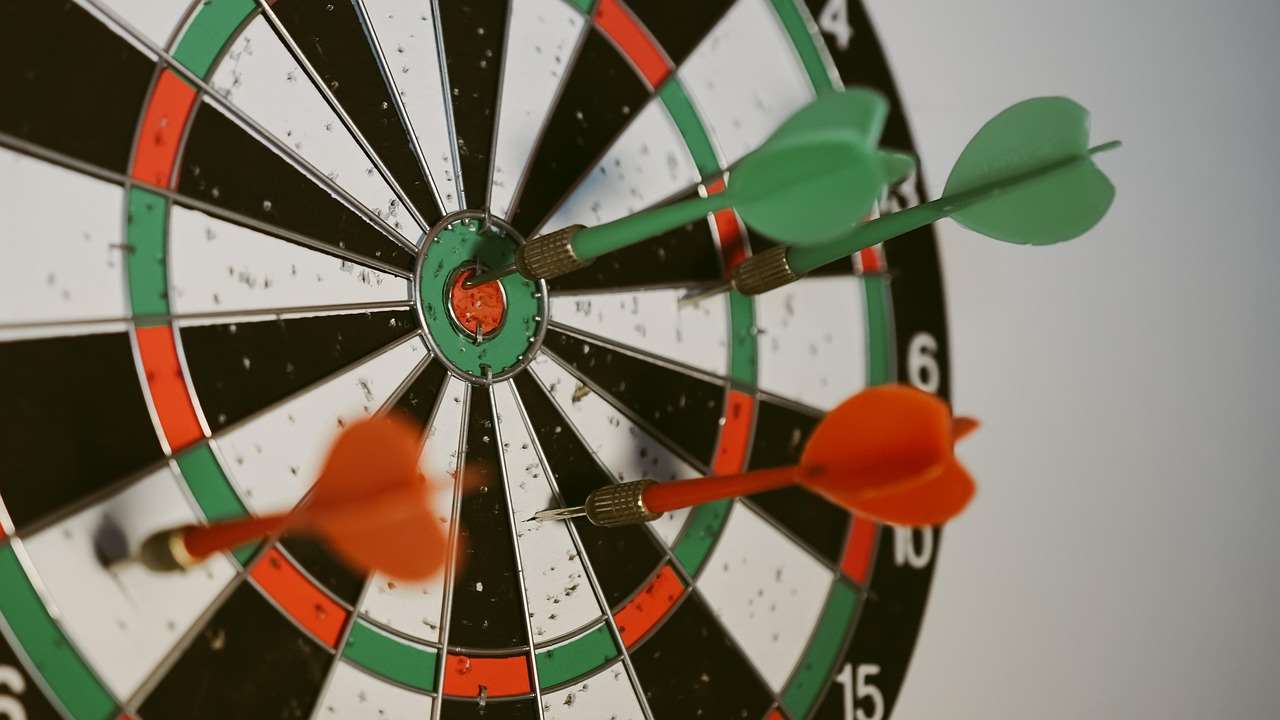
Checkout practice involves practicing finishing combinations. Start with common checkouts like 40 (double 20), 32 (double 16), and 50 (bullseye). As you progress, practice more complex checkouts that involve multiple darts. This drill helps you develop the mental calculation skills and the accuracy needed to finish games quickly and efficiently. Mastering checkouts is one of the most effective ways to **improve darts games number hitting** and win more games.
Mental Toughness Training
Darts is as much a mental game as it is a physical one. Learn to manage pressure and maintain focus, especially during crucial moments. Visualize successful throws and stay positive even after missed targets. Incorporate mindfulness techniques to calm your nerves and improve your concentration. Practice under simulated game conditions to build your confidence and resilience. A strong mental game will contribute significantly to your ability to **improve darts games number hitting** consistently.
Strategic Target Selection to Optimize Your Scoring
Knowing where to aim is just as important as how to throw. Strategic target selection can significantly impact your scoring potential and your ability to finish games efficiently. This involves understanding the layout of the dartboard and choosing the optimal targets based on your current score and the game situation.
Understanding Dartboard Layout
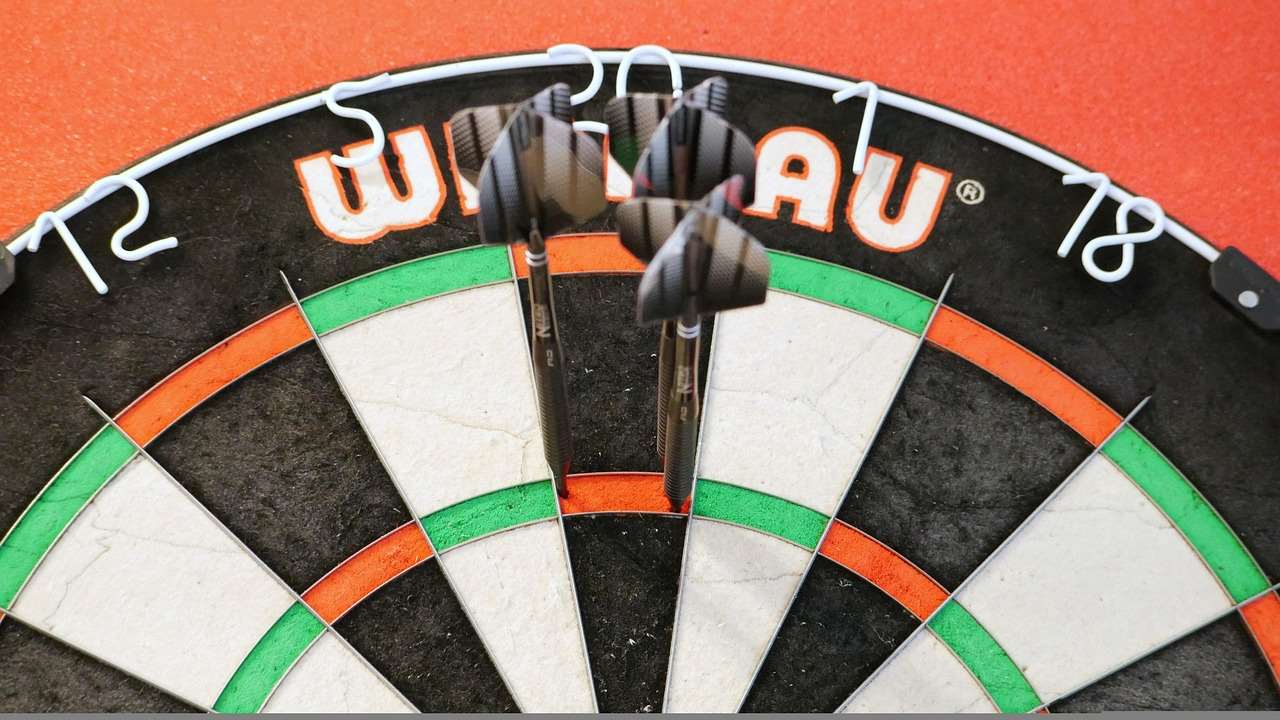
Familiarize yourself with the arrangement of numbers on the dartboard. Notice the proximity of high-scoring numbers like 20, 19, and 18. Also, be aware of the placement of low-scoring numbers like 1 and 5, which can be problematic if you miss your target. A thorough understanding of the dartboard layout is essential for making informed target selections. This foundation allows you to **improve darts games number hitting** through smart decision-making.
The Power of Treble 20
The treble 20 is the highest-scoring single target on the dartboard. Aiming for the treble 20 is often the best strategy for maximizing your score, especially when you’re well below a checkout. However, be mindful of the risk of hitting the adjacent 1 or 5 if you miss. Practice your treble 20 accuracy diligently to capitalize on its scoring potential. A sharp focus on the treble 20 is a reliable method to **improve darts games number hitting** for competitive scoring.
Setting Up Checkouts
As you approach a checkout, your target selection should prioritize leaving yourself with a manageable double or bullseye. Avoid leaving odd numbers, as they cannot be finished with a single dart. Calculate your remaining score and choose targets that will leave you with a favorable checkout number. Checkout strategy is a critical part of any game. By aiming strategically, you can **improve darts games number hitting** for a quick win.
Defense and Blocking
In some game situations, it may be advantageous to play defensively and block your opponent’s progress. This might involve targeting numbers that your opponent needs to close out in cricket, or aiming for low-scoring numbers to avoid leaving yourself with a difficult checkout. Strategic thinking and adaptability are important qualities in a successful darts player. Remember there is always some element of strategy from old dart games rules in modern play.

Analyzing Your Performance to Identify Areas for Improvement
Tracking your progress and identifying your weaknesses is crucial for continuous improvement. Keep a record of your scores, your accuracy on different targets, and your checkout percentages. This data will provide valuable insights into your strengths and weaknesses. Analyzing these metrics is how you **improve darts games number hitting** in a measurable way.
Score Tracking
Keep a detailed record of your scores in each game or practice session. Note your average score per dart (APD), your highest score, and your lowest score. This information will help you track your overall progress and identify any trends in your performance. Tracking is an invaluable tool to **improve darts games number hitting**.
Accuracy Analysis
Analyze your accuracy on different targets, such as the treble 20, doubles, and bullseye. Calculate your percentage of hits on each target. This will help you identify which areas of your game need the most attention. Do you have specific trouble spots that keep you from being able to **improve darts games number hitting**? Now is the time to focus your attention.
Checkout Percentage
Calculate your checkout percentage, which is the percentage of times you successfully finish a game when you have a checkout opportunity. A high checkout percentage indicates strong finishing skills. A low checkout percentage suggests that you need to dedicate more practice to checkout combinations. Practicing checkouts will dramatically **improve darts games number hitting** and finishing ability.
Staying Consistent for Long-Term Improvement
Consistent practice, dedication, and a strategic approach are essential for long-term improvement in darts. Set realistic goals, track your progress, and never stop learning. Seek out advice from experienced players and continue to refine your technique. The journey to becoming a skilled darts player is a marathon, not a sprint. The longer you commit to structured and thoughtful routines, the more you will **improve darts games number hitting**.
Darts Games Number Hitting Improve: A Recap
Ultimately, the path to **improve darts games number hitting** involves a holistic approach. Focus on mastering the fundamentals of stance, grip, throwing motion, and release. Invest in quality equipment that suits your style. Implement structured practice drills to enhance your accuracy and checkout skills. Develop a strategic mindset for target selection and game management. Analyze your performance to identify areas for improvement. And above all, stay consistent and dedicated to your training. By following these guidelines, you’ll be well on your way to achieving your darts goals and consistently hitting those crucial numbers.
Ready to take your darts game to the next level? Start implementing these tips today and witness the difference. Remember to have fun and enjoy the process. Consistent effort and a positive attitude are the keys to success. And don’t forget to explore other **darts variants fun games** to sharpen your skills even further! Now, go practice and **improve darts games number hitting**!

Hi, I’m Dieter, and I created Dartcounter (Dartcounterapp.com). My motivation wasn’t being a darts expert – quite the opposite! When I first started playing, I loved the game but found keeping accurate scores and tracking stats difficult and distracting.
I figured I couldn’t be the only one struggling with this. So, I decided to build a solution: an easy-to-use application that everyone, no matter their experience level, could use to manage scoring effortlessly.
My goal for Dartcounter was simple: let the app handle the numbers – the scoring, the averages, the stats, even checkout suggestions – so players could focus purely on their throw and enjoying the game. It began as a way to solve my own beginner’s problem, and I’m thrilled it has grown into a helpful tool for the wider darts community.