The **dartboard number ring** is a crucial component that dictates scoring, and understanding its layout is fundamental to playing darts effectively; this article provides a comprehensive explanation of its features. You’ll learn about the strategic placement of numbers, the significance of different sections, and how the numbering system impacts gameplay.
⚠️ Still Using Pen & Paper (or a Chalkboard)?! ⚠️
Step into the future! The Dart Counter App handles all the scoring, suggests checkouts, and tracks your stats automatically. It's easier than you think!
Try the Smart Dart Counter App FREE!Ready for an upgrade? Click above!
Dartboard Number Ring Explained: A Deep Dive
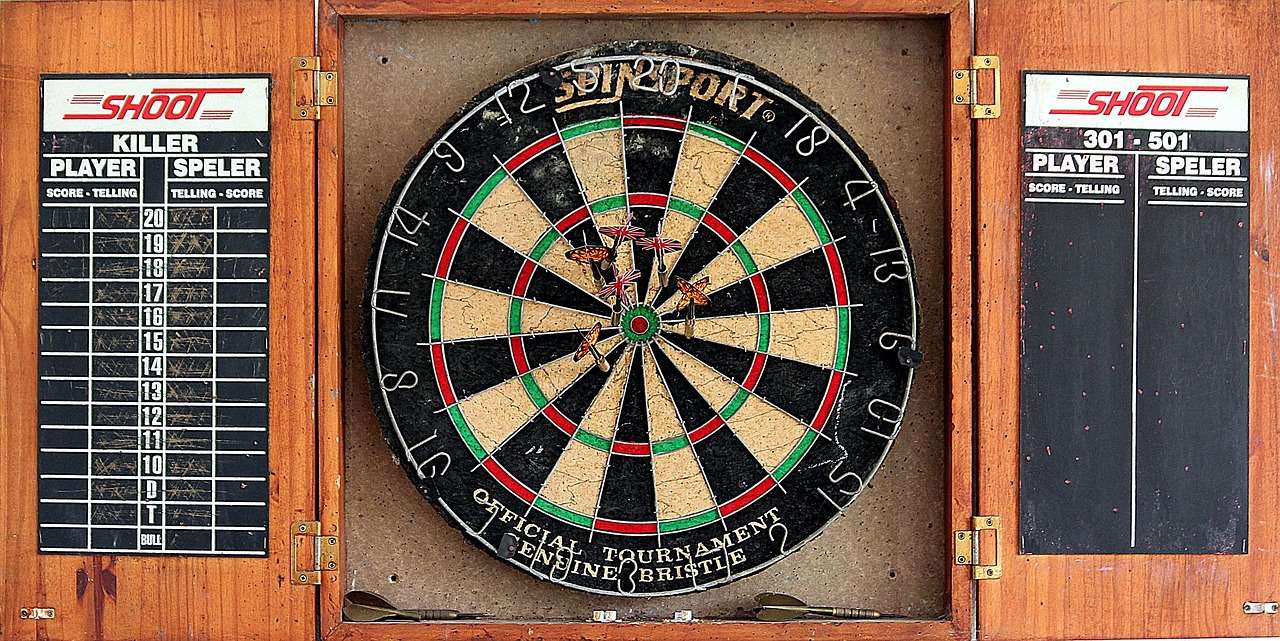
The **dartboard number ring**, also known as the outer ring, is that circular band containing the numbers 1 through 20. It’s not arranged in sequential order. This seemingly random arrangement is a key design element that adds a layer of complexity and strategy to the game of darts. The arrangement is designed to penalize inaccurate throws. For example, throwing slightly off from the 20 segment will land you in the 1 or 5 segment.

The Method Behind the Madness: Understanding the Number Placement
The arrangement of numbers on the **dartboard number ring** is not arbitrary. It’s carefully designed to minimize the impact of luck and emphasize skill. The designers aimed to create a system where a slight misthrow near a high-scoring number would likely result in a significantly lower score. Adjacent to the 20, you’ll find the 1 and the 5. Next to the 19 are the 3 and the 7. This alternating high-low scoring scheme keeps players on their toes.
Think about it: if the numbers were in sequential order, a slightly off throw from the 20 could easily land you on the 19 or 21 (if it existed), resulting in a minimal scoring difference. The current arrangement dramatically punishes such errors. Understanding this principle is crucial for developing a **darts strategy**.
How the Number Ring Works: A Breakdown of Scoring Zones
The number ring is just one part of the dartboard, and it interacts with other sections to determine your score. Here’s a breakdown:
- Single Segments: The large areas between the wires, marked with a number from 1 to 20, award the points indicated by that number.
- Double Ring: The outer, thinner ring doubles the value of the number it borders. Hitting the double 20, for instance, scores 40 points. Doubles are an essential part of finishing a game.
- Treble Ring: The inner, thinner ring triples the value of the number it borders. Hitting the treble 20 scores 60 points, making it the highest possible score with a single dart. Mastering the treble ring is crucial for advanced players.
- Bullseye: The inner center circle scores 50 points (often referred to as the bull).
- Outer Bull/Single Bull: The outer green ring around the bullseye scores 25 points.
Understanding how these zones interact is key to mastering the game. Many players aiming for the bullseye benefit from improved Optimal Dartboard Lighting Solutions Guide to help hone their accuracy.
Why is the Dartboard Number Ring Arranged the Way It Is?
As mentioned earlier, the seemingly random number arrangement serves a very specific purpose: to penalize inaccuracy. Consider these points:
- Fairness: The non-sequential arrangement ensures that players must aim precisely. Luck plays a minimal role.
- Skill Emphasis: Players who consistently hit their target areas will score higher, rewarding skill and practice.
- Strategic Depth: The number arrangement forces players to think strategically about their shots. Sometimes, aiming for a slightly lower-scoring area with a larger target zone is a safer bet than aiming for a high-scoring area with a smaller target zone.
The arrangement compels players to develop a **throwing technique** and consistently practice to improve their precision. It also adds an element of risk-reward assessment with each throw.

Impact of the Number Ring on Game Strategy
The **dartboard number ring’s** design directly influences game strategy. Here’s how:
- Checkout Strategy: Finishing a game usually involves hitting a double. Players need to plan their throws carefully to reduce their score to a number they can finish with a double. The position of doubles on the number ring plays a crucial role in this strategy.
- Risk Assessment: Players must weigh the risk of aiming for a high-scoring treble (like treble 20) against the risk of missing and landing on a low-scoring number (like 1 or 5).
- Target Selection: Sometimes, aiming for a lower-scoring number strategically positioned next to a desired double or treble can be a more effective approach.
For example, instead of always aiming for treble 20, a player might aim for the single 20, knowing that a slight miss could land them in the treble 3 or treble 7, which are still reasonably high scores. Similarly, aiming for the 19, next to the 3 and 7, opens strategic avenues for both high scores and fallback positions. Choosing the **right darts** can significantly impact one’s ability to execute these strategies effectively; you can Choose Best Dart Equipment to improve accuracy.
Tips for Mastering the Dartboard Number Ring
Mastering the dartboard involves more than just throwing darts; it requires understanding the board and refining your technique. Here are some tips to help you improve your game:
- Practice Consistently: Regular practice is essential for developing muscle memory and improving accuracy.
- Focus on Your Stance and Grip: A consistent stance and grip are crucial for repeatable throws.
- Aim Deliberately: Take your time to aim carefully before each throw. Visualize the path of the dart and focus on your target.
- Analyze Your Throws: Pay attention to where your darts land and adjust your aim accordingly.
- Learn Checkout Strategies: Study common checkout combinations and practice them regularly.
Pay attention to your **dart grip** and adjust it until you find one that feels comfortable and allows for consistent throws. Many experienced players find a consistent pre-throw routine helps calm nerves and focus concentration.

Common Mistakes to Avoid
Even experienced players can fall into common traps. Here are some mistakes to avoid when playing darts:
- Rushing Your Throws: Taking your time to aim and focus is essential.
- Ignoring Your Stance: A consistent stance is crucial for repeatable throws.
- Changing Your Grip Frequently: Stick with a grip that feels comfortable and allows for consistent throws.
- Not Practicing Regularly: Regular practice is essential for improving accuracy.
- Ignoring the Mental Game: Darts is as much a mental game as it is a physical one. Stay focused and positive, even when you’re not throwing well.
Another common mistake is not understanding the dartboard well enough, a problem this article, **Dartboard Number Ring Explained**, resolves.

The Importance of a Good Dartboard Setup
While skill is paramount, the quality of your dartboard setup can significantly impact your game. Consider these factors:
- Dartboard Quality: Invest in a high-quality sisal dartboard for optimal performance and durability.
- Proper Mounting: Ensure your dartboard is mounted at the correct height and distance from the throwing line (oche).
- Adequate Lighting: Good lighting is essential for clear visibility and accurate aiming. Poor lighting can create shadows that distort your perception of the target. Consider investing in Best Dartboard Lighting Systems to enhance your setup.
- Dartboard Surround: A surround protects your wall from stray darts and provides a larger target area.
The correct dimensions are vital. The center of the bullseye should be 5 feet 8 inches (1.73 meters) from the floor. The oche (throwing line) should be 7 feet 9.25 inches (2.37 meters) from the face of the dartboard.
Advanced Dartboard Strategies Involving the Number Ring
Once you’ve mastered the basics, you can explore more advanced strategies that utilize the **dartboard number ring** to your advantage:
- Using the “Around the Clock” Method: Practice hitting each number on the board in sequence, starting with 1 and ending with 20. This is an excellent way to improve your overall accuracy and consistency.
- Targeting Specific Doubles and Trebles: Focus on mastering specific doubles and trebles that are commonly used in checkout combinations.
- Developing a Mental Map of the Board: Visualize the location of each number on the board and its relationship to other numbers. This will help you make quicker and more strategic decisions during gameplay.
Developing a deep understanding of the **dartboard number ring** allows for more instinctive and effective play. The strategic arrangement makes darts far more nuanced than simply aiming for the highest score.
Experimenting with Different Darts and Equipment
Finding the right darts and equipment can also enhance your performance. Experiment with different dart weights, shapes, and flights to find what works best for you. Factors to consider include:
- Dart Weight: Heavier darts tend to be more stable in the air, while lighter darts can be thrown with more finesse.
- Dart Barrel Shape: Different barrel shapes can affect your grip and release.
- Dart Flight Shape and Size: Flights affect the aerodynamics of the dart and can impact its stability and trajectory.
Consider that even minute adjustments to **dart accessories** can significantly impact your game.
Conclusion
Understanding the **dartboard number ring explained** – its layout, scoring zones, and strategic implications – is fundamental to becoming a skilled darts player. The seemingly random arrangement of numbers is a deliberate design element that emphasizes accuracy, penalizes mistakes, and adds a layer of strategic depth to the game. By practicing consistently, focusing on your technique, and developing a strategic mindset, you can master the number ring and take your dart game to the next level. Ready to improve your game? Find the Choose Best Dart Equipment, start practicing, and aiming for those high scores!

Hi, I’m Dieter, and I created Dartcounter (Dartcounterapp.com). My motivation wasn’t being a darts expert – quite the opposite! When I first started playing, I loved the game but found keeping accurate scores and tracking stats difficult and distracting.
I figured I couldn’t be the only one struggling with this. So, I decided to build a solution: an easy-to-use application that everyone, no matter their experience level, could use to manage scoring effortlessly.
My goal for Dartcounter was simple: let the app handle the numbers – the scoring, the averages, the stats, even checkout suggestions – so players could focus purely on their throw and enjoying the game. It began as a way to solve my own beginner’s problem, and I’m thrilled it has grown into a helpful tool for the wider darts community.