The standard dartboard height, measured from the floor to the bullseye, is 5 feet 8 inches (1.73 meters), a dimension that has remained surprisingly consistent throughout the game’s history. This article delves into the dartboard height history standard, exploring its origins, reasons for its endurance, and offering practical guidance on ensuring your dartboard is properly mounted for optimal gameplay.
⚠️ Still Using Pen & Paper (or a Chalkboard)?! ⚠️
Step into the future! The Dart Counter App handles all the scoring, suggests checkouts, and tracks your stats automatically. It's easier than you think!
Try the Smart Dart Counter App FREE!Ready for an upgrade? Click above!
Understanding the Origins of Dartboard Height History Standard
While pinpointing the exact genesis of the official dartboard height standard is challenging due to limited historical documentation, we can trace its roots back to the late 19th and early 20th centuries. During this period, darts evolved from a pub game of chance into a more formalized sport. Early dartboards and playing areas varied significantly, leading to inconsistent experiences.
Several theories attempt to explain the standardization of the height. One suggests it was simply the average eye level of a typical adult male at the time. This would provide a comfortable and natural throwing stance for the majority of players. Another theory posits that it was based on the height of a specific piece of furniture commonly found in pubs, such as a table or bar, which served as a makeshift mounting surface. Whatever the precise reason, the standardized height provided much needed consistency, leading to more competitive and enjoyable play.
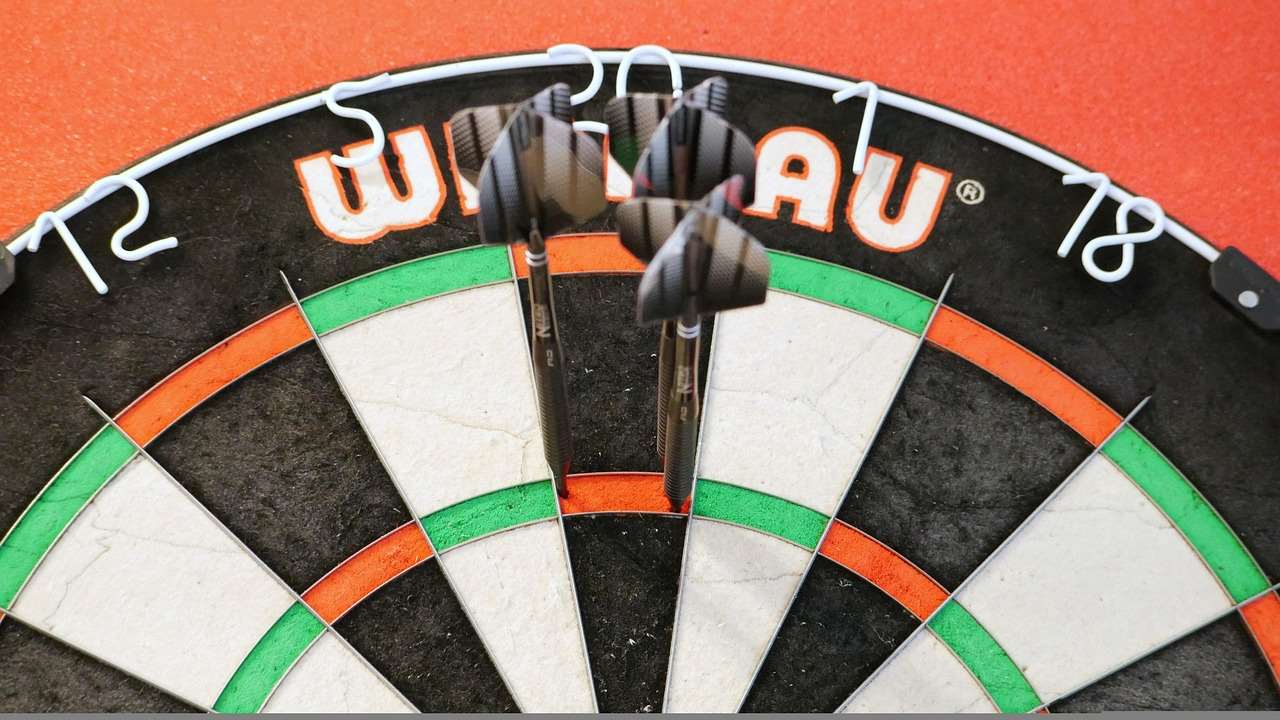
The Enduring Legacy of 5′ 8″: Why the Height Standard Persists
The fact that the 5 feet 8 inches (1.73 meters) dartboard height standard has endured for over a century speaks to its inherent practicality and balance. This height, combined with the throwing distance, creates a challenging yet achievable target for players of varying skill levels. Several factors contribute to its continued relevance:
- Ergonomics: The height allows for a natural throwing motion without excessive strain on the back or shoulder.
- Fairness: It provides a level playing field for players of different heights and builds.
- Tradition: The established height has become ingrained in the culture of darts, contributing to the sport’s rich heritage.
Furthermore, the adoption of this standard by governing bodies like the Professional Darts Corporation (PDC) and the British Darts Organisation (BDO) solidified its place in the competitive arena. Adhering to these standards ensures consistency in tournaments and professional play, maintaining the integrity of the sport. Basic Darts Fundamentals for Beginners are crucial to understanding the game.
The Oche: Complementing the Dartboard Height
The oche, or throwing line, plays a critical role in conjunction with the dartboard height. The standard distance from the oche to the face of the dartboard is 7 feet 9.25 inches (2.37 meters). This distance, combined with the board’s height, creates the ideal throwing angle and challenge. Together, these dimensions define the standard playing area for darts.
Ensuring Accurate Dartboard Mounting: A Practical Guide
Properly mounting your dartboard at the correct height is crucial for enjoying the game and developing your skills. Here’s a step-by-step guide to ensure accuracy:
- Measure Accurately: Use a reliable measuring tape to precisely measure 5 feet 8 inches (1.73 meters) from the floor. Mark this point on the wall where you plan to hang the dartboard.
- Find the Bullseye Center: This measurement represents the center of the bullseye. Ensure your dartboard is positioned so that the bullseye aligns perfectly with this mark.
- Use a Level: Before securing the dartboard, use a level to ensure it’s perfectly vertical. This prevents skewed throws and ensures fair gameplay.
- Secure Mounting: Use appropriate mounting hardware based on your wall type (drywall, plaster, wood, etc.) to securely attach the dartboard. A wobbly dartboard can significantly impact your accuracy.
Tip: Consider using a laser level for even greater accuracy during the mounting process. This can help ensure the bullseye is perfectly aligned with your marked height. Also, remember to double-check your measurements before drilling any holes. Prevention is better than cure.
Dartboard Material and Its Influence on Play
While the dartboard height standard is consistent, the materials used in dartboard construction have evolved over time. Early dartboards were often made of wood, which proved less durable and prone to damage from dart impacts. Today, the most common material is sisal fiber, a natural material that offers excellent dart retention and self-healing properties. The density and arrangement of the sisal fibers significantly impact the board’s durability and playability. High-quality sisal dartboards last longer and provide a more consistent playing surface.
Electronic dartboards are also gaining popularity, especially for casual play. These boards feature plastic segments with small holes that register dart impacts electronically. While they eliminate the need for manual scoring, they often don’t offer the same feel and precision as traditional sisal boards. Electronic boards often have slightly different hole configurations that can affect gameplay.
Common Mistakes to Avoid When Setting Up Your Dartboard
Even with careful planning, some common mistakes can lead to inaccurate dartboard setups. Avoiding these pitfalls ensures optimal gameplay and prevents potential frustrations.
- Incorrect Height: This is the most frequent error. Double-check your measurements and use a reliable measuring tape.
- Unstable Mounting: A wobbly or poorly secured dartboard will significantly affect your accuracy. Use appropriate mounting hardware and ensure the board is firmly attached to the wall.
- Ignoring the Oche Distance: The throwing distance is just as important as the board height. Measure 7 feet 9.25 inches (2.37 meters) from the face of the board to the oche.
- Uneven Lighting: Poor lighting can cast shadows and make it difficult to see the target clearly. Ensure adequate and even lighting across the dartboard.
Addressing these common mistakes will contribute to a more enjoyable and accurate darts experience. Consider the space available when setting up your dartboard.
The Psychological Impact of Proper Dartboard Setup
Beyond the technical aspects, a properly mounted dartboard can have a significant psychological impact on players. When the height, distance, and lighting are all correct, players feel more confident and focused. This can lead to improved performance and a more enjoyable experience. Conversely, an incorrectly set up dartboard can create frustration and negatively impact a player’s mental game. Even subtle inconsistencies can erode confidence and lead to poor throws. Therefore, taking the time to ensure accurate setup is an investment in your mental game.
Fine-Tuning Your Stance and Throw
Once your dartboard is properly mounted, it’s essential to fine-tune your stance and throw. Experiment with different stances to find one that feels comfortable and balanced. Pay attention to your grip, arm motion, and release point. Consistent practice will help you develop a smooth and repeatable throwing motion. Remember, even with the perfect dartboard setup, consistent practice is key to improvement. Consider adapting rules for mixed-level players for better experience.
Dartboard Height in Competitive Play: Regulations and Standards
In competitive darts, strict regulations govern the dartboard height history standard and other aspects of the playing area. These regulations are enforced to ensure fairness and consistency across all tournaments and events. The PDC and other governing bodies have specific guidelines that must be followed, including:
- Official Height: As mentioned, 5 feet 8 inches (1.73 meters) from the floor to the bullseye.
- Oche Distance: 7 feet 9.25 inches (2.37 meters) from the face of the board to the oche.
- Lighting Requirements: Minimum lux levels and specific lighting angles to ensure even illumination.
- Dartboard Specifications: Regulations on the type and construction of dartboards allowed in competition.
Adherence to these regulations is crucial for maintaining the integrity of the sport and ensuring fair competition. Professional players are expected to be intimately familiar with these standards, and any deviation can result in penalties. For casual players, understanding these standards can still enhance their experience by providing a framework for proper dartboard setup and gameplay.
Beyond the Standard: Accommodating Players of Different Abilities
While the standard dartboard height serves as the benchmark, accommodations can be made for players with disabilities or physical limitations. Adjustments to the height or throwing distance can be implemented to ensure accessibility and inclusivity. These modifications should be made in a way that maintains the spirit of the game and allows all players to participate fairly. Options might include lowering the board slightly or allowing players to throw from a closer distance. It’s important to communicate and collaborate with players to determine the best accommodations for their individual needs.
Dartboard Height and Accessibility
Promoting accessibility in darts involves more than just adjusting the board height. It also includes ensuring that the playing area is free of obstacles and that players have adequate space to move around. Creating a welcoming and inclusive environment is essential for encouraging participation from individuals of all abilities. Explore fun dart game variations to accommodate players of all skills.
The Future of Dartboard Standards: Will Things Change?
Given the long-standing tradition and practicality of the current dartboard height history standard, it’s unlikely that any significant changes will be implemented in the near future. The 5 feet 8 inches (1.73 meters) height has proven to be a stable and effective benchmark for players of all skill levels. However, advancements in technology and materials may lead to subtle refinements in dartboard construction and playing area design. These advancements will likely focus on improving durability, playability, and accuracy, rather than fundamentally altering the established height standard.
Conclusion
The dartboard height history standard of 5 feet 8 inches (1.73 meters) stands as a testament to the game’s enduring appeal and practicality. Understanding its origins, the reasons for its persistence, and how to properly mount your dartboard are crucial for enjoying the sport to its fullest. By adhering to these standards, you’ll ensure a fair and consistent playing experience, allowing you to focus on honing your skills and enjoying the camaraderie of the game. So, grab your darts, measure carefully, and get ready to experience the thrill of hitting that perfect bullseye! Take the time to understand how to make darts fairer for everyone playing.

Hi, I’m Dieter, and I created Dartcounter (Dartcounterapp.com). My motivation wasn’t being a darts expert – quite the opposite! When I first started playing, I loved the game but found keeping accurate scores and tracking stats difficult and distracting.
I figured I couldn’t be the only one struggling with this. So, I decided to build a solution: an easy-to-use application that everyone, no matter their experience level, could use to manage scoring effortlessly.
My goal for Dartcounter was simple: let the app handle the numbers – the scoring, the averages, the stats, even checkout suggestions – so players could focus purely on their throw and enjoying the game. It began as a way to solve my own beginner’s problem, and I’m thrilled it has grown into a helpful tool for the wider darts community.