Understanding dart weight conversion grams ounces is crucial for selecting the right darts, as weight significantly impacts your throw. This article breaks down the conversions, explores the effect of weight on dart performance, and provides guidance on choosing the ideal dart weight for your playing style.
⚠️ Still Using Pen & Paper (or a Chalkboard)?! ⚠️
Step into the future! The Dart Counter App handles all the scoring, suggests checkouts, and tracks your stats automatically. It's easier than you think!
Try the Smart Dart Counter App FREE!Ready for an upgrade? Click above!
Understanding Dart Weight Conversion Grams Ounces
The world of darts, while seemingly simple, involves a surprisingly nuanced understanding of equipment. One of the most crucial aspects is the weight of your darts. Darts are typically measured in grams, but occasionally you might encounter specifications in ounces, especially from older sources or when dealing with international manufacturers. Therefore, understanding dart weight conversion grams ounces is essential to make informed decisions.
The standard weight range for darts is generally between 16 grams and 30 grams. Within this range, even a small difference can have a noticeable effect on your throw. Heavier darts are often perceived as being more stable in flight, while lighter darts might offer more finesse. But how do you translate these weights if one is given in grams and the other in ounces?
The Conversion Factor: Grams to Ounces and Vice Versa
The key to dart weight conversion grams ounces lies in understanding the fundamental relationship between the two units of measurement. Specifically:
- 1 ounce (oz) is approximately equal to 28.35 grams (g).
- 1 gram (g) is approximately equal to 0.035 ounces (oz).
These conversion factors allow you to easily switch between grams and ounces. For example, a 24-gram dart is roughly equivalent to 0.85 ounces (24 x 0.035 = 0.84). Similarly, a 1-ounce dart would weigh around 28.35 grams.

Why is Accurate Dart Weight Conversion Important?
Accurate conversion is vital for several reasons:
- Consistency: Ensuring your darts are consistently weighted. If you’re trying to replace a dart, knowing the precise weight in grams or ounces will help you find a suitable replacement.
- Regulation Compliance: Understanding official dart weight regulations. Many leagues and tournaments have weight restrictions. Being able to convert between grams and ounces allows you to easily check if your darts comply with these rules.
- Making Informed Purchases: Comparing different dart sets, especially when manufacturers use varying units.
The Impact of Dart Weight on Performance
Dart weight is a key factor affecting your throw’s trajectory and stability. Different weights suit different throwing styles, and understanding how weight influences your game is paramount. Experimenting with different dart weights is often recommended to find what works best for each player. This is why understanding dart weight conversion grams ounces is useful.
Heavier Darts: Stability and Control
Generally, heavier darts (24 grams and up) are favored by players who prefer a more controlled and deliberate throw. Here’s why:
- Reduced Wobble: Heavier darts tend to be more stable in the air, reducing wobble and minimizing the impact of minor inconsistencies in your throw.
- Stronger Trajectory: The increased mass provides greater momentum, making them less susceptible to deflection from air currents or slight contact with other darts on the board.
- Potentially Easier to Group: Some players find heavier darts easier to group tightly, especially when throwing with power.
Lighter Darts: Finesse and Speed
Lighter darts (23 grams and below) are often preferred by players who prioritize speed and finesse in their throw.
- Faster Release: Lighter darts require less effort to accelerate, potentially leading to a quicker release.
- More Subtle Control: Some players feel they have greater control over the finer details of their throw with lighter darts.
- Less Strain: Lighter darts may reduce strain on the arm and shoulder, which can be beneficial during long practice sessions or tournaments.
Balance and Grip Considerations
It’s not just about the overall weight; the balance of the dart also plays a significant role. The balance point, which can be front-weighted, center-weighted, or rear-weighted, affects how the dart feels in your hand and how it flies. Experimentation with different barrel shapes and materials can alter the balance point.
Your grip also dictates optimal dart weight. A tight grip can work well with heavier darts, while a lighter grip might benefit from a lighter dart. It’s also important to Choose Best Dart Equipment for maximum performance.
Finding the Right Dart Weight for You
There’s no one-size-fits-all answer when it comes to dart weight. Finding the perfect weight is a personal journey that involves experimentation and self-assessment. Here are some tips to help you find the ideal weight for your game:
Start with a Baseline
If you’re new to darts, a good starting point is around 22-24 grams. This is a relatively neutral weight range that allows you to get a feel for the game and experiment with different throwing styles.
Experiment with Different Weights
Borrow or purchase a few sets of darts in different weight ranges. Even a 1-2 gram difference can be noticeable. Throw each set for an extended period, paying attention to how the dart feels in your hand and how consistently you can throw it.
Consider Your Throwing Style
Analyze your throwing style. Do you throw with a lot of power, or do you rely more on finesse? As mentioned earlier, heavier darts are often better for power throwers, while lighter darts may suit finesse players.
Pay Attention to Consistency and Grouping
The ultimate goal is to improve your accuracy and consistency. Track your scores and observe how tightly you can group your darts with each weight. The weight that allows you to consistently hit your targets is likely the best choice for you.
Factor in Barrel Shape and Material
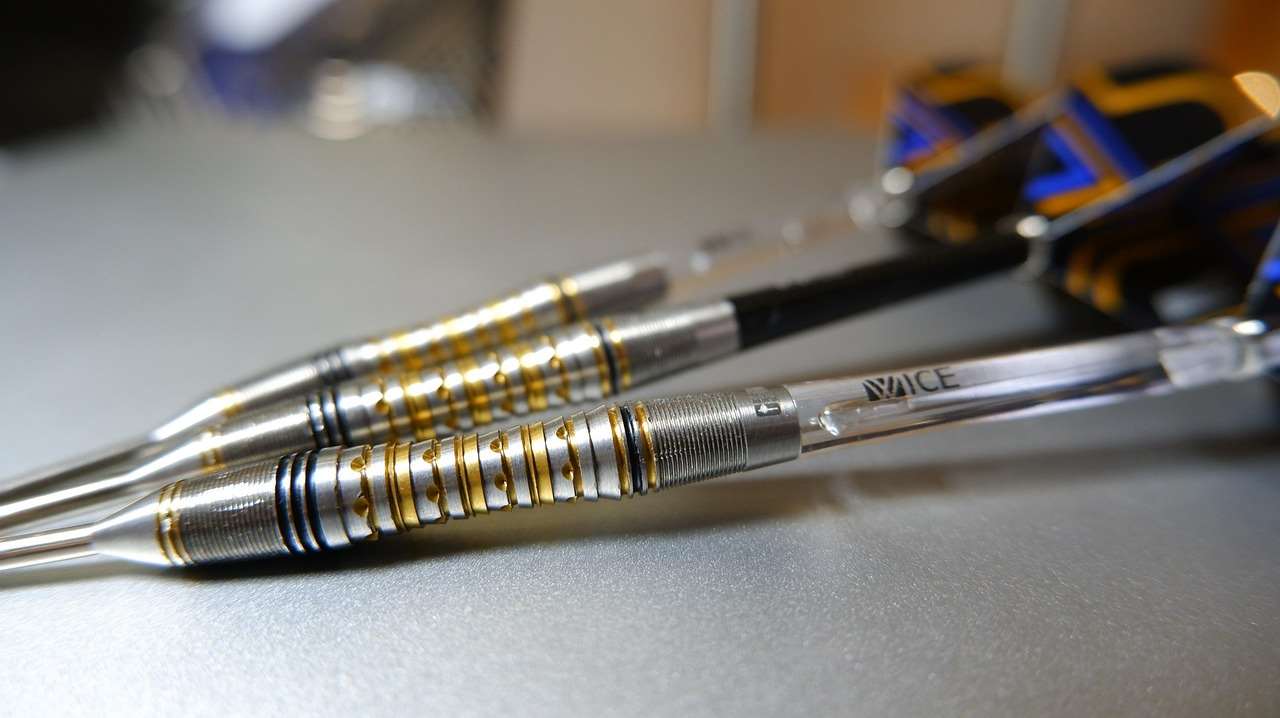
While weight is a primary consideration, don’t overlook the importance of barrel shape and material. A thicker barrel will feel different than a thinner one, even if they weigh the same. Similarly, different materials, such as brass, nickel silver, and tungsten, have varying densities, which affects the dart’s balance and feel.
Don’t Be Afraid to Adjust
Your ideal dart weight may change over time as your throwing style evolves. Be open to re-evaluating your equipment and making adjustments as needed. It’s good practice to maintain proper How To Light Your Dartboard to get the best view of where your darts land.
Tools for Dart Weight Conversion Grams Ounces
Fortunately, several online tools and resources can simplify the process of dart weight conversion grams ounces. These tools eliminate the need for manual calculations and provide quick and accurate conversions. A simple web search for “grams to ounces converter” will yield numerous options.
Online Converters
Many websites offer dedicated unit conversion tools. Simply enter the weight in grams or ounces, and the tool will automatically convert it to the other unit.
Mobile Apps
Various mobile apps are available for both iOS and Android devices that provide unit conversion functionality. These apps can be particularly useful for quick conversions on the go.
Beyond Weight: Other Factors to Consider
While dart weight is undeniably important, remember that it’s just one piece of the puzzle. Other factors, such as dart length, shaft type, and flight shape, also influence dart performance. It is essential to find optimal Optimal Dartboard Lighting Solutions Guide and LED Dartboard Lights Benefits.
Shafts and Flights
The length and material of your shafts can affect the dart’s stability and trajectory. Longer shafts generally provide more stability, while shorter shafts offer greater maneuverability. Similarly, the shape and size of your flights influence the dart’s aerodynamic properties. Larger flights provide more drag, which can help to stabilize the dart, while smaller flights offer less drag for a faster flight.
Dart Length and Diameter
The overall length and diameter of the dart can also impact your grip and throwing style. A longer dart may feel more comfortable in your hand if you have larger hands, while a thinner dart may be easier to grip for players with smaller hands.
Maintaining Your Darts
Regardless of the weight you choose, proper maintenance is essential for ensuring your darts perform optimally and last longer. Regularly clean your darts with a soft cloth to remove dirt and grime. Inspect your shafts and flights for damage and replace them as needed.
Storage
Store your darts in a case or container to protect them from damage when not in use. This will help to prevent bending, scratching, and other types of wear and tear.
Conclusion
Understanding dart weight conversion grams ounces is a fundamental aspect of choosing the right darts for your game. While weight is a crucial factor affecting performance, remember to consider other elements such as barrel shape, balance, shaft type, and flight shape. Experiment with different weights and configurations to discover what works best for you. Ultimately, the ideal dart setup is the one that allows you to throw consistently, accurately, and comfortably. Now that you understand dart weight conversion grams ounces, go ahead and find the perfect darts to elevate your game! Consider exploring different dart accessories too!

Hi, I’m Dieter, and I created Dartcounter (Dartcounterapp.com). My motivation wasn’t being a darts expert – quite the opposite! When I first started playing, I loved the game but found keeping accurate scores and tracking stats difficult and distracting.
I figured I couldn’t be the only one struggling with this. So, I decided to build a solution: an easy-to-use application that everyone, no matter their experience level, could use to manage scoring effortlessly.
My goal for Dartcounter was simple: let the app handle the numbers – the scoring, the averages, the stats, even checkout suggestions – so players could focus purely on their throw and enjoying the game. It began as a way to solve my own beginner’s problem, and I’m thrilled it has grown into a helpful tool for the wider darts community.