Understanding **dart speed measurement** is crucial for improving your throwing technique and consistency. By tracking this metric, you can identify areas for improvement and optimize your dart release for better accuracy. This article explores different methods for measuring dart speed, factors influencing it, and how you can use this information to become a better player.
⚠️ Still Using Pen & Paper (or a Chalkboard)?! ⚠️
Step into the future! The Dart Counter App handles all the scoring, suggests checkouts, and tracks your stats automatically. It's easier than you think!
Try the Smart Dart Counter App FREE!Ready for an upgrade? Click above!
The Importance of Dart Speed Measurement
While not always the primary focus, dart speed measurement offers valuable insights into your throwing mechanics. Knowing the speed at which you consistently release your dart allows you to:
- Identify inconsistencies: Variations in speed can indicate flaws in your release or stance.
- Optimize trajectory: Adjust your throwing angle based on your speed to achieve the desired dart flight.
- Refine your power: Find the optimal balance between power and control for consistent accuracy.
- Understand equipment impact: See how different darts or setups affect your throwing speed.
Essentially, **measuring dart velocity** provides a data point that, when combined with other analyses (like dart trajectory and landing position), can dramatically improve your game. This leads to better control and ultimately higher scores. Understanding how different **dart weights** can influence your speed is also essential for choosing the right equipment. You can Choose Best Dart Equipment to match your personal throwing style and power.
Methods for Dart Speed Measurement
While there isn’t a universally accepted or readily available device specifically designed for **dart speed measurement** in home settings, there are several methods, ranging from high-tech to estimations, that can provide useful data.
High-Speed Camera Analysis
This is the most accurate method for determining **dart velocity**. By recording your throw with a high-speed camera (capable of capturing hundreds or even thousands of frames per second), you can analyze the footage frame by frame. The distance the dart travels between each frame allows you to calculate its speed. Specialized software can automate this process. This allows for very accurate **trajectory analysis**. This method is often used by professional dart players and researchers. Remember that a consistent setup will also benefit your game.
Smartphone Video Analysis (Estimate)
While not as precise as a high-speed camera, smartphone video analysis can provide a reasonable estimate of your **dart’s speed**. Record your throws using your smartphone’s slow-motion feature. You’ll need a reference object of known length in the frame (e.g., the height of the dartboard). By counting the frames it takes for the dart to travel a specific distance, you can calculate an approximate speed. Several apps are available that assist with this type of video analysis.
Dart Trajectory Calculators
Some online dart trajectory calculators ask for input regarding the power of your throw. If you’ve used either of the methods above, you can input what you know about your **dart throwing speed** into these calculators and see how different angles will affect your game. These tools typically take into account other factors such as **dart weight** and air resistance to provide a more accurate prediction.
Factors Influencing Dart Speed
Several factors contribute to the speed at which you release your dart. Understanding these factors allows you to identify areas where you can potentially improve your throw.
Arm Action and Technique
Your arm action is the primary driver of **dart speed**. A smooth, fluid motion with a consistent release point is crucial. Avoid jerky or forced movements, as these can lead to inconsistencies in both speed and accuracy. Concentrate on the **follow-through**. The most basic thing a player can do to improve the velocity of his or her dart is to improve your follow-through and make sure your arm is fully extended to the target. The arm action will play a huge role and is perhaps the single most important factor in determining dart speed.
Grip and Release
The way you grip the dart and release it significantly impacts its speed and trajectory. A grip that is too tight can restrict your motion and reduce speed, while a grip that is too loose can lead to a loss of control. Experiment with different grips to find one that feels comfortable and allows for a smooth, consistent release. You need to practice your **dart grip** to make sure that you are throwing with velocity, and you’re also comfortable and accurate with your throwing. Having the right equipment for your game will allow you to maximize your skills.
Dart Weight and Design
The weight and design of your darts also play a role in your **dart throwing speed**. Heavier darts generally require more force to throw at the same speed as lighter darts. The shape and aerodynamics of the dart can also affect its flight characteristics and, consequently, the perceived speed. Knowing the **ideal dart weight** for your technique is critical.
Physical Condition and Strength
While dart throwing is primarily a skill-based activity, your physical condition and strength can influence your consistency. Fatigue can lead to changes in your throwing motion and reduced speed. Maintaining a reasonable level of fitness can help you maintain consistency throughout longer playing sessions. Proper dartboard lighting is also crucial to avoid eye strain, which can impact your throwing consistency. Consider exploring Optimal Dartboard Lighting Solutions Guide to enhance your playing environment.
Using Dart Speed Measurement to Improve Your Game
Once you have a baseline understanding of your **dart speed measurement**, you can use this information to improve your game.
Identify and Correct Inconsistencies
If your **dart velocity** varies significantly between throws, it’s a sign that your technique needs refinement. Focus on identifying the factors that contribute to these inconsistencies. Are you changing your grip, stance, or arm action? Use video analysis to pinpoint the specific moments where your throw deviates from your norm. Once you know these, you can address them.
Optimize Your Throwing Technique
Experiment with subtle adjustments to your throwing technique and observe how these changes affect your dart speed and accuracy. Try adjusting your stance, grip, or release point. Remember to make small, incremental changes and track your progress over time. Sometimes, all you need is a simple **grip adjustment**. The goal isn’t necessarily to throw the dart faster, but rather to achieve a consistent speed that allows for greater control and accuracy.
Match Your Dart to Your Style
Once you have a comfortable arm action and have an understanding of your average **dart speed**, you can begin to select darts that will help you play your best. As mentioned earlier, dart weight will affect your playstyle. The best way to find the **best dart barrel design** is to experiment with different types of darts.
Advanced Darting Techniques
As you continue to hone your darting skills, consider exploring advanced techniques that can further enhance your performance. These may include techniques that involve specific **dart grip adjustments** or changes to your throwing motion to achieve a desired effect.
The Importance of Practice
Consistent practice is essential for improving your dart throwing skills, regardless of whether you are focusing on **dart speed measurement** or other aspects of your game. Dedicate regular time to practicing your technique and tracking your progress. Over time, your muscle memory will develop, and your throws will become more consistent and accurate.
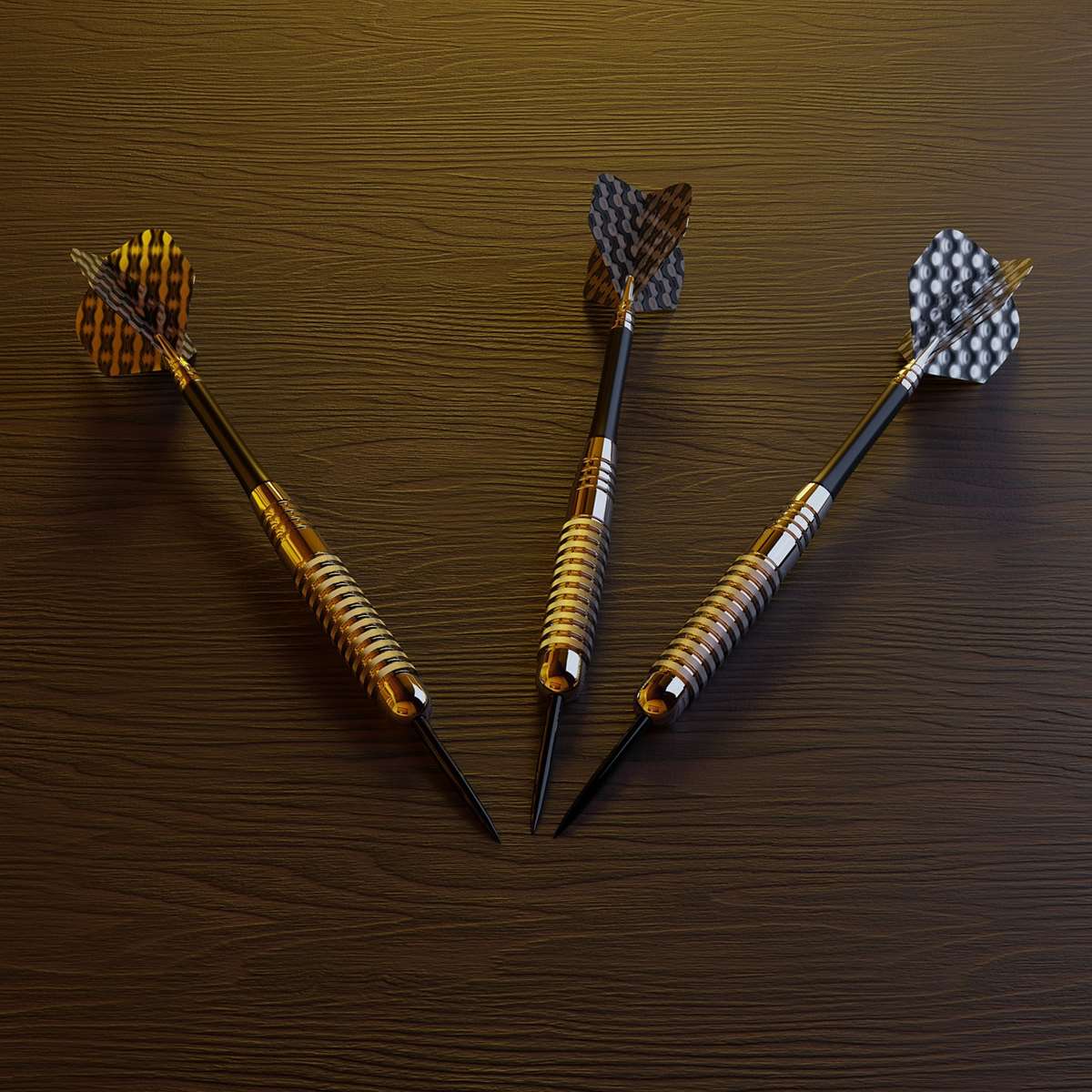
Another helpful tip to keep in mind is that a good follow through and a steady throw will get you a long way in darts. Your technique will become second nature over time, and you will see your **dart accuracy** improve significantly. You may want to also consider exploring various options for How To Light Your Dartboard to ensure you have optimal visibility during practice and gameplay.
Conclusion
While direct **dart speed measurement** can be challenging without specialized equipment, understanding the factors that influence dart speed and using available methods to estimate it can provide valuable insights into your throwing technique. By focusing on consistency, optimizing your throwing motion, and experimenting with different dart setups, you can improve your accuracy and consistency on the dartboard. Embrace the data, refine your technique, and watch your scores soar! Now that you understand more about the importance of equipment in influencing your throw, take the next step and Choose Best Dart Equipment to enhance your game.

Hi, I’m Dieter, and I created Dartcounter (Dartcounterapp.com). My motivation wasn’t being a darts expert – quite the opposite! When I first started playing, I loved the game but found keeping accurate scores and tracking stats difficult and distracting.
I figured I couldn’t be the only one struggling with this. So, I decided to build a solution: an easy-to-use application that everyone, no matter their experience level, could use to manage scoring effortlessly.
My goal for Dartcounter was simple: let the app handle the numbers – the scoring, the averages, the stats, even checkout suggestions – so players could focus purely on their throw and enjoying the game. It began as a way to solve my own beginner’s problem, and I’m thrilled it has grown into a helpful tool for the wider darts community.