Mastering your dart grip is crucial for consistent throws, and the secret lies in proper Dart Grip Finger Placement Guide. This guide reveals the optimal finger positioning techniques to enhance your accuracy and control, transforming your dart game. You’ll also discover different grip styles, common mistakes to avoid, and how to find the perfect grip that suits your individual throwing style.
⚠️ Still Using Pen & Paper (or a Chalkboard)?! ⚠️
Step into the future! The Dart Counter App handles all the scoring, suggests checkouts, and tracks your stats automatically. It's easier than you think!
Try the Smart Dart Counter App FREE!Ready for an upgrade? Click above!
Understanding the Fundamentals of Dart Grip Finger Placement
The way you hold your dart directly impacts its flight and trajectory. A consistent grip ensures a consistent release, leading to tighter groupings and higher scores. A proper dart grip involves understanding how your fingers interact with the dart barrel, point, and even the shaft. Mastering your grip will allow you to Choose Best Dart Equipment and play with greater confidence.

The three main elements of a good grip are:
- Pressure: Applying the right amount of pressure allows for a controlled release. Too much pressure can cause tension, while too little can result in a wobbly throw.
- Placement: Where your fingers are positioned on the dart dictates the amount of control and spin you impart.
- Consistency: Repeating the same grip every time is essential for accuracy. Develop muscle memory to ensure your grip is consistent across all throws.
Exploring Different Dart Grip Styles
There’s no single “best” grip, as the ideal style depends on individual preference and throwing technique. However, understanding the common grip types can help you experiment and find what works best for you. Many professionals use a variation of these basic grips, further customizing it for their specific requirements. Ultimately, the best grip is the one that feels most natural and comfortable, while still allowing for consistent and accurate throws. Finding the right dart grip finger placement can take time and practice, so don’t be afraid to experiment.
The Two-Finger Grip
The two-finger grip provides a minimalist approach, often favored by players seeking maximum feel and control. Typically, the thumb and index finger are used to hold the dart, with the middle finger potentially providing light support without applying significant pressure. This grip is known for allowing a very smooth and uninhibited release. However, it can be less stable for some players, requiring excellent hand-eye coordination and a very refined throwing motion.
The Three-Finger Grip
The three-finger grip is perhaps the most popular and versatile style. It generally involves the thumb, index finger, and middle finger working together to control the dart. The ring finger and pinky may rest on the dart or float freely, depending on the player’s preference. This grip offers a good balance of control and feel, making it suitable for a wide range of throwing styles. It also provides more stability compared to the two-finger grip.
The Four-Finger Grip
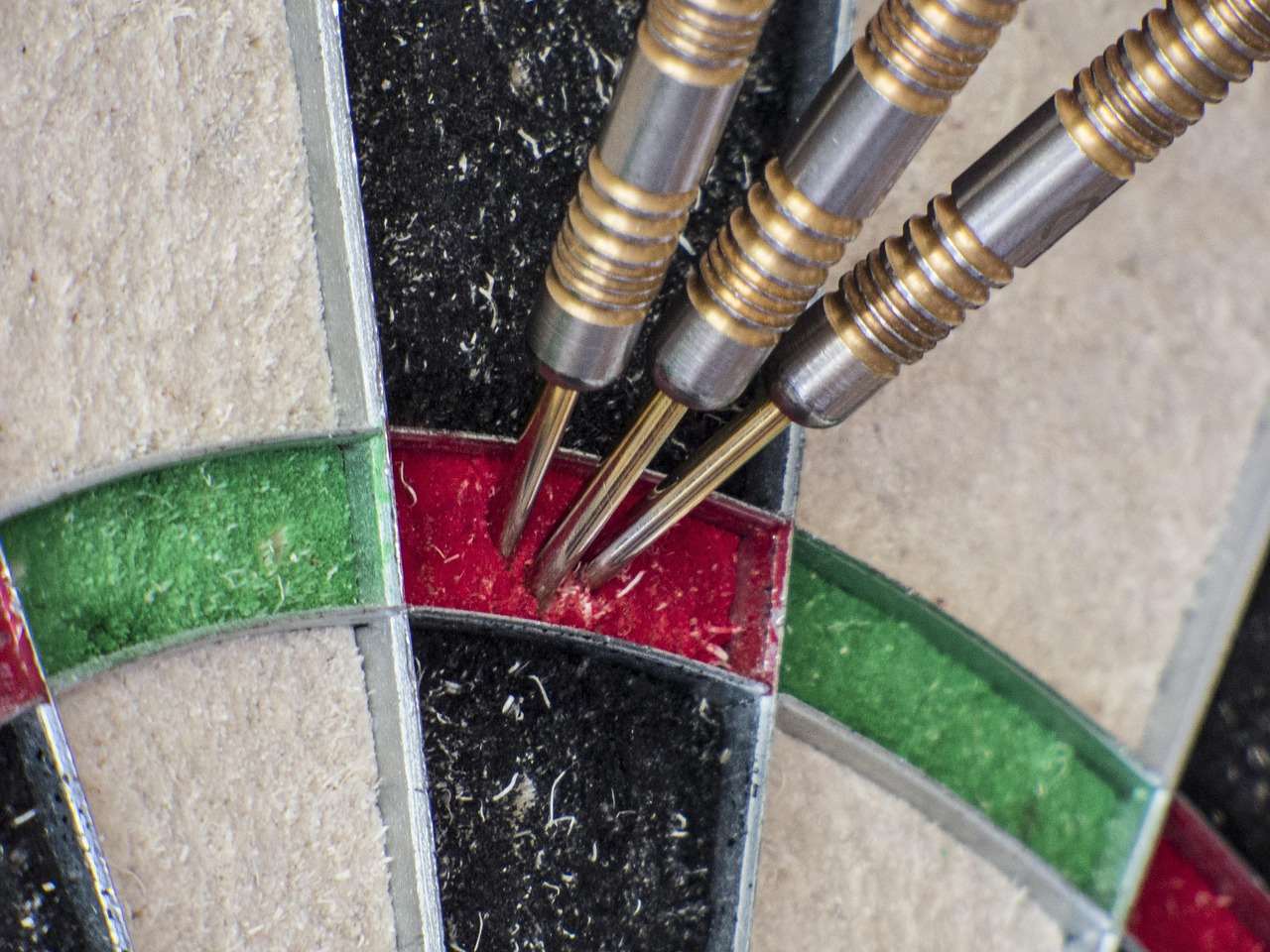
The four-finger grip, using the thumb, index, middle, and ring fingers, provides maximum stability and control. This grip is often chosen by players who prefer a more secure hold on the dart. However, it can sometimes restrict the fluidity of the release, so it’s important to ensure that the fingers don’t overly grip the dart, leading to tension. Experimenting with different levels of pressure from each finger is crucial for optimizing this grip style. Consider the benefits of using Best Material For Darts Barrels for your darts.
The Five-Finger Grip
While less common, the five-finger grip involves all fingers making contact with the dart. This provides the highest level of stability, but often at the expense of feel and finesse. This grip is rarely used by professional dart players because it reduces the amount of control you have over the dart’s flight path. Players using this style often use it for trick shots and not for serious games. You can find Tungsten Darts Pros Cons Explained if you’re looking to up your game!
Fine-Tuning Your Dart Grip Finger Placement
Once you’ve experimented with different grip styles, you can start fine-tuning your finger placement. Small adjustments can make a big difference in your accuracy and consistency. Consider these key elements:
- Balance Point: Find the balance point of your dart. This is the point where the dart rests evenly in your hand. Gripping the dart slightly in front or behind the balance point can affect its flight. Experiment to see what works best for your style.
- Finger Pressure: Distribute pressure evenly across your fingers. Avoid gripping too tightly, which can cause tension and a jerky release. Aim for a relaxed but secure hold.
- Finger Spacing: Experiment with the spacing between your fingers. Some players prefer their fingers close together, while others prefer them slightly spread apart. The optimal spacing depends on your hand size and grip style.
Remember that even subtle adjustments to your grip can significantly impact your throw. Keep a practice log to track which dart grip adjustments are effective, and which are not.
Common Mistakes to Avoid in Dart Grip Finger Placement
Even experienced players can fall into bad habits with their dart grip. Be aware of these common mistakes and actively work to avoid them:

- Gripping Too Tightly: This is one of the most common mistakes. A tight grip creates tension in your arm and shoulder, leading to an inconsistent release.
- Changing Your Grip Mid-Throw: Avoid adjusting your grip while drawing back the dart. This can disrupt your timing and accuracy.
- Inconsistent Finger Placement: Strive for consistency in your finger placement every time you throw. Use visual cues or mental reminders to ensure your grip is the same.
- Ignoring the Balance Point: Failing to find and grip the dart around its balance point can cause wobble and instability in flight.
Addressing these common mistakes can significantly improve your dart game. Also, if you are using cheaper darts, it may be time to upgrade. Look into Cheap Dart Materials Buying Guide for advice on purchasing the right set of darts.
Finding Your Perfect Dart Grip
The quest for the perfect dart grip is a personal journey. There’s no magic formula, but by understanding the fundamentals, experimenting with different styles, and fine-tuning your technique, you can find a grip that maximizes your accuracy and consistency. Consider these tips to help you on your journey:
- Experiment Regularly: Don’t be afraid to try different grip styles and finger placements. Even small adjustments can make a big difference.
- Record Your Progress: Keep a practice log to track your results. Note which grips feel most comfortable and produce the best results.
- Seek Feedback: Ask experienced dart players for feedback on your grip. They may be able to spot issues you haven’t noticed.
- Be Patient: Finding the perfect dart grip takes time and practice. Don’t get discouraged if you don’t see results immediately.
Your individual throwing style and dart characteristics will also influence your ideal grip. Remember, the ultimate goal is to find a dart grip that feels natural and comfortable, while allowing you to throw consistently and accurately. Consider Choose Right Dart Material Guide when choosing your next darts.
Advanced Dart Grip Techniques and Considerations
Once you’ve mastered the fundamentals, you can explore more advanced techniques to further refine your dart grip finger placement and enhance your game.
Grip Pressure Variation
Experiment with varying the pressure you apply with different fingers. For example, you might apply more pressure with your thumb and index finger for control, while using your middle finger for subtle guidance. This can influence the spin and trajectory of the dart. Always consider the Tungsten Percentage Explained Darts, as this impacts dart weight and grip sensitivity.

Pivot Points and Release
Pay attention to your pivot point, the area where the dart leaves your fingers. A clean and consistent release is crucial for accuracy. Visualize a smooth, continuous motion from your grip, through your arm, and out through your fingertips.
Adapting to Different Dart Weights and Barrel Shapes
Your ideal grip may need to be adjusted based on the weight and shape of your darts. Heavier darts often require a more secure grip, while lighter darts may benefit from a more delicate touch. Similarly, different barrel shapes may necessitate adjustments to your finger placement for optimal control.
Maintaining Your Dart Grip for Long-Term Success
Consistency is key in darts, and that extends to your grip. Once you’ve found a grip that works for you, it’s important to maintain it consistently over time. This requires regular practice and a conscious effort to avoid developing bad habits.
- Regular Practice: Consistent practice reinforces muscle memory and helps you maintain your grip.
- Video Analysis: Record yourself throwing darts and analyze your grip. This can help you identify any inconsistencies or areas for improvement.
- Mental Focus: Before each throw, take a moment to focus on your grip and ensure it’s correct.
By prioritizing consistency and regularly evaluating your Dart Grip Finger Placement Guide, you can maximize your accuracy and reach your full potential as a dart player.
Conclusion: Mastering the Dart Grip for Enhanced Performance
Finding the perfect Dart Grip Finger Placement Guide is a journey of experimentation and refinement. By understanding the fundamentals of different grip styles, fine-tuning your technique, and avoiding common mistakes, you can unlock your full potential as a dart player. Remember that consistency, practice, and patience are key to mastering your grip and achieving long-term success on the dartboard. Start experimenting with different grips today, and watch your accuracy soar!
Ready to take your dart game to the next level? Invest time in understanding and refining your grip. Practice regularly, experiment with different styles, and remember to maintain consistency. Share this guide with your fellow dart enthusiasts and encourage them to explore the world of dart grip finger placement! Consider reading our other dart guides like Beginner Dart Barrel Materials Guide to further help you improve your game.

Hi, I’m Dieter, and I created Dartcounter (Dartcounterapp.com). My motivation wasn’t being a darts expert – quite the opposite! When I first started playing, I loved the game but found keeping accurate scores and tracking stats difficult and distracting.
I figured I couldn’t be the only one struggling with this. So, I decided to build a solution: an easy-to-use application that everyone, no matter their experience level, could use to manage scoring effortlessly.
My goal for Dartcounter was simple: let the app handle the numbers – the scoring, the averages, the stats, even checkout suggestions – so players could focus purely on their throw and enjoying the game. It began as a way to solve my own beginner’s problem, and I’m thrilled it has grown into a helpful tool for the wider darts community.