Unraveling the nuances of Cricket darts rules soft tip board games can seem complex, but the core objective is simple: be the first to close out specific numbers and the bullseye. This article will comprehensively guide you through the official rules, scoring, and strategic elements of Cricket darts on a soft tip board, along with offering insights into popular variations and helpful tips for improving your game.
⚠️ Still Using Pen & Paper (or a Chalkboard)?! ⚠️
Step into the future! The Dart Counter App handles all the scoring, suggests checkouts, and tracks your stats automatically. It's easier than you think!
Try the Smart Dart Counter App FREE!Ready for an upgrade? Click above!
Understanding the Basics of Cricket Darts Rules Soft Tip Board
Cricket darts is a strategic game of darts where players aim to “close” numbers on the dartboard before their opponents. Unlike games like 501, Cricket isn’t about accumulating the highest score. Instead, it focuses on hitting specific numbers and the bullseye to claim them as your own and ultimately win the game.
Here’s a breakdown of the essential elements:
- Target Numbers: In standard Cricket, you’ll be focusing on the numbers 15 through 20, along with the bullseye.
- Closing a Number: To “close” a number, you must hit it three times. These hits can be achieved through single, double, or triple scores. For example, hitting a single 20, a double 20, and another single 20 closes out the number 20.
- Ownership: Once you have closed a number, it becomes “yours.” You score points on that number if your opponent has not yet closed it.
- Winning the Game: To win, you must be the first player to close all target numbers (15-20 and bullseye) and have a higher or equal score than your opponent. If you close all numbers but are behind in points, you must continue scoring on your opponent’s open numbers until you either surpass their score or they close out all the numbers themselves.
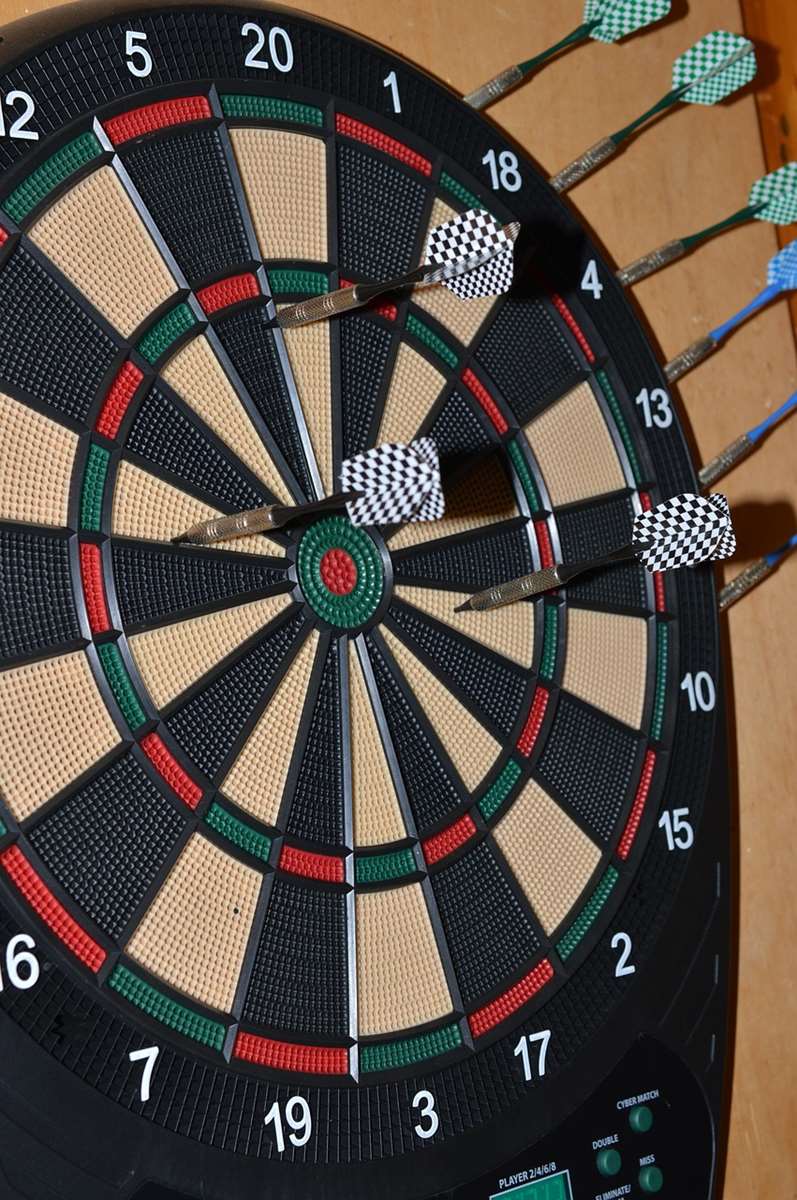
Soft Tip vs. Steel Tip: Key Differences
While the fundamental rules of Cricket remain the same regardless of the dartboard type, there are some crucial differences between playing on a soft tip board and a steel tip board.
- Dart Type: Soft tip darts have plastic tips, designed to stick into the small holes on an electronic dartboard. Steel tip darts have metal tips, which are used on traditional bristle dartboards.
- Scoring: Soft tip boards automatically calculate and display scores, eliminating the need for manual scorekeeping. Steel tip requires manual scoring. This impacts game flow and speed significantly.
- Board Material: Soft tip boards are typically made of plastic with numerous small holes, whereas steel tip boards are made of compressed sisal fibers.
- Dart Weight: Soft tip darts are generally lighter than steel tip darts, due to the plastic tip and the design requirements of electronic boards.
These differences necessitate adjustments in throwing technique and dart selection.
Setting Up Your Soft Tip Cricket Darts Game
Before you start throwing darts, make sure you have everything set up correctly for a fair and enjoyable game of Cricket darts.
- Dartboard Height: The center of the bullseye should be 5 feet 8 inches (1.73 meters) from the floor. This is the standard height for both soft tip and steel tip dartboards.
- Throwing Distance: The official throwing distance for soft tip darts is typically 8 feet (2.44 meters) from the face of the dartboard. However, always confirm this distance according to the specific electronic dartboard you are using. Some boards may have slight variations.
- Lighting: Ensure adequate lighting to clearly see the dartboard and your target numbers. Proper lighting minimizes shadows and improves accuracy.
- Software Settings: Many electronic dartboards offer various game settings and options for handicap system fun dart games. Familiarize yourself with these settings before starting your game. You can adjust the dart game rules to suit different skill levels.

Strategic Considerations for Cricket Darts
Cricket is more than just hitting numbers; it’s about strategy. Here are some key strategic considerations:
- Prioritize Closing: Focus on closing numbers before scoring on them. Once you own a number, you can consistently rack up points, but you first need to secure it.
- Target Opponent’s Open Numbers: If your opponent has closed more numbers than you, focus on closing their open numbers to prevent them from scoring further.
- Defensive Play: If you are ahead in points, consider playing defensively by closing numbers even if you don’t need them to win. This limits your opponent’s scoring opportunities.
- Bullseye Strategy: The bullseye is often a critical number in Cricket. Decide whether to close it early to gain an advantage or save it for a clutch situation.
Smart players will also look for opportunities to adapt their darts games skills during the match.
Common Mistakes to Avoid in Cricket Darts
Even experienced dart players make mistakes. Here are some common pitfalls to watch out for when playing Cricket darts:
- Ignoring the Score: It’s easy to get caught up in closing numbers and forget to track the score. Always be aware of your score relative to your opponent’s.
- Prematurely Scoring: Hitting an open number before closing it is often a waste of darts. Focus on closing first.
- Neglecting Defense: Failing to address your opponent’s open numbers can lead to them quickly overtaking your score.
- Poor Dart Selection: Choosing the wrong weight or style of dart can negatively impact your accuracy and consistency.
Avoiding these errors will significantly improve your chances of winning.

Variations on the Standard Cricket Darts Rules
While the basic Cricket darts rules remain consistent, there are numerous variations that add different twists to the game:
- Cut-Throat Cricket: In this variation, instead of scoring points on open numbers, you add points to your opponents’ scores. The player with the lowest score at the end wins.
- Hidden Cricket: The target numbers are kept secret until the game begins, adding an element of surprise and requiring players to adapt their strategy on the fly.
- Team Cricket: Played with teams of two or more players, each team member takes turns throwing darts and contributing to the team’s overall score and closing of numbers.
Exploring these variations can keep the game fresh and exciting.
Improving Your Cricket Darts Game: Practice Drills
Consistent practice is key to improving your Cricket darts skills. Here are some effective practice drills:
- Targeted Practice: Focus on hitting specific target numbers (15-20 and bullseye) repeatedly. Aim for consistent accuracy.
- Closing Drill: Practice closing numbers by hitting them three times in as few darts as possible.
- Scoring Drill: After closing a number, practice scoring on it by repeatedly hitting it while your opponent is unable to close it.
- Game Simulation: Play simulated Cricket games against yourself or a practice partner to replicate game-like conditions and improve your strategic decision-making.

Selecting the Right Soft Tip Darts and Board
Choosing the right equipment can significantly impact your performance. Here’s what to consider when selecting soft tip darts and a soft tip board:
- Dart Weight: Soft tip darts typically range from 16 to 20 grams. Experiment to find the weight that feels most comfortable and provides the best accuracy.
- Dart Barrel: Consider the material, shape, and grip of the dart barrel. Different barrel designs can affect your throwing style and control.
- Dart Flights: Choose flights that are durable and provide stable flight characteristics. Experiment with different flight shapes and sizes to find what works best for you.
- Dartboard Quality: Invest in a high-quality electronic dartboard with a durable target area and reliable scoring sensors. A well-made board will last longer and provide a more accurate and enjoyable playing experience.
Remember to explore the different dart games and find the ones you enjoy the most to stay motivated and improve your skills.
Advanced Cricket Darts Techniques
Once you’ve mastered the basics, you can explore more advanced techniques to further enhance your Cricket darts game:
- Grouping: Aim to group your darts closely together on the target number. This increases your chances of hitting the desired score and closing the number quickly.
- Reading the Board: Pay attention to where your darts land on the board. Use this information to adjust your aim and improve your accuracy.
- Mental Game: Develop a strong mental game by staying focused, managing pressure, and maintaining a positive attitude.

These advanced techniques can give you a competitive edge.
Troubleshooting Common Soft Tip Dartboard Issues
Even with proper care, electronic dartboards can sometimes experience issues. Here are some common problems and how to troubleshoot them:
- Dart Bounce-Outs: Ensure your darts have sharp, undamaged tips. Also, check the dartboard surface for any worn or damaged sections.
- Scoring Errors: Clean the target area regularly to remove dust and debris that can interfere with the sensors. If scoring errors persist, consult the dartboard’s user manual or contact the manufacturer for support.
- Power Issues: Check the power cord and outlet to ensure the dartboard is receiving power. If the board still doesn’t turn on, try replacing the batteries or contacting the manufacturer.
Conclusion: Mastering Cricket Darts on a Soft Tip Board
Mastering Cricket darts rules soft tip board involves understanding the core rules, developing strategic thinking, practicing consistently, and selecting the right equipment. By focusing on closing numbers, tracking the score, and adapting to your opponent’s strategy, you can significantly improve your chances of winning. Remember to explore different variations of the game and troubleshoot any technical issues that may arise. Now grab your darts, step up to the oche, and start honing your skills! Consider experimenting with modify dart games skill gap to even the playing field amongst friends.

Hi, I’m Dieter, and I created Dartcounter (Dartcounterapp.com). My motivation wasn’t being a darts expert – quite the opposite! When I first started playing, I loved the game but found keeping accurate scores and tracking stats difficult and distracting.
I figured I couldn’t be the only one struggling with this. So, I decided to build a solution: an easy-to-use application that everyone, no matter their experience level, could use to manage scoring effortlessly.
My goal for Dartcounter was simple: let the app handle the numbers – the scoring, the averages, the stats, even checkout suggestions – so players could focus purely on their throw and enjoying the game. It began as a way to solve my own beginner’s problem, and I’m thrilled it has grown into a helpful tool for the wider darts community.