Understanding the most **common scoring numbers darts T20 T19** is crucial for improving your game, as these are the targets that offer the highest single-dart scores. This article delves into why these numbers are so important, strategies for hitting them consistently, and how mastering them can elevate your darting skills.
⚠️ Still Using Pen & Paper (or a Chalkboard)?! ⚠️
Step into the future! The Dart Counter App handles all the scoring, suggests checkouts, and tracks your stats automatically. It's easier than you think!
Try the Smart Dart Counter App FREE!Ready for an upgrade? Click above!
Why T20 and T19 Dominate Darts Strategy
The numbers 20 and 19, specifically their **treble (T20 and T19)** sections, are the cornerstones of high scoring in darts. The treble twenty is worth 60 points, while the treble nineteen yields 57 points. These are the two highest possible scores you can achieve with a single dart, making them primary targets for players aiming to reduce their score to zero as quickly as possible in games like 501. Understanding how to consistently hit these targets is fundamental to becoming a proficient darter.
The strategic importance of **T20** stems not only from its high value but also from its position on the dartboard. It sits between the 1 and the 5, meaning that even slight misses can result in scores that are still relatively useful. A miss to the right lands on 1, worth very little, but a miss to the left lands on 5, worth more. This relative safety net, compared to other high-scoring numbers, further solidifies **T20’s** position as the go-to target for many players.

However, relying solely on **T20** can be risky, especially when the pressure is on. If the opponent is on a checkout, the player may want to switch to the T19, worth 57, the second-highest scoring area of the dartboard. A miss to the left of the 19 lands on the 7, worth very little, but a miss to the right lands on the 3, worth more. Both high-value zones allow a player to maintain momentum or set up a favorable outshot.
Mastering the T20: Techniques and Drills
Consistently hitting the **T20** requires a combination of proper technique, focused practice, and mental fortitude. Here are some strategies to help you improve your accuracy:
- Stance and Posture: A stable and balanced stance is crucial. Experiment with different foot positions until you find one that feels comfortable and allows you to maintain a consistent throwing motion. Typically, players position their lead foot (the foot on the same side as their throwing arm) slightly angled towards the oche.
- Grip: The grip should be firm enough to control the dart but not so tight that it causes tension. Experiment with different grip styles (e.g., three-finger, four-finger) to find what works best for you. Consistency is key.
- Arm Action: Your arm action should be smooth and fluid, starting from a point close to your eye and extending towards the target. Avoid jerky movements or unnecessary tension.
- Release: The release point is critical. Aim to release the dart at the same point in your throwing motion every time. Practice releasing the dart consistently to improve your accuracy.
- Follow Through: A proper follow-through is essential for accuracy. Extend your arm fully towards the target after releasing the dart and maintain your focus until the dart hits the board.
To reinforce these techniques, incorporate specific drills into your practice routine. One effective drill is to focus solely on hitting the **T20** for a set period of time. Track your progress and identify areas for improvement.
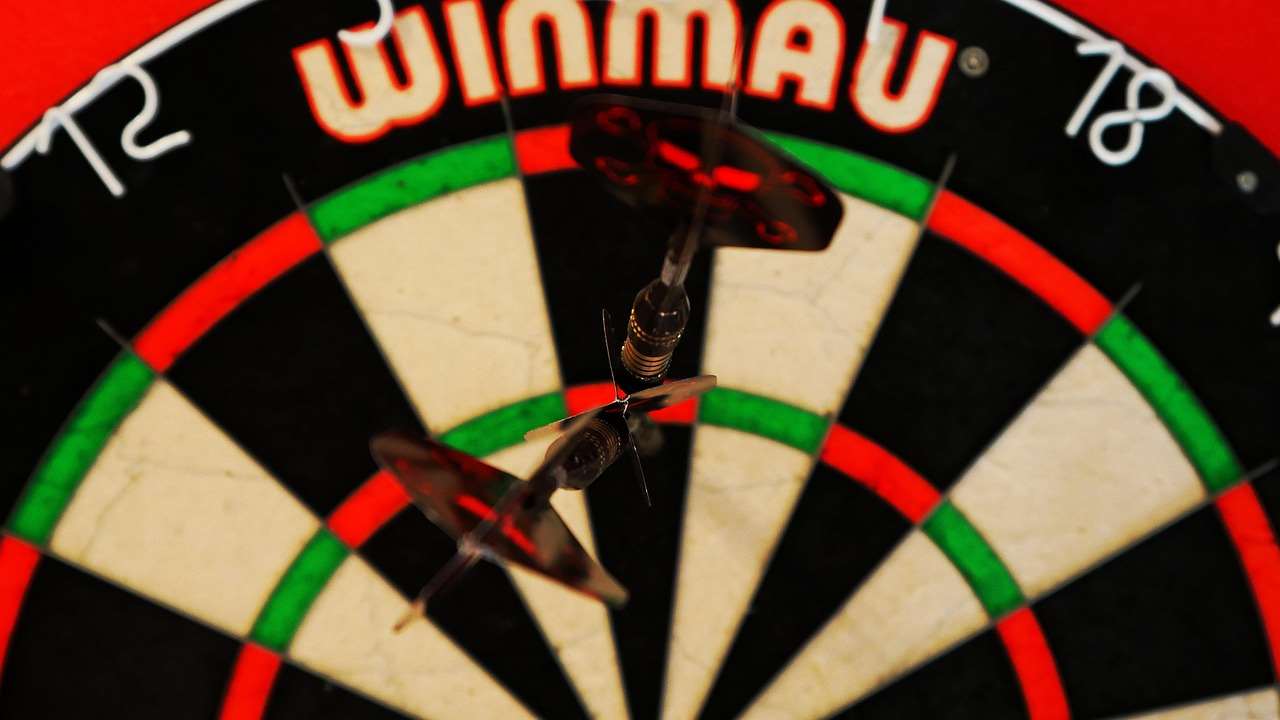
Another useful drill involves aiming for the single 20, then gradually shrinking the target to the double 20, and finally the **T20**. This helps develop precision and control.
Remember, consistent practice is paramount. Even short, focused practice sessions can yield significant improvements over time.
You can also check out Basic Darts Fundamentals for Beginners to make sure you have the right posture and throwing motion.
The Importance of the T19: An Alternative High Score
While the **T20** reigns supreme as the highest scoring segment, the **T19** holds significant strategic value. As mentioned, it’s worth 57 points, which is only slightly less than the **T20** (60 points). This makes it a valuable alternative when the **T20** proves elusive or when a strategic switch is needed.
One key advantage of the **T19** is its positioning on the dartboard. It is located adjacent to the 3 and 7. While a miss to the 3 is less desirable, a miss to the 7 can be strategically useful in certain situations. Some players even prefer the T19 to the T20.
Furthermore, the **T19** can be a psychological advantage. If a player is struggling with the **T20**, switching to the **T19** can break the cycle of frustration and restore confidence.
Strategies for Switching Between T20 and T19
Knowing when to switch between the **T20** and **T19** is a key aspect of advanced darts strategy. Here are some scenarios to consider:
- Under Pressure: If you are feeling pressured by your opponent and struggling to hit the **T20**, switching to the **T19** can help you regain composure.
- Blocking: If your opponent is consistently blocking your access to the **T20**, switching to the **T19** can open up new scoring opportunities.
- Checkout Strategy: In certain checkout situations, the **T19** can be a more strategic target than the **T20**. For example, if you need to leave an odd number for your final dart, the **T19** might be the better choice.
Effective switching requires practice and mental flexibility. Don’t be afraid to experiment with different strategies and adapt your approach based on the situation.
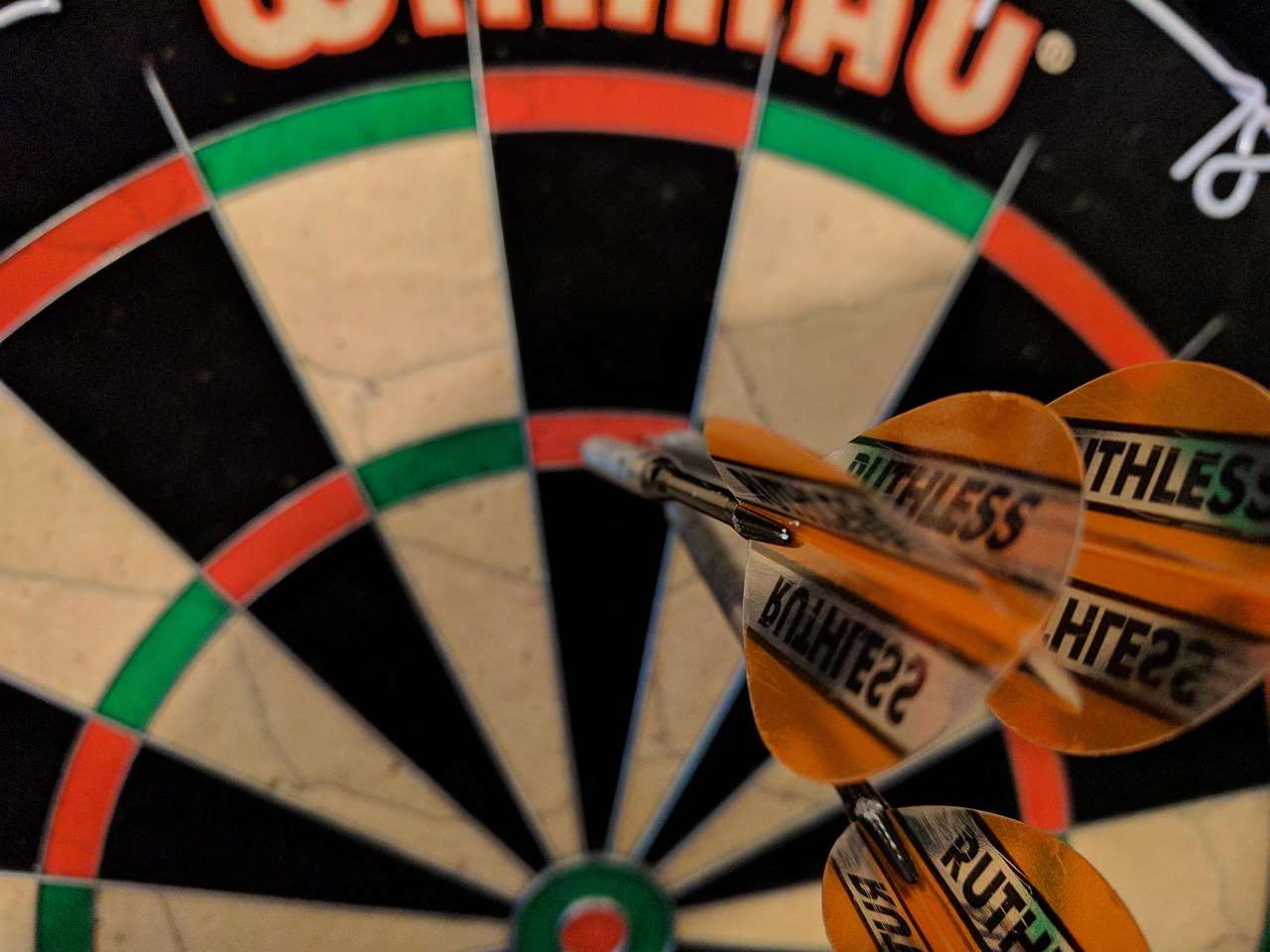
Another common strategy is to try to stack scores. This can be done by hitting back-to-back treble 20s or **treble 19s**. This may be easier for players who are having a bad day. By hitting these areas the player will hopefully restore their confidence and momentum.
Beyond T20 and T19: Other Important Scoring Numbers
While the **T20** and **T19** are the primary targets for high scoring, it’s important to understand the value of other numbers on the dartboard. The single 20 and single 19 are valuable targets, as are the 18, 17, 16, 15 and 14, as well as their corresponding treble sections. The double scores are also crucial for checkout finishes.
Understanding the potential of these other numbers can help you develop a more versatile and adaptable game.
- 18, 17, 16, 15 and 14: These numbers are often targeted when the **T20** and **T19** are blocked, or when a specific score is needed to set up a checkout.
- Double Scores: Mastering the double scores is essential for finishing games. Practice hitting doubles of all numbers, especially the double 20, double 16, and double 18, as these are commonly used in checkout combinations.
Knowing which numbers to target in different situations is a sign of a well-rounded darts player.
You may also want to consider fun dart game variations with modified rules to make darts more exciting.
Mental Game: Staying Focused on T20 and T19
The mental aspect of darts is just as important as the physical technique. Maintaining focus and composure, especially under pressure, is crucial for hitting your target consistently. This is especially important for the most **common scoring numbers darts T20 T19**.
Here are some tips for improving your mental game:
- Visualization: Before each throw, visualize the dart hitting the **T20** or **T19**. This can help boost your confidence and improve your accuracy.
- Positive Self-Talk: Replace negative thoughts with positive affirmations. Believe in your ability to hit your target.
- Breathing Techniques: Use deep breathing techniques to calm your nerves and focus your attention.
- Routine: Develop a consistent pre-throw routine to help you focus and stay in the moment.
Remember, darts is a game of concentration and precision. By honing your mental skills, you can significantly improve your performance.
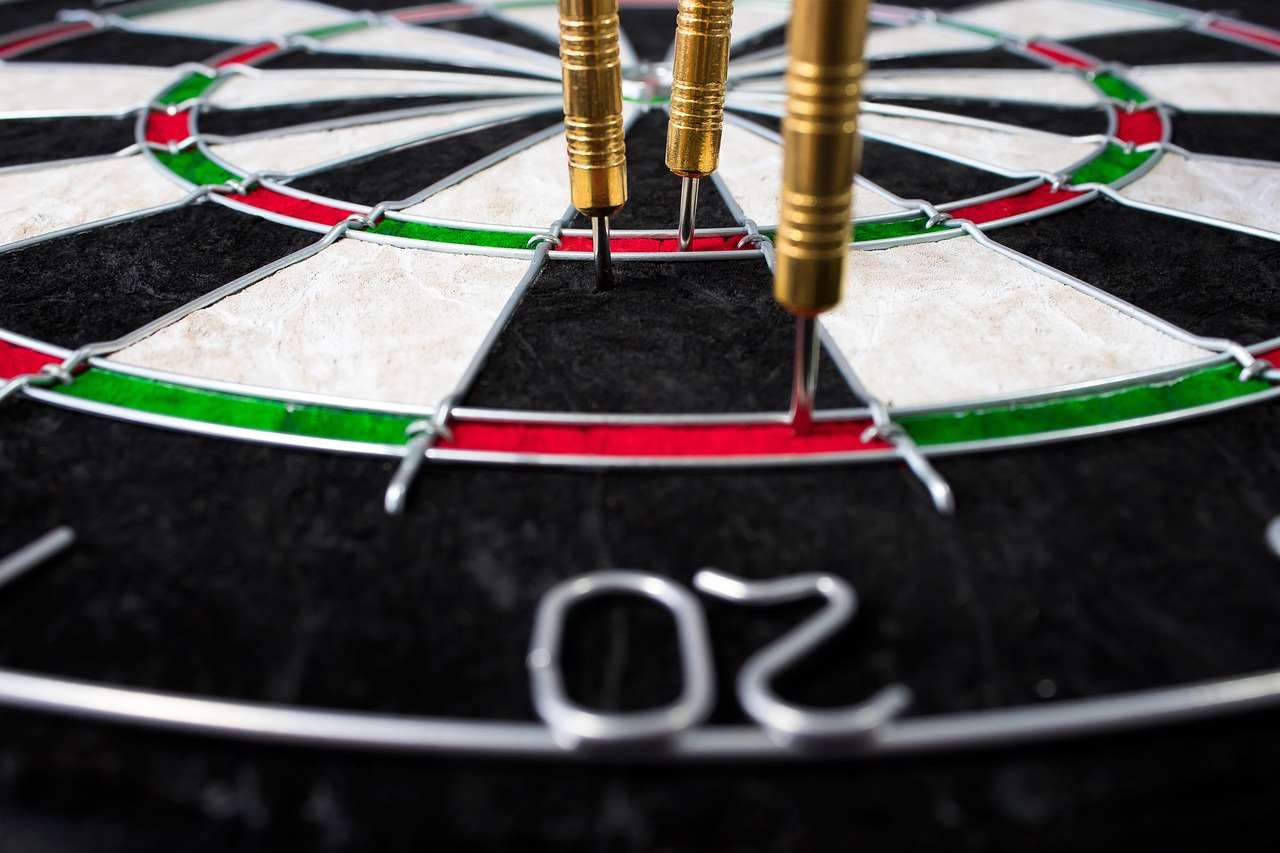
It may also be beneficial to look at adapting darts rules for beginners if you struggle hitting the **T20** and **T19**.
Conclusion
Mastering the **common scoring numbers darts T20 T19** is fundamental to achieving success in darts. By understanding the strategic importance of these numbers, practicing consistently, and honing your mental game, you can significantly improve your scoring ability. Remember to experiment with different techniques, adapt your strategy based on the situation, and never stop practicing. Now, grab your darts, focus on that treble, and start racking up those high scores!

Hi, I’m Dieter, and I created Dartcounter (Dartcounterapp.com). My motivation wasn’t being a darts expert – quite the opposite! When I first started playing, I loved the game but found keeping accurate scores and tracking stats difficult and distracting.
I figured I couldn’t be the only one struggling with this. So, I decided to build a solution: an easy-to-use application that everyone, no matter their experience level, could use to manage scoring effortlessly.
My goal for Dartcounter was simple: let the app handle the numbers – the scoring, the averages, the stats, even checkout suggestions – so players could focus purely on their throw and enjoying the game. It began as a way to solve my own beginner’s problem, and I’m thrilled it has grown into a helpful tool for the wider darts community.