Calculating score three darts turn in darts is fundamental: simply add the values of where your three darts land on the board, accounting for doubles, triples, and the bullseye. This article will comprehensively explain how to accurately determine your score, common scoring errors to avoid, and strategies to improve your scoring consistency.
⚠️ Still Using Pen & Paper (or a Chalkboard)?! ⚠️
Step into the future! The Dart Counter App handles all the scoring, suggests checkouts, and tracks your stats automatically. It's easier than you think!
Try the Smart Dart Counter App FREE!Ready for an upgrade? Click above!
Understanding the Dartboard for Accurate Scoring
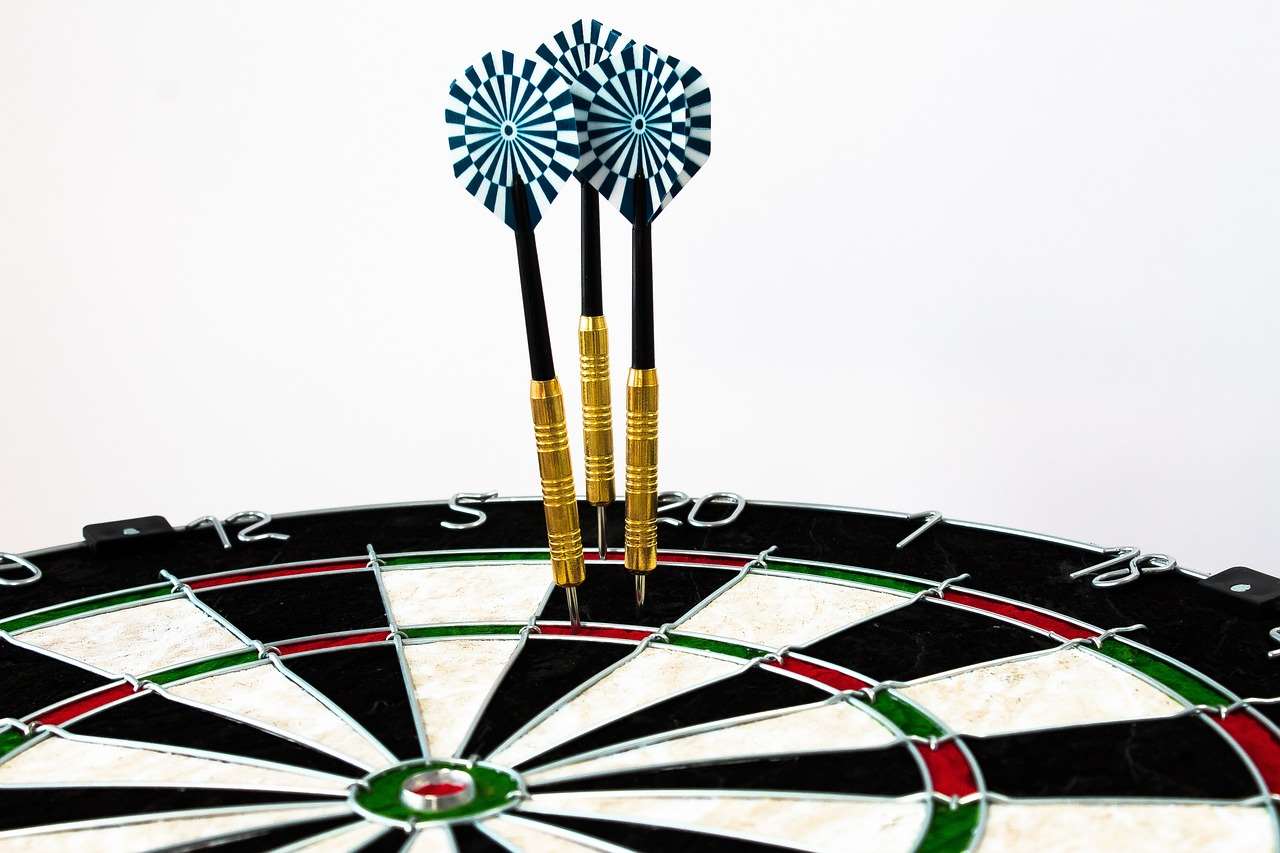
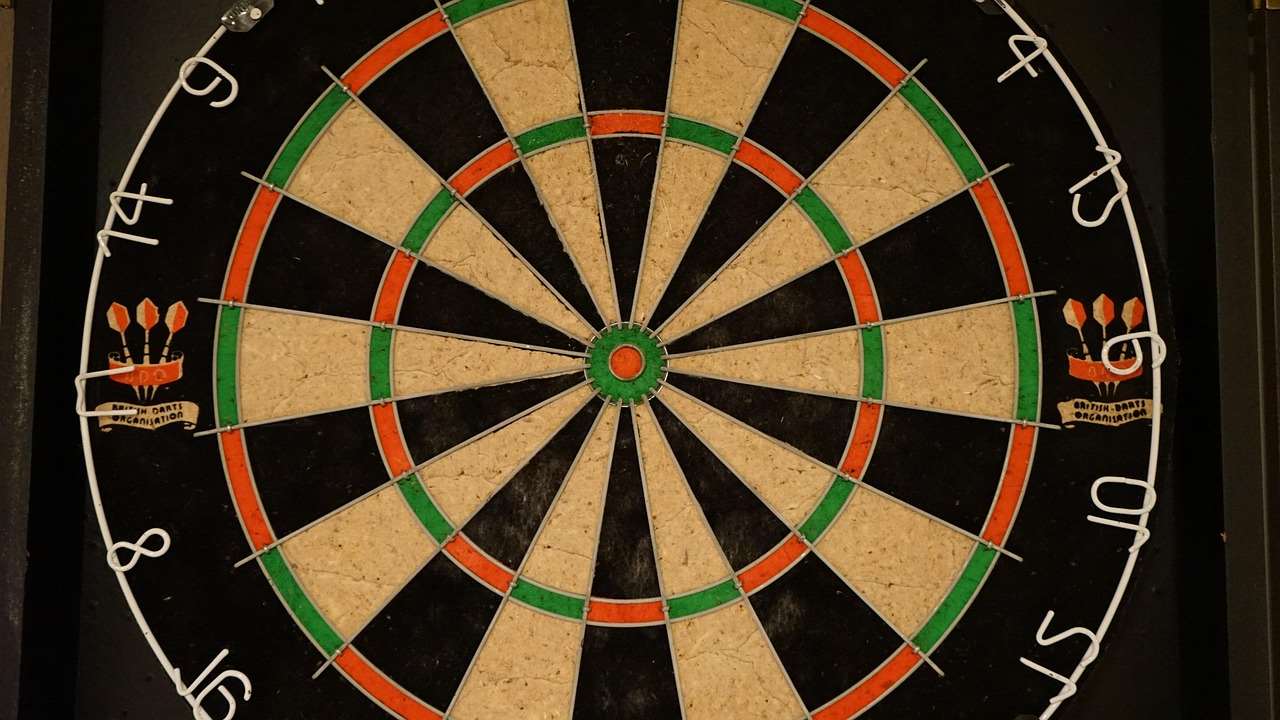
Before delving into the mechanics of calculating score three darts turn, it’s crucial to have a solid understanding of the dartboard layout. The board is divided into 20 numbered sections, each containing single, double, and triple areas. The outer ring represents the double area, while the inner ring represents the triple area. The bullseye is divided into an outer green ring worth 25 points (often called the single bull) and an inner red circle worth 50 points (the double bull).
A dart landing in the single area of a number scores the face value of that number. A dart in the double area scores twice the number, and a dart in the triple area scores three times the number. Missing the board entirely results in a score of zero for that dart. Basic Darts Fundamentals for Beginners can help you understand this. It is important to know the layout very well before advancing.
Step-by-Step Guide to Calculating Score Three Darts Turn
Here’s a breakdown of how to calculating score three darts turn effectively:
- Identify where each dart lands: Carefully observe where each of your three darts strikes the board. Be precise in determining if it’s in a single, double, or triple area.
- Determine the score for each dart: Based on the location of each dart, calculate its individual score. Remember the double and triple multipliers.
- Sum the individual scores: Add the scores of all three darts together to get the total score for that turn.
For example, if you hit a single 20, a double 10, and a triple 5, your total score would be 20 + (2 * 10) + (3 * 5) = 20 + 20 + 15 = 55.
Common Scoring Scenarios and Examples
- Scenario 1: Hitting a Double and Two Singles If you hit a double 15, a single 8, and a single 3, your score would be (2*15) + 8 + 3 = 30 + 8 + 3 = 41.
- Scenario 2: Hitting Two Triples and a Single If you hit a triple 20, a triple 10, and a single 5, your score would be (3*20) + (3*10) + 5 = 60 + 30 + 5 = 95.
- Scenario 3: Missing the Board If you hit a single 20, a single 5 and miss the board entirely, your score would be 20 + 5 + 0 = 25.
Avoiding Common Scoring Errors When Calculating Score Three Darts Turn
Even experienced players occasionally make scoring errors. Here are some common mistakes to watch out for when calculating score three darts turn:
- Misidentifying Doubles and Triples: Double-check that your darts are actually in the double or triple rings. Angle can sometimes be deceiving.
- Incorrectly Adding Scores: Simple arithmetic errors can easily happen, especially under pressure. Take a moment to verify your calculations.
- Forgetting Missed Darts: Always account for darts that miss the board entirely. These are worth zero points.
- Confusion with the Bullseye: Remember the outer green ring is 25 points, and the inner red bullseye is 50 points.
To minimize these errors, develop a consistent routine for scoring. This might involve verbally confirming each dart’s score before adding it to the total or using a scoring app or whiteboard to keep track.
Strategies to Improve Your Scoring Consistency
Beyond simply calculating score three darts turn correctly, improving your scoring consistency is key to winning games. Here are some strategies to help you achieve this:
- Focus on Accuracy: Consistently hitting your target number, even if it’s not a double or triple, is often better than randomly aiming for high-scoring areas.
- Develop a Pre-Throw Routine: A consistent routine helps you focus and minimizes distractions. This might include stance, grip, and aiming techniques.
- Practice Regularly: The more you practice, the more consistent your throwing will become. Focus on specific targets during practice sessions.
- Analyze Your Performance: Track your scores and identify areas where you need improvement. Are you consistently missing doubles or triples? Do you struggle with certain numbers?
- Manage Pressure: Learn to stay calm and focused under pressure. This is especially important in competitive situations.

Target Selection and Strategic Scoring
Smart target selection is crucial for maximizing your scoring potential. While aiming for triple 20 is tempting, it’s not always the best option. Consider the following:
- Leaving a Finishable Score: Plan your throws to leave yourself a manageable checkout score. This often involves aiming for specific doubles.
- Playing the Board: If you’re struggling with a particular number, switch to a different one. Don’t force it.
- Considering Opponent’s Position: Be aware of your opponent’s score and adjust your strategy accordingly. You may need to play defensively or aggressively.
For example, if you need 60 to win, aiming for a single 20 followed by a double 20 is a safer strategy than going for a triple 20 directly.
Utilizing Technology to Simplify Scorekeeping and Analysis
In the modern era, several technological aids can help streamline the process of calculating score three darts turn and analyzing your performance. These tools can range from simple scoring apps to sophisticated dart tracking systems.
- Scoring Apps: Numerous mobile apps are available that allow you to easily input your dart scores and automatically calculate your running total, average, and checkout possibilities. These apps often include features for tracking your progress over time and identifying areas for improvement.
- Online Dart Calculators: Several websites offer online dart calculators that can quickly determine your score for a given turn or suggest optimal checkouts based on your remaining score.
- Dart Tracking Systems: More advanced systems use sensors and cameras to automatically track the location of your darts on the board. These systems provide detailed data on your accuracy, consistency, and grouping patterns, allowing for in-depth analysis of your throwing technique.

Practice Drills for Mastering Calculating Score Three Darts Turn
Implementing specific practice drills can significantly enhance your ability to accurately calculating score three darts turn and improve your overall scoring proficiency. Here are a few effective drills:
- The Round the Board Drill: Start at number 1 and work your way around the board, hitting each number with a single dart. This drill improves your accuracy and focus on all areas of the board. You can also try hitting doubles or triples as you go around.
- The High Score Drill: Throw three darts at a time and try to achieve the highest possible score. This drill helps you develop your aiming skills and strategic target selection.
- The Checkout Drill: Practice finishing specific checkout combinations. Start with common checkouts like 40 (double 20) and 32 (double 16) and gradually work your way up to more challenging combinations.
Consistency is key. Dedicate regular time to these drills to see improvement.
If you are looking for Fun dart game variations with modified rules there are numerous options.
The Mental Game of Scoring in Darts
While technical skill is paramount, the mental aspect of darts, including accurately calculating score three darts turn under pressure, plays a significant role in your overall performance. Managing your emotions, maintaining focus, and developing a positive mindset are crucial for success.
- Visualization: Before each throw, visualize your dart hitting the target. This helps to improve your focus and confidence.
- Positive Self-Talk: Replace negative thoughts with positive affirmations. Believe in your ability to hit your target.
- Breathing Techniques: Use deep breathing exercises to calm your nerves and reduce tension.
- Learn from Mistakes: Don’t dwell on missed throws. Analyze what went wrong and learn from your mistakes.
Remember, darts is a game of consistency and mental fortitude. By honing your mental game, you can improve your scoring performance and achieve your goals.
It is important to consider How to make darts fairer with handicap rules especially when mixed skill levels play together.
Conclusion
Mastering the art of calculating score three darts turn is fundamental to becoming a proficient darts player. By understanding the dartboard layout, practicing accurate scoring techniques, avoiding common errors, and implementing strategic scoring approaches, you can significantly improve your game. Remember to utilize available technology, engage in targeted practice drills, and cultivate a strong mental game. Now that you understand the fundamentals of scoring, head to the oche and start practicing. Consider adapting darts rules for beginners to make learning easier.

Hi, I’m Dieter, and I created Dartcounter (Dartcounterapp.com). My motivation wasn’t being a darts expert – quite the opposite! When I first started playing, I loved the game but found keeping accurate scores and tracking stats difficult and distracting.
I figured I couldn’t be the only one struggling with this. So, I decided to build a solution: an easy-to-use application that everyone, no matter their experience level, could use to manage scoring effortlessly.
My goal for Dartcounter was simple: let the app handle the numbers – the scoring, the averages, the stats, even checkout suggestions – so players could focus purely on their throw and enjoying the game. It began as a way to solve my own beginner’s problem, and I’m thrilled it has grown into a helpful tool for the wider darts community.