Understanding the balance point for different barrels is crucial for achieving consistent and accurate dart throws, significantly impacting your game. This article delves into the factors affecting a dart’s balance, how to find it, and how it influences your throwing style, ultimately helping you select the ideal dart for your needs.
⚠️ Still Using Pen & Paper (or a Chalkboard)?! ⚠️
Step into the future! The Dart Counter App handles all the scoring, suggests checkouts, and tracks your stats automatically. It's easier than you think!
Try the Smart Dart Counter App FREE!Ready for an upgrade? Click above!
Why the Balance Point Matters For Different Barrels
The balance point of a dart barrel, sometimes called the center of gravity, plays a critical role in its flight characteristics and how it feels in your hand. A well-balanced dart will fly straighter and more predictably, translating to increased accuracy and tighter groupings on the dartboard. Conversely, a poorly balanced dart can wobble or fishtail, making it difficult to control and leading to frustrating inconsistencies. The location of the balance point significantly impacts how a dart rotates in flight and how much force is needed to achieve a desired trajectory.
Different players prefer different balance points, and the ideal location is highly personal. Some prefer a front-weighted dart for a more forceful throw, while others opt for a center-balanced or rear-weighted dart for increased control and finesse. Choosing a dart with a balance point that complements your throwing style is essential for maximizing your potential.
Understanding Dart Weight Distribution
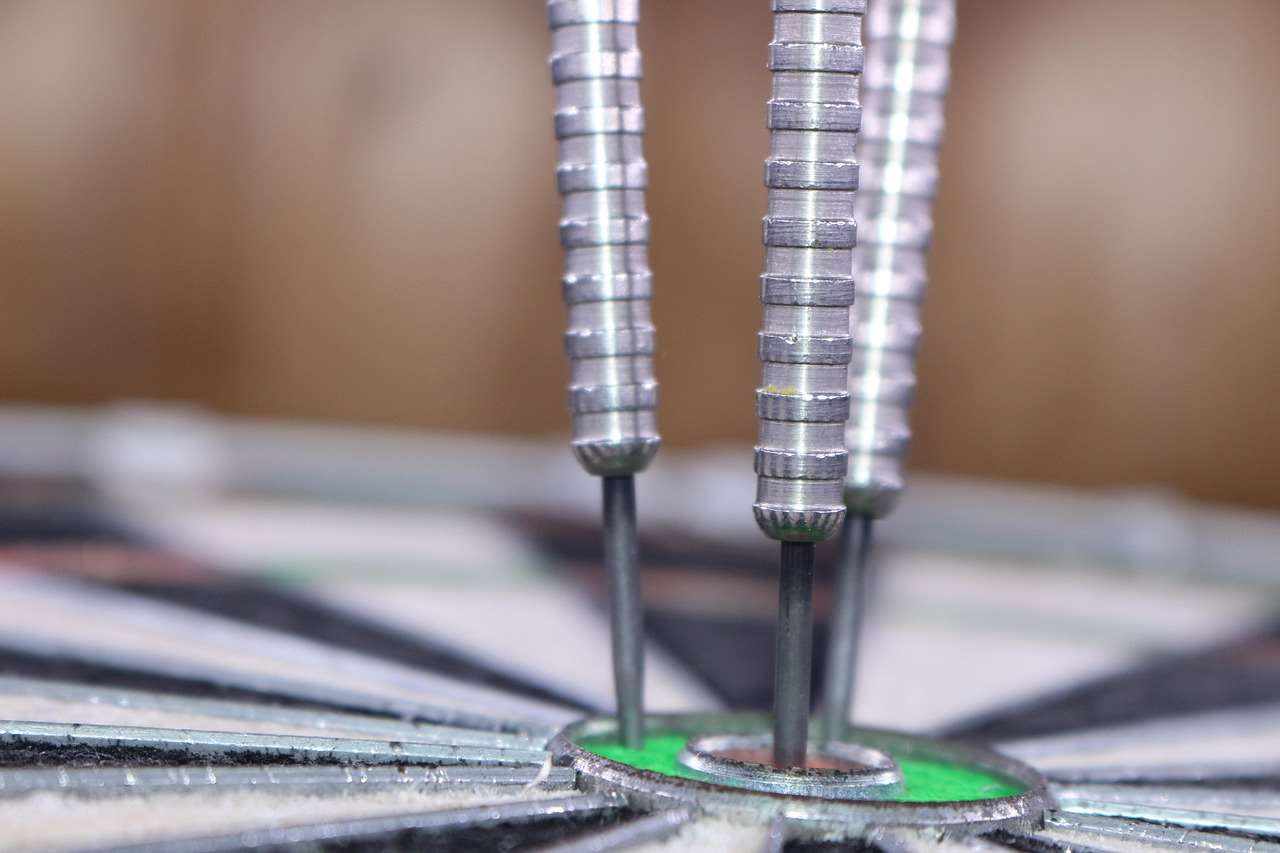
The weight distribution within the barrel directly influences its balance point. A heavier front section will naturally shift the balance point forward, while more weight towards the rear will create a rear-weighted dart. The material used in the barrel also contributes, with tungsten darts typically offering a slimmer profile for a given weight compared to brass or nickel-silver darts, affecting the overall weight distribution and thus the balance. Understanding this is key when you Choose Best Dart Equipment.
How to Find the Balance Point of a Dart Barrel
Determining the balance point of a dart barrel is a simple process:
- The Pencil Method: Rest the dart horizontally on a pencil. Adjust its position until it balances perfectly. The point where the dart rests on the pencil is its balance point.
- The Fingertip Method: Carefully balance the dart on your fingertip, making minor adjustments until it is stable. The location where the dart balances is the balance point.
- Visual Inspection & Measurement: For symmetrical barrels, you can often visually estimate the balance point by finding the midpoint of the barrel’s length. For asymmetrical barrels, the previous methods are more reliable. Precise measurement from either the front or rear of the barrel to the balance point can then be taken for comparison purposes.
Once you’ve found the balance point, make a note of its location relative to the overall length of the barrel. This measurement will be valuable when comparing different barrels and selecting darts that suit your preferences. Remember that the balance point is often expressed as a distance from the front or rear of the barrel.
Different Barrel Shapes and Their Impact on Balance
The shape of a dart barrel significantly influences its balance point and overall feel. Common barrel shapes include:
- Straight Barrels: These barrels have a consistent diameter along their length, providing a predictable and consistent feel. Their balance point tends to be closer to the center.
- Torpedo Barrels: These barrels are thicker in the front and taper towards the rear, creating a front-weighted feel and a balance point that is typically forward.
- Bomb Barrels: Similar to torpedo barrels but with a more pronounced bulge in the front, further enhancing the front-weighted feel and shifting the balance point even further forward.
- Scalloped Barrels: These barrels feature indentations or scallops, often near the center, which can subtly influence the balance point and provide a comfortable grip.
Experimenting with different barrel shapes is crucial for finding the one that best complements your throwing style. Consider how the shape affects the dart’s stability in flight and your ability to release it consistently. You might also want to explore the world of Best Dartboard Lighting Systems to improve your visibility.
Front, Center, and Rear Balanced Darts: Which Is Right For You?
Understanding the characteristics of front, center, and rear balanced darts is essential for making an informed decision.
- Front-Balanced Darts: These darts are favored by players who prefer a more forceful throw. The forward balance point helps to propel the dart through the air with greater momentum, potentially increasing accuracy for those who naturally ‘push’ the dart.
- Center-Balanced Darts: These darts offer a neutral feel and are well-suited for players who prefer a balanced and controlled throw. The central balance point provides stability and allows for a smooth release.
- Rear-Balanced Darts: These darts are often preferred by players who prioritize finesse and control. The rearward balance point allows for subtle adjustments during the throw and can be beneficial for players who have a more ‘lofted’ throwing style.
There is no universally “best” balance point; it’s a matter of personal preference and throwing style. Experiment with different balance points to discover what feels most comfortable and produces the best results for you.
How Grip Affects Perceived Balance Point
Even if the physical balance point for different barrels remains constant, your grip can significantly alter your *perceived* balance. Gripping the dart further forward will make it feel more front-weighted, while gripping it closer to the rear will make it feel more rear-weighted. Consider adjusting your grip to fine-tune the feel of your dart and optimize its performance. Experiment with different grip positions to discover what enhances your control and consistency.
A comfortable and consistent grip is paramount. If you’re struggling to find the right balance point, first focus on establishing a solid and repeatable grip before making significant changes to your dart setup. Sometimes, a simple adjustment to your grip can make all the difference.
The Impact of Dart Length and Weight on Balance
Dart length and weight also interact with the balance point. A longer dart will generally feel more stable in flight, while a heavier dart will require more force to throw. The relationship between these factors and the balance point is complex and depends on individual throwing mechanics. When changing dart weight or length, be prepared to adjust your throwing style and experiment with different balance points to find the optimal combination.
For example, a longer, heavier dart with a front-weighted balance point might be ideal for a player who throws with a powerful, linear motion. Conversely, a shorter, lighter dart with a center-balanced balance point might be better suited for a player who throws with a more controlled, arcing motion.
Experimentation is Key: Finding Your Ideal Balance
Ultimately, the best way to determine the ideal balance point for different barrels is through experimentation. Try out different darts with varying barrel shapes, weights, and balance points to see what feels best in your hand and produces the most consistent results. Don’t be afraid to deviate from conventional wisdom and explore unconventional setups. Remember that what works for one player may not work for another.
Consider visiting a local dart shop where you can try out different darts before making a purchase. Many shops offer a trial period or allow you to throw a few darts before committing to a particular set. This hands-on experience is invaluable for finding the perfect dart for your individual needs. You may also want to explore Types Optimal Dartboard Lighting to enhance your playing experience.
Tungsten vs. Brass: Material and Balance Considerations
The material used in the dart barrel significantly affects its density and, consequently, the balance point. Tungsten darts are denser than brass darts, meaning that a tungsten dart can achieve the same weight as a brass dart with a smaller overall volume. This allows for slimmer barrels and more concentrated weight distribution, which can influence the balance point and feel of the dart.
Tungsten darts are generally considered to be of higher quality and offer a more refined feel compared to brass darts. However, they also tend to be more expensive. Brass darts can be a good option for beginners or casual players who are looking for an affordable set of darts. Consider your budget and playing frequency when choosing between tungsten and brass darts.
Fine-Tuning Your Setup for Optimal Balance
Once you’ve found a dart with a balance point that feels comfortable, you can further fine-tune your setup by adjusting the shafts and flights. Shorter shafts will generally shift the balance point slightly forward, while longer shafts will shift it slightly rearward. Similarly, smaller flights will reduce drag and make the dart fly faster, while larger flights will increase drag and provide more stability.
Experiment with different shaft lengths and flight shapes to optimize the dart’s flight characteristics and achieve the desired level of control. Small adjustments to your setup can have a significant impact on your accuracy and consistency. Remember that the ideal setup is a matter of personal preference and requires experimentation to discover what works best for you. And to avoid shadows on your board, check out Reduce Dartboard Shadows Effectively.
Conclusion: Mastering the Balance Point For Different Barrels
Understanding the balance point for different barrels is a critical aspect of dart selection and a key factor in improving your game. By experimenting with different barrel shapes, weights, and balance points, you can find the perfect dart to complement your throwing style and maximize your potential. Remember that the ideal balance point is a matter of personal preference, and the best way to find what works for you is to experiment and practice. Focus on developing a consistent grip, a smooth release, and a consistent throwing motion, and you’ll be well on your way to achieving your darting goals.
Now that you understand the importance of balance, it’s time to put your knowledge into practice! Visit your local dart shop, try out different darts, and start experimenting with different setups. With a little effort and dedication, you’ll be throwing more accurately and consistently in no time. Consider exploring How To Light Your Dartboard to further enhance your playing environment!

Hi, I’m Dieter, and I created Dartcounter (Dartcounterapp.com). My motivation wasn’t being a darts expert – quite the opposite! When I first started playing, I loved the game but found keeping accurate scores and tracking stats difficult and distracting.
I figured I couldn’t be the only one struggling with this. So, I decided to build a solution: an easy-to-use application that everyone, no matter their experience level, could use to manage scoring effortlessly.
My goal for Dartcounter was simple: let the app handle the numbers – the scoring, the averages, the stats, even checkout suggestions – so players could focus purely on their throw and enjoying the game. It began as a way to solve my own beginner’s problem, and I’m thrilled it has grown into a helpful tool for the wider darts community.