Aiming specific scoring segments is crucial for improving your darts game and achieving consistent results; this means developing a strategic approach to targeting specific areas of the dartboard based on skill level and game situation. This article will explore the techniques, strategies, and practice methods you need to effectively target desired scoring zones, ultimately boosting your accuracy and overall performance.
⚠️ Still Using Pen & Paper (or a Chalkboard)?! ⚠️
Step into the future! The Dart Counter App handles all the scoring, suggests checkouts, and tracks your stats automatically. It's easier than you think!
Try the Smart Dart Counter App FREE!Ready for an upgrade? Click above!
Why is Aiming Specific Scoring Segments Important?
Simply throwing darts at the board and hoping for the best won’t get you far. Aiming specific scoring segments offers several key advantages:
- Increased Accuracy: By focusing on a particular area, you train your eye and develop muscle memory, leading to more precise throws.
- Strategic Gameplay: Targeting specific numbers allows you to set up finishes, control the pace of the game, and exploit your opponent’s weaknesses.
- Improved Consistency: Consistent aiming leads to more consistent scoring, reducing the element of luck and increasing your chances of winning.
- Enhanced Confidence: Hitting your intended target boosts your confidence and creates a positive feedback loop, encouraging further improvement.
When you consistently hit the 20 segment, for example, you dramatically increase your average score. The same logic applies to doubles and triples – mastering these high-value areas is essential for competitive play.
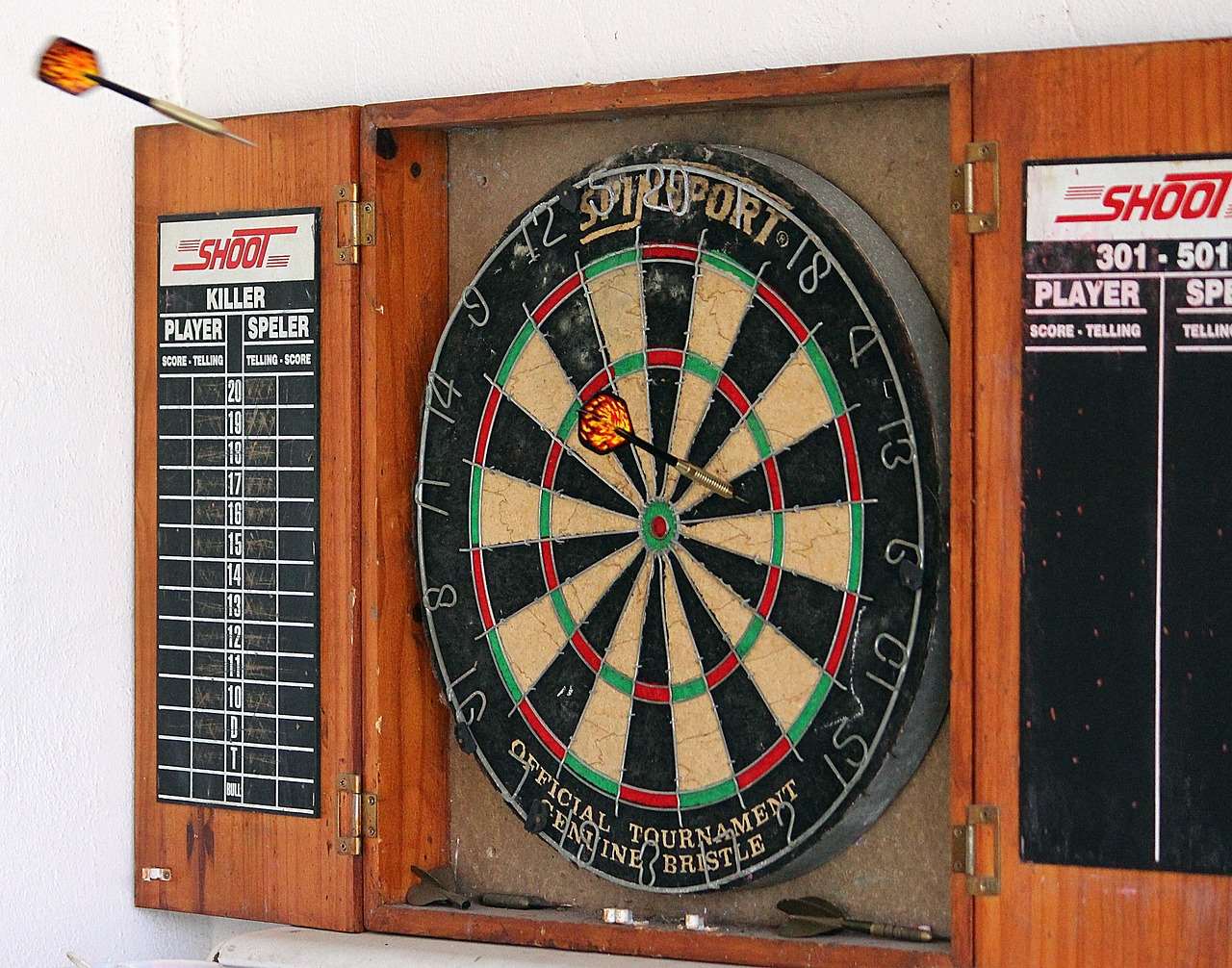
Techniques for Aiming Specific Scoring Segments
Effective aiming involves several key elements, all working together to guide your dart to the intended target. Here are some essential techniques:
Stance and Posture
Your stance provides the foundation for your throw. A stable and balanced stance is essential for consistent aiming. Consider these points:
- Foot Placement: Position your front foot pointing towards the dartboard, with your weight evenly distributed. Experiment to find what feels most comfortable and balanced for you.
- Body Alignment: Keep your body aligned with your target. Avoid twisting or leaning excessively.
- Arm Position: Your throwing arm should be at a 90-degree angle, with your elbow acting as a hinge.
- Head Position: Keep your head still and focused on the target. Avoid moving your head during the throw.
Finding the right stance is an individual process, so take the time to experiment and find what feels most natural and stable for you. A solid foundation will significantly improve your ability to consistently target specific areas.
Grip and Release
The way you grip the dart and release it has a significant impact on its trajectory. Here are some important considerations:
- Grip Pressure: Use a consistent grip pressure that allows you to maintain control of the dart without squeezing it too tightly. A relaxed grip promotes a smoother release.
- Finger Placement: Experiment with different finger placements to find what gives you the best control and feel for the dart.
- Release Point: Aim for a clean and consistent release point. Avoid snapping your wrist or jerking your arm.
- Follow Through: Follow through with your throw, extending your arm towards the target. This helps to maintain accuracy and consistency.
A proper grip allows for optimal control, while a consistent release ensures the dart follows the intended trajectory. Mastering these elements is crucial for accurately aiming specific scoring segments.
Visualisation
Visualisation plays a crucial role in successful aiming. Before each throw, take a moment to visualise the dart hitting your intended target. This mental rehearsal helps to improve your focus and confidence.
Imagine the trajectory of the dart, the feeling of the release, and the sound of the dart hitting the board. The more vividly you can visualise the shot, the more likely you are to execute it successfully. This technique is especially helpful when creative dart rules for parties and social gatherings add a layer of complexity to the game.
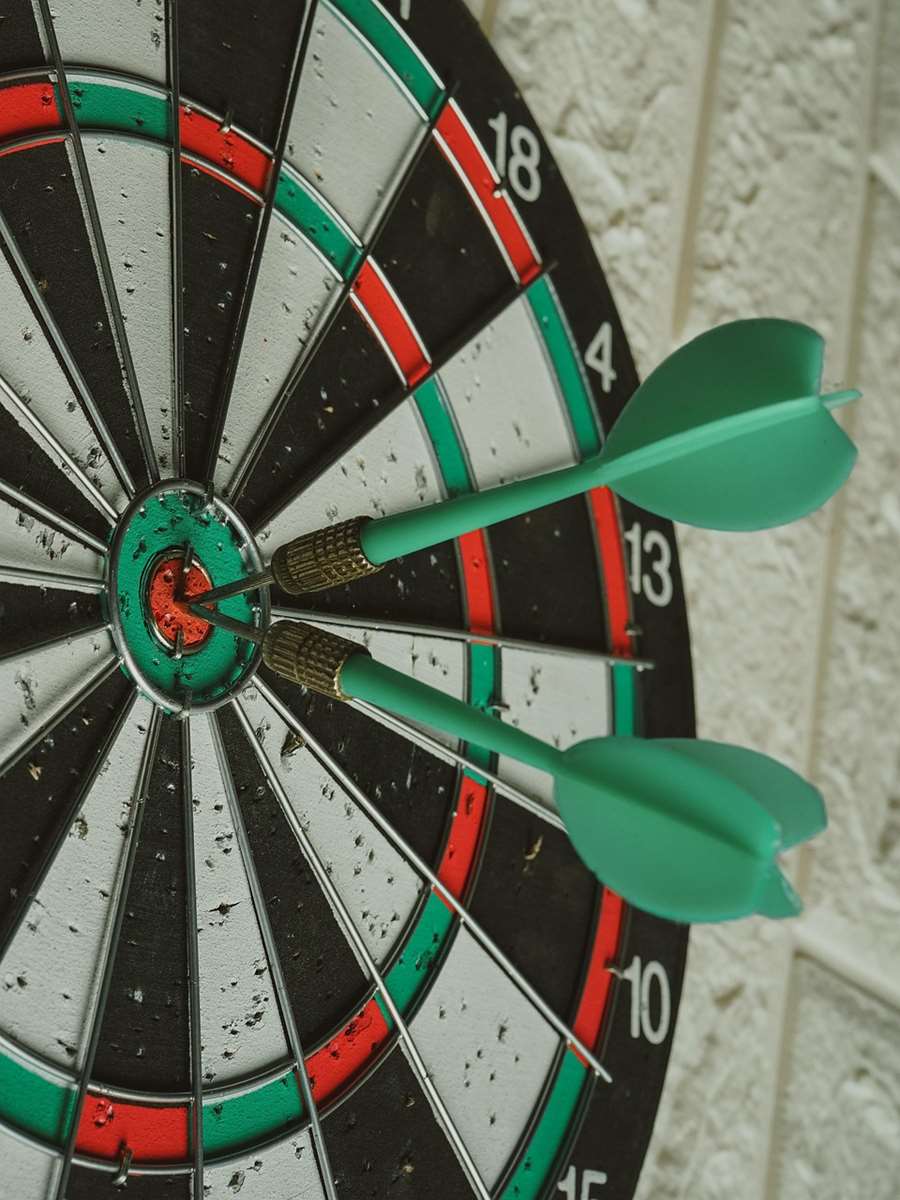
Strategies for Aiming Specific Scoring Segments
Beyond the fundamental techniques, strategic thinking is crucial for maximising your scoring potential. Consider these strategies:
Target Prioritisation
Determine which scoring segments are most important for your game. In most standard dart games, the **20 segment** is the primary target due to its high value. However, other segments, such as the **19 and 18**, can be strategically important for setting up finishes or avoiding low scores.
Prioritise your practice to focus on the segments that will have the biggest impact on your overall performance. This might mean spending more time on the 20, but also dedicating time to the segments that you find challenging or that are crucial for specific game situations.
Understanding Dartboard Angles
The angle at which you approach the dartboard can affect your aiming. Experiment with different angles to find what works best for you. Some players prefer to stand directly in front of the board, while others prefer to stand slightly to the side.
Consider how your angle affects your ability to see the target and your throwing motion. Adjust your stance and body position to optimise your aiming and ensure a clear line of sight to your desired scoring segment.
Adapting to Dartboard Wear and Tear
Over time, dartboards wear down, which can affect the accuracy of your throws. Pay attention to the condition of your dartboard and adjust your aiming accordingly. Worn areas may require you to aim slightly higher or lower to compensate for the change in resistance.
Regularly rotate your dartboard to distribute wear evenly and prolong its lifespan. This will help to maintain consistent scoring and reduce the need for significant aiming adjustments. It’s also helpful for understanding Basic Darts Fundamentals for Beginners.

Practice Methods for Improving Your Aim
Consistent practice is the key to improving your aiming skills. Here are some effective practice methods:
Repetitive Drills
Focus on aiming specific scoring segments by repeatedly throwing at the same target. This helps to develop muscle memory and improve your consistency. Start with the 20 segment and then move on to other important targets, such as the 19, 18, and doubles.
Set specific goals for each practice session, such as hitting a certain number of 20s in a row or achieving a target score in a specific number of throws. Track your progress and adjust your practice routine as needed.
Game Simulation
Simulate real game situations to practice your strategic aiming. Play games against yourself or with a partner, focusing on targeting specific segments based on the current score and game plan. For example, practice setting up finishes by targeting specific doubles or triples.
This type of practice helps you to develop your decision-making skills and adapt your aiming to different game scenarios. It also helps to build your confidence and prepare you for competitive play. Understanding how to utilize how to make darts fairer with handicap rules can also add another dimension to practice.
Targeted Challenges
Create targeted challenges to improve specific aspects of your aiming. For example, challenge yourself to hit a certain number of bulls-eyes in a row or to score a certain number of points in a limited number of throws. These challenges help to keep your practice engaging and provide a measurable way to track your progress.
You can also create challenges that focus on specific skills, such as grouping darts tightly or hitting specific targets under pressure. The key is to design challenges that are challenging but achievable, and that help you to improve your weaknesses.

Advanced Techniques for Experienced Players
Once you’ve mastered the fundamentals, you can explore more advanced techniques to further refine your aiming skills:
Fine-Tuning Your Release
Pay close attention to the nuances of your release. Even slight variations in your release point or follow-through can affect the accuracy of your throws. Experiment with different release techniques to find what gives you the best control and consistency.
Consider using video analysis to study your release and identify any areas for improvement. You can also work with a coach or experienced player to get feedback on your technique.
Mental Toughness
Develop your mental toughness to perform consistently under pressure. This involves managing your emotions, staying focused, and maintaining a positive attitude, even when facing setbacks. Use techniques such as visualisation and positive self-talk to build your confidence and resilience.
Learn to handle distractions and maintain your focus in challenging environments. The ability to stay calm and focused under pressure is a key differentiator between good players and great players. Consider what strategies are relevant when adapting darts rules for small spaces: tips and tricks to maintain a steady mental game.
Equipment Optimisation
Experiment with different darts, shafts, and flights to find the equipment that best suits your throwing style and preferences. Consider factors such as weight, grip, and balance when choosing your equipment.
Don’t be afraid to try different combinations of equipment to find what works best for you. Even small changes in your equipment can have a significant impact on your aiming and overall performance.

Conclusion
**Aiming specific scoring segments** is the cornerstone of successful dart playing. By mastering the techniques, implementing strategic approaches, and dedicating time to practice, you can significantly improve your accuracy, consistency, and overall performance. Remember to focus on your stance, grip, release, and mental game. Continuously analyze your performance and adapt your strategies as needed. Implement these principles into your practice routine, and you’ll be well on your way to hitting those crucial doubles, triples, and 20s with greater regularity. Now, grab your darts and start aiming specific scoring segments to elevate your game to the next level!

Hi, I’m Dieter, and I created Dartcounter (Dartcounterapp.com). My motivation wasn’t being a darts expert – quite the opposite! When I first started playing, I loved the game but found keeping accurate scores and tracking stats difficult and distracting.
I figured I couldn’t be the only one struggling with this. So, I decided to build a solution: an easy-to-use application that everyone, no matter their experience level, could use to manage scoring effortlessly.
My goal for Dartcounter was simple: let the app handle the numbers – the scoring, the averages, the stats, even checkout suggestions – so players could focus purely on their throw and enjoying the game. It began as a way to solve my own beginner’s problem, and I’m thrilled it has grown into a helpful tool for the wider darts community.